


10 Exotic Fruits You Didn’t Know You Could Buy on Amazon
Updated: May 17, 2021





Although mango, banana, and pineapple are all readily available and delicious, we're obsessed with these "foreign" fruits because they're super delicious and surprisingly healthy—and they'll get you excited about eating fruit again. Sticky, sweet, tart, and sour, these eats will change your produce game forever. (And you can buy them online!)
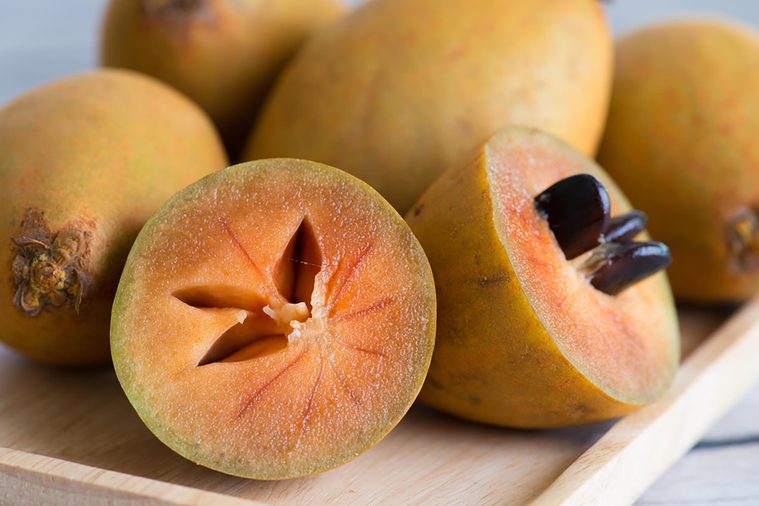
Sapodilla
Also called a sapota in some Asian countries, this teardrop-shaped brown fruit is deceptively ugly. Slice it open though and you’ll be rewarded with the candy of the fruit world—sugary sweet and dense, like a plum filled with sticky toffee pudding. It’s one of the higher-calorie exotic fruits, like something in the banana family, but it’s also rich in antioxidants as well as vitamins C and A, plus it’s a source of iron, folate, and niacin, giving it a multivitamins’ worth of pep in every bite.
Try it: Dice sapodilla and add it to oatmeal for a naturally sweetened breakfast bowl. (Check out these 10 surprising things you never knew you could rent!)
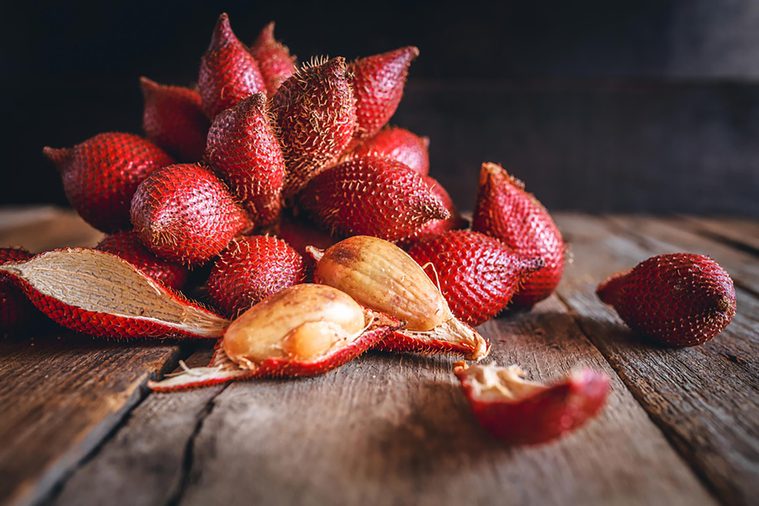
Salak
The health benefits of this cherry-sized, tart and chewy fruit are almost too good to be true: It’s chock-full of beta-carotene, fiber, iron, vitamin C, and protein. It’s also considered to be good for memory due to a high potassium content that enhances cognitive function. “All of these compounds in exotic fruits protect your cells from the harmful effects of molecules called free radicals—the ‘bad guys,'” says Glassman, “which cause oxidative stress, and damage to your body.” So load up on the salak to keep yourself in good health!
Try it: Chop up salak and add to a salad for a unique texture and nutritional boost to your greens.
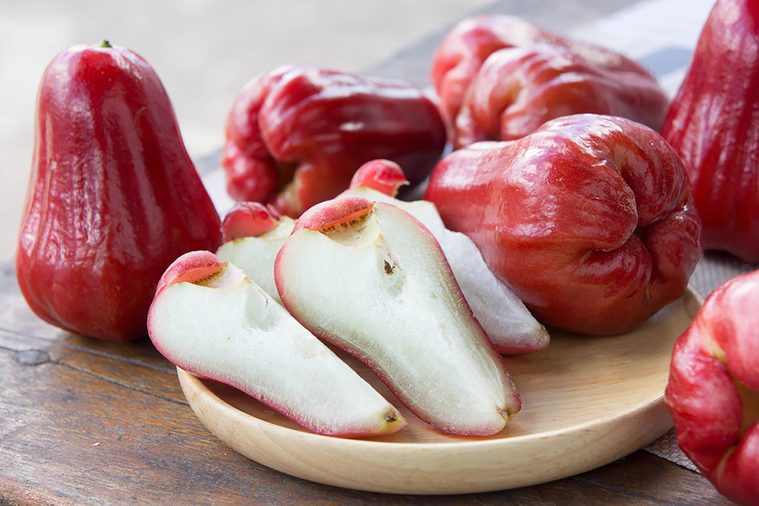
Rose apple
Would a rose by any other name still be as sweet? If it’s this shiny red pear-shaped rose, the answer is yes, since we’ve also heard this Asian fruit referred to as a heart apple, nose apple, and pear apple. Whatever you call it, the crisp fruit is a refreshing snack—think more of an unripe pear or sweet jicama than an apple texture. It’s also high in fiber, calcium, and potassium.
Try it: Since you can eat it out of hand (not the case for all of these exotic fruits), it’s an easy addition to add to your grab-and-go snack rotation as a way to eat more fruit. Besides bizarre fruits, here are the strange things you never knew you could buy at Costco.
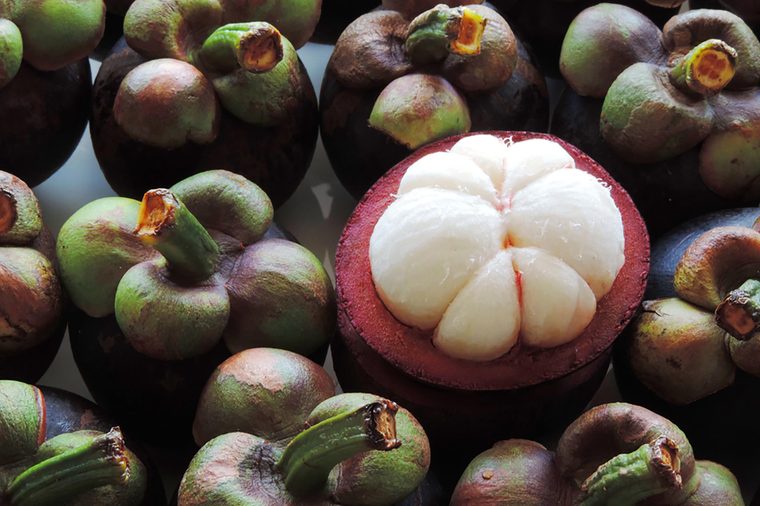
Mangosteen
Beneath its thick royal purple skin, the white segmented flesh of the mangosteen is soft and sweet, although it looks like a multi-segmented garlic bulb. It’s rich in pericarp, an antioxidant, which protects your body from harmful free radicals. Here are other antioxidant-rich foods you should be eating.
Try it: Whip into a juice or smoothie for a potent boost of nutrients.
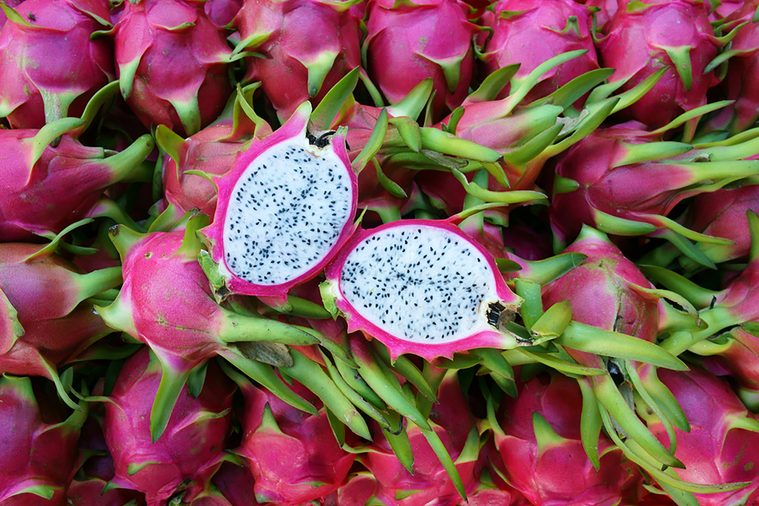
Dragon fruit (Pitaya)
Although this fiercely named exotic fruit (a member of the cactus family) may look daunting from the outside, the interior, flecked with tiny seeds like a black and white kiwi, is as mild a taste as you can find. The low calorie fruit is high in calcium, fiber, and vitamin C.
Try it: Dragon fruit is the perfect addition to make a healthy smoothie. These are the foods you had no clue you were eating all wrong!
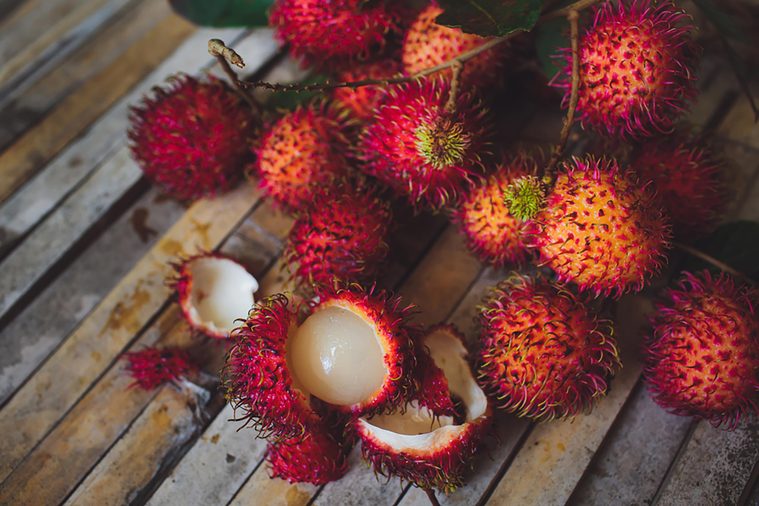
Rambutan
We’re not sure who first encountered the Rambutan, which basically looks like a red rubber ball covered with hair (Rambutan actually means “hair” in Malay), and thought “I should eat that,” but we’re glad they did. To get at the soft white fruit inside, make a cut around the outside and then peel back the hairy exterior. Eat the soft, highly hydrating fruit while watching out for the pit inside.
Try it: Rambutan’s high water content makes it a good choice to add to a tropical fruit drink and is a great way to stay hydrated on a hot day. These are the 10 foods most people don’t know they can buy at Staples!
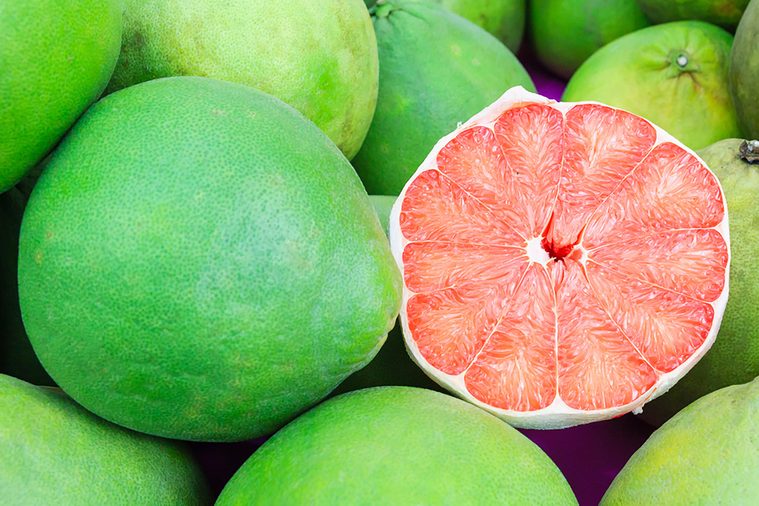
Pomelo
The largest member of the citrus family, the pomelo can weigh in at up to 22 pounds, and resembles a family-sized grapefruit in taste and appearance. It’s filled with all the same health benefits of a grapefruit, including high levels of Vitamin C, A, potassium, and fiber.
Try it: Squeeze it into a juice, slice it into wedges, or chop it up into a tropical salsa with other healthy fruits.
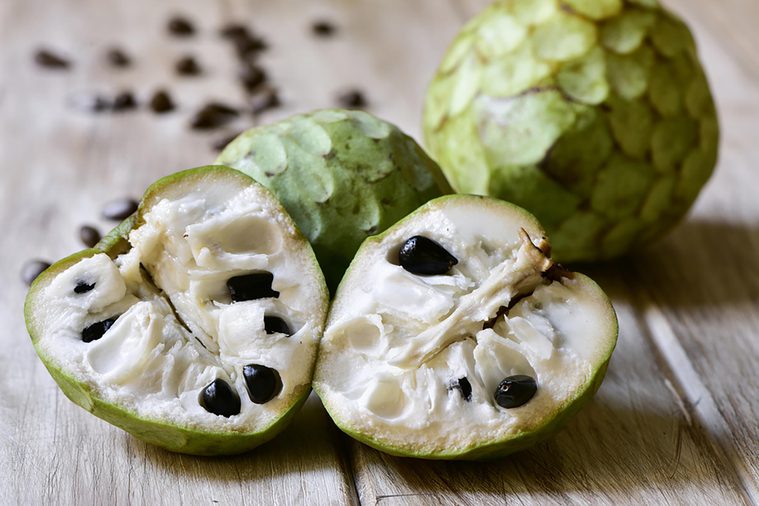
Custard apple
Lumpy on the outside, soft and sweet on the inside, the custard apple (also known as a Cherimoya) tastes like a pineapple crossed with a mango with the texture of a ripe banana. Even though it tastes like dessert, its rich in vitamins B6 and C and riboflavin.
Try it: Replace old-school pudding for dessert with a bowl of spoonable custard apple sprinkled with nutmeg or cinnamon. (Make sure you never make these 20 surprising produce mistakes ever again!)
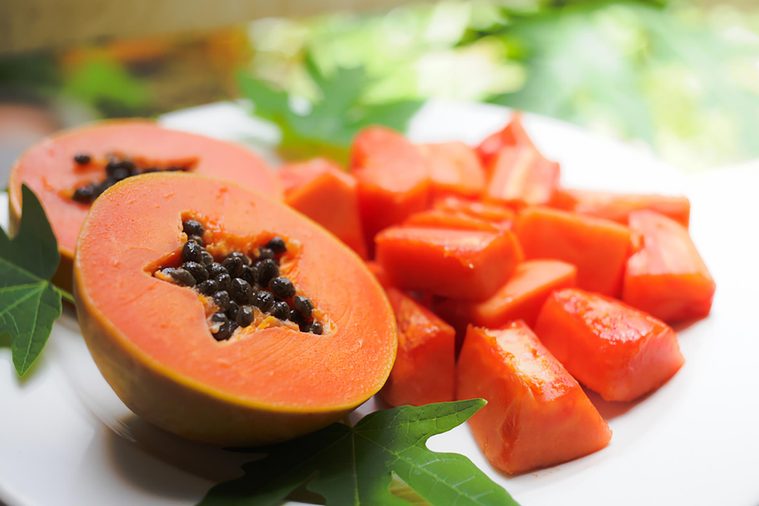
Papaya
The football shaped papaya has a deep orange and surprisingly creamy interior. Papaya is high in the enzyme papain, which is great for digestion, and packs a nutritional wallop with 10 percent of your daily fiber and folate and a full day’s vitamin C in just half a fruit. Don’t be tempted to grab papaya-flavored products off the grocery shelf, however, because they have none of these benefits. According to Larry Olmsted, author of Real Food/Fake Food, “the only reason there is fake-flavored food is because the real foods are so good; it’s always worth seeking out the real thing when it comes to exotic fruits.”
Try it: To cut the creamy sweetness of a papaya, try squeezing a lime over the top like they do Cambodia. Or puree the sweet fruit and swirl it into plain yogurt.
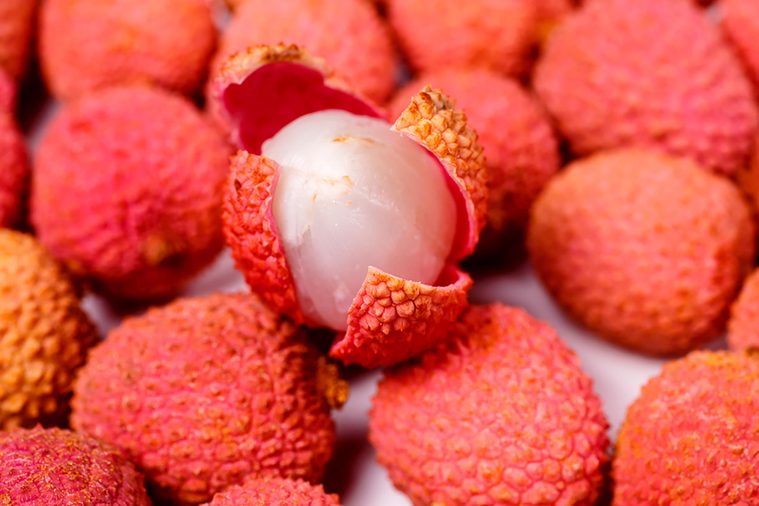
Lychee
This tasty translucent fruit is tucked inside a red leathery shell and is a fabulous thirst quencher. The sweet, grape-sized fruit is high in vitamin C, and also in polyphenols, which helps speed up metabolism.
Try it: Add to a fruit salad, cocktail, or juice drink to turn an everyday staple into an exotic fruits treat. (Don’t miss these 11 surprising skills you never knew Amazon’s Alexa could do.)
