Where do you fall in the great Diet Coke vs. Coke Zero debate? Let's break down the key differences with a beverage expert and nutritionist.
Diet Coke vs. Coke Zero: What’s the Difference—And Which Is Better?
If you think about a quintessential American meal, chances are there’s a glass of ice-cold Coca-Cola involved. Indeed, the soft drink has been incredibly popular in the United States for over a century, and has spawned other sips that achieved similar sky-high levels of fame. First there was Diet Coke, the sugar-free juggernaut that launched in 1982. Coke Zero followed in 2005, leading to many Diet Coke vs. Coke Zero debates among Coke aficionados.
But what’s to debate? If Diet Coke was supposed to be the sugar-free option for someone craving a Coke, what’s the difference between Diet Coke and Coke Zero? We spoke to beverage expert Bruce Langer, president of Langers, a family-owned California beverage company, and Destini Moody, a registered dietitian with Top Nutrition Coaching, to bring you the answers to these questions and more. Coke fans, keep reading.
Get Reader’s Digest’s Read Up newsletter for more tastes, humor, cleaning, tech and fun facts all week long.
What’s the difference between Diet Coke and Coke Zero?
Diet Coke and Coke Zero, which was technically renamed Coca-Cola Zero Sugar in 2016, do have a few things in common. They have similar ingredients, and they were both birthed by the mother of all soft drinks, Coca-Cola. But if we’re going to get into the nitty-gritty, there are differences between Diet Coke and Coke Zero.
Ingredients
First up is the sweetener. Langer says Diet Coke and Coke Zero have similar ingredients, but “Diet Coke has one artificial sweetener: aspartame, while Coke Zero has two: aspartame and Ace-K (aka acesulfame potassium).” Coke Zero also contains stevia extract, which is a natural calorie-free sweetener.
Here’s the full ingredient list for Diet Coke:
- Carbonated water
- Caramel color
- Aspartame
- Phosphoric acid
- Potassium benzoate
- Natural flavors
- Citric acid
- Caffeine
And here are the ingredients in Coke Zero:
- Carbonated water
- Caramel color
- Phosphoric acid
- Aspartame
- Potassium benzoate
- Natural flavors
- Potassium citrate
- Acesulfame potassium
- Caffeine
- Stevia extract
As you can see, there’s not much daylight between the two. But if you’ve ever tried both of them, you know those small differences bring distinctly different tastes.
Caffeine
In the Diet Coke vs. Coke Zero battle for energizing power, Diet Coke comes out on top. A 20-ounce bottle of Diet Coke contains 76 milligrams of caffeine, while a 20-ounce bottle of Coke Zero has just 57 milligrams.
Branding
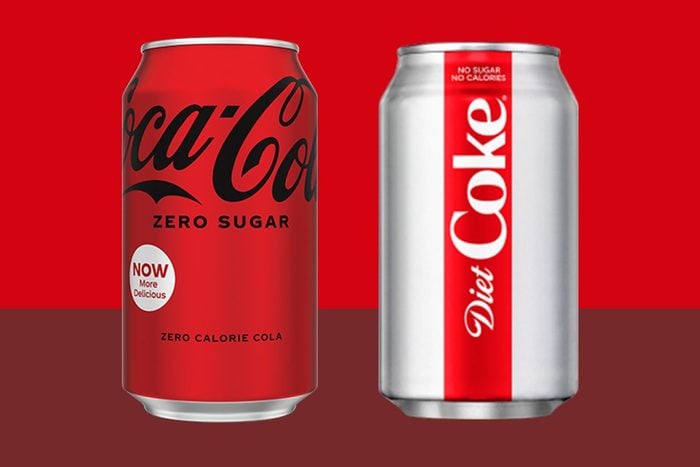
Diet Coke has a distinct look. The colors of the bottles and cans are grey and red, and the fonts used on the label are totally different from traditional Coca-Cola, which uses red and white. Coke Zero, on the other hand, looks much more like Coca-Cola. Red is the most prominent color on the label, and Coca-Cola is written in the traditional Coke font. The only difference is that the name of the beverage is written in black, while it’s written in white on a bottle of Coke.
Is Diet Coke or Coke Zero healthier?

“Neither of these beverages are health foods,” Moody says. “They don’t contribute any calories, but just because something is zero calorie doesn’t make it healthy,” adding that diet sodas aren’t a significant source of vitamins or minerals. If you want to get technical, you can look more closely at the calorie-free ingredients that are being used. “Some consumers view the Diet version as slightly ‘better’ because it uses only one sweetener, aspartame,” Langer says.
Multiple sources, including the World Health Organization, say that a can of Diet Coke contains around 200 milligrams of aspartame, which is just a fraction of the acceptable daily intake of 40 milligrams per kilogram of body weight (1 kilogram equals roughly 2.2 pounds). As for Coke Zero, Coca-Cola’s U.S. website does not list the amounts of artificial sweeteners in their drinks … so we have to do a bit of sleuthing.
Coca-Cola’s Canadian website lists ingredients for Coca-Cola Zero Sugar Zero Caffeine. If we assume that everything is the same as regular Coke Zero except for the caffeine, one can of Coke Zero contains 85 milligrams of aspartame and 46 milligrams of Ace-K. That’s a smaller amount of artificial sweetener than Diet Coke, but compared to the accepted daily intake it’s a negligible difference.
“The healthiest thing about these drinks is they do not contain refined sweeteners like cane sugar or high fructose corn syrup,” says Moody. “So that’s a plus for people who are watching their calorie intake but still want to enjoy a fizzy drink with flavor.”
Do Diet Coke and Coke Zero taste different?
According to The Coca-Cola Company, the main difference when comparing Diet Coke vs. Coke Zero is the taste. “Coca‑Cola Zero Sugar looks and tastes more like Coca‑Cola Original Taste, while Diet Coke has a distinct lighter taste,” they write on the website.
Do people agree? In a recent Reddit thread about the difference between the two drinks, they sure seem to. “Diet Coke is it’s own unique cola flavor. Coke Zero is a diet imitation of Coca-Cola,” one poster says. “Diet Coke has a light citrusy almost [chemical] taste, while Coke Zero just tastes like Coke,” writes another.
So are they right? As I write this, I am sipping on a Diet Coke and a Coke Zero. The Coke Zero definitely tastes more like Coca-Cola, with a sweeter, smoother taste compared to the sharper taste of Diet Coke. I hardly ever drink soda, but if I were looking to indulge and saw both in the cooler, I would probably grab the Coke Zero.
So which is the better choice?
If we’re talking about popularity, Diet Coke is still king. In a 2024 ranking of the most popular sodas in the U.S. by Beverage Digest, Diet Coke was No. 5 (behind Coca-Cola, Dr Pepper, Sprite and Pepsi), while Coke Zero came in at No. 7. However, Coke Zero’s sales were up a whopping 10%, while Diet Coke’s were down 1% for the year, so the tides may be changing.
While water is still the best and healthiest drink choice, mixing in one of these soft drinks (whichever you enjoy more) every once in a while likely won’t hurt. “These beverages help people with chronic diseases that are exacerbated by added sugars maintain their quality of life, and allow them to enjoy beverages they love without being limited by their illness,” says Moody. “Obviously sodas making up the bulk of one’s fluid intake is not ideal, but cutting it out completely isn’t necessary.”
About the experts
|
Why trust us
At Reader’s Digest, we’re committed to producing high-quality content by writers with expertise and experience in their field in consultation with relevant, qualified experts. We rely on reputable primary sources, including government and professional organizations and academic institutions as well as our writers’ personal experiences where appropriate. We verify all facts and data, back them with credible sourcing and revisit them over time to ensure they remain accurate and up to date. Read more about our team, our contributors and our editorial policies.
Sources:
- Bruce Langer, president of Langers, a family-owned beverage company based in California; email interview, August 2025
- Destini Moody, registered dietitian with Top Nutrition Coaching; email interview, August 2025
- Coca-Cola: “Diet Coke”
- Coca-Cola: “Coca-Cola Zero Sugar”
- World Health Organization: “Aspartame hazard and risk assessment results released”
- Coca-Cola Canada: “Coca-Cola Zero Sugar Zero Caffeine”
- Coca-Cola: “What’s the difference between Coca‑Cola Zero Sugar and Diet Coke?”
- Reddit: “Can anyone explain me the difference between diet coke and Coke zero?”
- MSN: “Longtime favorite drops in ranking of best-selling sodas in the US”