For the many years I owned a car (rest in peace, sweet Scion), renewing my registration was a yearly ritual, one that always felt a bit too pricey, in my opinion. When the new tags arrived in the mail, I’d stick them on the license plates and promptly forget about them for another 12 months.

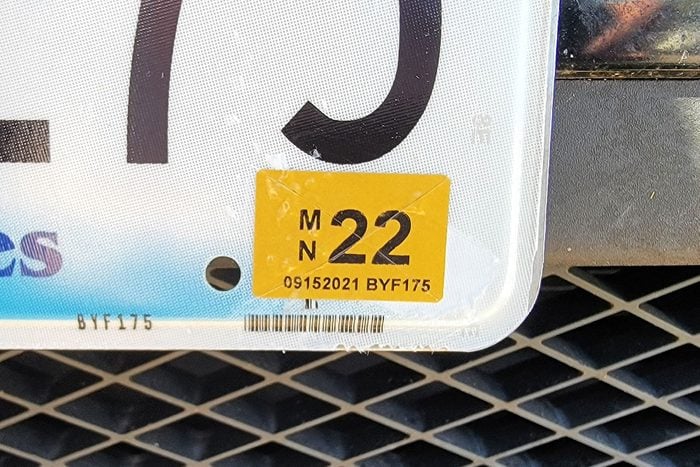
Ignorance is bliss, but perhaps I shouldn’t have been so cavalier about those forgettable little adhesive tabs. It turns out that some drivers pay a lot more attention to the humble car tag sticker than I ever did. If that’s you, maybe you’ve seen a cut registration sticker, where a driver adds tiny cuts to their car’s registration stickers. Did you assume they were vandalized or just extremely weather worn? Think again. In many cases, it’s neither.

Surprisingly, roughing up your own registration stickers on purpose is actually a smart move. Read on to find out why Sergeant Todd Murphy, San Diego supervisor for the California Department of Motor Vehicles, says there’s a good reason drivers should consider the cut registration sticker for themselves.

Get Reader’s Digest’s Read Up newsletter for more car news, humor, travel, tech and fun facts all week long.

What is the purpose of those license plate stickers, exactly?

If you have registration stickers, you likely know what they are. Drivers receive the state-issued decals after they’ve paid all fees and passed mandated inspections, such as smog compliance. According to Murphy, they’re affixed to license plates “to show to the public, police and parking enforcement that the vehicle is lawfully currently registered.”

It’s worth noting that, surprisingly, a few jurisdictions—New York, Texas and the District of Columbia—have swapped plate stickers for windshield stickers. And some states actually don’t use them at all (looking at you Connecticut, New Jersey and Pennsylvania!).

Why should you cut the registration sticker on your license plate?

Close-up of a yellow vehicle registration sticker featuring the outline of Wisconsin, the letters "WIS," and the number "25" on a white background, partially attached to a license plate.
Reader's Digest

Scoring your license plate registration sticker is a good way to keep thieves at bay.

“Commonly, they are stolen to be placed on another vehicle, so [the driver] does not get pulled over by police, issued a parking citation or have the vehicle impounded for expired registration,” Murphy explains. Sometimes, he adds, the swiped stickers even make it onto the black market.

Cutting the tabs deters thieves in two ways. “If someone tries to peel off a scored sticker, it will only come off in small pieces at a time and will be very difficult to reassemble,” Murphy says. And if they still try to slap the pricey stickers on another plate, he continues, “it will look altered or damaged,” making it easy for law or parking enforcement to catch.

What could thieves do with information found on the sticker?

Thankfully, if your tag is ever stolen, the worst-case scenario is usually just the cost of a replacement, since there’s not a lot a thief can do with the limited information they contain. In California, for example, Murphy points out that registration stickers show either a serial number only searchable by police or the DMV, or a plate number that’s already publicly visible.

How big of a problem is this?

It’s hard to say how big of a problem registration sticker theft is, since states generally don’t track the specific numbers. And Murphy says that car thieves who steal—or sell—these car tags do so to cover their tracks, hoping to avoid being pulled over, getting a citation, getting towed or facing arrest in a stolen vehicle.

How should you cut a registration sticker on your car?

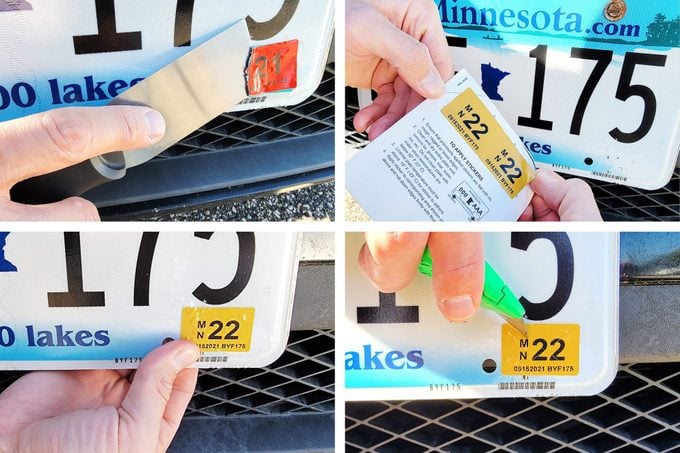
Devising a cut registration sticker is fairly simple, but following a few careful steps when you get your new sticker will help you avoid needlessly destroying it and having to pay for a replacement.

  1. Remove old stickers. A flat metal putty knife works well.
  2. Clean the license plate. Thoroughly clean your car’s plate, removing any excess adhesive left behind so the new sticker adheres properly.
  3. Apply the new tag. Press it firmly onto the plate and smooth out any air bubbles.
  4. Score the sticker. Use a box cutter or other sharp tool to lightly cut the sticker’s surface without obscuring, damaging or removing the numbers.

Murphy recommends a diagonal cross-hatch “XXXX” pattern to effectively deter most thieves. He adds: “All numbers and letters on the sticker must be clearly legible when displayed.”

Should you also do this if your registration sticker is on your windshield?

No. It’s best not to score a windshield sticker, since using a metal tool could scratch or damage the glass and compromise safety. Many car and glass manufacturers specifically warn against applying razors and other metal blades directly to the windshield.

About the expert

  • Sergeant Todd Murphy is the San Diego supervisor for the California Department of Motor Vehicles, where he has worked for more than seven years specializing in traffic collisions, traffic enforcement and CPR/first aid. He also spent 30 years with the San Diego Sheriff’s Department, 15 of which were focused on traffic enforcement and collision investigations, before retiring in 2018.

Why trust us

At Reader’s Digest, we’re committed to producing high-quality content by writers with expertise and experience in their field in consultation with relevant, qualified experts. We rely on reputable primary sources, including government and professional organizations and academic institutions as well as our writers’ personal experiences where appropriate. We verify all facts and data, back them with credible sourcing and revisit them over time to ensure they remain accurate and up to date. Read more about our team, our contributors and our editorial policies.

Sources: