


What Does “Erin Go Bragh” Mean?

Updated: Mar. 31, 2024





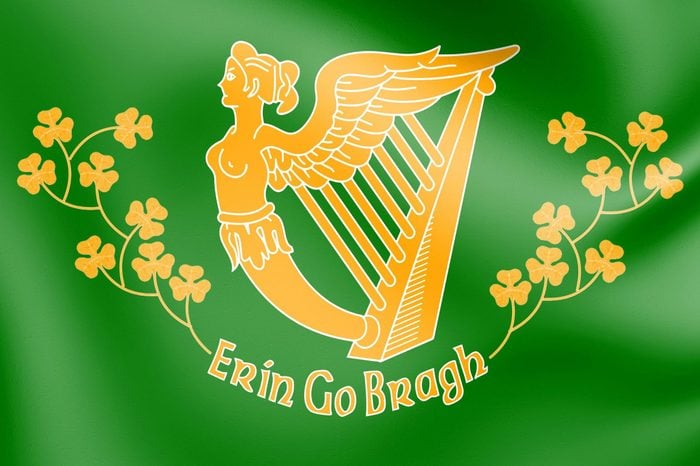
Here's the "Erin go Bragh" meaning and where the common St. Patrick's Day saying came from. Hint: It's rooted in rebellion.
Learning Irish words and phrases is a great way to celebrate St. Patrick’s Day. “Erin go Bragh” is one phrase you’ll likely hear around the holiday, and other times of the year if you’re of Irish descent. People shout it with pride while partaking in celebratory St. Patrick’s Day traditions, but what does it really mean?
Similar to the symbolism of the four-leaf clover, the phrase has Gaelic origins, but it’s also aligned with historical and political events. Below, learn more about the Erin go Bragh meaning. We even share the phrase’s origins, pronunciation and the proper response if it’s said to you!
Get Reader’s Digest’s Read Up newsletter for more holiday tips, fun facts, humor, cleaning, travel and tech all week long.
What does “Erin go Bragh” mean?
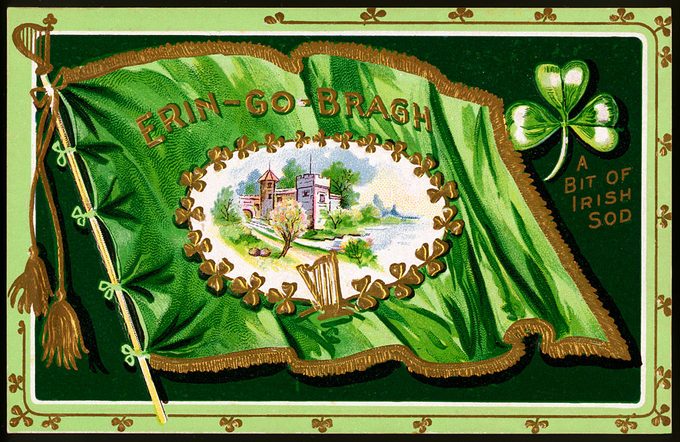
Erin go Bragh is sometimes also spelled Erin go Braugh. Both are an anglicization of Éire go brách, which literally means “Ireland to the end of time.” The word Erin is of Gaelic origin and is an Irish word for “Ireland.” The second part of the phrase is “go bragh” or “go brách,” meaning “til the end of time,” which has also been expressed as “til doomsday.”
What are the origins of Erin go Bragh?
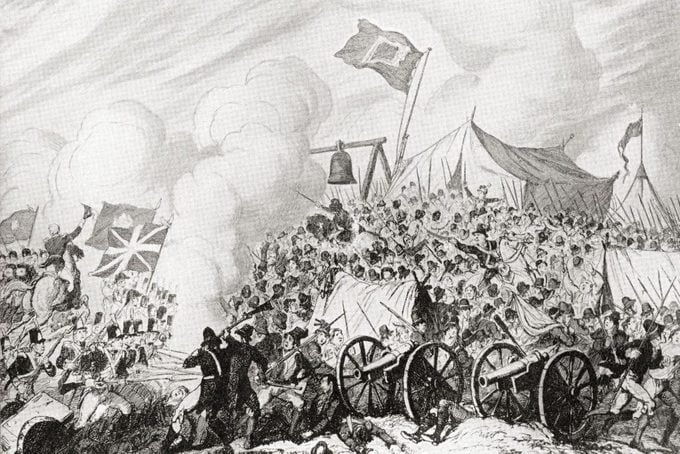
By most accounts, the roots of the phrase trace back to the Irish Rebellion of 1798. This was when a group of Irish rebels staged an uprising to protest against British rule. Unfortunately, their attempt to garner national support and organize a unified widespread protest was unsuccessful, and they were defeated in a bloody battle that resulted in many casualties. However, there was an Erin go Bragh flag, as the rebels used the anglicized version, “Erin goes Brah,” on their banners and flags during the fight to express their allegiance to Ireland; it also served as a rallying cry.
One of the earliest appearances of the phrase in the United States was in the 1840s. It was used on an old green-and-gold Irish flag flown by Saint Patrick’s Battalion, a unit of Irish-American mercenaries and U.S. deserters who fought alongside Mexicans and Europeans against the United States in the Mexican-American War.
How do you pronounce Erin go Bragh?
The English pronunciation of “Erin go” is exactly the way it is spelled, then the “agh” in “Bragh” makes an “ah” sound. Put together, it’s pronounced “Erin-go-brah.”
How is Erin go Bragh used today?
In modern usage, the phrase is translated as “Ireland forever.” Most people who use the phrase today likely don’t know the historical and political origins of the slogan. It has now become a sort of slang, often used as part of the St. Paddy‘s Day pop-culture lexicon, shouted at parades (even while the Chicago River turns green) or in place of “Cheers!” as a toast with a mug of green beer. Still, it is sometimes used by those of Irish descent to express their love for their mother country.
How do you respond to Erin go Bragh?
Respond to “Erin go Bragh” by saying it back or responding with “Happy St. Patrick’s Day” or “Cheers!” Another response is “Sláinte,” which generally translates to “good health” or “cheers.”
Sources:
- Dictionary.com: “Erin go Bragh”
- BBC: “The 1798 Irish Rebellion”
- Merriam-Webster: “Erin go bragh”

Originally Published: February 16, 2022

