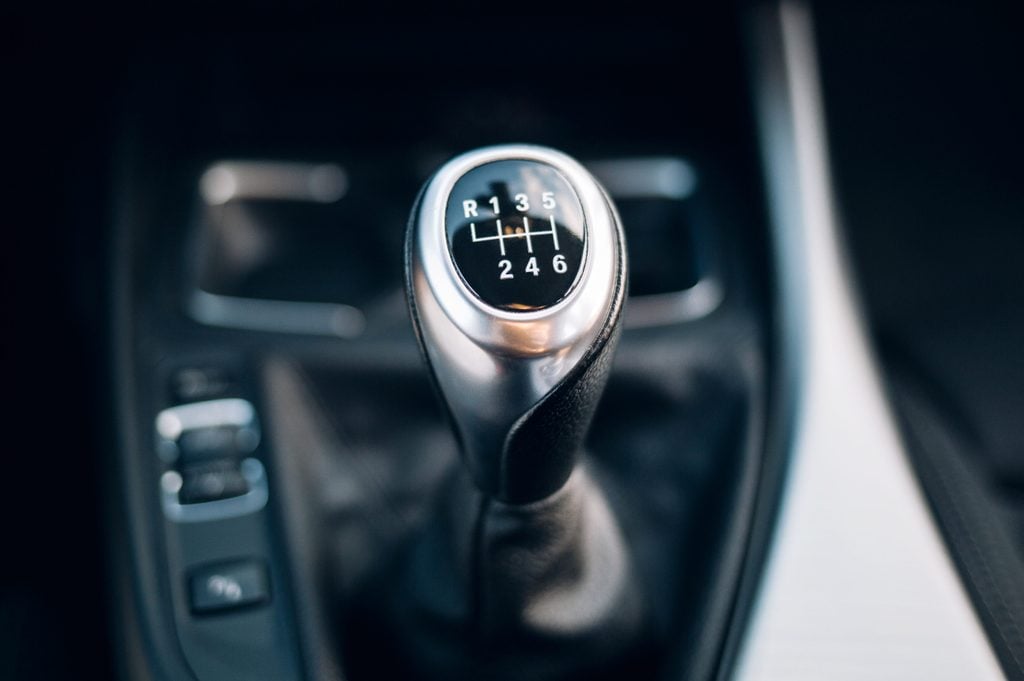
When I was growing up, it was pretty common to choose whether you wanted to take your driver’s test in a car with an automatic or a manual transmission. After I got my learner’s permit, my sister offered to teach me how to drive her racy red Ford Thunderbird, which had a manual. It didn’t go well. The crunching gears were only drowned out by her terse instructions … and a few choice four-letter words. That one and only lesson ended with me concluding that maybe stick shifts just weren’t my thing.

The decision has honestly only mattered a handful of times—mostly when I needed to rent an automatic car in Europe and the agency had to scramble to find one in its fleet. And since I’ve never appeared on The Amazing Race, where panicked contestants stalling a manual car (while falling behind) is a rite of passage every season, I’ve managed just fine. But I’ve noticed something on recent trips to Italy: My friends there now drive electric vehicles, which don’t have gears at all, and some even drive automatics. Has the automotive landscape actually shifted? Is the manual truly on its way out?

Reader’s Digest spoke to Kevin Kirbitz, chief historian and senior manager of Heritage Operations at General Motors, and Matt Anderson, curator of transportation at the Henry Ford Museum of American Innovation, to answer these questions and learn more about these trends. Keep reading to find out what’s going on with the manual stick shift vs. automatic transmission and other interesting facts about the great continental divide that you never knew.

Get Reader’s Digest’s Read Up newsletter for more car facts, travel, tech, cleaning and humor all week long.

What is the percent of manual cars in the U.S. vs. Europe?

According to the 2024 EPA Automotive Trends Report, fewer than one out of every 100 new vehicles sold last year in the United States came with a manual transmission. The same report also noted that manual production dipped below 1% of the U.S. market in model year 2021, and hasn’t risen above that threshold since. To put that shift into perspective, in 1980 manual transmissions made up almost 35% of new vehicles sold in the U.S.

Final sales data from CarMax shows a similar downward trend. A company rep told me that manuals accounted for just under 2.5% of company sales in 2023. The following calendar year, that share dropped four-tenths of a percent to just over 2%. So far in 2025 (through July), manuals dropped again, representing just 1.83% of sales—more than a 12% decrease.

Meanwhile, only a single model with a 5-speed manual transmission remained on the U.S. market last year, according to the automotive website The Autopian. Just 27 models offered 6-speeds, and only two featured 7-speed manuals. Even if Americans wanted a manual, one might be pretty hard to find.

In contrast, the manual remains far more common in Europe, though their popularity is waning there, too. Citing JATO Dynamics, a global provider of automotive market data, automotive news site Motor1 reported that in the year 2000, 89% of all registered vehicles across the pond had manual transmissions. That figure dropped to 78% for new vehicles by 2017, and then fell to 34% just five years later, in 2022. Their numbers continue to slide to this day.

Why did the U.S. transition from manual to automatic cars?

Automatic transmission gearshift stick. Modern car interior
LAZY_BEAR/GETTY IMAGES

General Motors introduced the first successful mass-produced hydraulic automatic transmission in its Oldsmobile line in the 1940 model year—and it was a wildly popular hit. “The expanse of roadways and the long-haul nature of many road trips in the U.S. seem to be more welcoming to automatic transmissions,” Kirbitz says. Simply put, automatics were much easier and more comfortable to use.

“Americans were all-in on automatics almost from the start,” Anderson agrees. “America is a big country with long roads, which encourages the use of as many conveniences in a car as possible. And short of the electric starter itself, introduced by Cadillac in 1912, there’s probably no greater automotive convenience than an automatic transmission.”

Setting aside the World War II years, Anderson notes that it only took about a decade for the “slushbox” to catch on. That slang term for an automatic transmission comes from the smooth, fluid-like sensation of driving those early automatics, compared to the more mechanical feel of shifting gearboxes manually. As a result, “automatics were outselling manuals by the mid-1950s,” he says.

Today, manual transmissions have become a niche preference for driving purists and performance-focused buyers, who believe three-pedal vehicles offer a more tactile and engaging experience, especially in sportier models.

Why do Europeans still prefer manual cars?

While America rapidly adopted automatics following World War II, Europe largely stuck with manual transmissions. Several factors explain the split:

Lower prices

“At a time when America was booming with expansion in the post-WWII era, Europe was rebuilding, materials were scarce and cars were expensive,” Kirbitz explains. Manuals were simpler and cheaper than newfangled automatics.

Fuel costs

Manuals also had the edge in fuel efficiency, a big selling point in Europe, where gasoline can be pricier. “The cost of gasoline in the U.S. has been historically lower than it is overseas, which encourages driving and made the previous fuel-economy gap between automatics and manuals less of a concern,” Anderson says.

Driver control

“There is something to be said, too, about the idea that European automakers and drivers have traditionally been more concerned with the handling, responsiveness and ‘feel’ of their automobiles,” Anderson explains. “A manual transmission gives a driver more precise control of the car, and makes the driver feel more connected.”

Cultural preferences

In Europe, manual cars weren’t broken, so there was no need to fix them. “Americans spend more time in their cars generally, while Europeans are more inclined to walking and biking,” Anderson says. In the U.S., where driving longer distances is the norm rather than exception, “we’ve generally been more about comfort and ease in our automobiles, hence the preference for automatics.”

Can you get an automatic car in Europe if you’re visiting?

exus UX (Toyota Group) SUV vehicles in hybrid version parked on public parking before the drives
TRAMINO/GETTY IMAGES

Yes, though they’re still less common than in the U.S. Most rental car agencies have automatic options available for rental, especially in major cities and airports, though they may come at an extra cost. Before traveling, it’s always a good idea to reserve them ahead of time.

Are automatic vs. manual preferences changing in the U.S. or Europe?

Manuals are still more popular than automatic cars in Europe, but probably not for long. As mentioned, manuals went from 89% of all registered vehicles in Europe in 2000 to only 34% just a few years ago.

Why the big shift? There are a variety of reasons. The price gap between automatics and manuals has nearly vanished. Automatics are also now much more fuel efficient than they used to be. “The advent of lock-up torque convertors and 6-speed or even 9-speed gearsets in modern automatics pretty much erased that advantage,” Anderson points out.

And the rise of electric vehicles is changing everything, since EVs don’t have multi-speed gearboxes at all. “Some manual transmission ‘purists’ may scoff,” Kirbitz says, “but [with EVs] there is no shifting—except park, drive, and reverse. Acceleration is immediate, speed is incredible and, with one pedal driving, you can feel quite connected to the road. Maybe that will eventually turn the tide in Europe.”

About the experts

  • Matt Anderson is curator of transportation at the Henry Ford of American Innovation museum in Dearborn, Michigan, where he oversees the museum’s collection of automobiles, railroad equipment and aircraft. He is a past president of the National Association of Automobile Museums and a member of the board of the Society of Automotive Historians.
  • Kevin Kirbitz is the chief historian and senior manager of Heritage Operations at General Motors. The GM Heritage Archive and Collection, in Sterling Heights, Michigan, consists of photos, videos and more than 600 vehicles spanning more than a century of the carmaker’s history.

Why trust us

Reader’s Digest has published hundreds of travel stories that help readers explore the world safely, easily and affordably. We regularly cover topics such as the best places to visit (and the best times to visit them), tips and tricks to zoom through airport security, flight-attendant secrets, hotel-room hacks and more. We’re committed to producing high-quality content by writers with expertise and experience in their field in consultation with relevant, qualified experts. We rely on reputable primary sources, including government and professional organizations and academic institutions as well as our writers’ personal experiences where appropriate. For this piece on automatic cars in Europe vs. the U.S., Aaron Rasmussen tapped his experience as a longtime travel writer with more than 20 years of experience who has been to 50-plus countries. We verify all facts and data, back them with credible sourcing and revisit them over time to ensure they remain accurate and up to date. Read more about our team, our contributors and our editorial policies.

Sources: