


10 Animals That Can Walk Minutes After They’re Born

Updated: Jul. 22, 2021





What’s more adorable than a baby animal? A baby animal trying to take its first steps. These cute critters get up and get going very early.
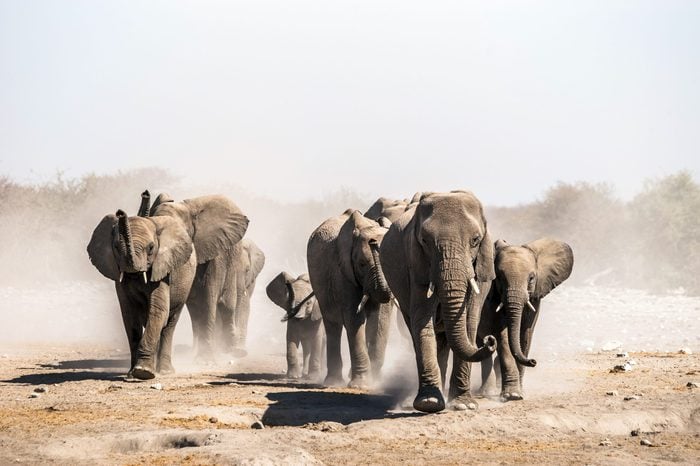
The most precious and precocious babies on Earth
Human babies need almost constant care during their first few years of life. Most animals, however, become independent far earlier. Some—called precocial animals—can even walk and feed themselves shortly after they’re born. The word precocial is related to the word precocious, which refers to youngsters who do things a lot earlier than you expect. Many (but not all) precocial animals have hooves, and there’s a very simple, very logical explanation for this. “These are prey animals, and they need to be able to move with the pack, especially when they are under attack,” explains Sara Ochoa, DVM, a veterinary consultant. While early walking is a survival mechanism, it is also pretty darn cute to watch—as are the following baby animals attempting it.
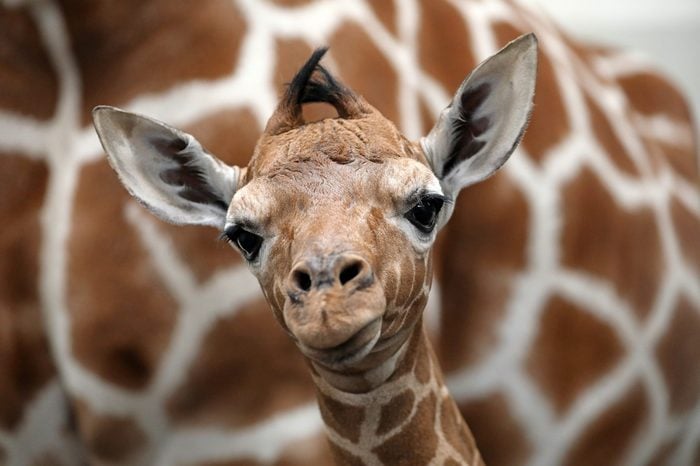
Giraffe
Giraffes are among the hooved animals that can walk early, but you might be shocked at just how early they do it: Baby giraffes take their first adorably wobbly steps 30 to 60 minutes after making their big debuts. Stephanie Mantilla, a professional animal trainer and former keeper at the Houston Zoo, says that after a 14-month gestation, a baby giraffe drops “six feet straight to the ground” when being born. Though it looks like the fall might hurt their long legs and neck, instead “it helps them by encouraging the calf to take their first breath,” she explains. Whether tall and spindly like a giraffe or tiny and fuzzy like a duckling (an animal that can also walk on its first day of life), baby animals are almost always cute.
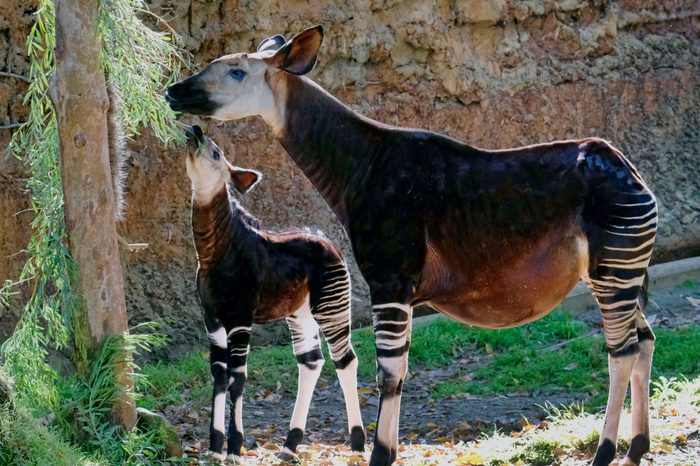
Okapi
Nicknamed “forest giraffes,” okapis are closely related to giraffes but look more like a cross between a brown horse and a zebra. Similar to giraffes, babies gestate for 15 months and also have the ability to walk quickly after being born. However, unlike giraffe babies, okapi calves have a much shorter distance to drop before hitting solid ground.
According to the World Wildlife Fund, in the wild, okapis are found only in the Democratic Republic of the Congo. Stateside, one place you can see these elusive animals is at Disney’s Animal Kingdom in Orlando. If you do see them, look for this strange talent: “An okapi’s tongue is so long that they can lick their own ears,” says Mantilla.
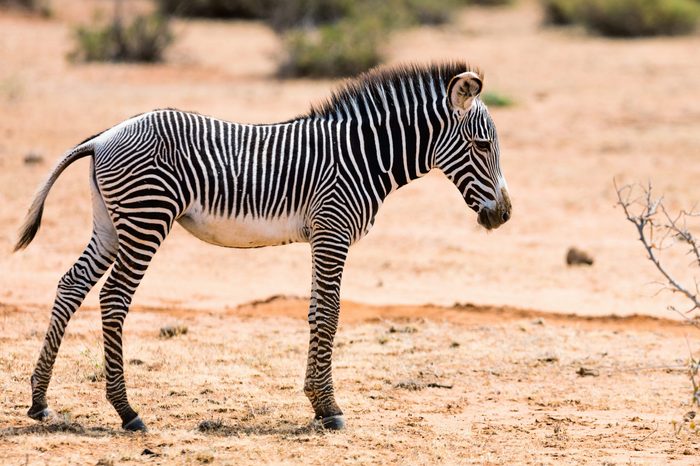
Zebra
What’s black and white and can stand up 30 minutes after being born? A baby zebra! Also known as a foal, a baby zebra stays with its mother, separate from the rest of the group, for a few days after it’s born so that it can learn the unique smell of its mother. The Nashville Zoo, which is home to a small herd of zebras, says that zebra births can happen at any time of the year and that foals become independent of their mothers after about three years.
Horse
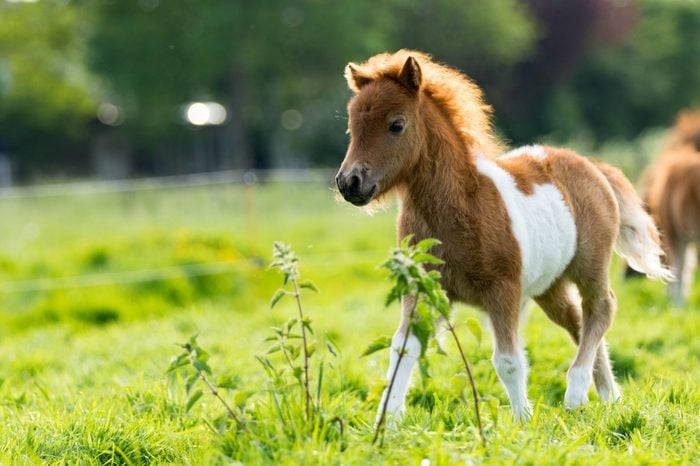
Like baby zebras, baby horses are called foals. A young female horse is also called a filly and a young male a colt. Now that we have all of that terminology down, some facts about these beautiful babies: Horse foals are able to stand and walk within an hour or two after their arrival in the world. According to TheSprucePets.com, fillies are usually faster than colts at walking and standing. Still, both male and female foals develop the skill and dexterity to gallop after just 24 hours of life. Many male and female animals may also exhibit behavioral differences. For example, here’s how male and female dogs are different.
Marine iguana
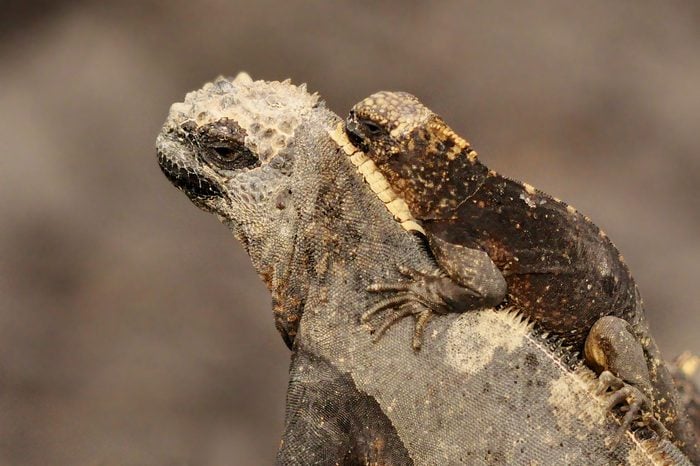
These creatures that look like small gray dragons are able to run as soon as they hatch. And they need to, because many predators, like racer snakes, are waiting to eat them. On the “Islands” episode of the BBC’s Planet Earth II, you can watch dramatic footage of racer snakes chasing a marine iguana. (Don’t worry—he survives, but barely!) In the wild, marine iguanas, who live only in Ecuador’s Galapagos Islands, can eventually grow to about 22 pounds.
Gnu
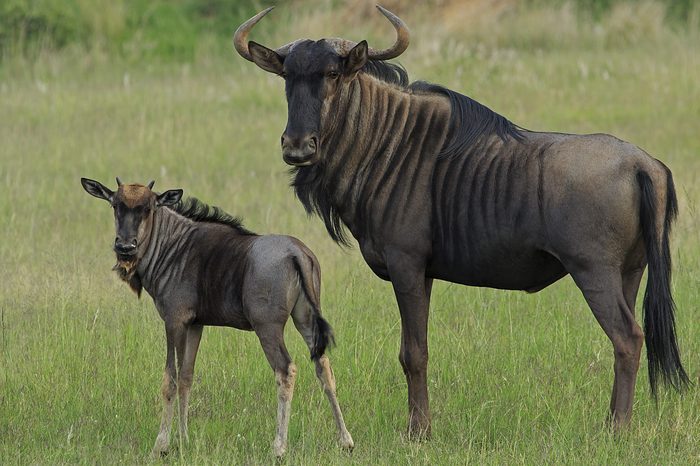
Gnus, which are also called wildebeests, are found in southern and eastern Africa. Lion World Travel reports that between 300,000 and 500,000 gnus are born every year at the beginning of the rainy season (between January and March). LiveScience.com explains that it takes just a few minutes for the 45-pound babies to be able to walk. Only a few days later, they’re able to outrun predators like lions, hyenas, and wild dogs. If you go gaga over gnus and other newborns, you won’t want to miss these 17 adorable pictures of baby animals you’ll love instantly.
Pig
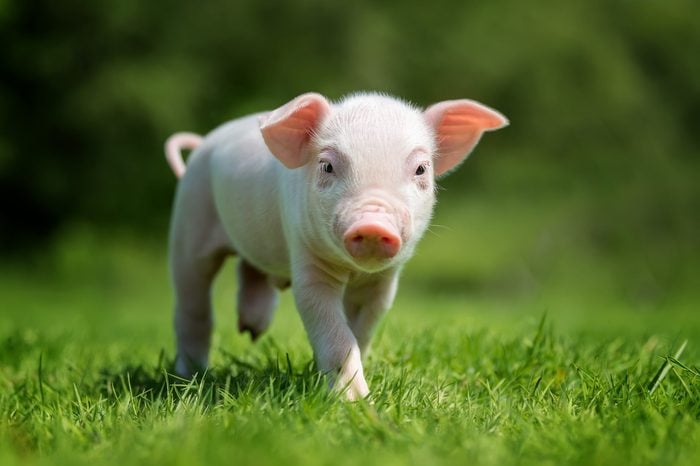
Piglets are able to stand and walk almost as soon as they’re born, according to New Scientist. And over the course of the next few hours, their walking skills improve greatly. By the time they’re eight hours old, they have full control over their motor skills. Pigs also understand emotions, show empathy, and are incredibly intelligent. In an experiment, six-week-old piglets learned the concept of mirror reflection in just a few hours—something that takes human babies months to figure out. That’s just one reason they made this list of 12 animals that are probably smarter than you.
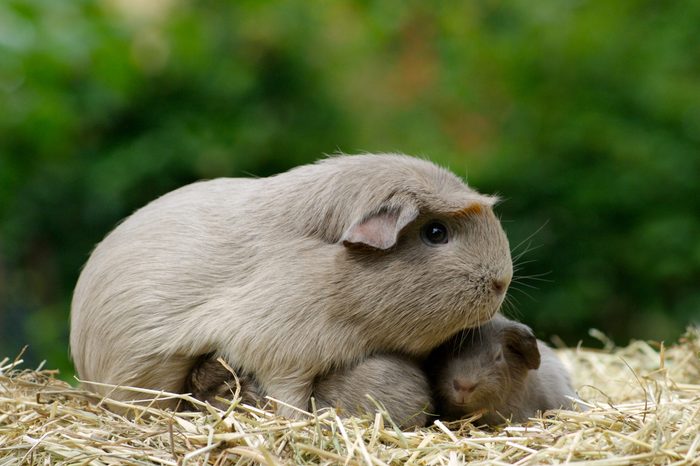
Guinea pig
Guinea-pig pups are able to walk on the day they’re born, just like pigs. However, Guinea pigs aren’t related to pigs at all. Guinea pigs are rodents, originating from South America. In addition to being able to walk on their birth days, baby Guinea pigs also start eating solid food then, though they continue to drink their mother’s milk for their first three weeks of life. Another surprising fact: Guinea pigs are able to have babies of their own when they’re just one month old.
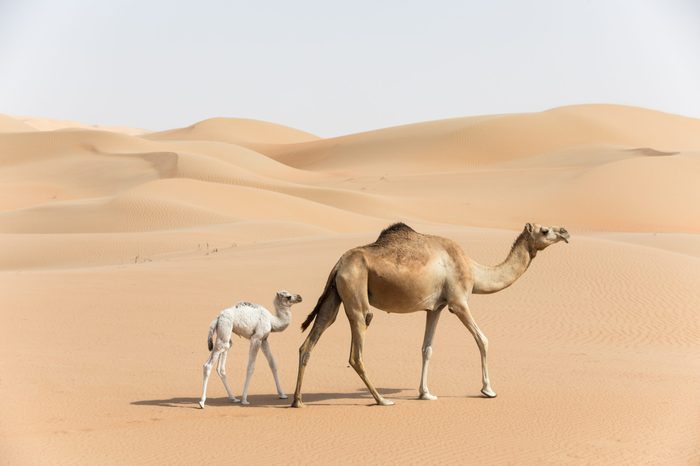
Camel
According to Live Science, baby camels can walk just 30 minutes after they’re born. In this video of a baby camel standing up for the first time at the Cincinnati Zoo, you can see just how quickly they learn independence. While a lot of baby animals walk early, they can’t do some of the unusual things that camels can do. During sandstorms, for instance, camels can close their nostrils to stop sand from blowing up their noses, as well as protect their eyes with two rows of eyelashes and a third transparent eyelid.
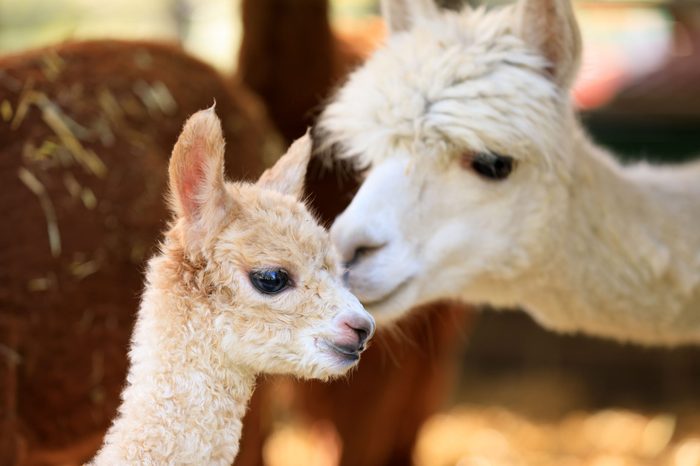
Alpaca
A baby alpaca can stand and walk between 15 and 90 minutes after arriving in the world, says AlpacaInfo.com. These cuties, which are related to camels, are originally from Peru and other countries near the Andes mountains, where tourists often snap their photos as they slowly wander through fields and graze on grass. Surprisingly, alpacas are actually covered in fiber, not fur, and that the fiber is both stronger and warmer than sheep’s wool. Next, check out these 60 adorable animal pictures that will make you say, “Awww.”
Originally Published: September 23, 2019

