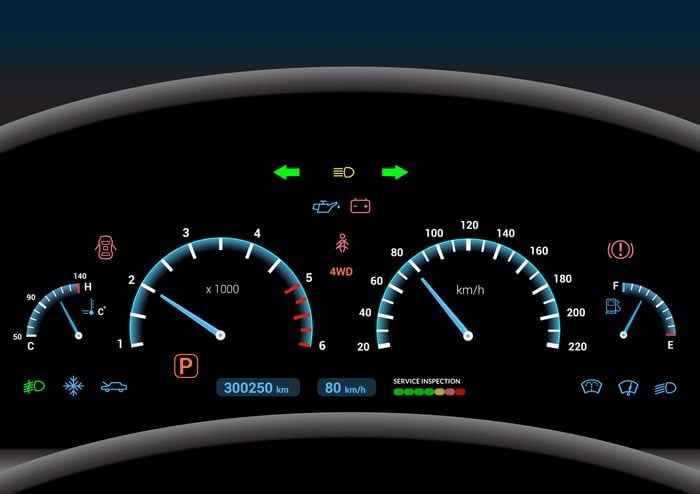
Do you know what the warning lights on your car's dashboard are trying to tell you? If you don't want to end up stranded on the side of the road, you should!
Here’s What Your Car’s Dashboard Warning Lights Mean—And How Long You Have Until It’s a Big Problem!

Check engine warning light
When this warning lights up on your dashboard, it is concerning—but believe it or not, it’s not necessarily dire. Yes, this universal sign is definitely supposed to get your attention, but the reason for it could be anything from a loose gas cap (no big deal) to a malfunctioning catalytic converter (a big problem and a potentially expensive fix). When it pops up, pay attention to how the car is driving, and look out for any signs of deeper problems. “The check engine light is not used for general maintenance,” Bert says, which means that something is definitely up.
How long you have: If the car is making odd noises, driving in fits or the check engine light is flashing, stop immediately. If you keep driving, you could damage the engine or another crucial component or have trouble controlling the car.
If, however, the light is steady and the car isn’t exhibiting any other issues, you have some time. See if the problem is anything you can take care of (like the gas-cap issue noted above); if the light disappears on its own after you make an adjustment, you’re likely in the clear. If not, schedule an appointment with a mechanic sooner rather than later.

Tire pressure warning light
The tire pressure warning light—represented by an exclamation point surrounded by a half circle and a squiggly line at the bottom—goes off “to alert the driver to low pressure in at least one tire,” Bert says. “Low is 25% or more below the placard value.”
This could happen if you have a slow leak, punctured your tire and it’s rapidly losing air, or even if it’s simply cold outside. Yep, that’s right—the tire pressure warning light can go off when cold weather causes the tires to deflate just enough for the system to pick up on the lower tire pressure.
But there’s no way to know what’s going on until you do a little prodding. Pull over as soon as possible, and check your tires, using a gauge. If the tire is low, stop at an air pump and inflate it to the proper level. Once it reads the proper air pressure, it’s safe to drive. If the warning light returns right away, the tire may be damaged.
How long you have: It depends on the severity of the issue. If it’s a small hole and a slow leak, you could have hours, but a severe puncture could result in a flat in 60 seconds or less. If the car is making grinding noises or is difficult to handle, it’s an urgent situation. Drive slowly, and pull over. Driving even a short distance can damage the tire and wheel beyond repair. The bottom line: Check your tire pressure as soon as possible after the light appears.

Coolant warning light
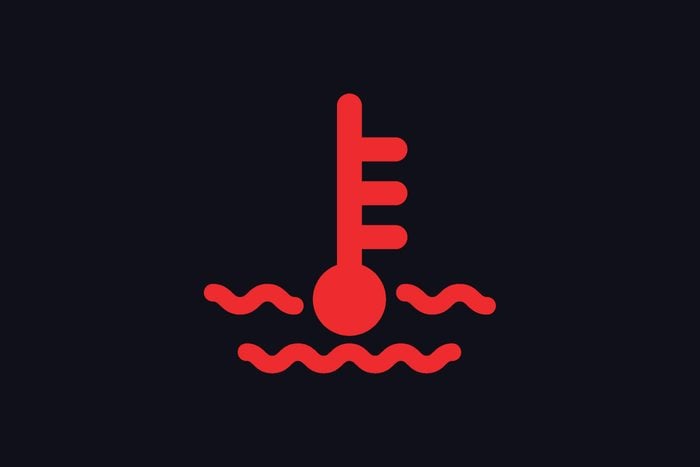
Whether you drive a Ferrari or a minivan, your car needs to be cool. Fluids ensure that it stays in a Goldilocks–style state—not too hot, not too cold—and runs smoothly. One of those key fluids? Coolant, aka antifreeze, which controls heat, prevents freezing and protects the engine from corrosion and erosion. The coolant light features a thermometer surrounded by waves, and if turns red, take it seriously. Its sensor is triggered when the coolant level falls low, and it could mean that your engine is overheating.
How long you have: Not long. Pull over or go to the nearest gas station when this light pops up. It’s possible that you will only need to change the coolant (a minor fix), but if the engine is overheating, major damage could be on the horizon. It can cost thousands of dollars to replace the engine, and ignoring the problem will only make it worse and ultimately cause your car to break down.

Brake system warning light
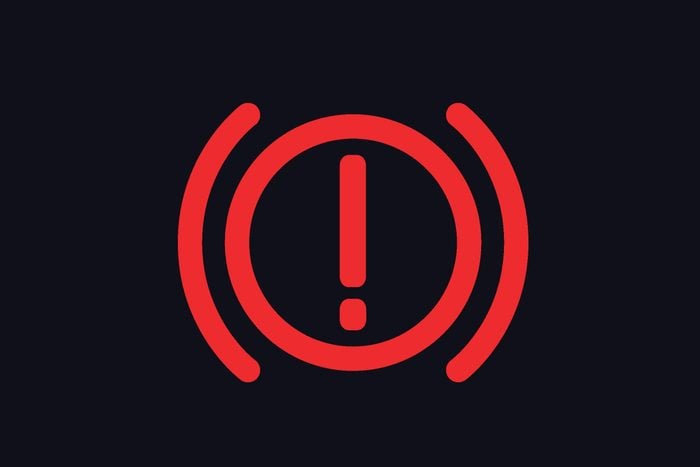
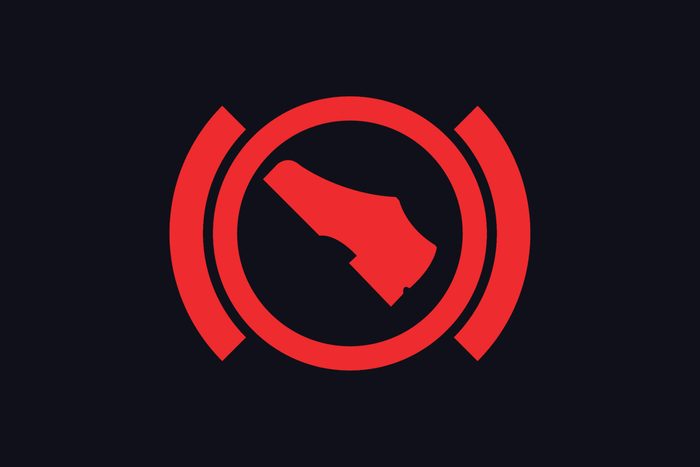
When your brakes are on the fritz, it’s clearly a critical issue, and this little light can give you advance warning of a big problem. It could signify faulty brake pads, a problem with the antilock braking (ABS) system or leaky brake fluid. On the other hand, sometimes this light is no big deal. For example, it may pop on if you forget to turn off the emergency brake.
How long you have: It depends. If you adjust the parking brake and the light disappears, you’re fine. If that’s not the case, see a mechanic soon. And, of course, if this light goes on and your brakes aren’t responding properly when you tap on them, pull over immediately and call for help—do not attempt to continue driving.

Oil pressure warning light
Nope, this isn’t Aladdin’s lamp, but once you see it, you can’t unsee it. (Sorry!) It is, however, an indication that you don’t have enough oil in your engine or that the pressure decreased so much that it can’t circulate oil. What brings it on takes a bit more sleuthing from car to car. This light could triggered by—you guessed it—the need for an oil change, or it could be something a lot more serious like a leak in the engine, a clogged filter or worn parts. The latter issues all require an immediate fix. If the engine seizes up, it may require a full rebuild, which could cost a small fortune.
How long you have: It depends on the cause. Pull over, turn off the car and, once it’s safe, check the oil level. If the oil is low, add more, and then have it checked out by a mechanic. If you notice strange noises or overheating, call for a tow truck.

Airbag warning light
Airbags are like insurance: You only truly appreciate them in a crisis situation, which hopefully never happens. And when you haven’t been in an accident, you certainly don’t expect to see this warning light lit up on your dashboard. So what’s going on?
Well, even if you’ve never noticed it, this symbol—with the image of a passenger seated alongside a circle that represents the inflated airbag—pops up whenever you turn on the car. “This can be part of an initial system check at start-up,” Bert explains. It basically shows you that the airbags are working.
However, if it stays on while you’re driving, there could be problems with one or both of the airbags. This signal could be caused by a faulty part or a problem with the seat belts.
How long you have: It’s not a dire warning that means you need to pull off the road, but you should get it checked out. After all, a faulty airbag could pose a serious problem if you’re in an accident.

Automatic emergency brake light
Most new cars have this safety feature represented on the dashboard. Symbolized by two cars in a near collision, your car’s automatic emergency brake (AEB) senses oncoming traffic and applies the brakes to avoid a collision. AEB is lifesaver if a car stops suddenly in front of you or swerves in your lane, and it works in tandem with forward collision warning to stop the vehicle in short-range, high-risk city environments.
So why is the dashboard warning light going off? When the system malfunctions, the driver will see the symbol for AEB with the word OFF underneath it, to make sure that the driver stays alert and the car is being safely driven.
How long you have: If the AEB symbol shows up with the word OFF, it’s not a critical safety issue. But you should see a mechanic so that the automatic braking systems are working as intended. This fix will become more crucial when AEB is required in all cars in 2029.

Traction control warning light
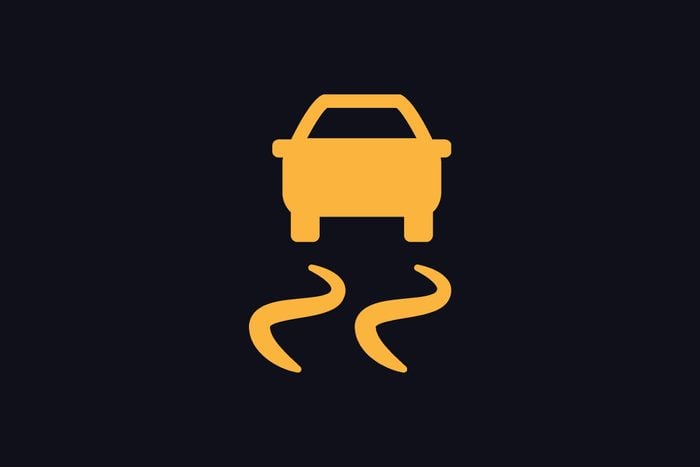
Traction control is a federally mandated safety system found on almost all new cars produced since 2012. When traction control is engaged, sensors help prevent excess wheel spin and assist with tire grip on the road. But drivers can manually override this feature—though they really shouldn’t, except in rare situations, like if their car is stuck in mud.
“The traction control light will display when the driver manually turns the feature off,” Bert says. “And in some vehicles, the traction control, or ESC (Electronic Stability Control) telltale, will flash during a loss-of-traction situation.” Basically, if you see it, it’s probably just telling you that this feature is working properly. For example, it may pop up temporarily when you slightly spin out on a slick, wet or icy road as the system tries to get your car back on track (literally).
When you actually have to worry is if you’re seeing the word OFF underneath the symbol. If you can’t reengage it, that’s a sign of a malfunction, possibly from a defective wheel-speed sensor. Another issue is if it pops up without warning when you’re driving on dry surfaces.
How long you have: Traction control is not a critical issue, but if the traction control light doesn’t appear when you turn on the car or in slippery conditions or you can’t get rid of the OFF sign, get your car checked out.

Service required warning light
The service required warning light, also sometimes called the maintenance required light, provides you with a gentle reminder to stay on top of crucial car maintenance. It pops up to ensure you take care of regularly scheduled issues, such as oil changes. “If the service required light looks like a wrench, it can indicate general maintenance, such as an oil change or other fluid change (like brake fluid or transmission fluid) is needed,” Bert says. “Some vehicles have specific intervals for fluid changes that must be performed in order for the dealership to reset the system.”
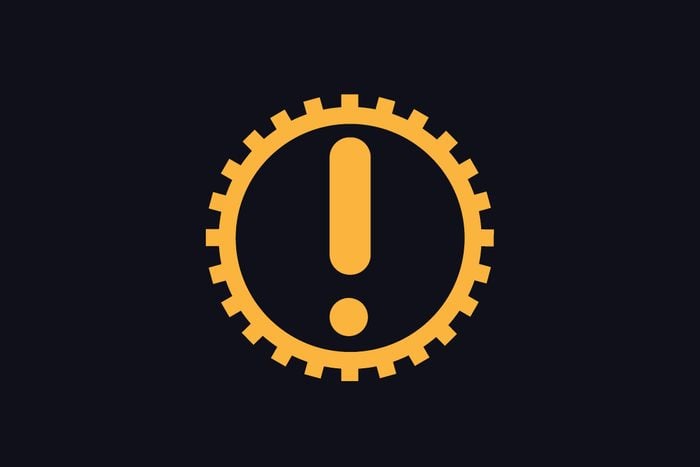
There’s no immediate danger when this light comes on, but ignoring it can cause harm to the vehicle over time. It’s also worth noting that some versions of the service required light—a cog with an exclamation mark—might look a little bit like the check engine light, so it’s good to pay attention to the difference in each light’s function. (The wrench shown above is another version.)
How long you have: The maintenance light is not critical for driving unless the car is malfunctioning. You should be able to schedule an appointment at your convenience. But don’t put service off indefinitely: Driving for an extended time without an oil change, for example, takes a toll on the engine.

Lane keep assist warning light
What does it mean when the lane keep assist is off? Well, first let’s talk about lane keep assist. This feature ensures that your car doesn’t drift into a nearby lane or that you don’t miss another car in your blind spot when changing lanes. The system uses cameras and sensors, and it takes control of your wheel to avoid a collision. In some brands, this safety feature is called lane centering.
Drivers can override it, causing you to see an off button. Or the car may automatically turn off this functionality when you’re on bumpy streets or experiencing other poor driving conditions.
How long you have: If you’re not the one turning it off and the system isn’t responsive, have a service department inspect your car. And just a general word of warning: If it’s automatically or manually turned off, pay even more careful attention to the road to avoid a potential fender bender.

Empty gas tank warning light
Running out of gas is a little bit like a game of chicken: Just how far are you willing to push it on empty before your car sputters to a halt? The trouble is how far you can go on an empty tank of gas varies from car to car and according to driving conditions, and the light flips on before the tank is actually empty.
How do carmakers determine when to trigger the empty gas tank light? “There are two methods,” Bert says. “First is volume of fuel in the tank. When the volume reaches around 10% remaining, the light will display. Second is the range to empty. Different car brands can set the remaining miles’ estimate threshold—for example, 30 miles to empty—to display the [warning]. Since the range to empty is an estimate based on driving behavior, it is best to fill up very soon after that light is displayed.”
If the car is burning fuel at a higher rate and earning lower fuel economy—like if you’re using the AC—it may run out of gas even sooner. Beyond that, it’s not good for your car to run low on gas. It can clog up components, damage parts like your air filter and fuel pump, and cause the engine to misfire.
How long you have: The sooner you fuel up, the better for your peace of mind and for your car too. If you’re not close to a gas station, don’t panic—the light will generally give you at least a 20-mile buffer. But to be on the safe side, fill up when the fuel level dips below a quarter tank.

Battery warning light
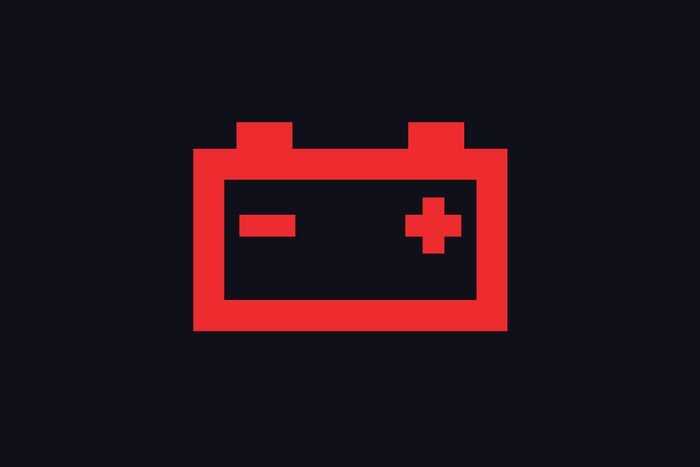
Seeing red is never a good sign. The red battery warning light is a sign of trouble with your car’s charging system. It could mean that your alternator or wiring is faulty. It also means that your car is on its way to dying. This signal will illuminate when you turn on the car, which is normal, but if it stays on, that’s how you’ll know there might be a more serious problem. That said, a minor issue—such as a loose clamp or a bit of corrosion—might cause the battery light to illuminate, but you need to check to see what’s going on.
How long you have: Before you bust out the jumper cables, see if the light lingers. If so, be mindful of where and how you’re driving, and consider seeking help. If you hear strange whirring noises and see a change in the way the car drives, pull over immediately. You don’t want your battery to die suddenly while you’re on the road, of course, since this could be incredibly dangerous.
FYI, even without signs of a major problem, a deeper problem could exist. So don’t pretend that little light isn’t screaming at you; get thee to a repair shop and have that battery tested.

Transmission temperature warning light
The transmission plays a key role in your car—transferring power from the engine to the wheels. On most modern cars, the transmission is automatic instead of manual. The transmission light indicates that the transmission’s temperature is running hot, potentially caused by overheating, low transmission fluid, gearbox issues or faulty wires. Of course, the transmission is an essential part of your car (can’t drive without it!), and it’s expensive to both repair and replace. Pray that you just need to replenish the fluids it needs!
How long you have: This light is bad news if you’ve got to be somewhere to be in a hurry. If you keep driving with the transmission light on and there’s a serious issue, it could cause a whole lot of damage to the transmission. And, of course, your car will ultimately just stop working.
If you see this light, pull over and call your mechanic or AAA. If you’re not in a safe place to pull over, drive slowly and smoothly until you can stop the car.

Antilock braking system warning light
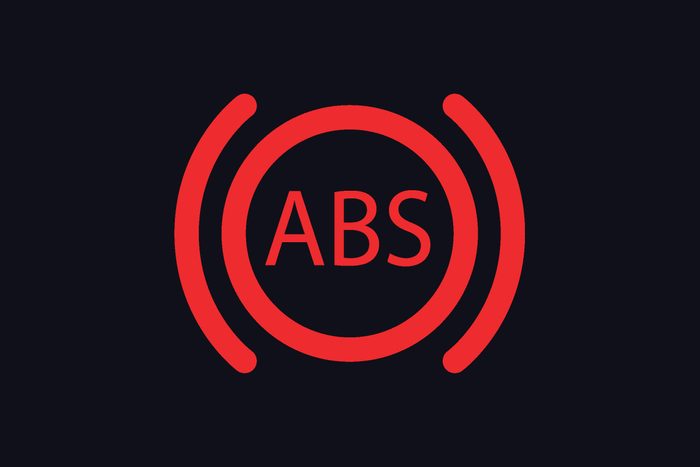
Antilock brakes are standard in all cars. Designed to prevent skidding, this system simply stops your wheels from locking up when you hit the brakes. If you see the antilock braking system light—a circle with the letters ABS encased in parentheses—it’s trying to tell you that something’s amiss. It could be a problem with the hydraulic pump, low brake fluid or flawed sensors. You’re likely to see this one in inclement weather conditions, similar to traction control.
How long you have: Your standard brakes will continue to work if this light appears, so you will still have some braking ability and won’t need to pull over immediately. That said, you’ll definitely want to take extra care on the road if this light is flashing, especially in poor driving conditions.

Charging cord warning light
If you have an electric car or a plug-in hybrid, this dashboard warning light applies to you. “Most EVs have an indication of when the vehicle is charging, both interior and exterior lights,” Bert says. “Applications differ by manufacturer, but many carmakers have external lights to indicate when a vehicle is charging, even when the vehicle is off.”
There’s a dual alert because you’ll want to ensure that it’s actually charging when you plug it in and, later on, that you don’t accidentally drive away without disconnecting the cord from the charging port. When the green light is illuminated, it means your car is charging. Most EVs will also show a percentage of how much the battery has charged and has left to go. Charging times vary greatly according to wattage, speed of charger, and weather conditions.
How long you have: Just like a gas car, you don’t want to wait too long. If you let it go all the way to zero, you can damage the battery and shorten its lifespan. And, of course, you don’t want to yank the charger out by driving away without disconnecting. Thankfully, though, most cars will prevent you from driving away while the car is still being charged.
About the expert
|
Why trust us
Reader’s Digest has published hundreds of travel stories that help readers explore the world safely, easily and affordably. We regularly cover topics such as the best places to visit (and the best times to visit them), tips and tricks to zoom through airport security, flight-attendant secrets, hotel-room hacks and more. We’re committed to producing high-quality content by writers with expertise and experience in their field in consultation with relevant, qualified experts. We rely on reputable primary sources, including government and professional organizations and academic institutions as well as our writers’ personal experiences where appropriate. For this piece on dashboard warning lights, Tamara Warren tapped her experience as the founder of the automotive platform Le Car and as a prolific journalist who has written for more than 160 publications, including Car and Driver, Motor Trend and AutoWeek. We verify all facts and data, back them with credible sourcing, and revisit them over time to ensure they remain accurate and up to date. Read more about our team, our contributors and our editorial policies.
Source:
- Matt Bert, lead cluster designer at General Motors; interviewed, November 2025