


10 Noises Your Cat Makes—and What They All Mean

Updated: Nov. 28, 2022





When we think about noises that cats make, three different sounds generally come to mind: meows, purrs, and hisses. However, felines actually have a robust vocabulary of sounds they can make in order to communicate with each other and their humans—and each means something different.
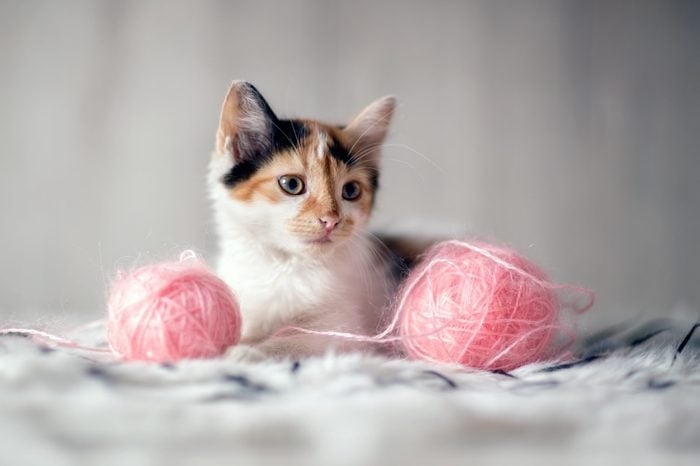
Short, high pitched meows
Meowing comes in many variations, and each one means something slightly different. “Adult cats developed meowing specifically to communicate with humans. The only feline-to-feline meows are done by kittens to get fed by their mothers,” notes Susan Rubin, a pet expert and trainer. “A short, high-pitched meow is your cat’s way of saying hello to you.” She adds that several of these meows strung together could mean “I’m so happy to see you!” or it could be a “Hey, let’s play!” Loving pet parents will want to learn these 17 other things your cat would love you to know.
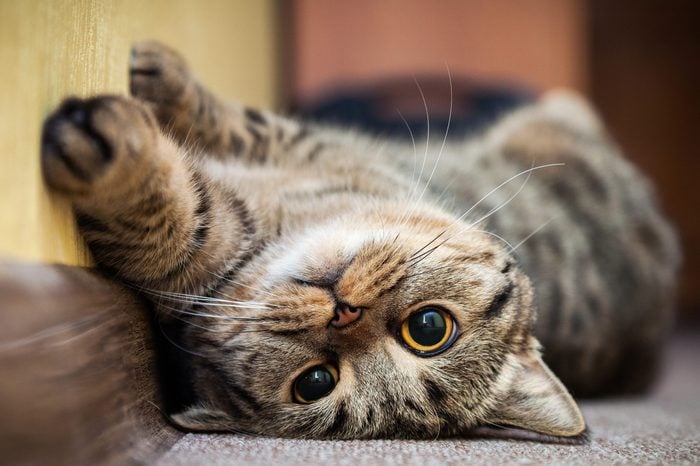
Drawn out meow
A meow that sounds pleading or drawn-out—somewhere between a meow and a cry—is another way your cat tries to get your attention, says Rubin. This time it’s a little more serious, and could mean anything from “Please feed me!” or “Please let me out!” or even “Please pet me!” Keep your cat happy with the best cat diet.
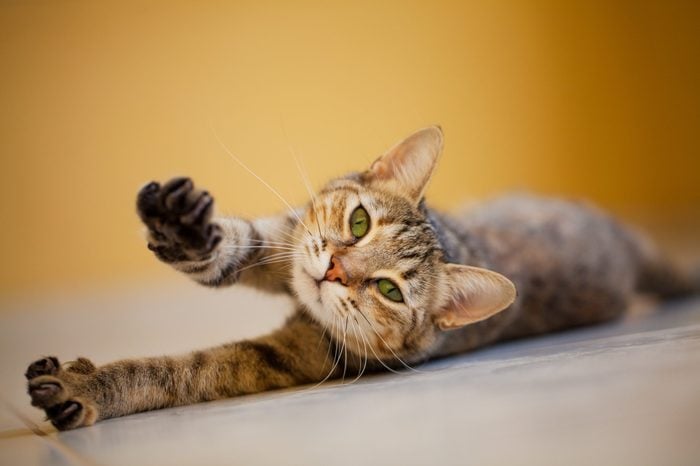
Crying meow
A crying meow is longer than the pleading meow, and it tends to sound more urgent and perhaps even a little agonized. “Kittens will emit a cry when they are in distress with the goal of eliciting a search response from the maternal figure to look for them. If they have wandered from the nest, she will retrieve them and bring them back,” says Wailani Sung, a pet behaviorist with Chewy.com. Be aware of the subtle signs your cat could actually be depressed.
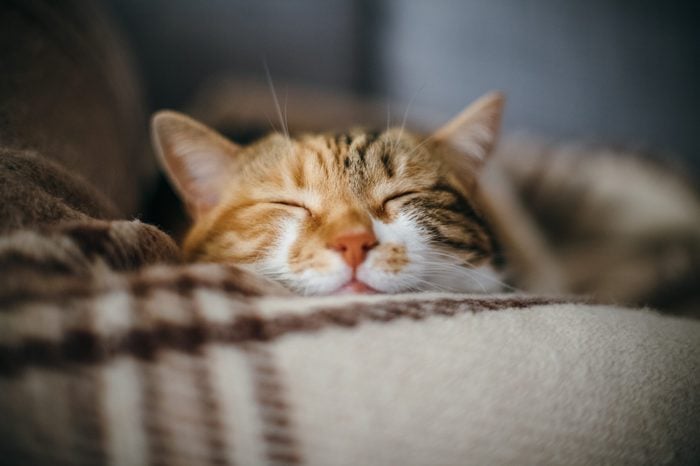
Quick, aggressive meow
This type of meow isn’t quite a yowl (which we’ll get to), but it sounds decidedly urgent and even a little angry. Rubin says, “This harsh-sounding meow is our cat scolding us for something we did, or maybe something we did not do.” These affectionate cat breeds are far more likely to want attention.
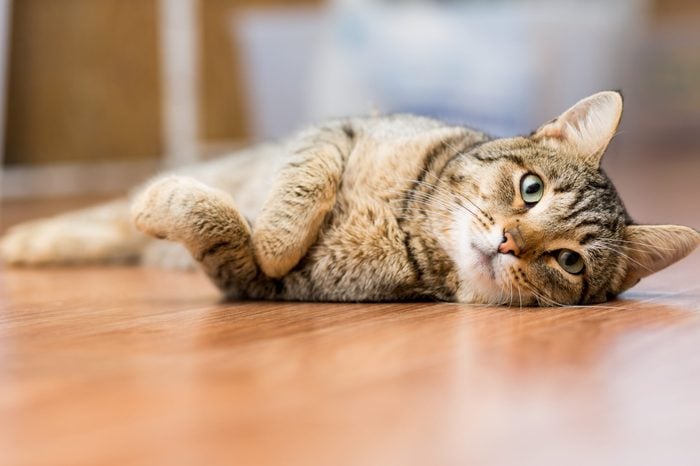
Yowling
“Some extra-chatty cats yowl as part of their everyday communication, but if your cat is yowling without precedent then [it could mean] they’re in distress,” notes Gary Richter, DVM, a veterinary health expert with Rover. “A low, drawn-out yowl can be a complaint. In older cats, [excessive] yowling is often a sign of cognitive disorder or dementia.” If your cat is non-spayed or non-neutered cats, loud, long yowls can be part of mating behavior, he notes. If the vocalizing goes on for 24 to 36 hours, this could be one of the signs your “healthy” cat is actually sick.
Hissing
“This noise sounds much like the word does—like air slowly escaping through a hole,” says Rubin. “A cat makes this noise as a warning that it is very angry or fearful and is going to strikeout. The noise is made when the cat feels that its life is threatened.” It’s intended to scare away predators as a pre-defense to actual fighting. Sometimes spit inadvertently comes out at the same time as the hiss. Next, find the answer to a question every cat-parent has had once in their life – do cats know their names?
Growling or snarling
Like hissing, when your cat makes a growling or snarling noise it’s their way of saying, “Hey buddy, back off or else!” Dr. Sung says, “These are aggressive vocalizations. If the other party does not retreat, then a physical confrontation will occur.” Growling is one of the 15 signs your cat is mad at you.
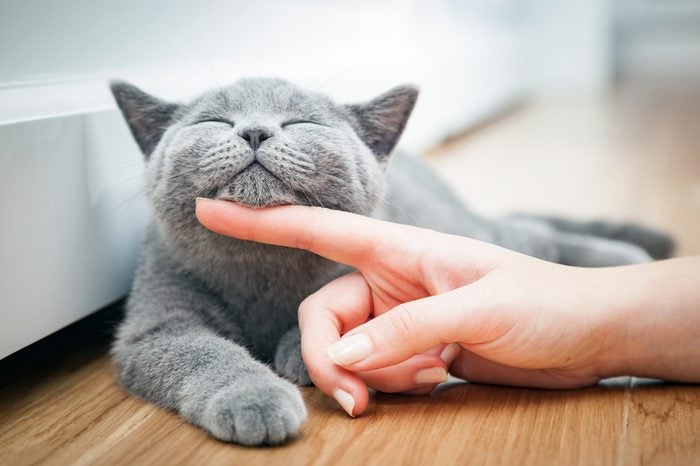
Purring
Purring is a soft, low rumbling sound that almost all cats make. Depending on the cat, it may be a very quiet murmur or so loud you can hear it across the room. You can also often feel a vibration when they purr. “Purrs are produced by contractions of muscles in the throat, as well as the diaphragm in the chest,” explains Mikel Delgado, a cat behavior expert with Rover. “Purring most often happens when cats are content, such as when they are enjoying being petted, about to be fed, or when a mother cat is nursing her kittens.”
Dr. Sung adds that in some cases, cats will purr when they are afraid or in pain, or even if they are feeling sleepy or drowsy. It’s believed that they do this to comfort and calm themselves, though we still have a lot to learn about why cats purr.
Trilling
“Trilling lands somewhere between a purr and a meow,” says Dr. Richter. “It usually means that your cat is extra pleased or excited.” It could be that they’re really excited to see you when you get home, excited to snuggle on the couch, or thrilled about the food you’re preparing for them.
Chatter or clicking
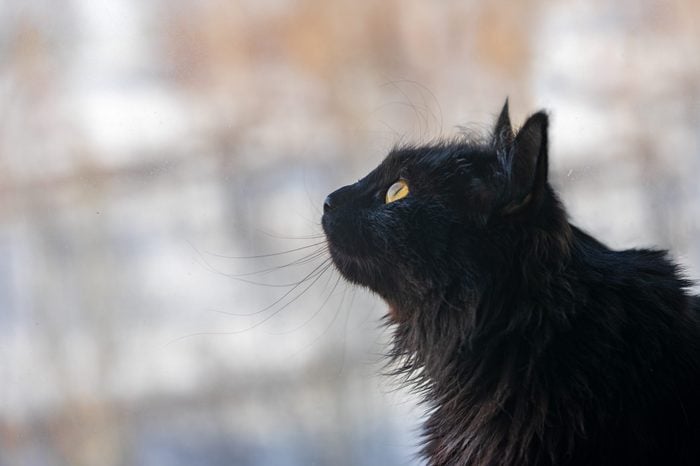
Cat “chatter” is a quiet, fast-paced “ack-ack-ack” sound, or a clicking sound, that cats make when they see birds or other animals outside, says Delgado. “We don’t fully understand this behavior, but because it seems to almost exclusively happen when cats see prey that they can’t access—like through a window—we think it might be frustration or excitement,” she says. “Some scientists have observed that some predators make sounds mimicking their prey as a way to sneak up on them, so it may be the cat’s attempt to ‘tweet’ like a bird.” Next, learn the mistakes cat owners should never make.
Originally Published: September 23, 2019

