


13 Things You Never Knew About Penguins (and How to Help Them)
Updated: Feb. 08, 2023





It's hard not to fall in love with waddling, tuxedo-wearing penguins, which is why it feels extra depressing that many species of these black-and-white beauties are struggling to survive. We may not be able to reverse all of the damage already done to their natural habitats, but there's plenty we can all do now to help them have a brighter future.
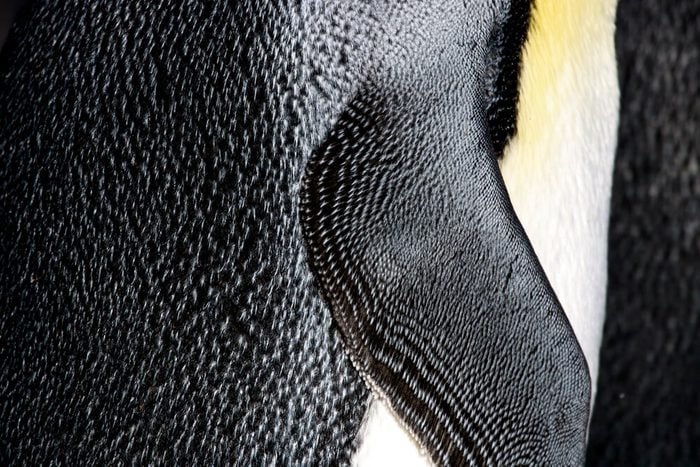
They have waterproof feathers
Penguins’ feathers are coated in a waterproof oil produced by an adaptive gland called the preen gland, shares Corbin Maxey, an animal expert and biologist. Penguin chicks, however, do not have waterproof feathers, which is why they stay out of the water. Penguins also have a higher feather density than most birds, more than 100 feathers per square inch, and at the base of each feather is a small muscle that holds the feather tightly to the body to trap warm air, explains Maxey.
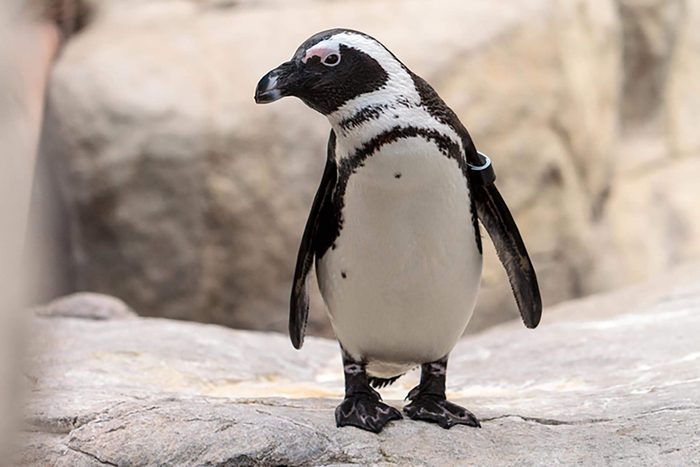
Their “tuxedo” isn’t just a fashion statement
Counter-shading, or camouflage, helps penguins hide from predators or prey in the water, says Maxey. When viewed from below, their white bellies blend in with the light near the surface of the sea. When viewed from above, their black backs are hard to see in deep, dark water. Don’t miss these 17 photos of adorable baby animals will brighten your day.
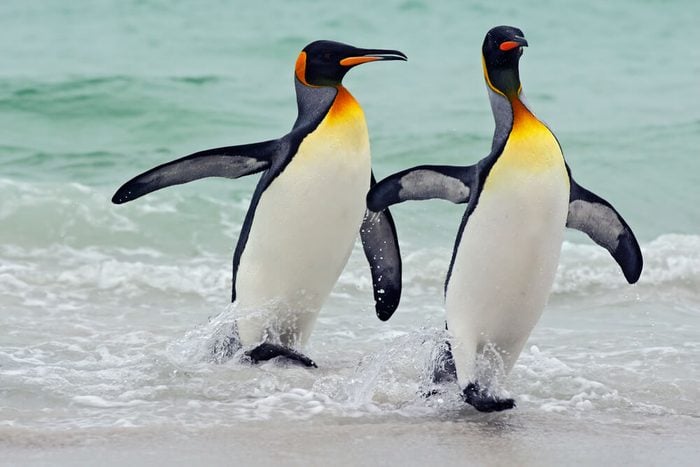
But they aren’t just black and white
According to Antonio Fernandez, a senior aviculturist at SeaWorld Orlando who has been working with penguins for 18 years, more than half of the species have colored feathers either on their head or on their bodies. Rockhopper and Macaroni penguins, for example, have yellow or orange feather crests that look like wild tufts of hair, while Emperor and King penguins are marked with yellow and orange patches on their heads, necks, and chests. Here are some hidden secrets about penguins.
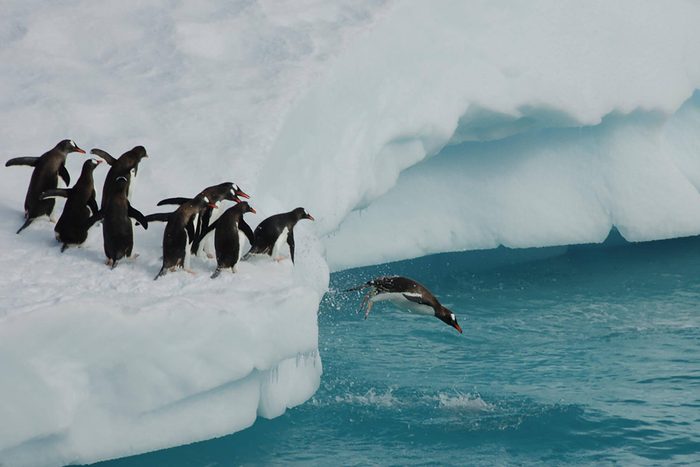
They’re the Michael Phelps of the animal world
Penguins have the perfect body for swimming. Rather than wings for flight, penguins have paddle-like flippers with short, scale-like feathers. The SeaWorld website describes penguins’ bones as “flattened and broadened, with the joint of the elbow and wrist almost fused,” creating a tapered, flat flipper for swimming. And they have solid bones, rather than air-filled ones of flighted birds. These dense bones counteract buoyancy to help them dive deeply underwater, says Fernandez. “They also have a layer of fat around their body which allows them to stay at the surface effortlessly,” Fernandez explains. Penguin species found closer to the Antarctic also tend to be more insulated with blubber than those found closer to the equator.
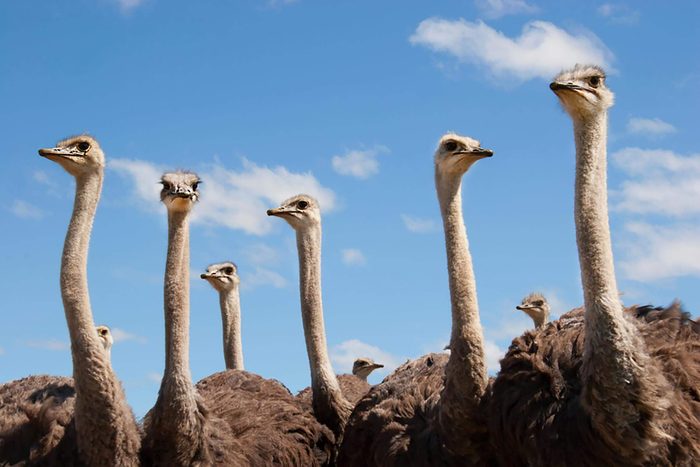
They aren’t the only type of bird that can’t fly
They may not fly, but penguins are still birds. “For an animal to be a bird it needs to meet three requirements: have feathers, lay eggs for reproduction, and be warm-blooded,” says Fernandez. Flight is not a requirement; to be a bird, in fact, there are several birds species known as ratites that are also unable to fly, including the ostrich, emu, and kiwi. Here are more interesting animal distinctions that will surprise you.
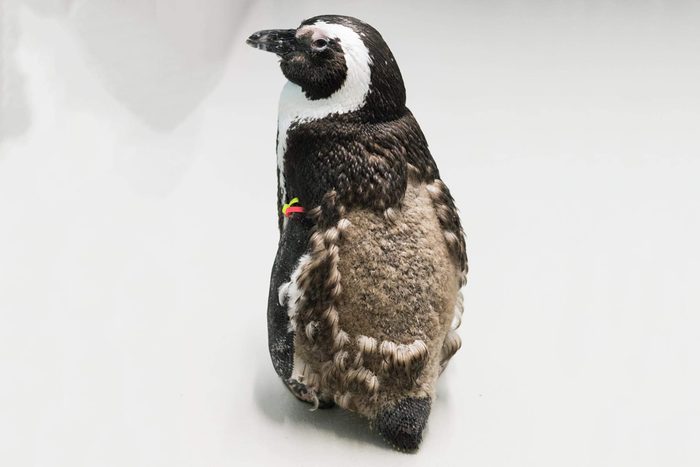
Once a year they look like exploding pillows
Penguins experience a “catastrophic molt” annually where they shed all of their feathers as new ones push through underneath. Molting can take 14 to 21 days, during which time penguins not only have bad hair days, they aren’t waterproof. Since they can’t swim, they can’t catch fish. “They compensate by eating immense amounts of food prior to molting and using the extra weight as an energy source during this period,” explains Fernandez. Check out these 60 adorable animal photos that will make you say “awww!”
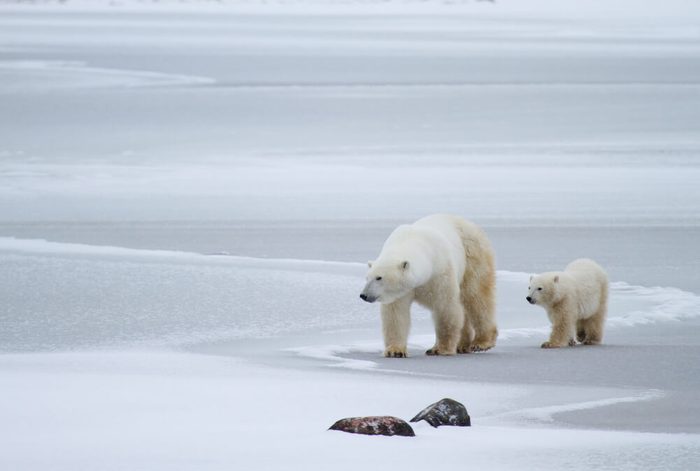
They don’t hang out with polar bears
Penguins and polar bears are often depicted as neighbors in cartoons, but the two species only ever see each other in zoos. That’s because polar bears live in the northern hemisphere, and penguins live on or below the equator, says Eric Fox, penguin trainer at Mystic Aquarium in Mystic, Connecticut.
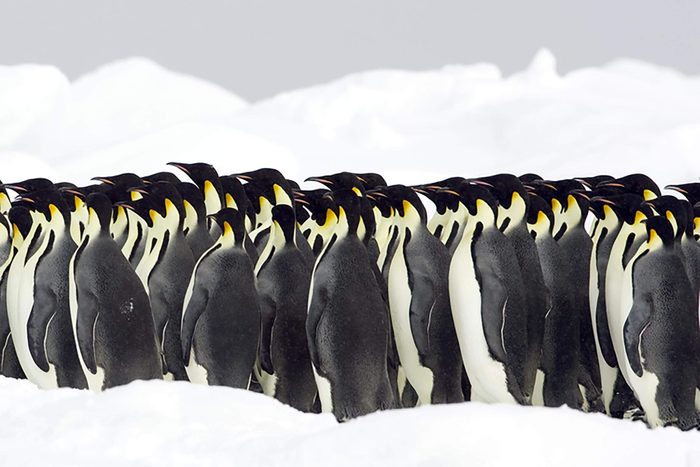
Not all penguins live in Antarctica
Of the 18 different species of penguins, only the Emperor and the Adelie prefer the snow and ice near the South Pole. According to Fox, the majority live in temperate-to-tropical environments like Australia, New Zealand, South America, South Africa, and Namibia. Discovery Kids reports that the Galapagos Islands, located on the equator, is the warmest place that penguins live.
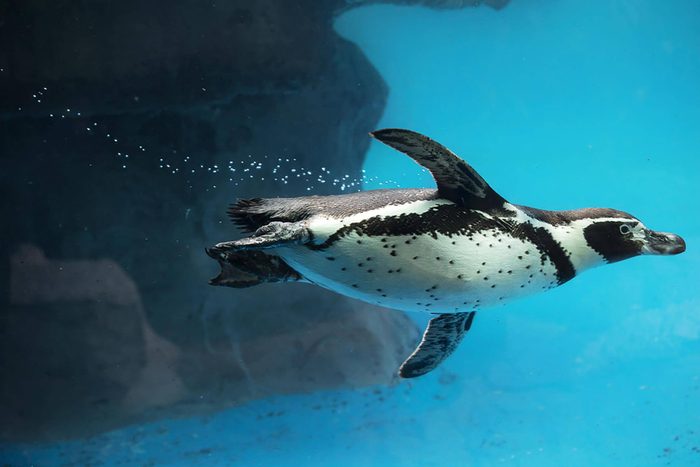
They have built-in swim goggles
Because penguins spend 75 percent of their lives in the water, their eyes were designed to see better underwater than on land. “Their nictitating membrane, or third eyelid, is a clear protective barrier that is held shut when swimming to act as a built-in pair of swim goggles,” explains Fox. This “third eyelid” is just one of the adaptations that have allowed penguins to survive their many predators, including sharks, whales, and seals. Don’t miss these facts and photos that prove penguins are the world’s most adorable animals.
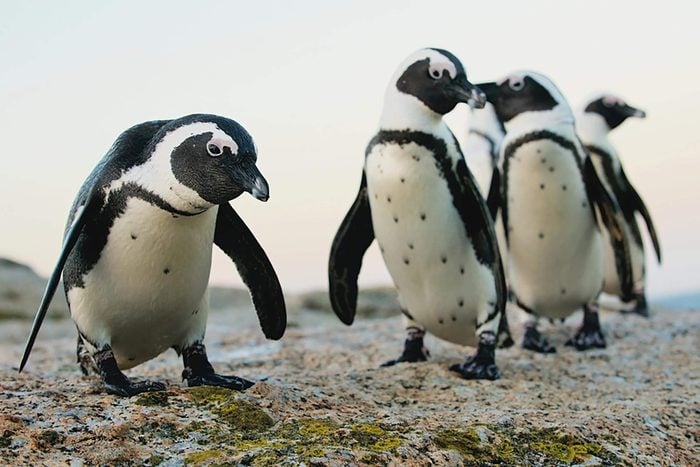
You need a DNA test to tell males and females apart
Most penguin species are not sexually dimorphic, meaning it’s nearly impossible to tell the difference between males and females by sight. “At Mystic Aquarium, we use DNA testing to prepare for the gender reveal parties of our African penguin chicks,” says Fox. However, penguins do show individual characteristics. African penguins, for example, have spot patterns on their chests that are as unique to that species as our fingerprints are to humans. You’ll want to check out these “facts” about animals you probably have all wrong.
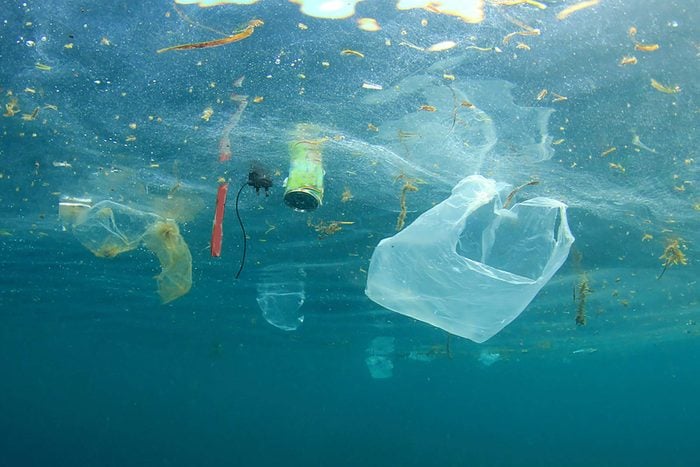
Sadly, penguins are in trouble
As much as humans adore penguins, we’re also the biggest threat to their survival. “Anthropogenic activity has driven many species of penguins to the brink of extinction,” says Fox. “Oil spills, trash pollution, over-fishing, and climate change are just some of the factors that contribute to the decline of penguin species across the globe.” The number of engaged African penguins, he explains, has declined 70 percent in just one decade.
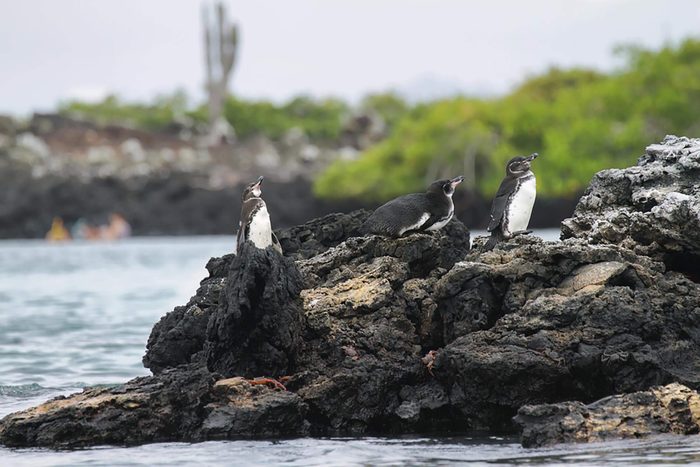
Climate change is affecting their food supply
According to Shaye Wolf, PhD, climate science director at the Center for Biological Diversity, warming oceans are causing a decline in food supply for penguins in Antarctica all the way to the equator. For sub-Antarctic penguins, for example, “since krill [a small crustacean] graze on algae that grow on the bottom of the sea ice, the loss of ice leads to the loss of krill,” she wrote in an article on ActionBioscienge.org. Penguins in the Galapagos Islands and the desert coasts of Africa and South America suffer from periodic food shortages “when El Niño events usher in warm water and prevent cold water from reaching the surface.” Dr. Wolf warns that leading climate scientists believe that global climate change will bring even stronger El Niño events in the future. Don’t miss these global warming effects that might surprise you.
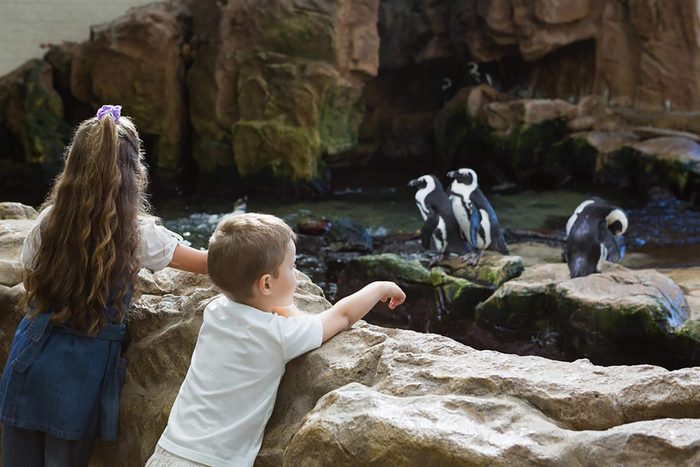
We can all help the penguins
“Knowing that the impacts on penguins are human-related, it is our responsibility to do something to fix this,” says Fox, who offers four easy lifestyle changes. “These may all sound like simple solutions, but if seven billion people made small changes, it would make a significant difference on our planet and the animals that live there.”
- Reduce the amount of trash that ends up in our oceans. Try to avoid single-use plastics like disposable straws, bags, and water bottles.
- Reduce greenhouse gas emissions by limiting our use of oil and natural gas by carpooling, taking shorter showers, and turning off lights when leaving a room.
- Make more responsible seafood choices. Fox suggests downloading the Monterey Bay’s Seafood Watch App, which recommends the most sustainable types of seafood to consume.
- Support a local zoo or aquarium. Many, like Mystic Aquarium where Fox works, partner with facilities across the globe to accomplish a variety of conservation projects. “Just this past year, we were able to fundraise to create thousands of artificial nesting sites for penguins to successfully rear their chicks on the beaches of South Africa.”
Next, don’t miss these 15 penguin pictures that will absolutely melt your heart.
