


Why Is Friday the 13th Considered Unlucky?

Updated: Oct. 12, 2023





These are the reasons behind the superstition about this calendar date—do you believe them?
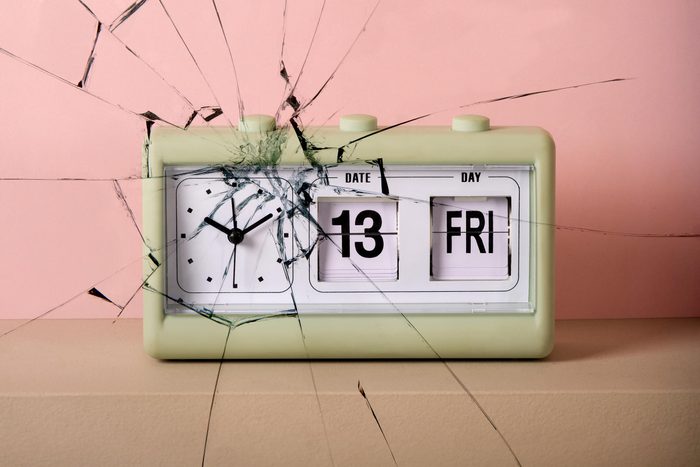
Why is Friday the 13th considered unlucky, anyway?
Humans have long used superstitions as a way of explaining everyday phenomena or to help bring them luck or avoid misfortune. And while we’ve grown out of many superstitions as a society, some—like Friday the 13th being unlucky—still remain. But the idea that there’s an entire day when bad things are more prone to happen didn’t come out of nowhere. So, why is Friday the 13th considered unlucky in the first place? Here’s the bizarre history, as well as some of the science behind it.

What research says about Friday the 13th
Believe it or not, there has been research into whether there is any truth behind common superstitions, including Friday the 13th. In a 2001 study, Brian Lucey, a statistician and business professor at Trinity College Dublin in Ireland, did an analysis of previous research that supposedly found that stock market returns on Friday the 13ths were lower than Fridays on any other date. As it turns out, he noticed several flaws in the methodologies—for instance, focusing on a few markets or single stock exchange—and found that when you look at the data as a whole, the returns on Friday the 13th were actually slightly higher than other Fridays. Here’s more on the science behind the fear of Friday the 13th.

The date may change our behavior
Though there’s no science suggesting that Friday the 13th is actually unlucky, Kenneth Drinkwater, a parapsychologist at Manchester Metropolitan University in England, told Live Science that people still alter their behavior when that date rolls around. For instance, he explains that people may change the way they drive on Friday the 13th—being extra cautious out of fear that something bad will happen. But when you look at the occurrence of traffic accidents based on the date, they aren’t more frequent on Friday the 13th.

Friday the 13th is oddly comforting (for some)
As bizarre as it sounds, going into Friday the 13th under the impression that it’s bad luck can actually be comforting. “It helps people to reduce anxiety,” Neil Dagnall, a parapsychologist at Manchester Metropolitan University, told Live Science. “Superstition generally serves as a mechanism to provide reassurance.”
On the other side of that, if things do go wrong on Friday the 13th, it’s reassuring for people to think that they happened because of the date. It helps us feel more in control of situations. “Psychologically, superstitions arise from the desire to influence external events, decrease anxiety, and reduce uncertainty,” Drinkwater told Live Science.
Friday the 13th has roots in ancient mythology
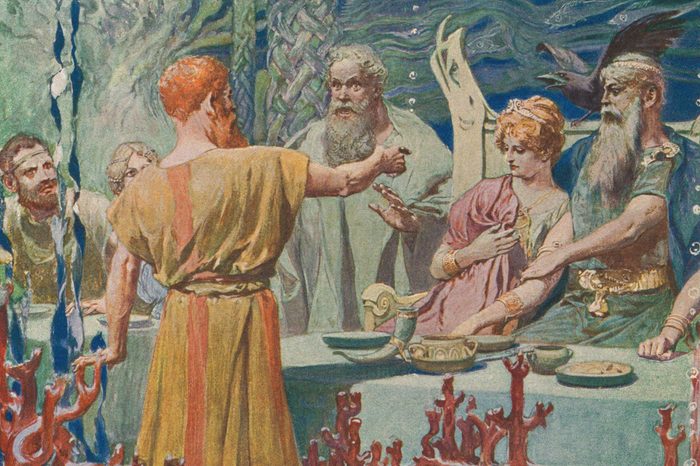
Though the precise origins of Friday the 13th as a day of bad luck are unknown, we do know that we can trace them back to ancient Norse mythology. In his book Holiday Folklore, Phobias and Fun, Donald Dossey describes a Norse myth that involves a dinner party for 12 gods. The 13th god—the trickster god Loki—showed up uninvited, and to make matters worse, shot Balder, the god of joy and happiness. After that, people began growing suspicious of things related to the number 13. Find out the history behind other common superstitions.
Another possible Friday the 13th explanation: There were 13 people at the Last Supper
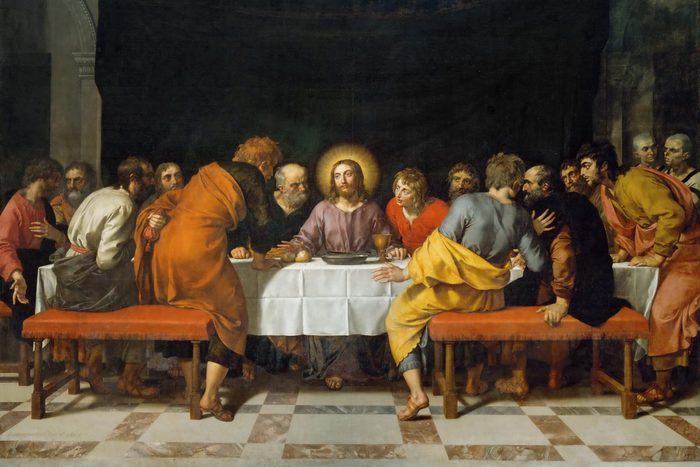
There’s a second story about a dinner involving 13 people that is also partially responsible for the Friday the 13th superstition. This was, of course, the Last Supper, in which 13 people ate together on the day before the Friday that Jesus was crucified. What’s more, the attendees were Jesus and his 12 apostles—including Judas, who ended up betraying Jesus. Having 13 guests at the Last Supper, then Jesus being crucified on a Friday, has led some to believe that Friday the 13th is bad luck.
“When those two events come together, you are reenacting at least a portion of that terrible event,” Phil Stevens Jr., PhD, an associate professor of anthropology at the University at Buffalo, told TIME. “You are reestablishing two things that were connected to that terrible event.” Find out hidden messages in these famous paintings—including DaVinci’s The Last Supper.
13 is considered an unlucky number
If you have “triskaidekaphobia,” that means you have a fear of the number 13—and you’re not alone. In addition to having 13 guests at two unlucky dinner gatherings, there are other reasons the number 13 is thought to be a harbinger of bad luck. Part of that has to do with the fact that in some cultures, 12 is considered the “perfect” number: There are 12 months in a year, two 12-hour half days, 12 tribes of Israel, 12 days of Christmas, 12 zodiac signs, 12 labors of Hercules, 12 gods of Olympus and so on.
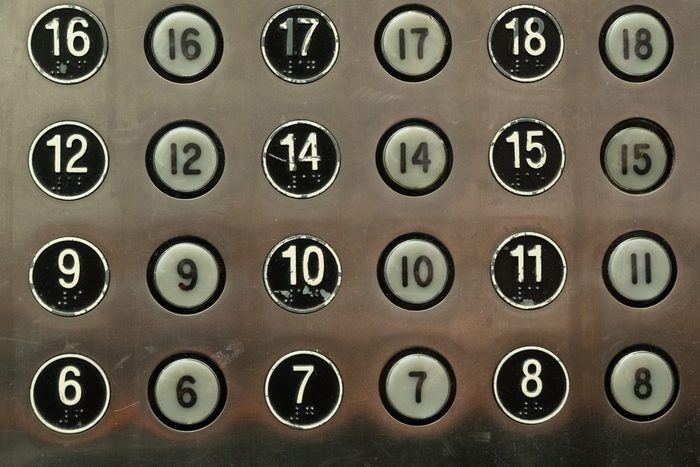
Basically, 12 was a tough act to follow—to the point where people then thought that 13 was unlucky. To this day, there are still high-rise buildings where there is no 13th floor (or, more accurately, the elevator buttons go from 12 to 14).

Thomas William Lawson’s book Friday, the Thirteenth
In 1907, a writer named Thomas William Lawson published a book called Friday, the Thirteenth, in which an unethical stockbroker takes advantage of people’s belief in the superstition on that day to win big on the stock market. This became known as “Wall Street hoodoo-day.” Though this was a work of fiction, it planted in people’s minds the idea of Friday the 13th being an unlucky day.
The Thirteen Club: Fighting bad luck
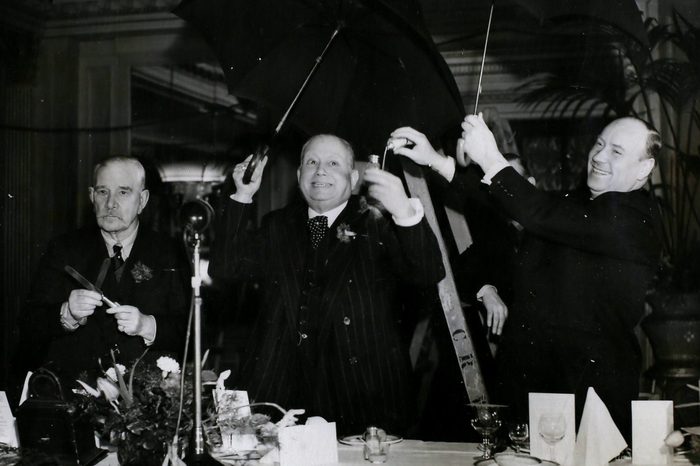
In the late 1800s, Capt. William Fowler, a well-known soldier, was fed up with all the mythology around Friday the 13th and decided to do something about it. Fowler created the Thirteen Club, a society of people who gathered together and specifically did activities meant to cause bad luck. For example, for their first gathering in 1881, they walked under ladders to a 13-seat table covered in spilled salt (also considered to be unlucky). Chester A. Arthur, Grover Cleveland, Benjamin Harrison and Theodore Roosevelt were all members of the Thirteen Club.
Friday the 13th in mainstream media
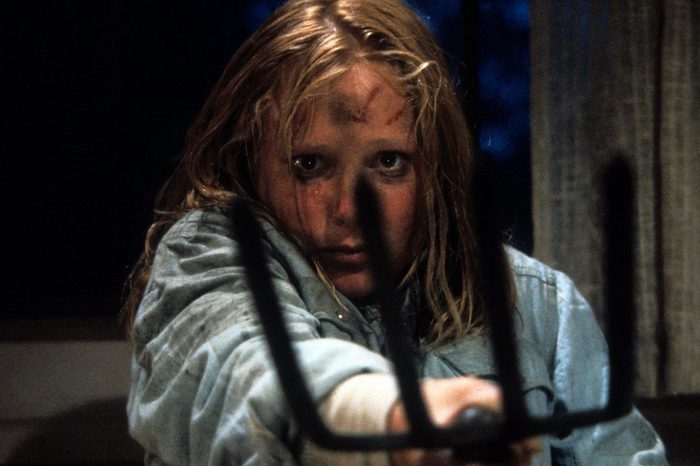
While Lawson’s book was the original Friday the 13th pop-culture moment, others followed. The most famous is likely the Friday the 13th horror movie franchise, which began in 1980 and eventually included everything from comic books to novellas to video games and other related merchandise. Today, there are a total of 12 Friday the 13th movies.

Bad things have happened on Friday the 13th
Some people point to all the negative occurrences on various Fridays the 13th throughout history as proof that the day is unlucky. Examples include hundreds of Knights Templar being arrested in 1307, the bombing of Buckingham Palace in 1940, the murder of Kitty Genovese in Queens, New York, in 1964, the death of rapper Tupac Shakur in 1996, and the wreck of the Costa Concordia cruise ship off the coast of Italy in 2012. Yes, those are all unfortunate incidents, but bad things happen every single day of the year, so this may not be the strongest argument. In fact, there are days that are historically unluckier than Friday the 13th.
Sources:
- The Journal of Finance: “Friday the Thirteenth: ‘Part VII’—A Note”
- Brian Lucey, 2001: “Friday the 13th: international evidence,” Applied Economics Letters, Taylor & Francis Journals, vol. 8(9), pages 577-579.
- Live Science: “The Science Behind Your (Irrational) Fear of Friday the 13th”
- Live Science: “Origins of Friday the 13th: How the Day Got So Spooky”
- TIME: “Here’s Why Friday the 13th Is Considered Unlucky”
- History.com: “Friday the 13th”
Originally Published: February 27, 2020

