


7 Simple Sentences That Drive English Speakers Crazy
Updated: Jul. 27, 2021





These "garden path sentences" will make you rip your hair out.

Think you have a good grasp of English?
Good. Let’s play a little game, then.
Below are seven short sentences. Each one of them is grammatically correct. Can you figure out why, and what they’re trying to say? Take a look, then check the answers below.
1. The old man the boat.
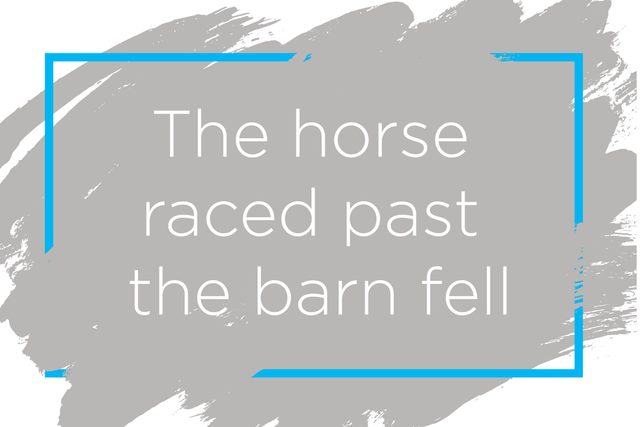
2. The horse raced past the barn fell.
3. The complex houses married and single soldiers and their families.
4. The prime number few.
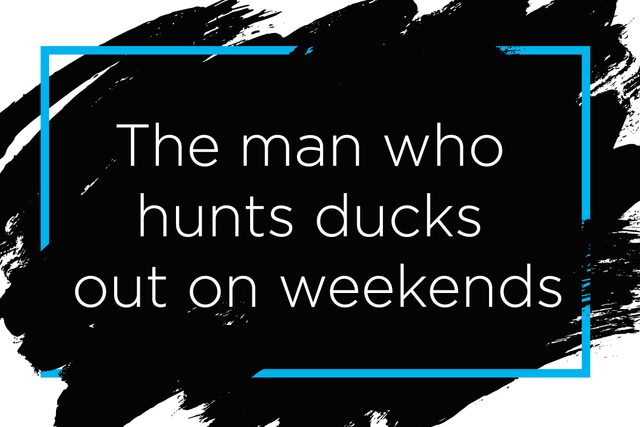
5. The man who hunts ducks out on weekends.
6. Until the police arrest the drug dealers control the street.
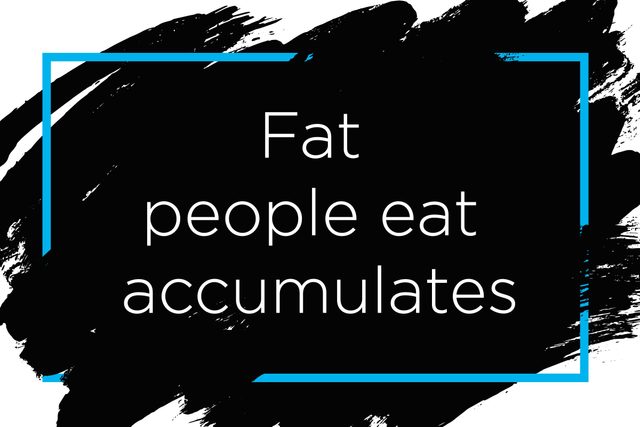
7. Fat people eat accumulates.
Linguists call these “garden path sentences.” They take you by the hand, lead you down a winding path, and leave you tricked and confused when you reach a dead end. Despite this, they are all perfectly grammatical according to the rules of English. Let’s take a look at why. These are the things you’ve probably been saying wrong the whole time.

1. “The old man the boat.”
Besides sounding like a rejected Ernest Hemingway title, this deceptive sentence is indeed grammatically correct thanks to some well-placed homonyms—multiple words that share the same spellings but have different meanings. Homonym #1 here is “old,” in this case being used as a noun meaning “old people” (like how you might say, “youth is wasted on the young”), not as an adjective modifying “man.”
Homonym #2, as it happens, is “man,” used here as a verb, meaning “to serve in the force of.” With that in mind, here’s what the sentence is actually saying: “The old people serve on the boat.” May they take this sentence and sail far, far away. (Speaking of homonyms, can you guess the three-letter word that has 645 meanings?)
2. “The horse raced past the barn fell.”
Everything is going hunky-dory until that “fell” at the end, huh? At first glance, you’d be right to think that “raced” is the main verb of this sentence. But it’s not. The simplest form of this sentence is actually, “The horse fell”; confusingly, “raced past the barn” is being used as a sort of adjective phrase to tell us which horse we’re talking about— was it the horse tethered behind the barn who fell, or the horse raced past the barn?
Of course, this sentence would make way more sense if it was written “The horse that was raced past the barn fell”, but the quirks of English allow us to remove certain conjunctions like “that” and still maintain meaning, the way you might say “the person I love” instead of “the person that I love.” Long story short, the horse fell (hopefully on top of whoever invented this sentence).

3. “The complex houses married and single soldiers and their families.”
Similar to “the old man the boat,” the trick of this sentence is figuring out which word is the verb, and which is the subject. At first, it seems like “houses” is the subject and “married” is the verb—then you get to “and single,” realizing too late “married and single soldiers” is a big adjective phrase. Even more confusing, “complex” seems to be an adjective modifying “houses,” which makes sense logically and linguistically to us. But it turns out “complex” is meant as a noun here, as in an “office complex” or “sporting complex”, and “houses” is the verb, meaning “to shelter.”
So, the non-confusing way to write this sentence would be: “the building shelters married and single soldiers and their families.” Or, to cut out the redundancy, “The building shelters soldiers and their families.” Basically, a needlessly complex way to describe on-base housing. Here are little grammar rules you can follow to sound smarter.

4. “The prime number few.”
Here “prime” is being used as a noun representing “prime people,” the same way “the old” represented “old people” up above. “Number” is our verb, meaning “amount to.” But our brains are so used to seeing “prime number” as a noun that it’s hard to separate the two on first glance. In other words: “There are few prime people around.” (The same goes for linguists.)
5. “The man who hunts ducks out on weekends”
When you see “hunts ducks” your mind probably jumps to duck hunting. But actually, “ducks” is the main verb here, telling you what “the man who hunts” does on weekends. In other words: “The man who hunts (animals) ducks out on weekends,” or, “The hunter sneaks away on weekends.” These are the strict grammar rules it’s probably safe to ignore.

6. “Until the police arrest the drug dealers control the street.”
An invisible comma belongs somewhere in this sentence, but it’s hard to know where. Your first inclination is probably to take “until the police arrest the drug dealers” as a single clause, but that leaves no subject in the remaining “control the street.” The answer: “Until the police (make the) arrest, drug dealers control the street.”
7. “Fat people eat accumulates.”
Come on, you’re practically an expert at solving these now! “Fat” is the subject, “accumulates” is the verb. Simply put: “The fat that people eat accumulates (in their bodies).”
Thanks for taking a stroll down the garden path with us. Next, check out these funny grammar jokes only word nerds will appreciate.
