


8 Reasons Dogs Get Disqualified at Westminster

Updated: Feb. 09, 2023





You'll rarely see a dog get disqualified from the Westminster Dog Show on TV—but it does happen. And the reasons may leave you shaking your head.
The rules of the ring
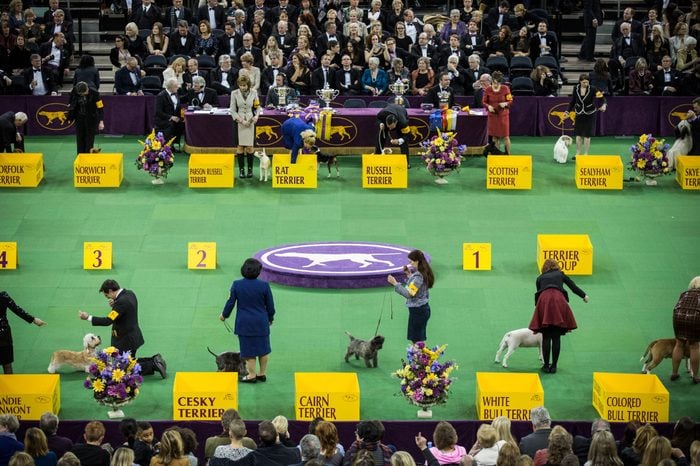
So, just how naughty does a dog have to be to get thrown out of the Westminster Dog Show? Believe it or not, it’s not usually manners (or a lack thereof) that causes a dog to be disqualified. In fact, dogs aren’t disqualified for jumping, barking, or even pooping in the show ring. Judges chalk that up to dogs being dogs. Dog shows are all about conformation, which means the judges are looking to see if a dog conforms to the specific breed standards set for that breed by the American Kennel Club (AKC). As a result, most disqualifications happen way before we see the dogs on TV because they have already been judged in their breed and group. And nope, the judges don’t overlook flaws even if the dog is super adorable. Here’s a handful of reasons why dogs get the boot from the show ring.
Conflicts of interest
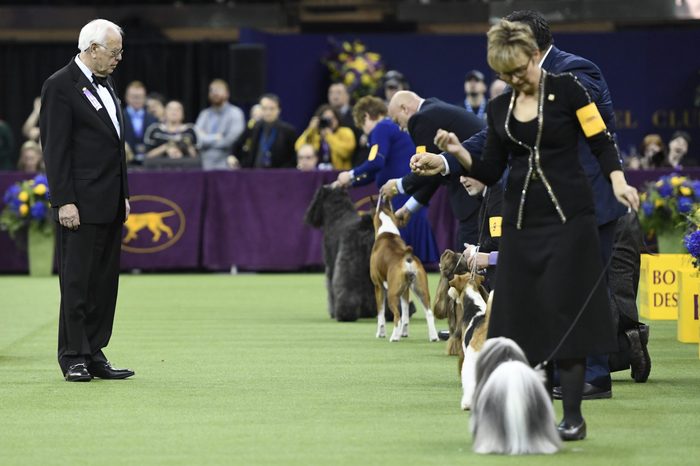
Sometimes the reason a dog is disqualified has nothing to do with the dog at all. In 2019, Colton, a Schipperke, earned his spot in the final ring of seven dogs for Best in Show. That means he’d already won Best of Breed of all the Schipperkes, then went on to win Best of Group, the Non-Sporting Group (the class he competes in). Unfortunately, after all those wins, he wasn’t able to compete for Best in Show. He was allowed to walk the green carpet with the other six finalists, but he was excused and disqualified. The reason? Top judge Peter Green’s partner co-owned dogs with one of Colton’s co-owners. That’s a big no-no, according to the Rules Applying to Dog Shows. Here are more fascinating facts about the Westminster Dog Show.
Biting
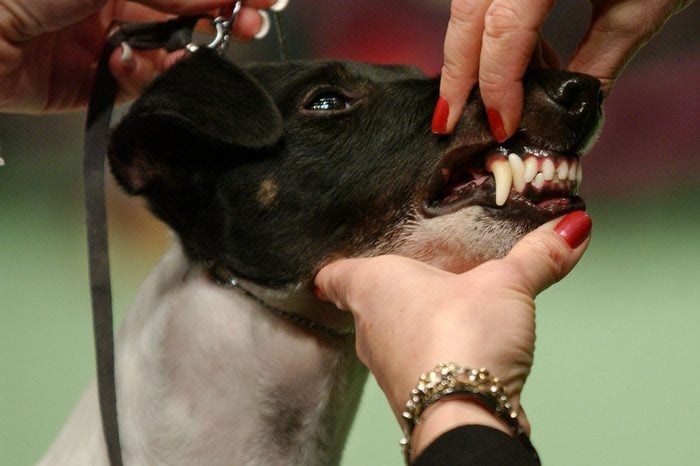
Don’t bite the hand that feeds you—or judges you. A dog that attacks the judge, another dog, or a person at an AKC event will be disqualified. What if the dog doesn’t bite but clearly doesn’t want to be approached or touched by the judge? Whether the dog is having a bad day or just clashes with the judge, safety is a primary concern. If a judge deems a dog menacing or threatening, they’ll mark the dog “excused” (not disqualified) in their book and it will not be allowed to compete. It’s important to keep a record of this “excused” status. According to the AKC Rules Applying to Dog Shows, a dog that gets the “excused” notation in its book for threatening or menacing a judge on three occasions will be disqualified by the AKC. Look for these signs that your dog is secretly mad at you.
Surgical enhancement
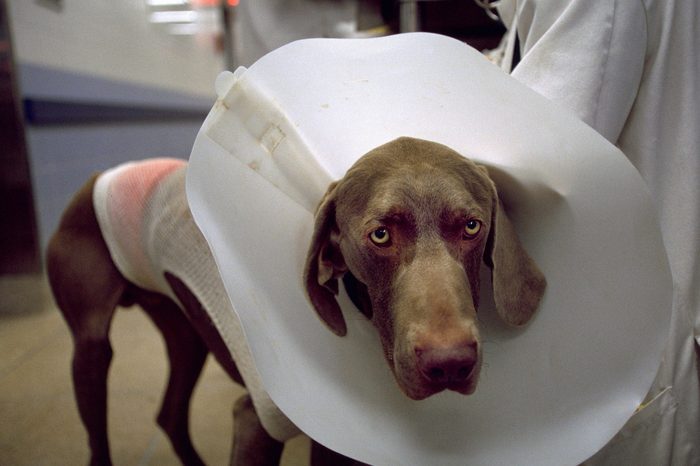
Owners of show dogs can’t try to amend nature to meet breed standard specs. Dogs will be disqualified if any procedure is done to hide or eliminate congenital or hereditary deformities or undesirable characteristics. It’s not always a matter of looking better for the judges. Even surgeries and procedures that could help a dog live a more comfortable life due to a health issue are problematic, according to Westminster rules, and will get the boot from the competition. Examples of this might be hip dysplasia, a skeletal disorder seen frequently in larger breeds such as the German Shepherd and Golden Retriever, and Stenotic nares, a condition in the nasal opening. Breeds like the Pug and Bulldog, which have short noses, are prone to this condition that is akin to breathing through a pinched nose.
Poppin’ pills
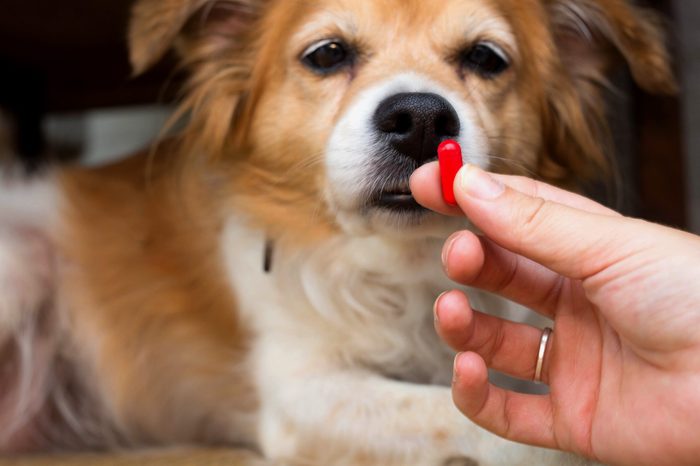
While show dogs probably aren’t taking banned supplements or illegal drugs, if they are taking prescribed drugs, they will be disqualified. That includes drugs prescribed for the health or comfort of the dog, or drugs for an illness or for pain relief when recovering from a procedure. The AKC stresses that the advice of a veterinarian should be followed and that the dog should stay on the course of the drugs, but they should steer clear from competition until all effects of the drug are clear from the dog’s system; otherwise, they’ll be disqualified. As long as your pup isn’t heading to a competition, this is what you can give your dog for pain.
Something doesn’t measure up
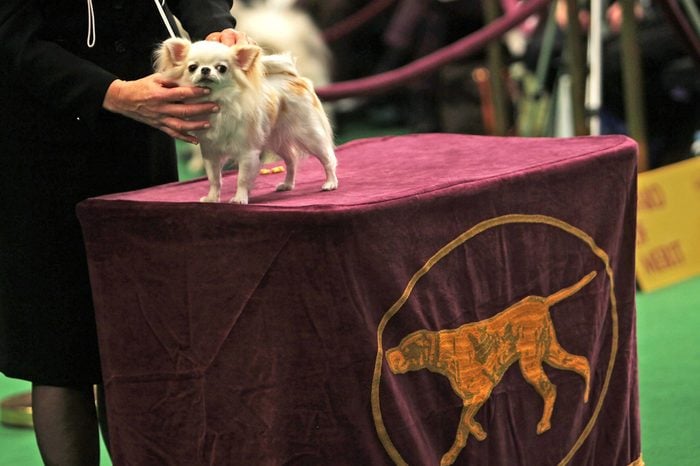
The AKC has breed standards for each dog breed and the varieties within said breed. These standards aren’t meant to be a marker of perfection, per se, but a guideline for breeders to ensure that the physical traits and temperament of the breed continue in the future. One of those standards is height and weight. Take the Poodle, for example. There are three varieties—Standard, Toy, and Miniature. According to the breed standard for a Standard Poodle, it should be more than 15 inches at the highest point of the shoulder. A Standard Poodle who measures at less than 15 inches would be disqualified from competing. Regarding weight, let’s consider the Chihuahua. If it weighs more than six pounds, it will be disqualified. Here’s how to help your chunky dog get to a healthy weight.
Altered anatomy
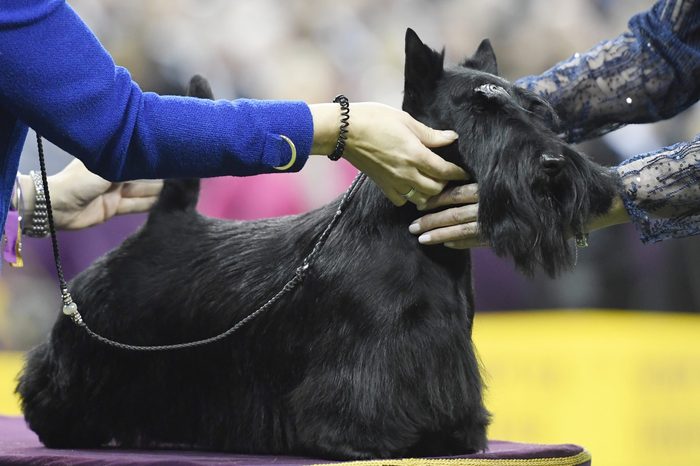
It’s fairly common for pet parents to get their dogs spayed or neutered, especially if they don’t plan on breeding. Show dogs, however, can never be spayed or neutered; that’s an automatic disqualification. And for male dogs, there must be “two normal testicles normally located in the scrotum.” Again, this guideline is in place due to the breed standard: A dog breed can’t exist without new puppies to carry on the breed. And yes, the judge checks the dog’s nether regions during the competition, but this is rarely picked up by the cameras—on purpose. What is OK in terms of doggy alterations? Both a docked tail and removal of the dewclaws are considered acceptable if it is part of the breed standard for that dog. Besides the obvious, this is how male and female dogs are different.
Floppy or cropped?
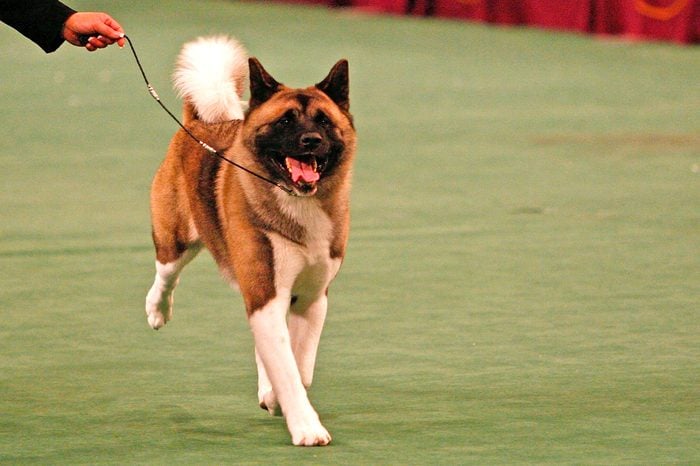
There has been a recent movement against tail docking and ear cropping. Some people feel it’s inhumane and unnecessary, and some states now even regulate these procedures. The AKC says ear cropping and tail docking aren’t just for cosmetic reasons but help dogs perform the function they were created to do. Yet the AKC honors the state laws and renders a dog whose ears have been cropped ineligible where state law prohibits it. Again, the breed standard determines if natural or cropped ears are acceptable. As an example, the Akita would be disqualified if it had dropped or broken ears. Floppy or cropped, this is how often you should be cleaning your dog’s ears.
A coat of too many colors
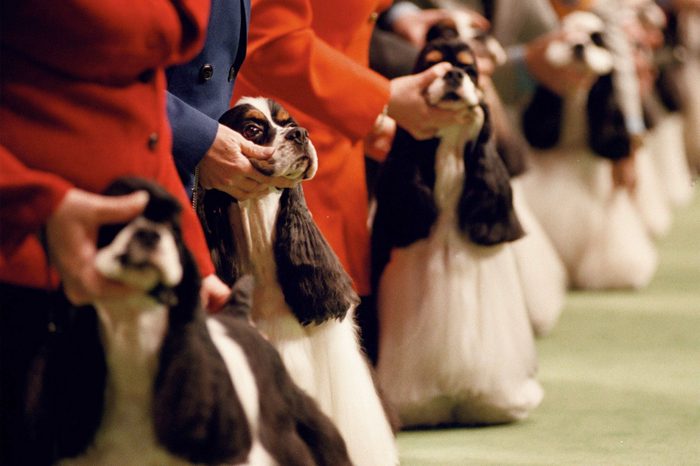
The color of a dog’s coat must also meet the strict breed standards. Some breeds like the Cocker Spaniel compete in three different varieties due to the color of their coat. If a Parti-Color Cocker Spaniel shows up with less than 90 percent of one color, it will be disqualified. Dogs not competing in one of the varieties have strict standards, too, including one of the newest dogs recognized by the AKC, the Dogo Argentino. According to its breed standard, it should have an entirely white coat. A black spot anywhere other than on the head or more than one spot on the head, with the exception of the ears, would warrant disqualification.
Originally Published: February 06, 2020

