


How to Use Baking Soda in Laundry to Remove Smells and More


Updated: Apr. 08, 2024





It’s all natural, safe and cheap. If you haven’t been using baking soda in your laundry, you’ll want to start after reading this!
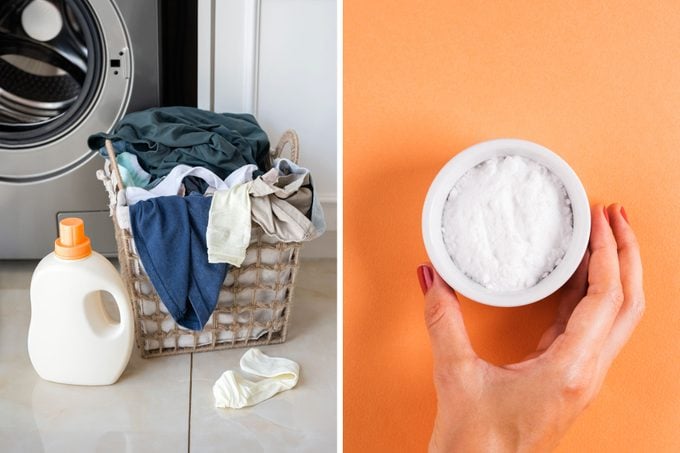
What can’t baking soda do? This simple ingredient is an unsung hero in baked goods, of course, but it also can freshen up a stinky fridge, gently remove stains from countertops and walls, and even give your laundry a boost. In fact, using baking soda in laundry is one of the best ways to get fresher clothing—and one of my tried-and-true cleaning secrets.
As the founder of Clean Mama, a former art teacher and a mom of three, I’m always on the lookout for natural ingredients that do double duty. Once I realized that baking soda (aka sodium bicarbonate) was a common ingredient in laundry products, I started trying it out for myself. After lots of testing and just one mishap involving baking soda and vinegar, I can assure you that this multitasker is an ingredient you’ll want to have on hand.
Ahead, I’ll show you what baking soda can do for your laundry—and exactly how to use it for a variety of laundry tasks, from eradicating stinky smells to lifting stubborn stains.
Get Reader’s Digest’s Read Up newsletter for more cleaning, tech, travel, humor and fun facts all week long.
Is it OK to put baking soda in laundry?
Absolutely. And if you haven’t tried this laundry hack yet, you should do so ASAP! Baking soda can eliminate stinky smells from clothes, as well as brighten dingy fabrics, remove oil stains and more. I particularly like it because it’s gentle and all natural (after all, you can eat it!), so you don’t have to worry about potentially unsafe chemicals under your nose and against your skin. What makes baking soda such a great ingredient in baking—its mild, non-acidic alkaline pH level—is also what makes it a great additive to laundry.
Bonus: Baking soda is incredibly affordable, so you can reap its many benefits for just pennies per load. I always purchase a large bag at my local wholesale club to use exclusively in laundry and other cleaning tasks, so I don’t end up raiding my baking cabinet.
How to use baking soda in laundry
Each laundry task requires different directions. Here’s how I use baking soda in laundry on a regular basis—and how you can too.
To remove odors from laundry
If you’ve ever had laundry that has lingered too long in the washing machine and has that “sour” or mildew-y smell, give it another go in the washing machine with baking soda. If you remove laundry from the dryer and it doesn’t smell fresh, do the same. Yes, it’s an extra step, but it’s worth it—and you really won’t be able to remove those odors without another proper wash. Here’s how to do it.
- Dissolve 1/2 to 1 cup of baking soda in 3 to 4 cups of warm water, and add it to your washing machine basin. If you’re able to stop your machine mid-fill, add it when the water has filled the machine.
- Add your favorite detergent, and wash on warm with a cool or cold rinse. The warm water will ensure that the baking soda dissolves completely, and the cool or cold rinse is simply my temperature preference for laundry, since it can prevent fading and shrinkage. If the care label on the garment calls for a different water temperature, go with that.
- Dry according to the fabric-care instructions.
If you want to remove odors from an unwashed batch of stinky clothes—food smells, a bonfire, sweat—follow the method noted above, but add an extra rinse to ensure the smells are eradicated. You can typically add an extra rinse cycle to a regular cycle on your machine, but if you don’t have that option, let the machine runs its full wash cycle and then run a rinse cycle.
To remove odors from fabrics that aren’t washable
If you have curtains, pillows, dry-clean-only clothes or anything else that isn’t washable but needs to be freshened up, baking soda can do that!
- Add 1 cup of baking soda to a Mason jar.
- Sprinkle in 10 drops of your favorite essential oil blend. Mix with a table knife or large spoon right in the jar.
- Put a piece of fabric or parchment paper under the Mason jar’s ring. The ring will hold the fabric or parchment paper intact, keeping the baking-soda mixture in the jar while still allowing the scent to permeate the air.
- Place the jar in a box or bin with the smelly items. Let it sit for overnight, or longer if needed.
| ♦ Pro tip |
| You can also put this mixture in a fabric sachet or a closet. Make sure that the sachet is tied or sewn, so the mixture doesn’t leak onto your items. |
To remove stains
If you have an oily stain, like a splatter from cooking or a sweat stain, baking soda is a great solution. Not only will the baking soda absorb the oil, but it also has a mild abrasive texture that you can work into stains to remove them.
- Rinse the stain from the back of the fabric, so you don’t further embed it in the fibers.
- Sprinkle the stain with baking soda—just enough to cover it.
- Add a little dish soap or Castile soap.
- Rub in the baking soda and soap with your fingers, a soft laundry brush or a clean toothbrush.
- Let the mixture sit for 15 minutes or so.
- Launder as usual.
- If the stain remains after washing, repeat the process before drying so you don’t set in the stain.
To make detergents and whiteners work better
Baking soda can give detergents and whiteners a boost, which is especially great for dingy whites or secondhand clothes. That said, while sodium bicarbonate is a common ingredient in detergents, take care to not overuse it when adding it to your laundry, and do not mix it with unknown ingredients.
- Mix 1/2 to 1 cup of baking soda with 2 cups of warm water. Stir to dissolve.
- Add the mixture to your washing machine, right on top of your laundry. If you’re able to stop your machine mid-fill, add it when the water has filled the machine.
- Add your preferred detergent, and wash on warm with a cool or cold rinse.
- Dry as normal, according to your item’s fabric-care label.
To clean an iron
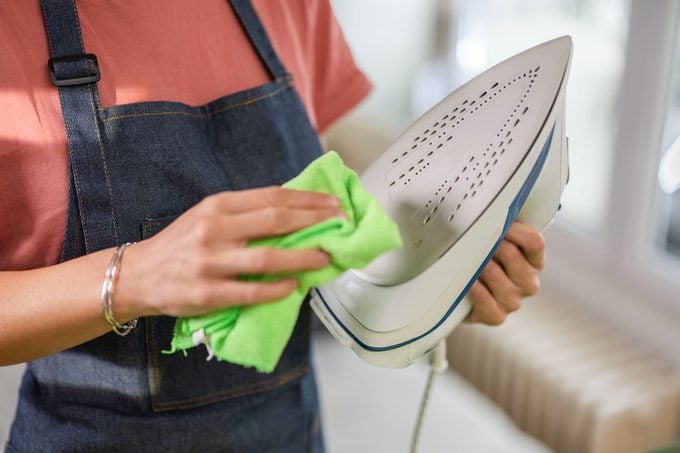
If you have scorch marks on your iron, a gentle paste made from baking soda and water can remove them. The paste will act as a mild abrasive, getting rid of the marks without harming the metal.
- Start with an unplugged, cool iron.
- Mix 1 tablespoon of baking soda with a little water to make a paste that has a thin, toothpaste-like consistency.
- Dip a soft, clean microfiber cloth or sponge in the paste, and rub on the scorch marks until they lift away.
- Rinse the microfiber cloth, and use it to wipe the iron plate clean.
- Continue until the scorch marks and the baking-soda mixture are gone.
FAQs
Can you mix baking soda and detergent?
Yes. Just make sure to fully dissolve the baking soda in warm water so that it’s in the best possible state to work with your favorite detergent. Pre-dissolving the baking soda ensures it’s ready to work right away.
Is vinegar or baking soda better for laundry?
They’re both great, but they have different purposes. When you put baking soda in laundry, it primarily acts as a freshener and deodorizer. You can also use vinegar in laundry for this purpose, but I particularly like using it as a fabric softener. Keep both on hand in the laundry room, and see which you like best for your various tasks.
Can you mix vinegar and baking soda in the laundry machine?
No! Since they are on opposite sides of the pH spectrum—baking soda has an alkaline pH of 9, while white vinegar has an acidic pH of 2—they will cancel each other out when combined.
If you mix them together, you’ll also have an elementary-school science project on your hands. Have you ever tried the “volcano” experiment with your kids that mixes vinegar and baking soda to get a bubbly, overflowing reaction? Let’s just say you don’t want that in your washing machine! That said, you can put baking soda in the washing-machine basin and then vinegar in the softener drawer or a softener ball. This works because the vinegar will release in the rinse cycle after the baking soda has worked its magic.
Where do you put baking soda in a front-loader washing machine?
Dissolve the baking soda in warm water, and place it in the drum with your clothes before you start the load. Alternatively, you can put it into the detergent compartment—again, as long as it’s pre-dissolved. That said, you’ll most likely have more than your detergent compartment can hold, making the drum the best place for the mixture.
Why trust us
At Reader’s Digest, we’re committed to producing high-quality content by writers with expertise and experience in their field in consultation with relevant, qualified experts in the cleaning industry. For this piece on using baking soda in laundry, Becky Rapinchuk, the founder of Clean Mama, tapped her experience as a cleaning expert with more than 15 years of experience, and then Mary Marlowe Leverette, a fabric-care, stain-removal and laundry expert with more than 40 years of industry experience, gave it a rigorous review to ensure that all information is accurate and offers the best possible advice to readers. We verify all facts and data, back them with credible sourcing and revisit them over time to ensure they remain accurate and up to date. Read more about our team, our contributors and our editorial policies.

Originally Published: April 08, 2024

