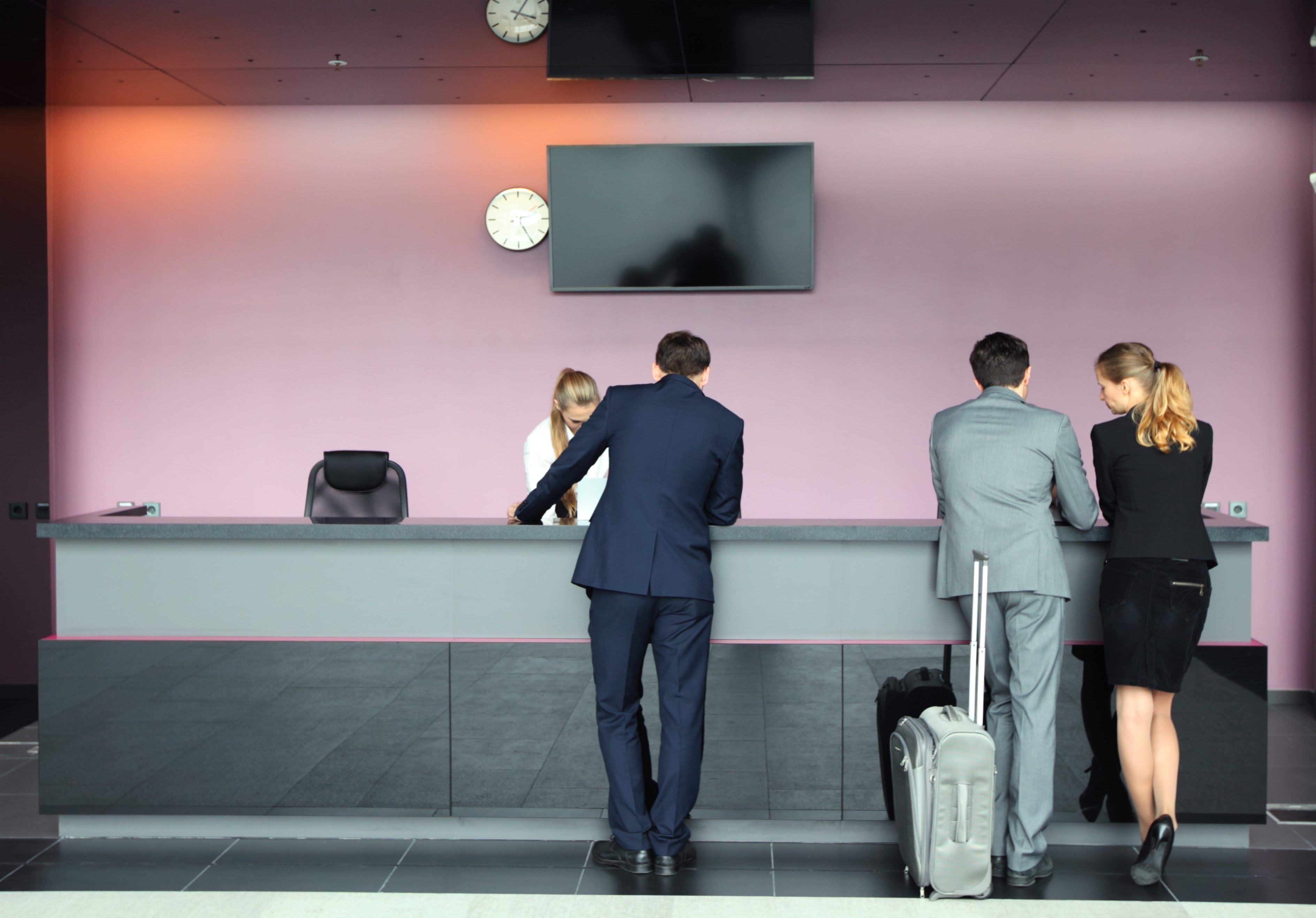
10 Amenities Slowly Vanishing from Hotels

Aaron Rasmussen

By Aaron Rasmussen

Updated on Aug. 26, 2025

Change is inevitable, especially when it comes to hotel extras

Once upon a time, checking into a hotel meant finding a mint on your pillow. Well, those days live on in lore but, by and large, hotel amenities are disappearing or evolving. But sometimes not all change is bad, especially when it reduces waste and is better for the earth.

Other times, not every vanishing amenity feels like such an upgrade. Some of those perks were quite useful, or at least thoughtful (remember sewing kits or even free daily newspapers outside your door?). And with hotel rates climbing, it’s natural to wonder if guests are really getting less for more.

According to the latest J.D. Power 2025 North America Hotel Guest Satisfaction Index (NAGSI), the average daily rate for hotel rooms climbed to a record $158.67 last year. Despite the increasingly hefty price tag, travelers still say they feel like they’re getting their money’s worth. The reason, explains Andrea Stokes, hospitality practice lead at J.D. Power, is that many hotel operators are plowing those dollars back into guest room upgrades, from refreshed furnishings and stylish décor to, you guessed it, revamped in-room amenities.

In other words, while some things are vanishing into the hotel dustbin of history, smart properties are finding ways to make sure the loss of certain amenities feels like progress. “Change in luxury hospitality must never be about subtraction; it must be about evolution,” explains Patrick Fernandes, the executive managing director for Carillon Miami Wellness Resort. True value, he adds, really comes down to a “sense of care, personalization, and relevance.”

So, which once-common hotel amenities are fading fast, and what are they getting replaced with? Read on to find out what’s probably gone for good, what’s on the endangered list and what, if anything, is taking their place.

Get Reader’s Digest‘s Read Up newsletter for more travel, humor, tech and fun facts all week long.

1 / 10

woman eating fruit from a plate in hotel room
domoyega/Getty Images

Uninspired welcome gifts

I can’t tell you how many hotels I’ve checked into only to find a welcome gift of a room-temperature fruit plate that then somehow frustratingly lingered in the room for days. Turns out, I’m not the only one happy to see the trend slowly getting retired. “Generic welcome gifts and standard offerings are disappearing—they created more waste than value, and many went untouched because they weren’t personal or memorable,” notes Suraj Lama, director of food & beverage at the luxury boutique hotel Pendry Chicago.

But don’t worry, the welcome gift concept isn’t going away. According to Lama, they’re just getting a makeover. Instead of flavorless fruit, hotels are really leaning into locally inspired surprises. “At Pendry Chicago, we partner with local favorites like Garrett’s Popcorn,” he says. “These touches give our guests a true sense of place.”

2 / 10

man receiving tray of food in hotel room
ZeynepKaya/Getty Images

Standard room service menu selections

Room service has long been a staple of many mid- and higher-end hotels. But even that amenity is, in some aspects, on its way out. “Boring room service menus are disappearing,” Lama says.

The reason? Guests have lost their appetite for the expected options, like charcuterie boards or the same-old bowls of spaghetti. “Old menus were once convenient, but they didn’t feel special or aligned with how people live today,” Lama notes. At his hotel, Pendry Chicago, F&B has tossed out the meal playbook and totally reimagined room service. “Dishes,” he says, “feel indulgent yet thoughtful.” Think: cavatelli Bolognese, truffle fries, guacamole with El Milagro tortilla chips and ice cream sandwiches.

3 / 10

opened suitcase on luggage rack in hotel room
Jupiterimages/Getty Images

Luggage racks

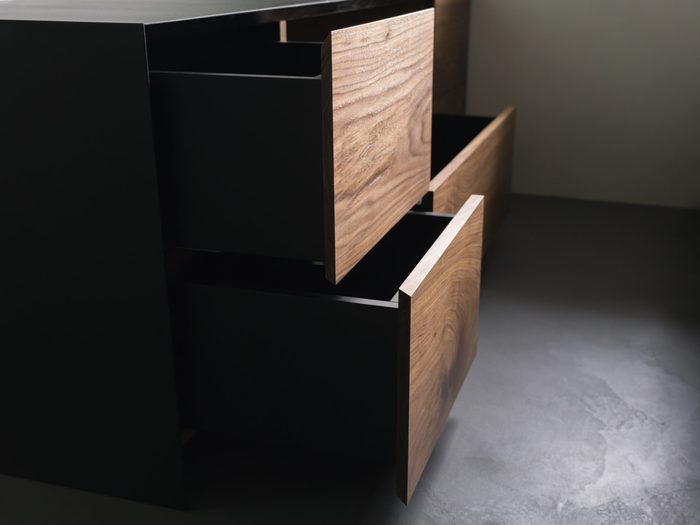
I fully admit it, sometimes I’m just too tired (or lazy) to fully unpack. But there’s one thing I’ll never do: put my overflowing suitcase on the bed or floor. That’s why it’s hard to accept that luggage racks are actually one of those amenities that’s on the decline. Back in 2019, 71% of hotel guests reported having those trusty fold-up stands available in their rooms, according to data from J.D. Power. Fast forward to 2025, and that number has shrunk to just 58%. Instead of providing luggage racks, many hotels have been reimagining storage space by adding more drawers and built-in shelves inside closets.

4 / 10

woman watching tv in hotel room
Maskot/Getty Images

On-demand movies and dumb TVs

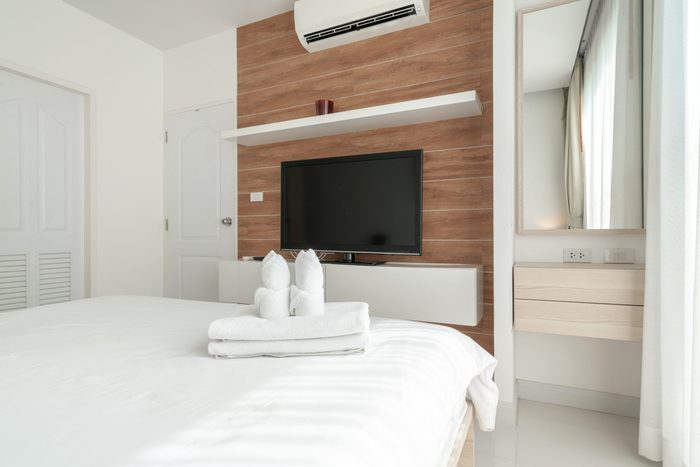
It wasn’t so long ago that paying for on-demand movies in hotel rooms really felt like the height of luxury and pretty cutting-edge to boot. Yes, some hotels still offer them, but the end is nigh, and those flicks are well on their way to becoming a nostalgic memory. Today, the real star of the show is the smart TV. Hotels have been upgrading to these TV sets for years, letting travelers log into their own Netflix, Hulu and Amazon Prime accounts and pick up their favorite series right where they left off. In 2019, a mere 39% of hotel rooms had a smart TV. Today, that number has nearly doubled, with 72% now equipped with one, J.D. Power reports.

5 / 10

printed room service menu
PhotoAlto/Anne-Sophie Bost/Getty Images

Printed materials

Remember when hotel guest rooms came supplied with big binders stuffed full with everything from room service menus to printed-out instructions on how to work the TV? There were also glossy hotel magazines and branded stationery waiting on the desk. These little touches were very much a part of a hotel’s personality, but most of that paper is now gone. “We have transitioned much of this content to digital formats,” explains Fernandes of the Carillon Miami Wellness Resort, pointing to in-room tablets, Smart TVs and hotel apps. “This not only reduces paper consumption but also allows us to update offerings in real time, whether that is a seasonal wellness program, a new chef’s tasting menu, or spa availability.”

Still, not all travelers are totally ready for the digital age, and that’s okay. Fernandes adds, “Guests who prefer a tangible experience may still request printed materials, but the flexibility and immediacy of digital access has elevated convenience without diminishing luxury.”

6 / 10
mini shampoo bottles
glegorly/Getty Images

Mini shampoo and conditioner bottles

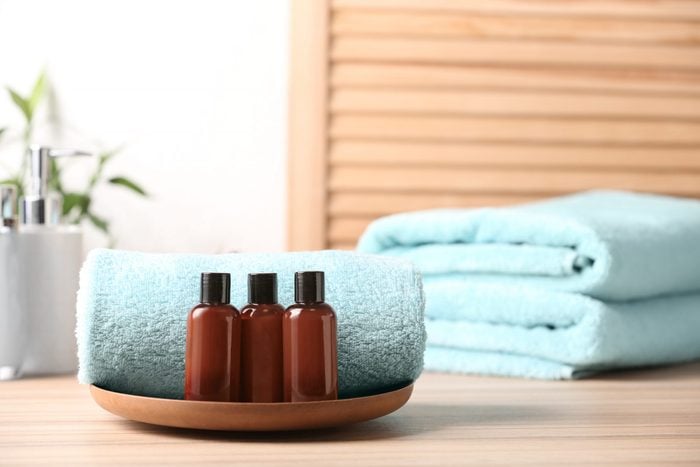
Confession: I have a stash of tiny shampoo and conditioner bottles tucked away in my bathroom cabinet from a number of properties, most more than likely well past their prime. It’s probably a good thing that these days I’d be hard-pressed to add to my collection since hotels, from budget lodging to luxury resorts, are increasingly phasing them out. InterContinental Hotels Group led the way in 2022, when the brand did away with mini bottles and replaced them with built-in, bulk-sized dispensers for shampoos, conditioners and body washes. “Those miniature bottles were once considered a symbol of indulgence and personalization,” Fernandes says. “Guests often associated them with a hotel’s brand identity and even took them home as keepsakes.”

The switch to dispensers isn’t just about streamlining. Sustainability is a driving force behind why properties no longer stock all those little bottles. “Each year, a hotel can eliminate thousands of plastic containers from entering the waste stream,” Fernandes says. “For a wellness-focused resort such as ours, environmental stewardship is not just expected, it is part of our ethos.”

Sure, some travelers still miss all those pint-sized products, but Fernandes notes that their replacements are hardly a downgrade since premium, refillable dispensers combine the best of all worlds—they’re sleek, hygienic, better for the planet and often contain a higher-quality product than the small bottles ever did.

7 / 10

towels with flower being placed on hotel room bed
globalmoments/Getty Images

Daily housekeeping

Some disappearing amenities are easy to live without, but daily housekeeping isn’t one of them for many hotel guests. Stokes notes that J.D. Power’s data shows 44% of hotel guests consider it a “need-to-have” service rather than a “nice-to-have.”

Fernandes points out that the pullback in daily housekeeping, which began during the pandemic, can leave guests feeling like there’s a gap in the hotel experience, particularly for older travelers who associate it with the polish and comfort of classic five-star stays.

Still, not everyone sees reductions in housekeeping as a loss. “Historically, daily linen and towel changes were considered the hallmark of attentive service in luxury hotels; however, expectations have shifted,” Fernandes explains. “Today’s guests are increasingly conscious of sustainability, while also valuing privacy and a sense of sanctuary in their rooms.”

The good news is that if you’re firmly in the camp that crisp sheets on the daily is an absolute must, most hotels that have reduced service will happily accommodate you upon request. At Carillon, for example, guests can choose the cadence of their housekeeping service, whether that means refreshes every day or more personalized, spaced-out scheduling.

8 / 10

close up of bathtub in hotel room
ymgerman/Getty Images

Bathtubs

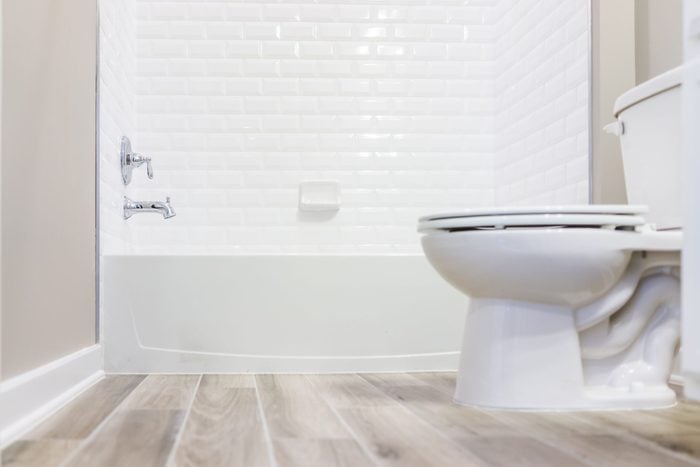
The hotel bathtub was at one time a hallmark of luxury and considered the ultimate indulgence, a place for guests to linger, soak and unwind. But over the past two decades, tubs have disappeared from many standard hotel rooms. “Most brands have phased tubs out of standard rooms in favor of oversized walk-in showers,” says Ami Alexander, managing partner at Barrel Aged Management, who has 20 years of expertise in hospitality operations and development.

The reasons for the shift are partly practical. “Travelers are busier, showers use less water and space, and accessibility standards are easier to meet,” Alexander explains, adding that many guests do notice the absence. “For some, especially leisure travelers and families, the loss of a tub is a subtle disappointment. Where tubs remain, they’re typically reserved for top suites, creating an unspoken hierarchy.”

Hotels’ options for replacements—spa-style showers with rainfall heads, steam options and integrated aromatherapy—are “aiming to recapture some of the ritual and relaxation once associated with the bathtub,” Alexander says.

9 / 10

minibar in hotel room
Adrian Peacock/Getty Images

Minibars

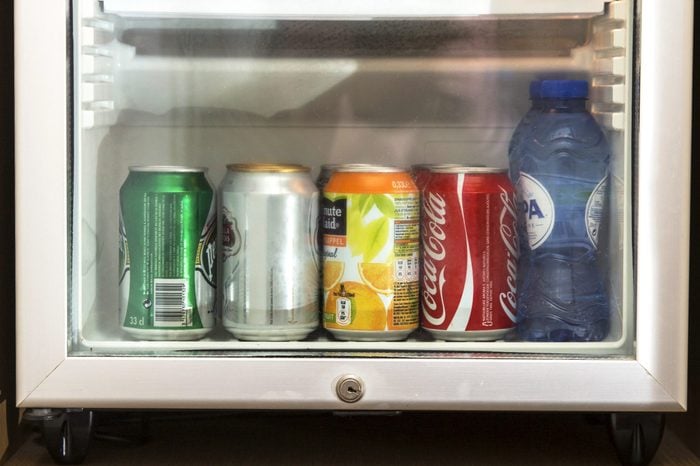
“Minibars are one of the few amenities that have technically survived, but over the years the sense of theater and curation around them has disappeared,” Alexander says, noting that what was once a carefully staged in-room ritual—champagne splits, hand-selected confections, even crystal glassware—has become an afterthought in recent years, with a jumble of generic snacks and nondescript packaging. “With the rise of third-party suppliers, many luxury hotels now outsource mini bars entirely, leading to uniform boxes with a hotel logo printed on top and little else.”

10 / 10

digital clock and telephone in hotel room
webphotographeer/Getty Images

Clocks, phones and other electronic gadgets

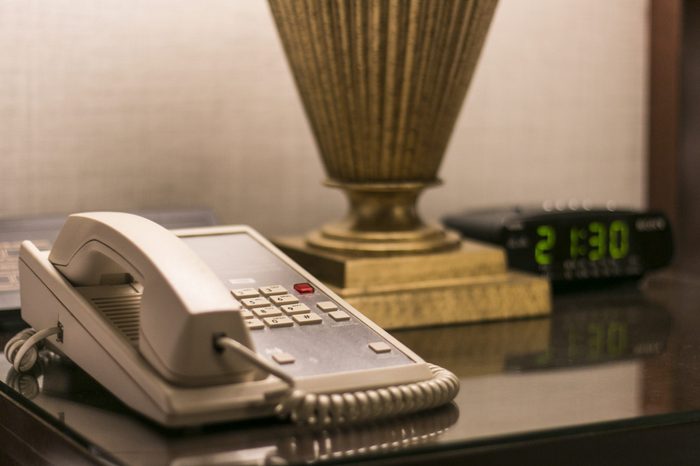
Smartphones have really transformed how technology is used in rooms, and they’ve essentially eliminated the need for traditional digital clocks and landlines. While many rooms still have them, their days are clearly numbered, especially since revenue from room-to-outside phone calls, once a major source of revenue for hotels, isn’t really a thing anymore. “Hotel chains are introducing apps for the cell phone and television in room that replace the need for a phone, guest compendium and even plastic key cards for room entry,” Alexander of Barrel Aged Management says. “These apps, when effectively deployed, allow for communication with front desk, room service, housekeeping, and mobile check-in and electronic key entry.”

About the experts

  • Andrea Stokes, hospitality practice lead at J.D. Power, is responsible for providing relevant and high quality intelligence for the hotel and senior living sectors. Before J.D. Power, she held positions at Marriott International, Ipsos, and the U.S. Travel Association. She earned her BA in Management from the College of St. Benedict and an MBA at Georgetown University.
  • Suraj Lama is the director of food & beverage at Pendry Chicago, the iconic boutique luxury hotel on the Magnificent Mile. With a proven track record at Hyatt Regency Houston West and The Ritz-Carlton in Dallas, Texas, he brings extensive expertise in luxury hotel operations and management. Lama is dedicated to crafting exceptional guest experiences, cultivating talented teams, and elevating every aspect of the hotel’s food and beverage offerings.
  • Patrick Fernandes, executive managing director for Carillon Miami Wellness Resort, has more than 25 years of hospitality experience across a number of leading brands and brings a proven track record of creativity and innovation in delivering five-star service. He served as the hotel manager of Faena Hotel Miami Beach and was instrumental in helping the property become the first independent hotel to achieve a Forbes Five Star rating in its inaugural year, as well as being named a Leading Hotel of the World and #1 Hotel in the USA by Condé Nast. Earlier in his career, Fernandes held various roles across the hospitality industry, serving as director of training and quality at The Setai, a luxury hotel in South Beach; senior consultant at F&G Hospitality Consulting, a premier hospitality consulting firm; and general manager at InterContinental Hotels Group, a British multinational hospitality company.
  • Ami Alexander is the managing partner at Barrel Aged Management, bringing over 20 years of expertise in hospitality operations and development. She has worked with some of the world’s most iconic brands, including Aria Las Vegas, Fontainebleau Miami Beach, and Jumeirah Emirates Towers Dubai. Alexander’s leadership spans the full project lifecycle, from concept development to operations, and she has held key roles at Hakkasan Group, Sydell Group, and Montage International, overseeing development and operations for properties like NoMad and Freehand. At Barrel Aged Management, she partners with top-tier brands such as Virgin Hotels and Core Club to drive innovative concepts forward. Her global experience, coupled with her hands-on approach, diverse background and passion for creating transformative hospitality experiences have made her a trusted leader in the industry.

Why trust us

Reader’s Digest has published hundreds of travel stories that help readers explore the world safely, easily and affordably. We regularly cover topics such as the best places to visit (and the best times to visit them), tips and tricks to zoom through airport security, flight-attendant secrets, hotel-room hacks and more. We’re committed to producing high-quality content by writers with expertise and experience in their field in consultation with relevant, qualified experts. We rely on reputable primary sources, including government and professional organizations and academic institutions as well as our writers’ personal experiences where appropriate. We verify all facts and data, back them with credible sourcing and revisit them over time to ensure they remain accurate and up to date. Read more about our team, our contributors and our editorial policies.

Sources:

  • Andrea Stokes, hospitality practice lead at J.D. Power; email interview, August 2025
  • J.D. Power: Hotel Guests Want Smart TVs and Good Hotel Mobile App, J.D. Power Finds
  • Suraj Lama, director of food and beverage at Pendry Chicago; email interview, August 2025
  • Patrick Fernandes, executive managing director for Carillon Miami Wellness Resort; email interview, August 2025
  • Ami Alexander, managing partner at Barrel Aged Management; email interview, August 2025