7 Disinfectant Spray Mistakes You Didn’t Know You Were Making

Madeline Wahl

By Madeline Wahl

Updated on Aug. 18, 2025

Think a quick spray-and-wipe works? Not so fast. Here’s what you need to know about common disinfectant spray mistakes.

Smart sprays, better days

Did you know that disinfecting and sanitizing aren’t the same thing? That’s right! While sanitizing reduces germs to safer levels, disinfecting is designed to kill them outright. And here’s the kicker: Even the best products won’t work if you’re using them the wrong way. In fact, some of the most common disinfectant spray mistakes can leave behind more germs than you think. What’s worse? We all make these mistakes more often than we’d like to admit.

It’s easy to assume that a quick spritz is all it takes to get a clean, safe surface. But in reality, disinfecting involves more than just pointing and spraying. To learn more, we turned to cleaning experts who’ve mastered the art of keeping a home spick-and-span and who can spot disinfectant spray mistakes from a mile away.

From skipping the proper contact time to using it on the wrong materials, these simple disinfectant spray application mistakes can make your cleaning schedule far less effective. Read on to learn how to spot and fix the disinfecting mistakes you might be making without realizing it.

Get Reader’s Digest’s Read Up newsletter for more cleaning, tech, travel, news, humor and fun facts all week long.

1 / 8

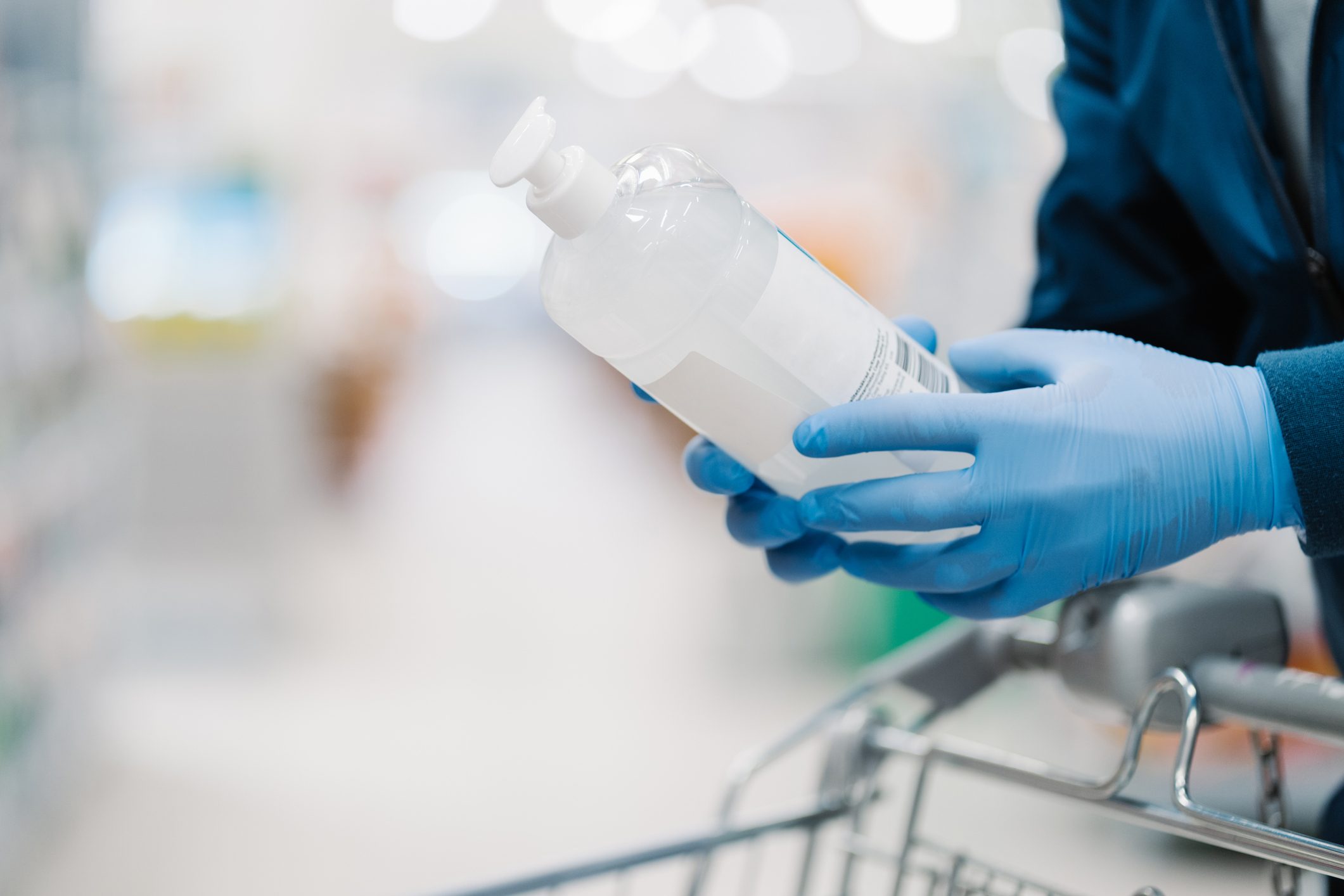
Concentrated man shopping in supermarket reading product information department household chemicals.
DMITRII MARCHENKO/GETTY IMAGES

Not reading the label thoroughly

You might want to start immediately cleaning and disinfecting your home, but sometimes it’s important to start slowly. “The biggest mistake is not reading and following the directions on the label,” Brian Sansoni, the American Cleaning Institute’s senior vice president of communications, outreach and membership, tells Reader’s Digest.

“With disinfecting products in high demand, you may bring home a product you’re not as familiar with. Don’t assume it works the same way,” he says. “Read the directions carefully and follow them in order to have the desired effect. This may seem like basic advice, but according to a recent American Cleaning Institute survey, 42% of Americans aren’t using disinfectants properly.”
2 / 8
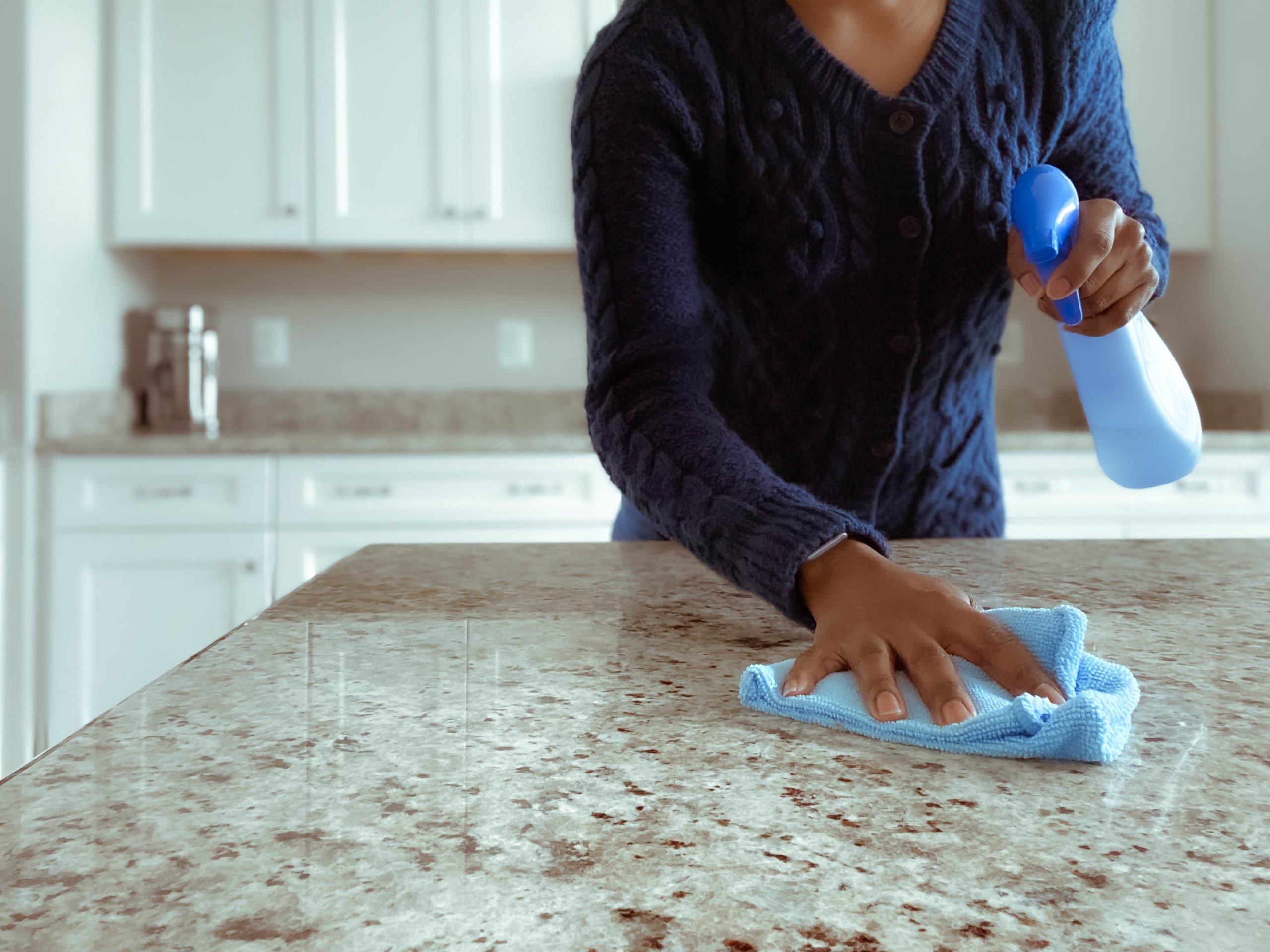
Hand wipes granite countertop with blue cloth and spray bottle in a bright kitchen, surrounded by white cabinets and a beige counter.
GRACE CARY/GETTY IMAGES

Not letting the spray sit long enough

Sure, cleaning your countertops with a quick spray-and-wipe is easy—wiping away the disinfectant while the surface is still wet makes for a faster cleanup. But as cleaning expert Jacqueline Janus, the owner of Two Chicks and a Broom cleaning company, tells Reader’s Digest, not letting the product sit for long enough is one of the most common disinfectant spray mistakes people make.

“Disinfecting isn’t instant, so if you spray and wipe, you may be getting a surface clean, but you’re really not doing much in the way of disinfecting,” she says. “Every product is different, so check the label of whatever disinfectant you’re using for the recommended time the product should sit on a surface in order to be most effective. It can be up to 10 to 15 minutes for some products!”

3 / 8

Young woman cleans kitchen counters
ASCENTXMEDIA/GETTY IMAGES

Not spraying enough disinfectant

To work its germ-busting magic, a disinfectant spray needs to stay wet on the surface for the full contact time. That means you must give it generous enough spritzes that it doesn’t dry up before it’s done its job.

“When people don’t follow the instructions on the label, the most common mistake we see is not getting a surface wet enough,” Sansoni says. “For the disinfectant to work, it needs contact time with the surface before it dries or gets wiped away. Depending on the product, this could range from 30 seconds to 10 minutes. It will always tell you how long on the label.”

4 / 8

Young woman with hearing aid cleaning her kitchen
SLADIC/GETTY IMAGES

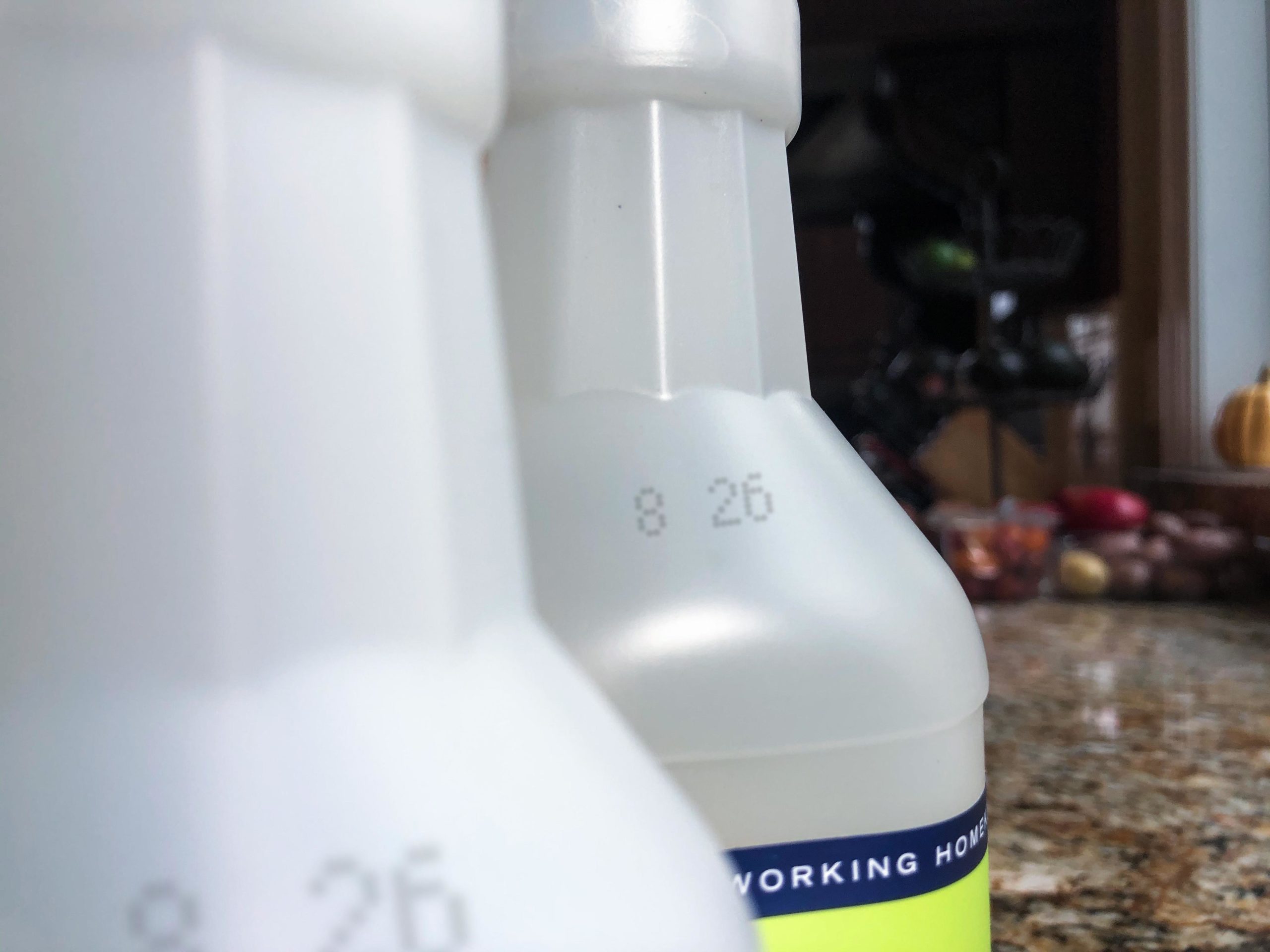
Not checking the expiration date

Checking expiration dates is crucial when it comes to cleaning products. “Disinfectant does expire/lose its potency over time, so it’s also important to check dates and the labels,” Janus says.

The Center for Research on Ingredient Safety at Michigan State University further confirms that once a disinfectant passes its expiration date, the breakdown of active ingredients reduces its effectiveness against bacteria and viruses. So by buying (and using) cleaning products that are within their expiration dates, you can avoid one of the most common disinfectant spray mistakes most people make.

5 / 8
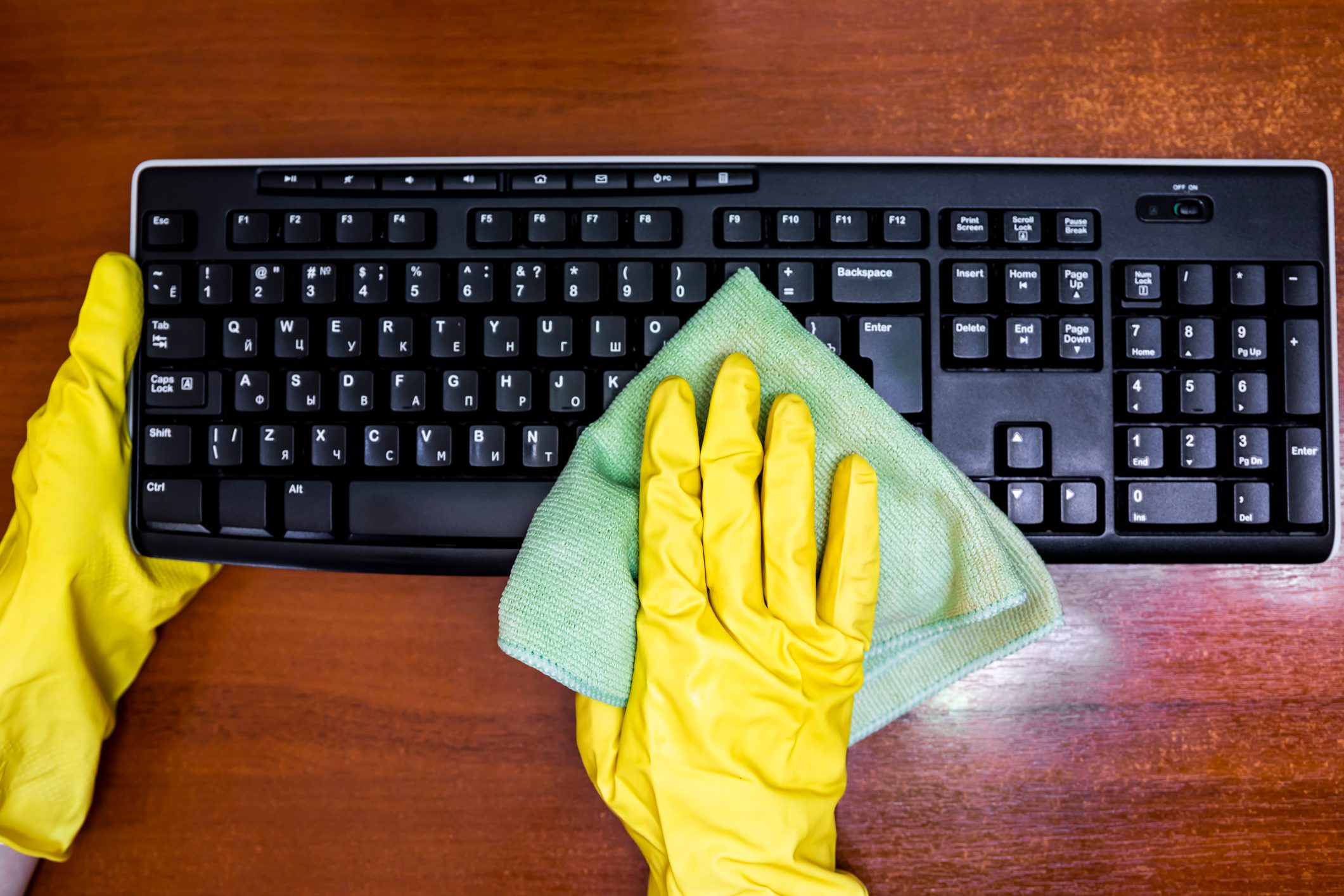
Keyboard being cleaned with a green cloth by hands wearing yellow gloves on a wooden table.
ANTON PETRUS/GETTY IMAGES

Relying on a one-and-done solution

Think you’ll disinfect an item and never need to clean it again? Think again. When Reader’s Digest reached out to Top Cleaners London, asking for the disinfectant spray error that their cleaning experts come across most often, they pointed to the idea of disinfectant as a permanent fix.

“The most common mistake is that people think of disinfectants as a long-term solution,” say the experts at Top Cleaners London. “In fact, their effectiveness is temporary.” Surfaces can be recontaminated quickly after contact, so consistent cleaning and reapplication are essential.

6 / 8
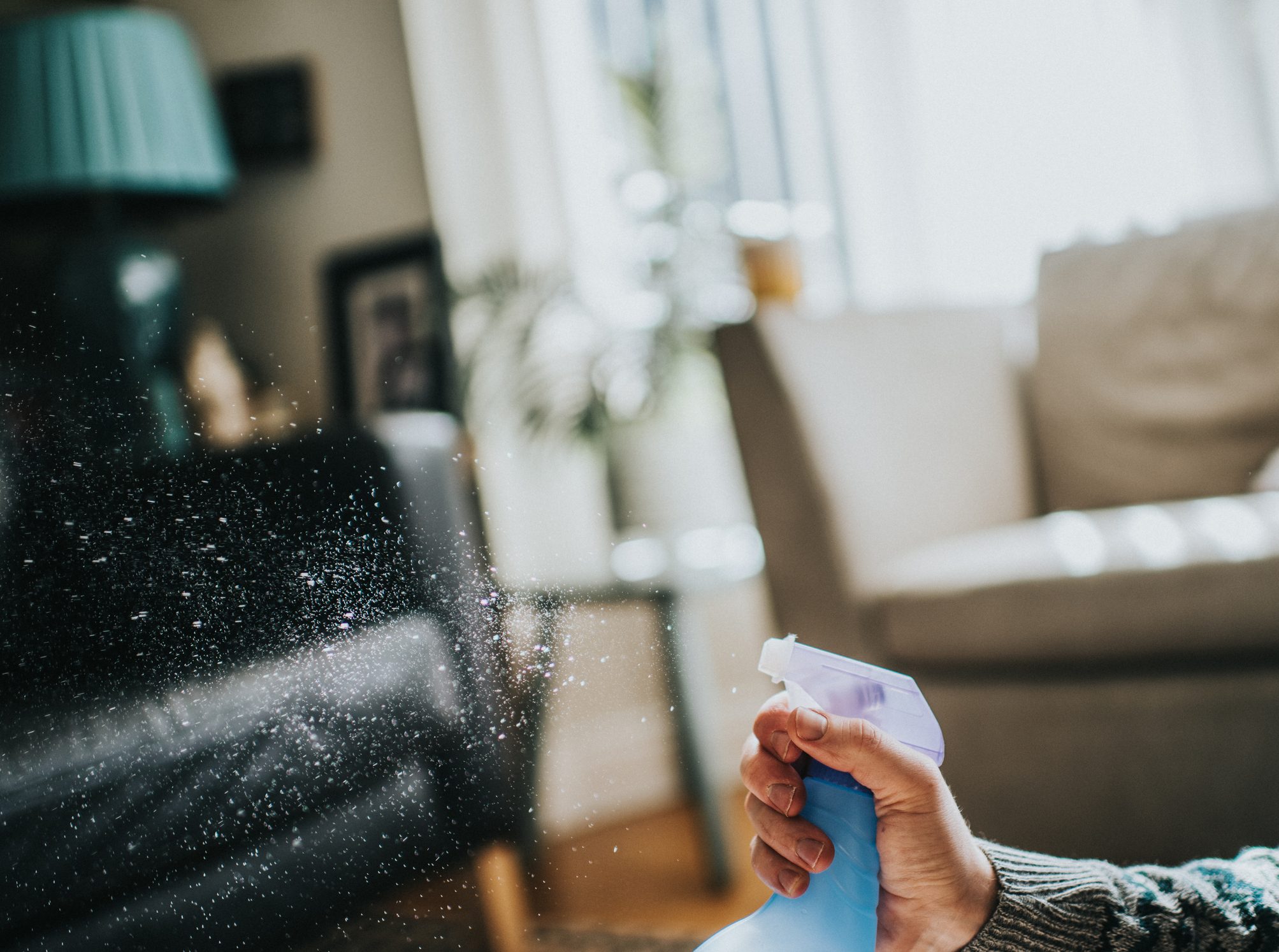
Hand sprays mist from a blue bottle in a cozy living room with a couch and soft lighting.
CATHERINE FALLS COMMERCIAL/GETTY IMAGES

Thinking the sprays purify the air

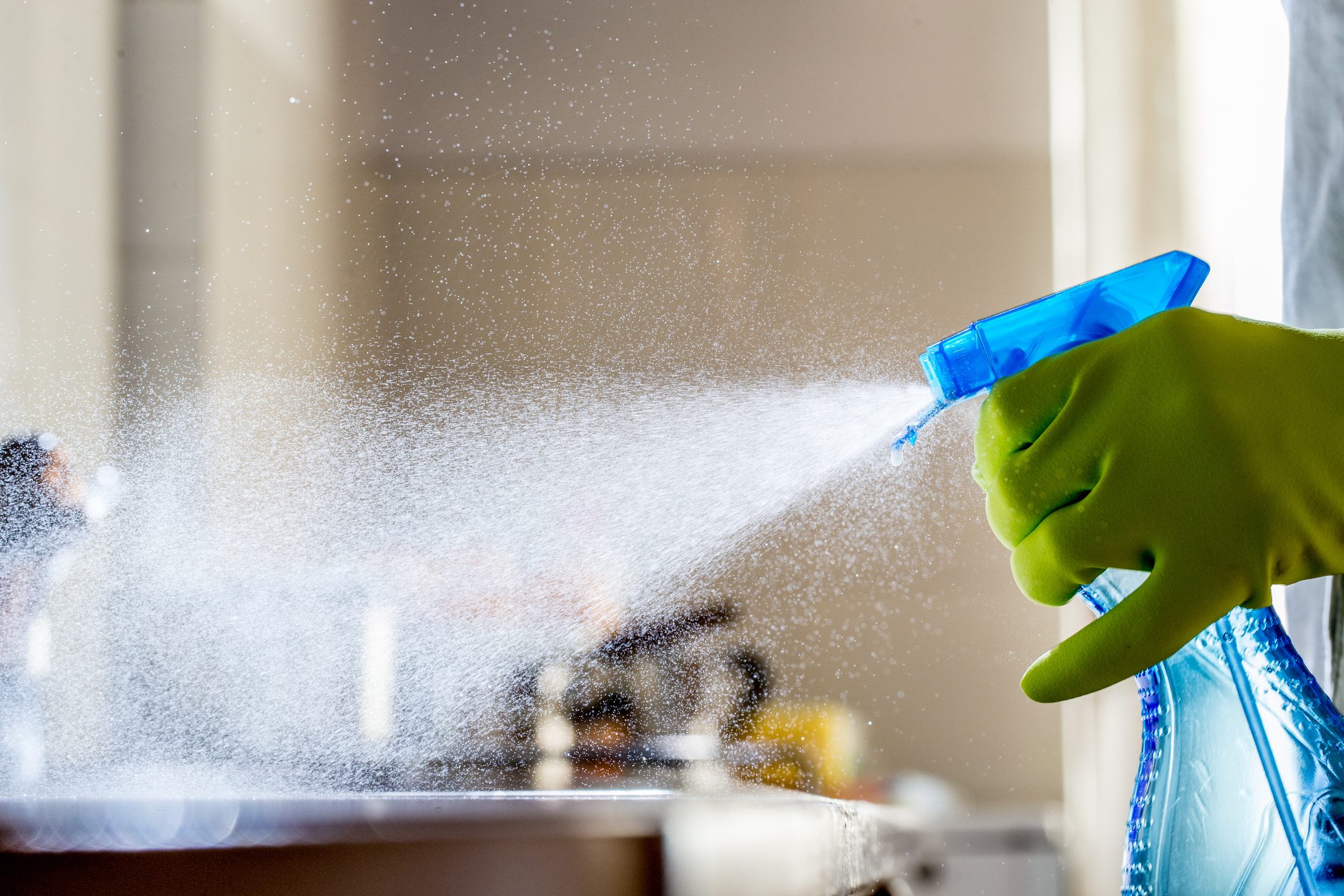
Disinfectants target only the surfaces they’re applied to, and they don’t purify the air. So spraying them onto the air instead of turning on your air purifier is a classic disinfectant spray mistake. In most cases, the distance from which you spray them doesn’t significantly affect their effectiveness either.

7 / 8

House Chores, cleaning the dinning room table
THANASIS/GETTY IMAGES

Not cleaning the surface before disinfecting

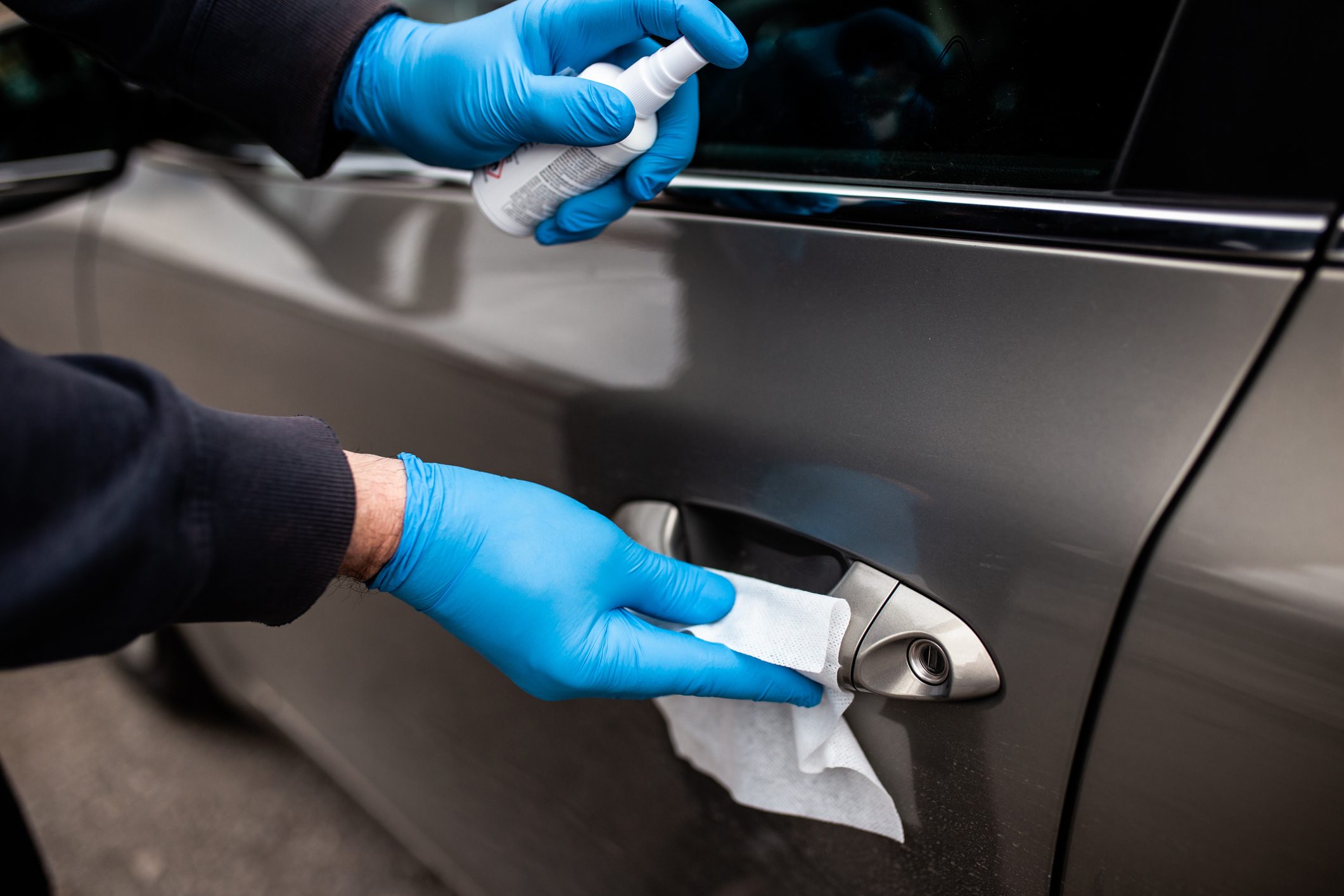
Yes, when disinfecting, you have to clean the surface beforehand, according to the experts at Top Cleaners London. “Meaning you first wipe with a multipurpose detergent to remove the dirt and then spray it to kill the remaining bacteria,” they say. “However, bear in mind that the terms sanitizing and disinfecting are not interchangeable. Sanitizers reduce the number of bacteria, whereas disinfectants get rid of all germs. In that sense, people should buy disinfectants and not sanitizers.”
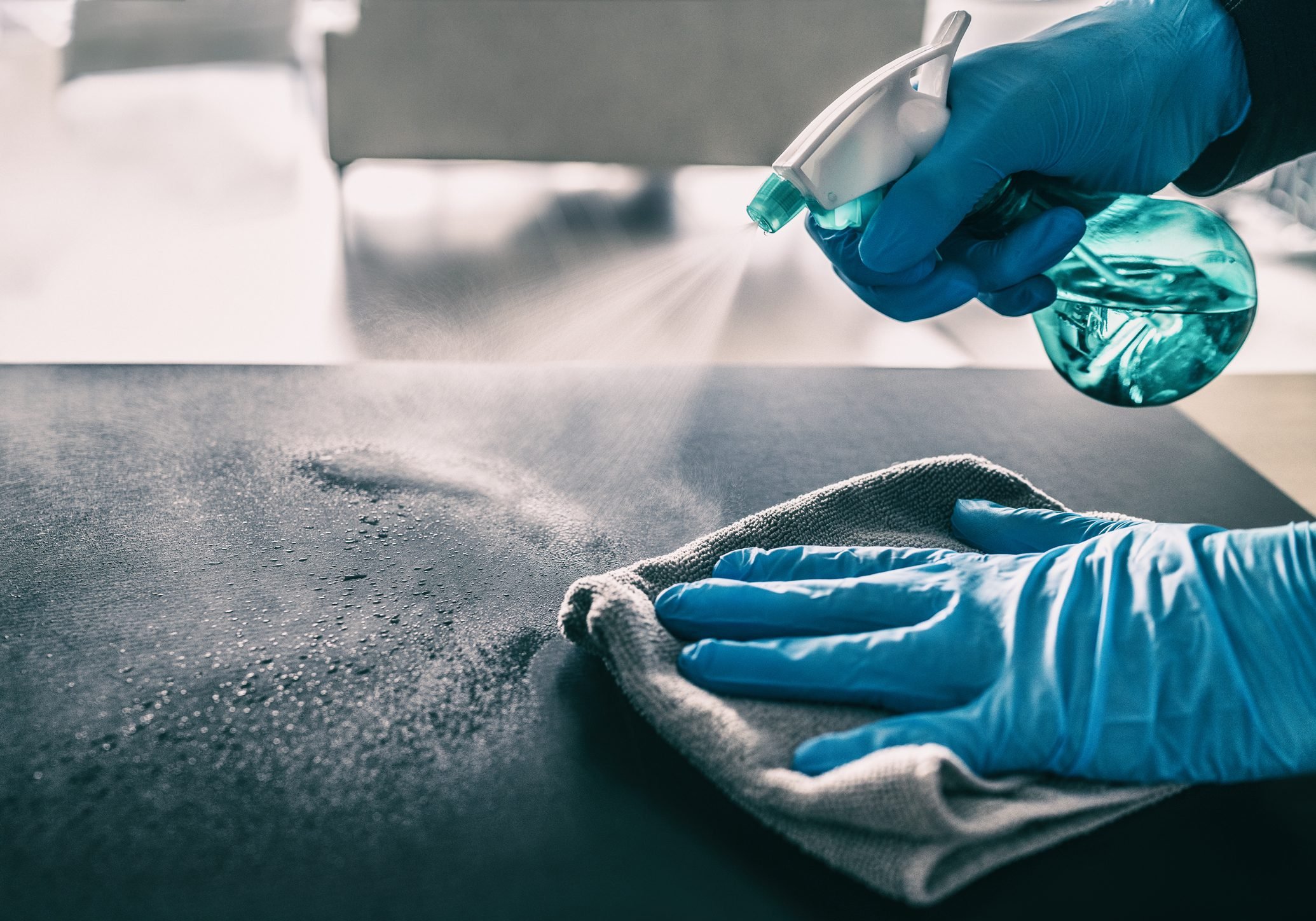
8 / 8

Cropped shot of a young woman cleaning the surface of a cabinet with cleaning spray and cloth at home during the day
D3SIGN/GETTY IMAGES

FAQs

How do you use disinfectant properly?

There’s a certain method of cleaning that yields the best results. It’s not as haphazard as you might think—especially if you’re trying to steer clear of disinfectant spray application mistakes. Here are five must-follow steps we’ve devised based on the U.S. Centers for Disease Control and Prevention’s recommended best practices for sanitizing and disinfecting:

  • Clean before you spray: Scrub the surface with soap and water to remove dirt and grime. Disinfectants work best on clean surfaces.
  • Suit up and ventilate: Always read the label and wear any recommended protective gear. Open windows or turn on fans to keep fresh air flowing.
  • Apply and get wet: Spray a generous, even layer and keep the surface visibly wet for the full “contact time” listed on the label (this is key for killing germs).
  • Let it sit to let it work: Don’t wipe it off too soon. Let the disinfectant dwell for the specified time to do its job.
  • Wash up: After you’re done, wash your hands for at least 20 seconds.
  • Store safely: Store the product out of reach of kids and pets.

And here’s a pro tip Janus swears by: “I recommend cleaning clockwise and top to bottom, alternating between cleaning and disinfecting,” she explains. “So for example, I’ll clean my bathroom sink and counter, spray it with disinfectant, and then move on to cleaning my shower. When the shower’s clean, I’ll spray it with disinfectant and then go back to dry off the sink and counter, etc.”
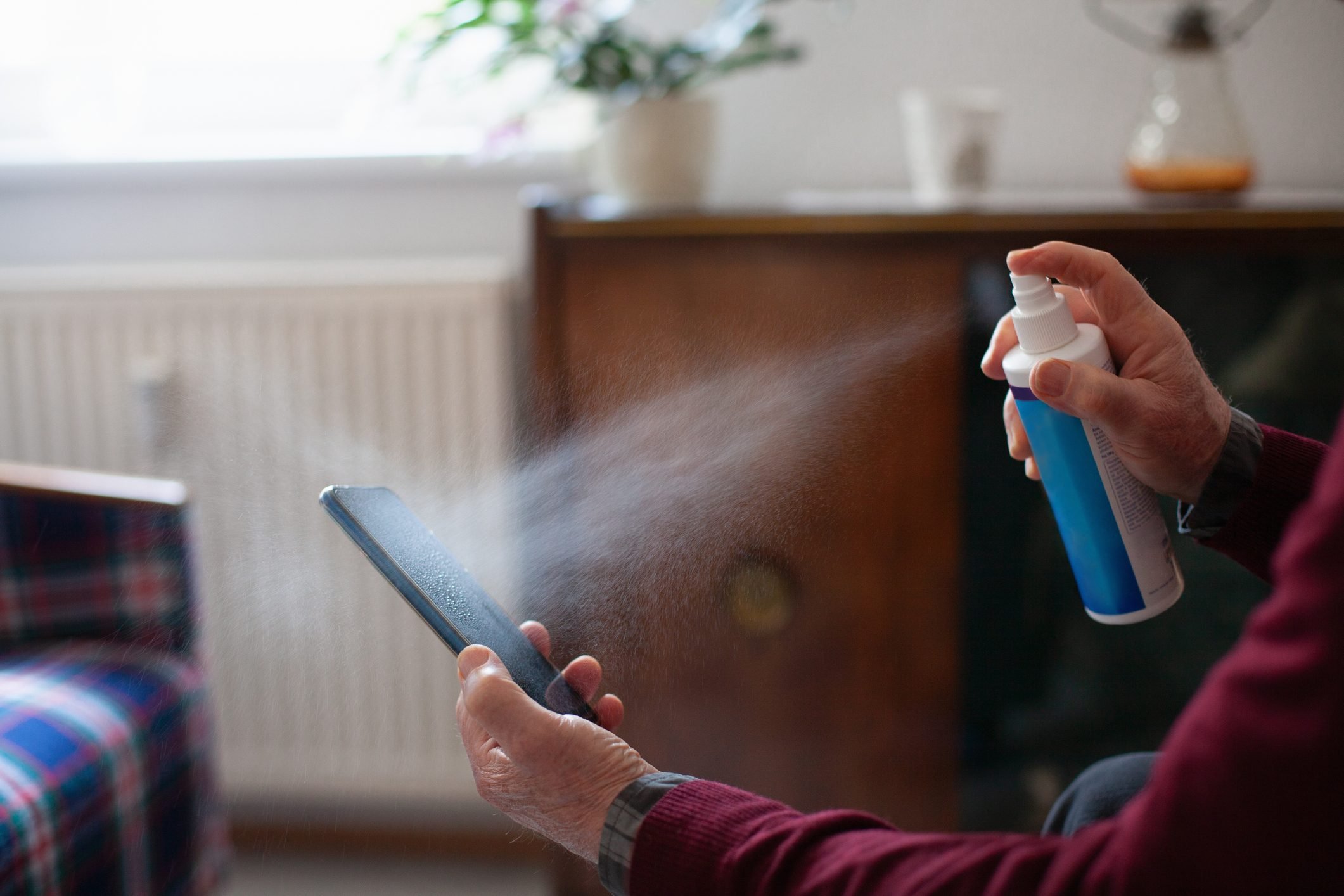
What comes first: cleaning or disinfecting?

You always want to clean first, sanitize or disinfect second. And to do that properly, you have to know your products. “There are many products that clean and disinfect in one,” Janus says, “but I prefer to use a product specifically meant for whatever surface I’m cleaning and then use a dedicated disinfectant on the cleaned surface.”

That may mean, for instance, beginning with a bathroom spray on your bathroom surfaces or a granite cleaner on granite countertops, then disinfecting with your go-to disinfectant.

Will disinfectant spray damage any surfaces?

Disinfectant isn’t a one-size-fits-all solution. A common mistake most people make is not checking a disinfectant spray’s label. While products made for a specific material (like metal or wood) are OK to use on those surfaces, research from the San Francisco Environment Department shows that compounds like hydrogen peroxide and citric or lactic acids may degrade materials such as aluminum, wood, natural stone and painted surfaces. That’s why it’s always a good idea to check the label of your product before using it.

What disinfectant sprays should you use?

“My favorite disinfectants are the Seventh Generation disinfectant spray and Force of Nature,” Janus says. “We’re an all-natural, health-focused cleaning company, so I want something that’s effective while still being nontoxic and environmentally friendly.” 
Whether or not you go with an eco-friendly cleanser, you have tons of options. Top Cleaners London recommends using products with at least 70% alcohol. “Solutions with ammonia and chlorine are generally dangerous, so we never recommend them. Trustworthy brands are Lysol, Clorox and Dettol,” they say. “A good alternative is Method Antibacterial All Purpose Cleaner Wild Rhubarb, as it is advertised as a natural disinfectant and has shown very favorable results.”

Can disinfectant spray be harmful to your health?

Yes! Disinfectant sprays can pose health risks if you overdo it. Frequent exposure, especially in poorly ventilated spaces or via misting methods, has been linked to respiratory irritation, asthma flare-ups, headaches and skin or eye irritation. A study from Canada’s National Collaborating Centre for Environmental Health indicates that higher exposure levels are associated with a greater risk of breathing or allergic issues.

So while moderation is clearly the key, the U.S. Centers for Disease Control and Prevention also advises using disinfectants in well-ventilated areas, wearing appropriate protection and storing them safely out of reach to prevent unintended disinfectant spray misuse.

About the experts

  • Brian Sansoni is the senior vice president of communications, outreach and membership at the American Cleaning Institute, which represents cleaning-product makers and champions safety, sustainability and innovation.
  • Jacqueline Janus is a cleaning expert and the owner of the cleaning company Two Chicks and a Broom. With years of hands-on experience, she knows what it really takes to get a home spotless.

Why trust us

At Reader’s Digest, we’re committed to producing high-quality content by writers with expertise and experience in their field in consultation with relevant, qualified experts. We rely on reputable primary sources, including government and professional organizations and academic institutions as well as our writers’ personal experiences where appropriate. We verify all facts and data, back them with credible sourcing and revisit them over time to ensure they remain accurate and up to date. Read more about our team, our contributors and our editorial policies.

Sources: