


10 Crazy Predictions That Actually Came True
Updated: Jun. 22, 2022





These people, publications, and even TV shows made predictions—and ended up with pretty spot-on visions of the future. Coincidence or clairvoyance? You decide.
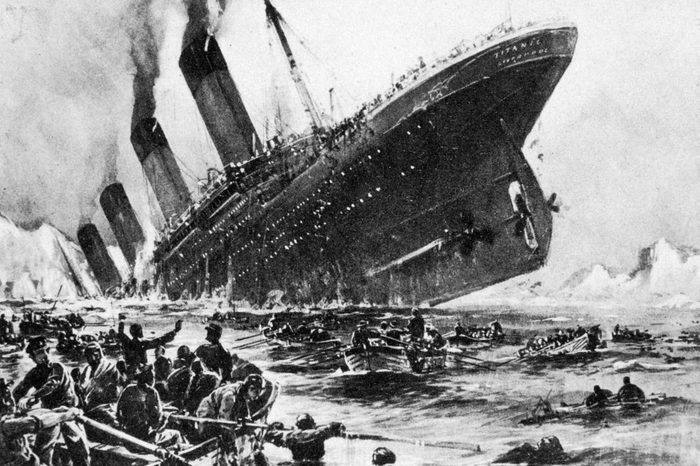
The Titanic tragedy
Journalist William Thomas Stead doubled as a psychic, launching his own supernatural magazine, Borderland, in 1893. Strangely, Stead’s claims of clairvoyance might not have been so far-fetched. He wrote an 1886 piece of fiction detailing the tragedy of a ship sinking without enough lifeboats, with the editor’s note, “This is exactly what might take place and will take place if liners are sent to sea short of boats.” Another short of Stead’s short stories from the early 1890s describes a rescue mission after a ship hits an iceberg in the Atlantic Ocean. Of course, those stories mirror the sinking of the Titanic in 1912, when the lack of lifeboats resulted in about 1,500 lives lost after the ship crashed into an iceberg. But even weirder? Stead was a passenger on the Titanic and died in the tragedy. Find out some more fascinating facts you never knew about the Titanic.
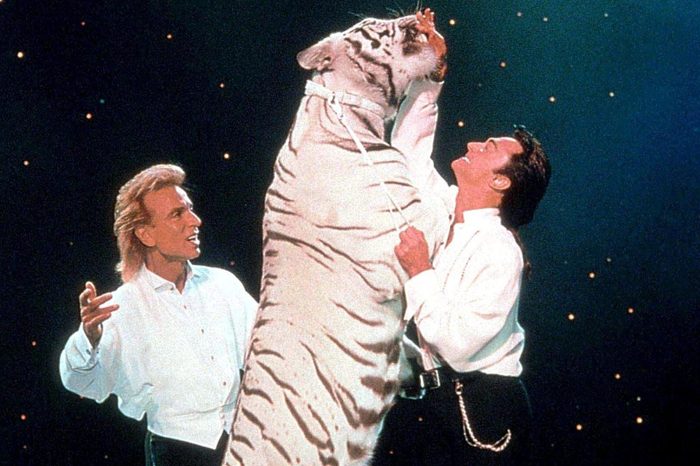
Siegfried & Roy tiger attack
A 1993 Simpsons episode includes a spoof of Siegfried & Roy, a Las Vegas show featuring the German-American illusionist duo Siegfried Fischbacher and Roy Horn. The Simpsons version, Gunter and Ernst, ends with one of the entertainers’ tigers mauling the pair. Tragically, that attack would become a reality ten years later. During an October 4, 2003, performance, a tiger attacked Horn, leaving him partially paralyzed and ending the show for good.
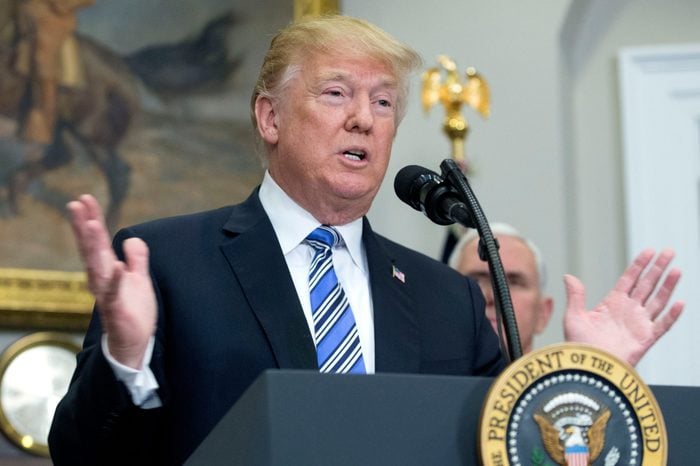
Trump’s presidency
The Simpsons has been credited with other scarily accurate predictions, including the March 19, 2000 episode in which Bart envisions Lisa as a future U.S. president, mentioning her predecessor President Trump. The show wasn’t the first to predict Donald Trump running for president, though. In 1999, Rage Against the Machine released its music video for “Sleep Now in the Fire”—and one member of the crowd holds up a sign reading “Donald J. Trump for President 2000.” The band didn’t prove a rare clairvoyance though; Trump has been toying with the idea of a presidency since at least 1987. These innovations and historical events that were predicted more than a full century before they happened are even more impressive.

News on iPads
In 2001: A Space Odyssey, author Arthur C. Clarke imagines his astronaut reading news from Earth on a device called a Newspad. “He would hold the front page while he quickly searched the headlines and noted the items that interested him. Each had its own two-digit reference; when he punched that, the postage-stamp-sized rectangle would expand until it neatly filled the screen and he could read it with comfort,” Clarke writes in 1968—decades before the 2010 introduction of the iPad, which is eerily similar. It’s so similar, in fact, that when Apple sued Samsung for ripping off its tablet idea, Samsung argued that Clarke came up with the idea way before Apple. Clarke even hit the nail on the head over the type of clickbait that minute-to-minute news cycle would produce. “The more wonderful the means of communication, the more trivial, tawdry, or depressing its contents seemed to be. Accidents, crimes, natural and man-made disasters, threats of conflict, gloomy editorials—these still seemed to be the main concern of the millions of words being sprayed into the ether,” he writes.
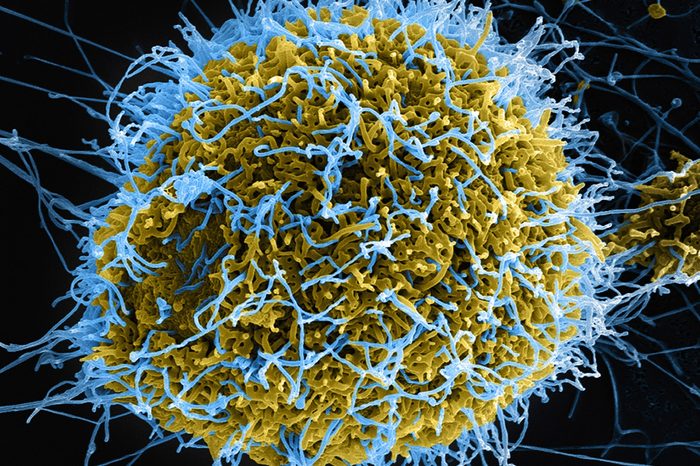
Ebola in the United States
The Ebola outbreak in West Africa in was publicized in March 2014, but no confirmed U.S. cases had been announced until September 30. Considering it takes almost a week to write, animate, and produce a South Park episode, conspiracy theories flared when its “Gluten Free Ebola” aired just a day later. Still, the plot centers around the town giving up gluten—not catching Ebola—so it probably wouldn’t have been hard to change the title so last-minute. Conspiracy theorists were actually right about these 12 crazy theories that turned out to be true.
Movies on streaming and DVDs
In a 1987 interview, OMNI magazine asked film critic Roger Ebert to predict the future of TV vs. movies. His response: “You’ll not go to a video store but instead order a movie on demand and then pay for it. Videocassette tapes as we know them now will be obsolete both for showing prerecorded movies and for recording movies. People will record films on 8mm and will play them back using laser-disk/CD technology.” Video-on-demand was introduced in the 1990s—and eventually gave way to Netflix and other streaming platforms, which are proving major competition with cable TV. Work inventing CDs for movies started in 1986, but the standard DVD as we know it wasn’t introduced until 1995. Of course, now even those are being replaced by Blu-rays.
49ers starting player
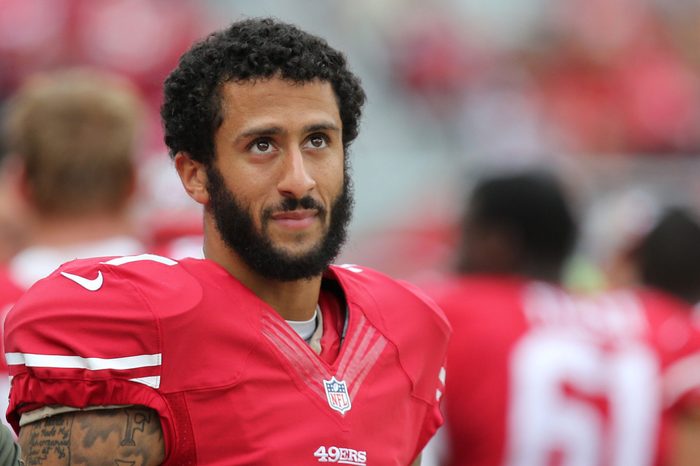
As a 4th grader, Colin Kaepernick wrote a letter predicting his future—and got it spot-on. The elementary student said he’d be somewhere between 6 feet and 6 foot 4 (he’s now 6 feet, 4 inches tall) and because he was a “good athelet” at that point, he figured he’d play pro football for either the San Francisco 49ers or Green Bay Packers, “even if they aren’t good in seven years.” Fast-forward to 2011, and Kaepernick was drafted to the 49ers. The next year, he would become a starting quarterback.
BP oil spill
In the 1970s, BP released a board game called BP Offshore Oil Strike. Players took on the role of oil tycoons, racing to get the most product to their countries. In their way were “hazard cards” with perils such as: “Blow-out! Rig damaged. Oil slick clean-up costs. Pay $1 million.” Sadly, it wasn’t all a game. A BP oil rig explosion in April 2010 killed 11 people, leaked 3.19 million barrels of oil into the Gulf of Mexico, and cost the company $61.6 billion, making the 1970s pretend catastrophe look like a blessing. These 8 other spooky and bizarre historical coincidences are no game, either.
Advent of social media
Bill Gates published Business @ the Speed of Thought: Succeeding in the Digital Economy in 1999. (For context, that’s just a year after Google hit the World Wide Web.) Even though household Internet use was still in its infancy, Gates had some pretty spot-on predictions for its future. Some of the most accurate: “Private websites for your friends and family will be common, allowing you to chat and plan for events” (Facebook); “Devices will have smart advertising. They will know your purchasing trends, and will display advertisements that are tailored toward your preferences” (those ads you keep seeing the shoes you were just looking at); “People looking for work will be able to find employment opportunities online by declaring their interest, needs, and specialized skills” (LinkedIn). We knew Gates is a forward thinker, but this is startling.
Mark Twain’s death
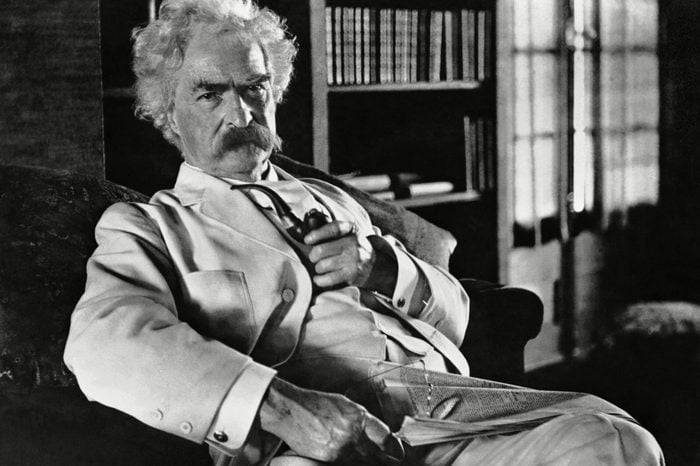
Halley’s Comet is only visible every 76 years or so, and Mark Twain was born during its 1835 appearance, around the time it was closest to Earth. According to his biographer, Twain predicted that he’d die during its next appearance a year before it came. “I came in with Halley’s comet in 1835. It is coming again next year, and I expect to go out with it. It will be the greatest disappointment of my life if I don’t go out with Halley’s comet. The Almighty said, no doubt: ‘Now here are these two unaccountable freaks; they came in together, they must go out together,’” Albert Bigelow Paine quotes Twain saying in a 1912 biography. Indeed, the author—who apparently knew during that quote that he had heart trouble, just not how serious it was—did pass on April 21, 1910, the day after the comet’s brightest point. But for every spot-on prediction, there’s a prediction about the future that was dead wrong, like these 13.
