


7 Times Crazy Weather Changed the Course of History

Updated: May 15, 2024





Mother Nature is powerful—so powerful, in fact, that there are times when the very course of historical events has been altered due to her forces.
When weather changed history
Sometimes we forget how much power nature has over the life that we live today. Throughout history, raging monsoons, arctic temperatures, and even fog have altered the course of important events. The results of natural conditions changing the course of history as we know it are so shocking that they may even sound fake. Don’t miss more history facts that sound fake, but aren’t.
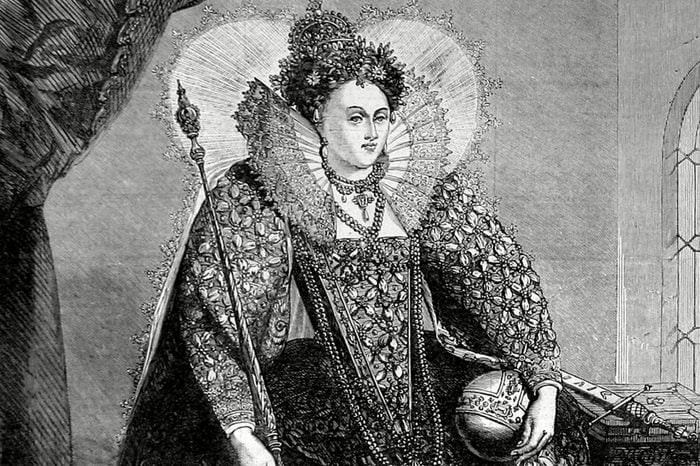
“God blew and they were scattered”
In 1588, King Phillip II of Spain sent his Spanish Armada to invade England. The goal was to return the nation from a Protestant land back to a Catholic one. Things were going fine, until the Armada made it to Calais, where each boat dropped its anchor and waited to join forces with the Spanish army. But while the fleet was anchored, the English attacked, sending eight burning ships into the crowded harbor. Mother Nature attacked too. High winds and waves from an Atlantic storm, plus the fire ships, left the Spanish Armada with no choice but to return to Spain. It was too late for most of the Armada, though. Less than half of the 130-ship fleet returned home, and 20,000 troops perished. England’s Queen Elizabeth attributed the fateful storm to divine intervention, inscribing commemorative medals with the phrase “God blew and they were scattered.” Find out the 10 historical figures who might not have existed.
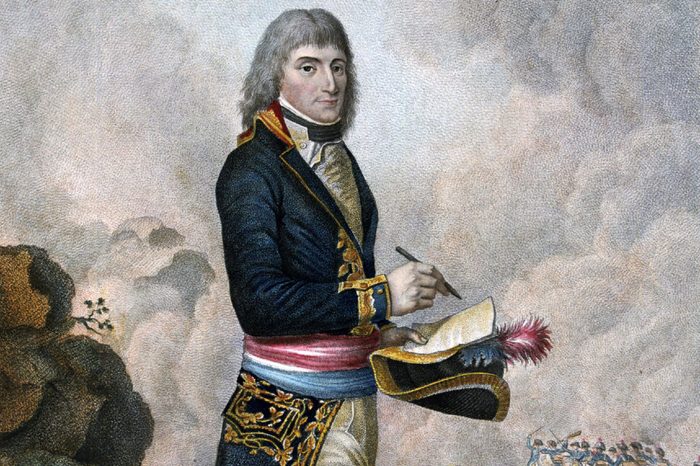
Napoleon’s invasion of Russia
Napoleon Bonaparte could get a bit cocky at times. So when he decided to invade Russia in 1812, against the advice of several fellow officers, it wasn’t a huge surprise that the invasion was a failure. His biggest challenge? Many historians say it was the weather. Napoleon’s 600,000 men and more than 200,000 horses were no match for Russia’s -20 to -4 degree winters. Many horses died, and without them, the army was unable to transport its weapons and supplies. Starvation and disease set in, and when defeat became inevitable, Napoleon abandoned the army and returned home on a sleigh to prevent a coup.

Hitler’s invasion of Russia
Despite Napoleon’s surrender to the Russian winter a century earlier, Hitler led his troops there too on June 22, 1941, during World War II. He figured the campaign, dubbed Operation Barbarossa, would last just a few months, and that the group would be in and out before October. Presumptuously, they left most of their winter gear at home—and they paid the price for it. “I was struck with horror and realized that they had no eyelids,” wrote Italian journalist Curzio Malaparte about watching the German troops return home. “The ghastly cold of that winter had the strangest consequences. Thousands and thousands of soldiers had lost their limbs; thousands and thousands had their ears, their noses, their fingers and their sexual organs ripped off by the frost. Many had lost their hair… Many had lost their eyelids. Singed by the cold, the eyelid drops off like a piece of dead skin.” And if that wasn’t tough enough, Operation Barbarossa was a German loss. Learn 10 disturbing history facts you never learned in school.
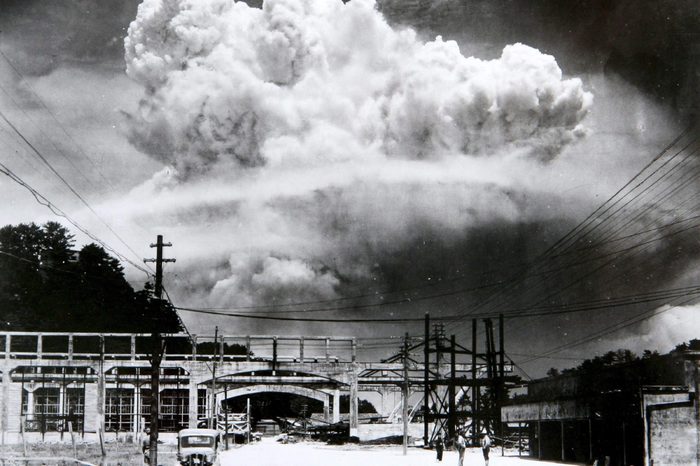
The bombing of Nagasaki
When American bomber Bockscar took off from Tinian island on August 9, 1945, it’s initial target wasn’t Nagasaki—it was the Japanese city of Kokura, where a major Japanese arsenal was located. But when the bomber approached the city, its target was obscured by dense clouds. Pilot Charles W. Sweeney circled the area three times before deciding to move onto the mission’s secondary target, Nagasaki. The cloud that saved one city doomed the other. At 10:58 a.m. local time, Bockscar dropped its nuclear bomb, killing an estimated 35,000 and obliterating 44 percent of the city.
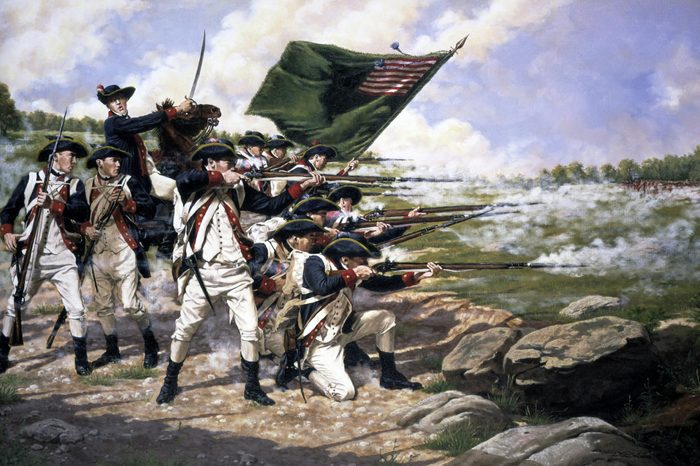
The battle of Long Island
Although the Battle of Long Island was a British victory in the Revolutionary War, it could have been much more disastrous if it weren’t for a brief period of lucky weather that favored the Continental army. After a week of fighting the British in Long Island and Brooklyn, commander-in-chief George Washington decided it was time to cross the East River from Brooklyn to Manhattan and withdraw. He started the ferrying process at night, but by morning a large part of the army was still on the wrong side of the river. Had the British seen them, they likely would have been killed or captured. But instead, Mother Nature sent cover: a dense fog descended over the area and concealed the ferrying of Washington’s troops. By the time the fog lifted and the British charged, the Continental army was gone. Had Washington lost those men, it’s highly possible the war could’ve turned out differently. Test your knowledge with the 10 U.S. war history questions people never get right.
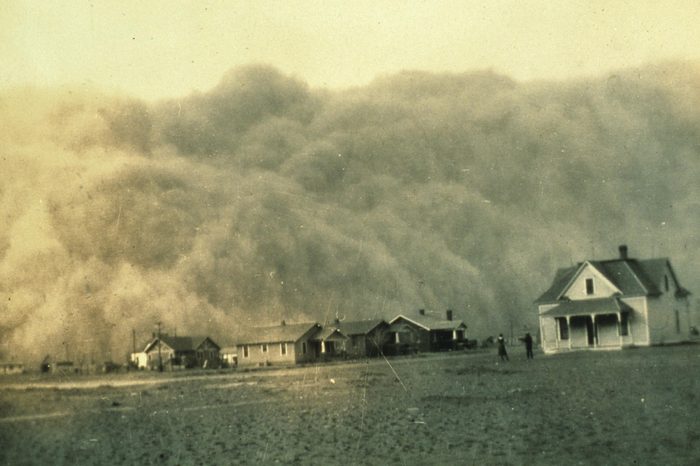
The dust bowl
While the rest of the country struggled with the Great Depression in 1929, farmers in the Southern Plains continued to grow crops and bring in money. Then, in 1931, the rain stopped and those same workers went from being the most prosperous people in the nation to the most imperiled. Dust storms rolled through the plains, picking up topsoil and obliterating the area’s agriculture. Families packed up and moved west, altering the course of the Southern Plains forever.
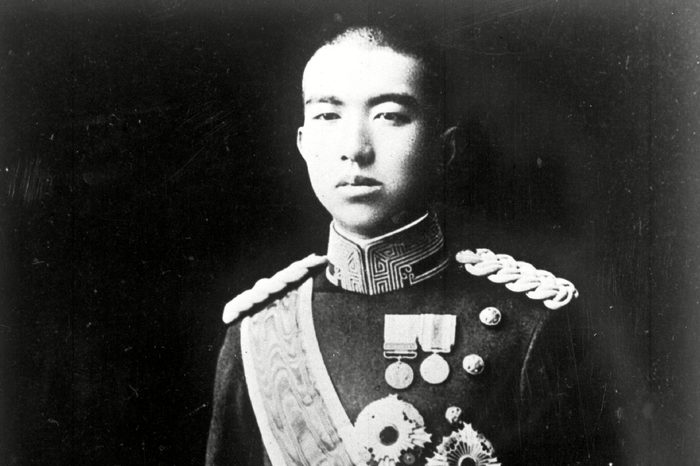
The Kamikaze winds
When it comes to maintaining an empire, there’s no better propaganda than claiming the gods are on your side. That’s what the emperor of Japan did in 1274 and 1281 when Kublai Khan’s Mongol fleets failed to conquer Japan because two major typhoons destroyed his ships. As the story goes, the emperor summoned the “kamikaze”—or divine—winds to save Japan. Emperor Hirohito retold the story of the kamikaze winds during World War II, when he asked his fighter pilots to become his divine winds and protect the nation from Allied forces. Next up, learn the 9 historical moments that never happened.
Originally Published: July 15, 2020

