


15 Rugged Mountain Dog Breeds That Love Adventures


Updated: Apr. 23, 2024





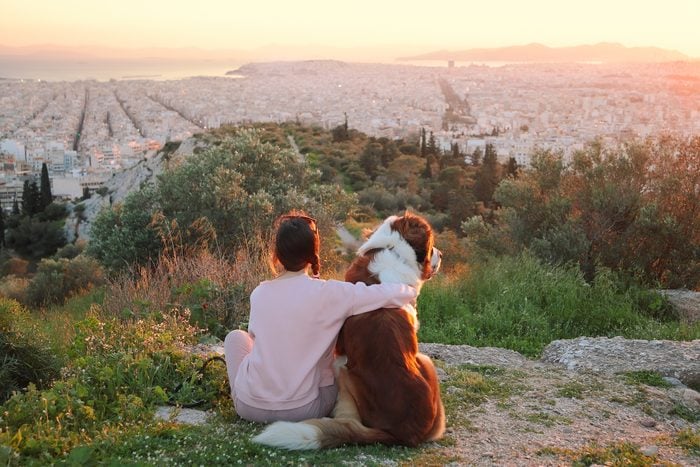
Whether you're looking for a beloved Berner or mighty mastiff, these mountain dog breeds come in all shapes and sizes
With their majestic manes, rugged good looks and rich histories, it’s hard not to instantly feel drawn to mountain dog breeds. Originating from all corners of the earth, these incredible canines have become some of the most popular dog breeds today. They come in a multitude of coat colors and sizes, and while some make excellent family companions or guard dogs, others are known for their athletic prowess and herding abilities. What they do have in common, though, is that their history can be traced back to mountainous regions in Portugal, Germany, Austria, Russia and beyond, and many continue to serve as working dogs in their own rugged locales.
For more insight on the most popular mountain dog breeds, we spoke with two experts on the topic: Dayna L. Dreger, PhD, who works on the Dog Genome Project for the National Institutes of Health, and Ambika Vaid, DVM, an integrative veterinarian at the Holistic Veterinary Care and Rehabilitation Center in Oakland, Calif. Ahead, we’ve rounded up the best rugged mountain dogs breeds.
Get Reader’s Digest’s Read Up newsletter for more pet insights, cleaning, humor, travel, tech and fun facts all week long.
About the experts
Reviewed for accuracy by: Caroline Coile, PhD, an award-winning journalist specializing in canine breeds, health and science. She’s the author of 34 books, including Barron’s Encyclopedia of Dog Breeds. |
What are mountain dog breeds?
Technically speaking, mountain dogs aren’t considered a separate breed group recognized by the American Kennel Club (AKC), Dreger says. “They are mostly split into the AKC Working and Herding groups,” she says. “They are termed mountain dogs due to their origin and use throughout mountain ranges.”
The Federation Cynologique Internationale (FCI), the world’s largest dog organization, does have a separate group for Swiss mountain dogs, cattle dogs and mountain dogs (which it labels Molossian Mountain type) and includes mountain breeds from Europe, Asia and North America.
Each mountain dog breed has its own unique and distinct personality, and there’s not a one-size-fits-all package for these pups. However, they do have some commonalities. For starters, because these dogs were bred to thrive in the great outdoors, many mountain dog breeds do benefit from purposeful socialization. In addition, some breeds can be more difficult to train and therefore do require an experienced human owner or behavior training classes to ensure they are living their best life.
The history of mountain dog breeds
Given that every mountain dog breed is unique, they have varying histories and backgrounds. However, one common thread is that, as you might have guessed, they originally thrived in the mountains—and some still do to this day!
“The breeds originate around mountain ranges and have historical jobs related to those areas, such as guarding and moving livestock and transporting people or items over mountainous terrain,” Dreger says. “They tend to be rugged breeds, well-suited to the weather and harsh environments.”
1. Bernese mountain dog
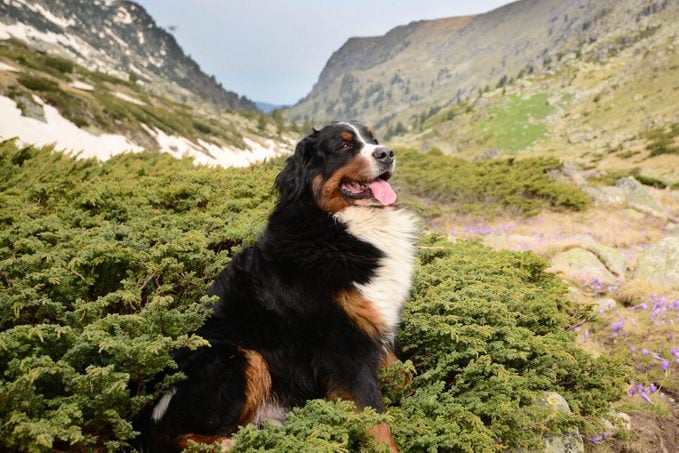
Bernese mountain dogs are strong, yet gentle giants who hail from the beautiful Swiss farmlands. Medium to large in size, they are beloved for their soft, sweet disposition as well as their intelligence and keen desire to learn during training.
Dreger says this breed is very similar to the Greater Swiss mountain dog, which makes sense when you consider they each originated in the Swiss Alps and are known for their impressive appearance. The Bernese is a little smaller than the Swiss, though it’s still certainly a big dog breed with a dense, medium-length coat. “It served as a carting dog, but would also fill the role of driving livestock and guarding ones property,” Dreger says. “Today, the Berner is very popular among pet owners due to his happy, stoic and laid-back attitude”
According to the AKC, Berners are also known for their patience with children and their love for their own family. They are quite adorable looking with their thick coats and floppy ears, and their coat is always a striking black, tan and white. Not surprisingly, they’re considered one of the best dogs for first-time owners.
| Breed overview | |
| Height: | 23 to 28 inches |
| Weight: | 70 to 115 pounds |
| Life expectancy: | 7 to 10 years |
2. Saint Bernard
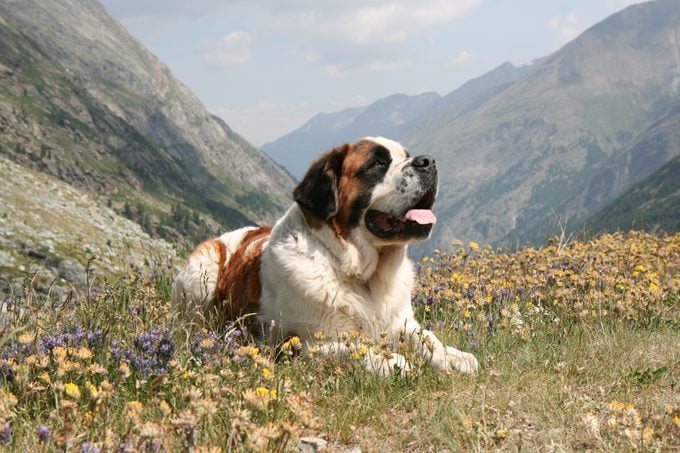
Famous for its sizable build and gentle disposition, the Saint Bernard is one of the more popular Swiss mountain dog breeds. They are an amiable, go-with-the-flow sort of pooch with a muscular build that makes them excellent workers.
“Because of how large they are, training early on is very important,” says Dr. Vaid. “Saint Bernards are loving dogs and love to jump on people as a sign of affection, which can be dangerous with their large size and needs to be trained out of them early on.” The breed does not require a lot of exercise, she says. In fact, a long walk or 30 minutes of playtime is usually enough.
Saint Bernards comes in two coat lengths: long and short. The long is really more like a medium length, and the short is very dense. The color is usually red (or sometimes brindle) with extensive white trim over a black mask. Like many dogs with big hanging lips, they are famous for their drool!
| Breed overview | |
| Height: | 26 to 30 inches |
| Weight: | 120 to 180 pounds |
| Life expectancy: | 8 to 10 years |
3. Kuvasz
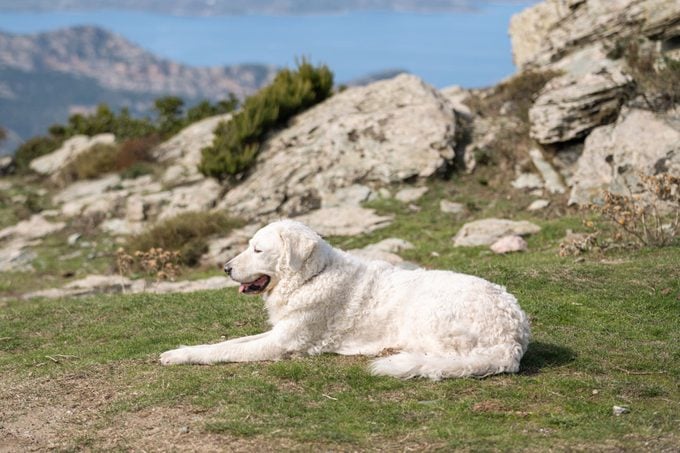
The kingly Kuvasz is a famed mountain dog from Hungary. Its beautiful, all-white coat is among its most distinct features, along with that muscular frame and those gentle eyes. Despite its large size, this breed is surprisingly agile and quick—especially when dealing with predators. While the Kuvasz breed has long thrived in the great outdoors, they are slowly becoming a loving household companion. Still, they require a lot of exercise and will need thorough training under the gentle hand of an experienced owner.
| Breed overview | |
| Height: | 26 to 30 inches |
| Weight: | 70 to 115 pounds |
| Life expectancy: | 10 to 12 years |
4. Estrela mountain dog
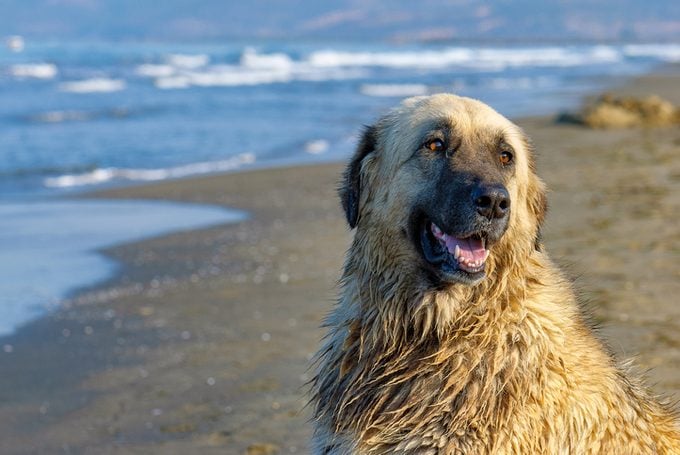
With roots in Portugal, the majestic Estrela mountain dog is a loyal breed renowned for its strong guarding instincts, intelligence and independent nature, notes the AKC. They’re robustly built with a dense coat, which can be long or short—often in shades of fawn, brindle or yellow—which helps provide excellent insulation against harsh mountain climates. In fact, they’ve historically been utilized as guardians of livestock in the rugged terrain of the Estrela Mountains.
This breed is relatively high-energy and strongly benefits from consistent training and socialization from early pup-hood. Despite their imposing appearance, well-trained Estrela mountain dogs display a gentle and loyal demeanor toward family members and children that make them a cherished family guard dog and companion.
| Breed overview | |
| Height: | 24.5 to 29 inches |
| Weight: | 77 to 132 pounds |
| Life expectancy: | 10 to 14 years |
5. Leonberger
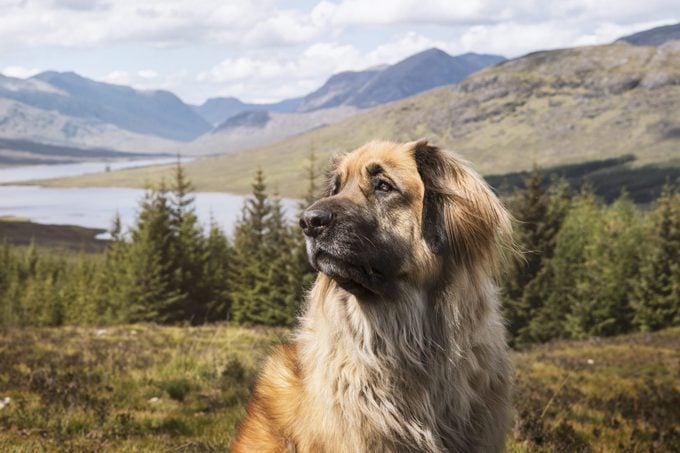
The Leonberger is a mighty dog breed that looks like a lion and can weigh an impressive 170 pounds. While a bit intimidating, this mountain dog breed is known for its majestic grace and unwavering kindness and is also known for being extremely patient with humans and other animals. Still, they are not easily fooled! This breed’s intelligence, vigilance and impressive sense of judgment makes them exceptional guard dogs.
| Breed Overview | |
| Height: | 25 to 32 inches |
| Weight: | 90 to 170 pounds |
| Life expectancy: | 7 years |
6. Anatolian shepherd
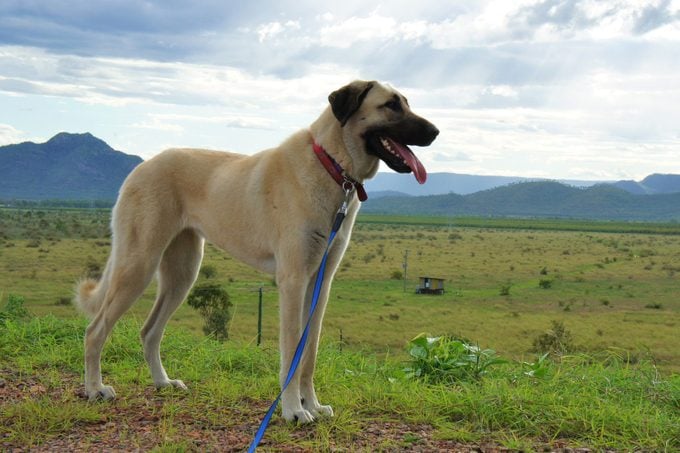
The Anatolian shepherd is the descendent of an ancient herding breed from Turkey. They’re quite unique looking with their short, golden-hued coats and black facial markings. “These breeds tend to be protective and wary of strangers; training early on is highly recommended,” Dr. Vaid says. “Anatolians were bred to work outdoors, and for this reason, they have a very thick undercoat. They will shed their undercoats twice a year, and during this time they will need to be thoroughly brushed.”
While this mountain dog breed is described as loyal, independent, patient and intelligent, they aren’t quite as affectionate as the other breeds on this list. Still, the Anatolian is loving, gentle and protective of everyone living under its roof, including other family pets.
| Breed Overview | |
| Height: | 27 to 29 inches |
| Weight: | 80 to 150 pounds |
| Life expectancy: | 11 to 13 years |
7. Great Pyrenees mountain dog
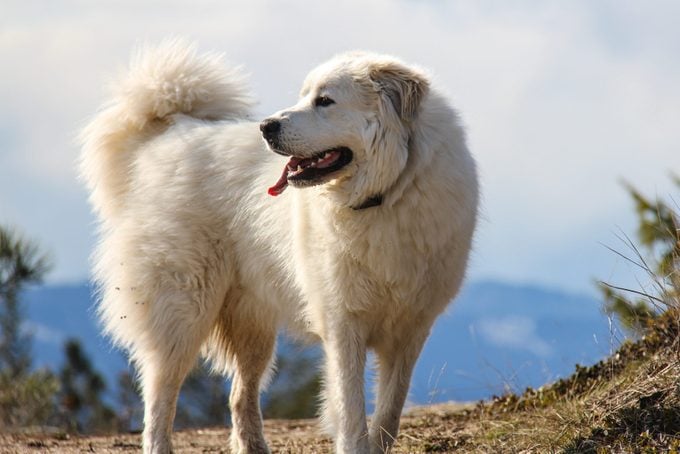
Topping out at about 150 pounds, the Great Pyrenees mountain dog is a modestly large dog that looks even bigger thanks to its all-white fluffy coat. “As the name implies, the Great Pyrenees originated in the Pyrenees mountains of France and Spain, where he served as a livestock guardian,” Dreger says. “These dogs were meant to live with their charges, usually sheep, goats or cattle, in mountain pastures year round. They protected them from predators and poachers and assisted in moving the animals from place to place. This breed is still used to guard livestock today, but it can also be found as a loyal and watchful companion.”
The Great Pyrenees is noted for being exceptionally calm and patient, making it a good choice for families. And although they love a good cuddle session, these dogs are also intelligent, independent thinkers who don’t mind being on their own.
| Breed Overview | |
| Height: | 25 to 32 inches |
| Weight: | 85 to 150 pounds |
| Life expectancy: | 10 to 12 years |
8. Hovawart
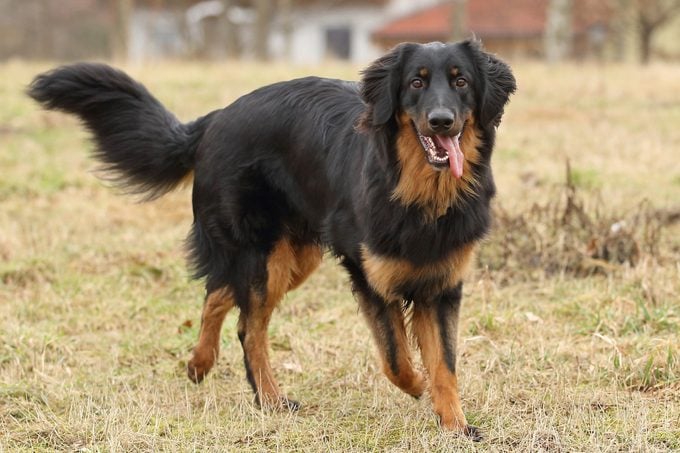
The playful and friendly hovawart, which has roots in Germany, is one of the smaller breeds on our list. What they lack in size, though, they make up for in protective instincts, affectionate personalities and deep loyalty. The AKC says this mountain dog breed is a supremely faithful friend that loves its humans—to the point of sometimes being aloof to strangers while sticking super close to their cherished family.
This mountain dog breed has a notable appearance characterized by a dense double coat in shades of black and gold, black or blonde. Renowned for its intelligence and trainability, this breed historically thrived in noble roles like search and rescue, therapy work and competitive obedience. Hovawarts do well in environments where they receive ample mental and physical stimulation alongside loving companionship.
| Breed Overview | |
| Height: | 23 to 28 inches |
| Weight: | 65 to 90 pounds |
| Life expectancy: | 10 to 14 years |
9. Greater Swiss mountain dog
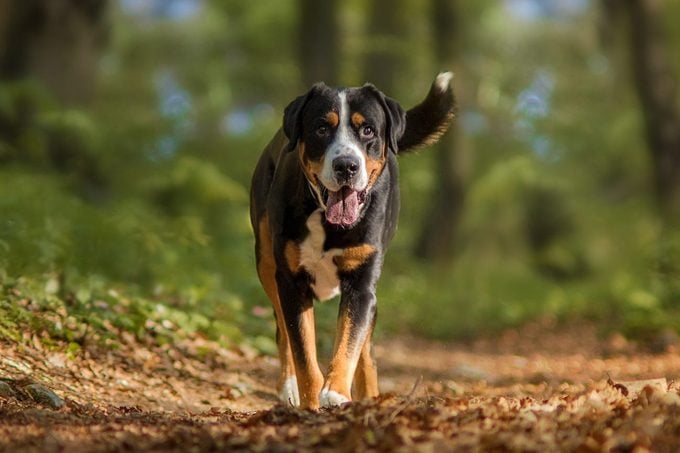
Very similar to the Bernese mountain dog, the Greater Swiss mountain dog is a high-energy, majestic breed built for herding sheep on the Swiss Alps, hence its name. This hardworking breed is especially known as a steadfast, loyal dog with deep affection for its family. The fact that they’re so eager to please makes them easier to train compared to some of the other mountain dog breeds on our list. Note that the Greater Swiss is one of the four types of Swiss mountain dogs (the other three are the Bernese mountain dog, Appenzeller Sennenhund and Entlebucher Sennenhund).
| Breed Overview | |
| Height: | 25 to 27 inches |
| Weight: | 85 to 140 pounds |
| Life expectancy: | 8 to 11 years |
10. Appenzeller Sennenhund
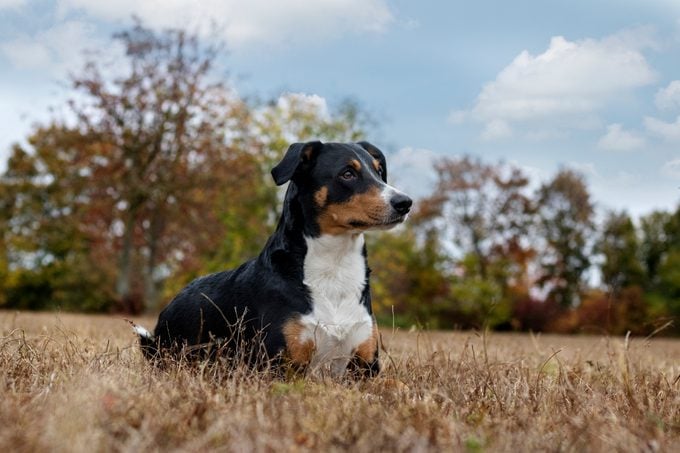
Also known as the Appenzell cattle dog or Appenzeller mountain dog, the charming, medium-sized Appenzeller Sennenhund is known for its agility, sprite and lean muscular build. This breed is another that tends to thrive during training thanks to its intelligence, adaptability and eagerness to obey its owners. Given that, Appenzeller Sennenhunds can serve as fantastic watchdogs, driving dogs, farm dogs or house dogs. They’re mainly black with a white chest and red, copper-like markings around the face and paws. Because they’re tricky to train, Dr. Vaid doesn’t recommend this breed for inexperienced dog owners.
“This is a herding breed with unlimited amounts of energy,” says Dr. Vaid. “They typically do well when they have a job to do, as they need to stay busy to tire themselves out. It’s also a very watchful and protective breed. They tend to be protective of their family, territory and home.”
| Breed Overview | |
| Height: | 19 to 22 inches |
| Weight: | 48 to 70 pounds |
| Life expectancy: | 12 to 15 years |
11. Newfoundland
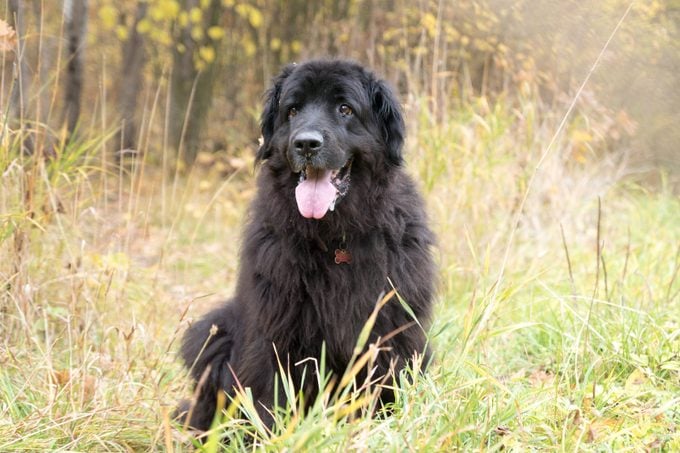
Delightfully oversized, the Newfoundland is a lovey-dovey, patient, big old softie of a pooch. This mountain dog breed is known for being one of the best dogs for kids and is particularly affectionate with its own family members. Also known as the Newfie, this is one of the world’s largest dog breeds, and you might feel intimidated by its presence. However, the AKC notes that Newfoundlands are unfailingly sweet in nature, responding better to gentle guidance as opposed to aggressive or direct commands.
“The most important characteristic of a Newfoundland is their sweet temperament,” says Dr. Vaid. “They are very rarely ever timid, skittish or aggressive. Instead, this breed is typically very outgoing, intelligent and confident. Their heavy coat requires brushing on a weekly basis, and more during their shedding seasons.”
| Breed Overview | |
| Height: | 26 to 28 inches |
| Weight: | 100 to 150 pounds |
| Life expectancy: | 9 to 10 years |
12. Caucasian shepherd dog
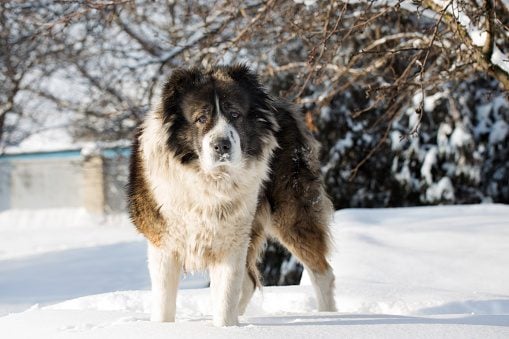
Bred to deal with wolves among sheep, the Caucasian shepherd dog has been praised for centuries as a fearless and bold watchdog eager to protect its family and herds. Though quick to come to the rescue against enemies, they are very friendly and protective toward their own family members. While traditionally kept as working dogs, Caucasian shepherd dogs can become a good family companion but require an experienced owner.
| Breed Overview | |
| Height: | 23 to 30 inches |
| Weight: | 99 to 170 pounds |
| Life expectancy: | 10 to 12 years |
13. Tibetan mastiff
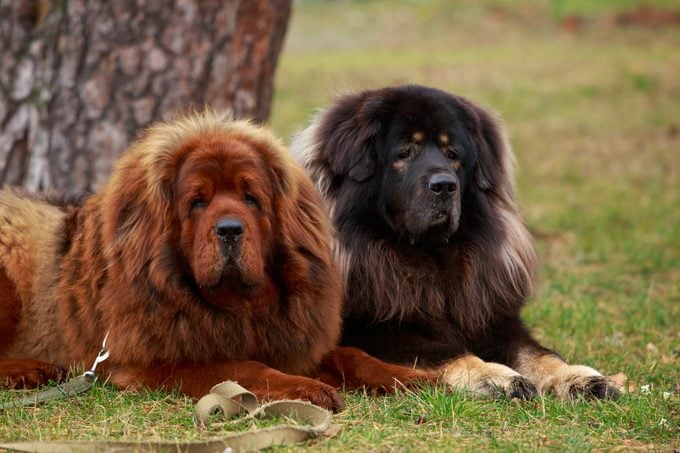
The so-big-it’s-adorable Tibetan mastiff was originally bred as a protector of livestock and property in Tibet, hence its name. Today, this large mountain dog breed makes for a great watchdog—and any intruder that crosses this imposing giant’s path will surely think twice before entering! While massive, this breed still makes for an ideal family companion that deeply loves its humans; the AKC notes they are great with kids.
| Breed Overview | |
| Height: | 24 to 26 inches |
| Weight: | 70 to 150 pounds |
| Life expectancy: | 10 to 12 years |
14. Colorado mountain dog
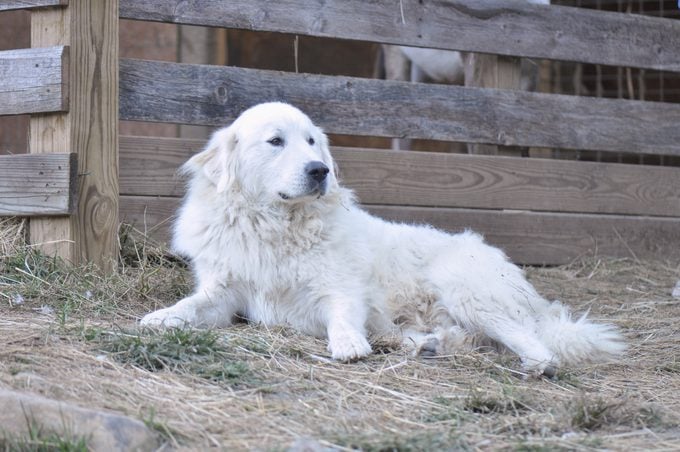
The Colorado mountain dog is a newer breed, created in 2005, and was raised to guard livestock on small acreage farms. They were specifically bred for their size and temperament toward mountain lions, wolves and any other predators of small livestock. Along with this temperament, they’re also extremely friendly with humans and can keep both humans and livestock feeling at ease on the farm.
| Breed Overview | |
| Height: | 26 to 29 inches |
| Weight: | 80 to 120 pounds |
| Life expectancy: | Unknown |
15. Entlebucher mountain dog
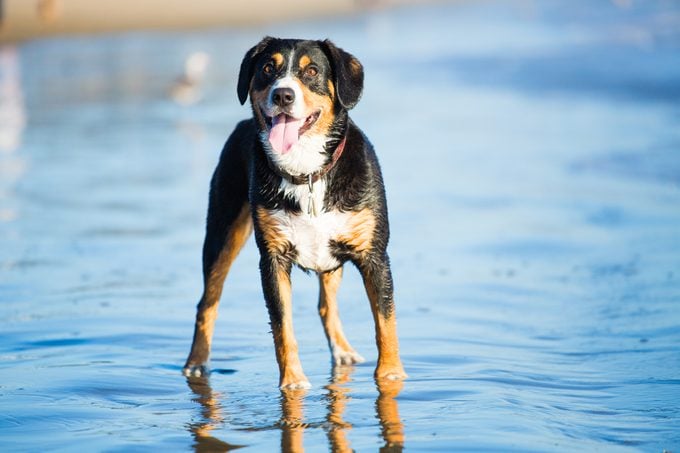
Known for its loyalty, enthusiasm and intelligence, the Entlebucher mountain dog is a cattle herding dog that originated in the Swiss Alps. Its name translates to “laughing dog,” which was given because of its happy-go-lucky personality—and it’s quite contagious! This mountain dog breed is very affectionate with adult family members, and they are also very good with other canines. To keep them laughing, make sure to give this breed plenty of exercise and lots of mental stimulation.
| Breed Overview | |
| Height: | 16 to 21 inches |
| Weight: | 40 to 65 pounds |
| Life expectancy: | 11 to 13 years |
Why trust us
At Reader’s Digest, we’re committed to producing high-quality content by writers with expertise and experience in their field in consultation with relevant, qualified experts. For this piece, Wendy Rose Gould tapped her experience as a veteran reporter covering pets, and then Caroline Coile, PhD, an award-winning journalist specializing in canine breeds, health and science, gave it a rigorous review to ensure that all information is accurate and offers the best possible advice to readers. We verify all facts and data, back them with credible sourcing and revisit them over time to ensure they remain accurate and up to date. Read more about our team, our contributors and our editorial policies.
Sources:
- Dayna L. Dreger, PhD, staff scientist working on the Dog Genome Project at the National Human Genome Research Institute at the National Institutes of Health; email interview, Jan. 31, 2024
- Ambika Vaid, DVM, integrative veterinarian at the Holistic Veterinary Care and Rehabilitation Center in Oakland, Calif., and veterinarian advisor to Badlands Ranch; email interview, Jan. 31, 2024
Originally Published: March 19, 2024

