


How to Get Out Of a Speeding Ticket: 10 Helpful Tips

Updated: Jan. 11, 2024





Need to know how to get out of a speeding ticket? Police officers and ticket-dodgers share their top traffic stop tips.
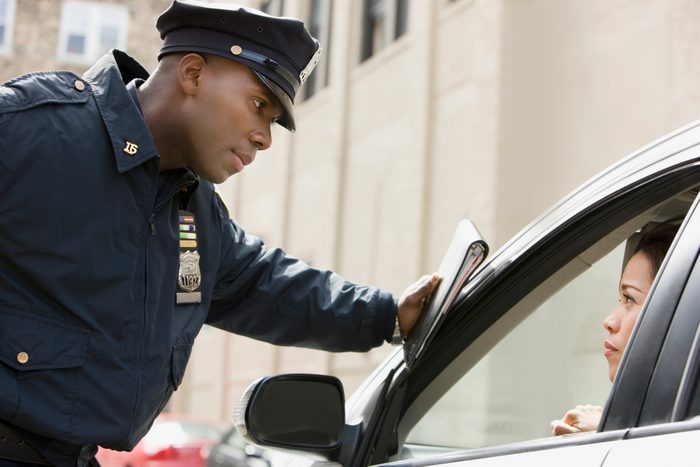
Reduce your chances of getting a speeding ticket with these helpful tips
As a driver, you don’t want to see those red and blue flashing lights in your rearview mirror—especially if you’re pressing the gas pedal a little too hard. A moment of panic may even set in as you’re pulled over: Did a red light camera catch you? How fast did the officer clock you going? And, most likely, your biggest concern is whether you’ll get a speeding ticket or not.
The key thing to do in this situation is to stay calm and remember these helpful tips for reducing your chances of getting a speeding ticket. These tips include things you should (and shouldn’t) say to a police officer, what to do once you’re pulled over, and what to look at if you decide to go to court. After reading these tips, read up on the interesting reason why police officers touch a car’s tail light at a traffic stop.

First, wave “hello”
So you were driving down the road a little faster than you should have been, and you spot a police cruiser lurking behind some shrubbery. One former police officer says that the smartest thing that you can do right then is to wave at the officer. Why? He will either think that you know each other and wave back or will think that you’re acknowledging that you were driving too fast, and are letting him know that you’re slowing down. Either way, you drastically reduce your chance of getting a ticket.

Don’t say “I’m sorry I was speeding”
If you do get pulled over, says one former police officer, never acknowledge that you were, in fact, speeding. You don’t want to give the police any ammunition to use against you, should you contest your ticket in traffic court. When the officer tells you that you are speeding, giving a brief, noncommittal response like, “I see” or “I thought I was going with the flow of traffic” is the way to go. (Asking sarcastic questions like, “What’s the problem, officer?” won’t help your case!)

Ask “How’s your day going?”
According to one officer on Reddit, treating a police officer like a human is a good way to get her to treat you the same way: “A lot of the time when people make small talk and have somewhat of a conversation it humanizes the people we’re dealing with and makes it harder for us to give someone a ticket.” Secret sources who have dodged more than one speeding ticket in their lives also advise that you just get through the meeting with the police as quickly and politely as you possibly can. You don’t want them to remember anything about you, except that you were nice and did what you were told.
Ask “Is it OK if I get my wallet out?”
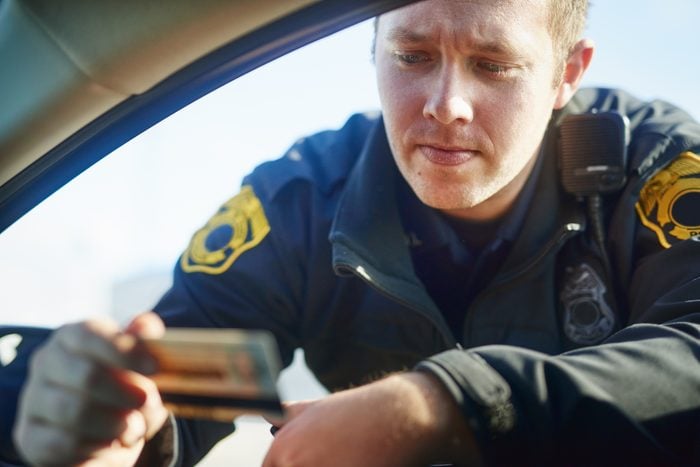
Roadside stops can be the most dangerous (and nerve-wracking) parts of an officer’s job. Showing them you care about their safety will take a load off their mind, and hopefully help win them to your cause. Here’s how to do that without looking suspicious:
- Keep your hands on your steering wheel throughout the encounter.
- If it’s dark out, turn on your dome light.
- Don’t stare at the officer in your side or rearview mirror (“We notice this every time,” says an officer on Reddit, “it looks suspicious and some officers will be more on the defensive.”)
- Ask permission to remove your wallet to retrieve your driver’s license and registration.
Definitely don’t say “Do you know who I am?!”
The same goes for stock bursts of outrage like, “My taxes pay your salary!” and “Don’t you have anything better to do?!” Many officers agree: Not being a jerk is the minimum requirement to getting out of a ticket.
Make sure your car says “I’m law-abiding”
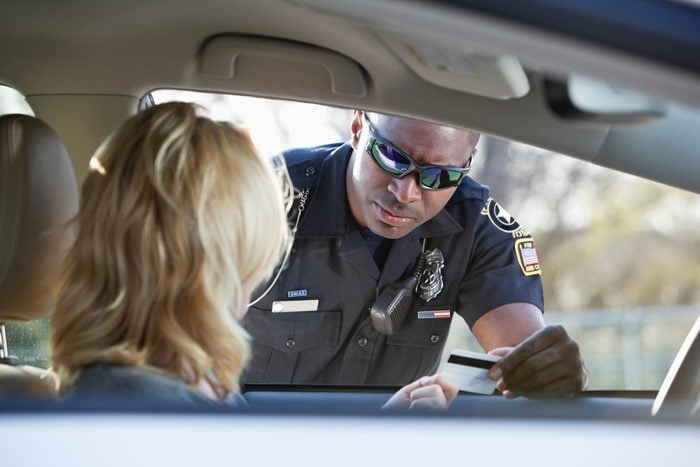
Most officers decide whether you’re getting a ticket or a warning before they even approach your vehicle. A good rule of thumb is to keep your car maintained in such a way that you wouldn’t be embarrassed to drive it to a job interview. Keep it clean, decluttered, and free of bumper stickers that are anti-police or pro-violence. Forgo aftermarket add-ons like spoilers, tinted windows, and neon undercarriage lights. You want to say “I’m responsible and law-abiding,” not “I hate the police, I speed all the time, and I’m trying to hide something from you.” By the way, here’s what a traffic cop first notices about you.
Download helpful technology
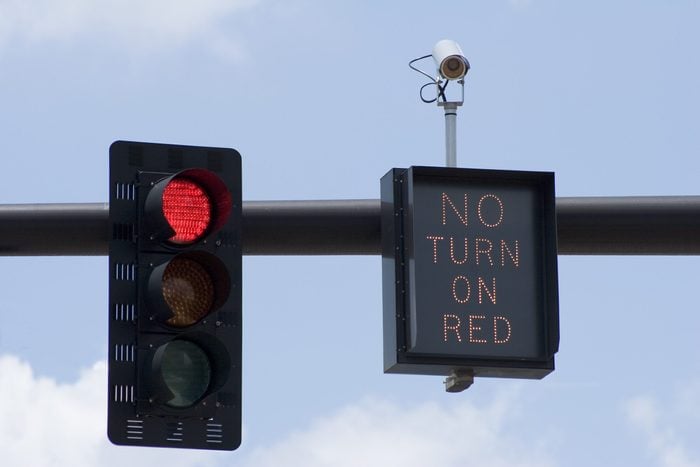
For those who have GPS navigation systems in their cars, here’s an added bonus: You can download additional Points-of-Interest (POI) software onto your gizmo that will tell you when you’re approaching stoplights that are hooked up to traffic cameras. You’ll find links to this software on the GPS manufacturers’ home pages. Here are other car accessories that will change the way you drive.

Say “I’d like a continuance, your honor”
There are tips that can help you in court, too. The more time you put between your speeding encounter and your court date, the better, advise some ticket dodgers. Imagine how many people an officer pulls over in a month. How many of them do you think he’ll remember six months from now, especially if you take your ticket quietly and move on? The more continuances you can reasonably request, the more time you have to collect your evidence and prepare your defense—and the less specific that officer’s recollection of you will be. Getting a continuance also increases the probability that the ticketing officer retires, transfers to another department, or just doesn’t show up for your court date. In almost all of these extenuating situations, the case against you will be dropped.
Look into ways to get your violation reduced or dismissed
There are dozens of ways to have your traffic violations reduced or dismissed—opportunities vary from region to region, so check to see if these apply in your state or province. Here is just a sampling:
- The issuing officer does not show for your court date.
- Two officers were in the patrol car when you received your ticket, and only one shows for the court date. In many jurisdictions, both need to be present to recount their testimony firsthand.
- A factual error on the ticket itself (your license plate number, name, date, or other inarguable fact is incorrect) may get you off the hook.
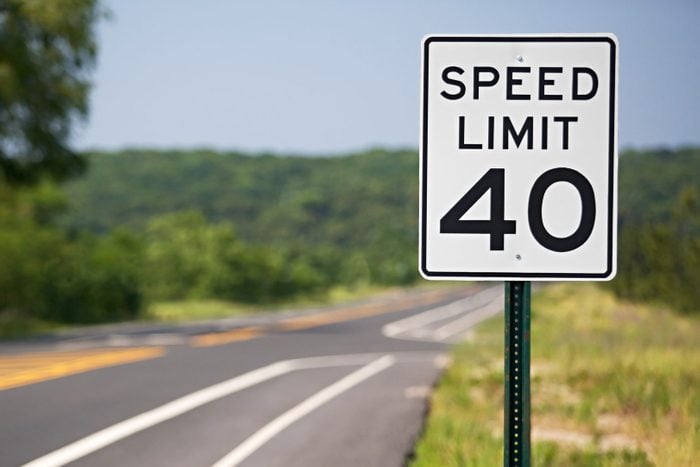
- There is no correct speed limit sign posted within a reasonable distance of where you were pulled over (in the U.S. this distance varies by state, but is usually about 1/4 mile).
Here are more secrets cops aren’t telling you about beating speeding tickets.
Seek an alternative to a conviction
Joseph Gutheinz, who has practiced criminal law for more than two decades and is a retired Federal law enforcement officer, says to seek an alternative to a conviction if you get a speeding ticket. “Take an alternative to a conviction, such as a class for a dismissal or a deferred adjudication,” he explains. “In both cases, the offense will not appear on your record.”
Sources:
- Joseph Gutheinz, attorney at Gutheinz Law Firm, LLP

