We sprinkle these expressions into everyday conversation like linguistic confetti: catchy little turns of phrase that make our language colorful and familiar. We “bite the bullet” when the moment calls for bravery, and say “God bless you” after a sneeze. And while these idioms sound innocuous enough, they are just two of many everyday phrases with dark origins.
And not just mildly dark—more like bloody battlefields and plague-ridden streets dark. Beneath the surface, some of our favorite expressions have surprisingly twisted origin stories. That cheerful saying you dropped at lunch? It may have been born centuries ago in a bloody war, filthy prison or disease-ridden alley.
“Some terms that have dark origins probably felt less dark in their day,” says Jess Zafarris, an etymology expert and co-host of the Words Unravelled podcast. For others, the history isn’t crystal clear—but that’s part of the intrigue. “I think we just like a good story,” she adds. “So we speculate, or we use earlier explanations from people who have just found a good story—or come up with a good one.”
“Idioms have always been, and continue to be, an exercise in creativity, and in many cases, the explanations are not quite as satisfying as some of us would like them to be,” Zafarris says. To shed more light on the subject, I spoke to Zafarris and listened to two podcasts on linguistics. Keep reading to learn more about these everyday phrases with dark origins.
Get Reader’s Digest’s Read Up newsletter for more grammar, knowledge, humor, travel, tech and fun facts all week long.
1/16
READER'S DIGEST, GETTY IMAGES
Raining cats and dogs
Dates back to: 1738
Heavy rain often sends everyone running indoors to stay dry—but centuries ago, there was an even more pressing reason to avoid the streets. “Back when public sanitation was practically nonexistent, a downpour would wash all kinds of unpleasant things into the gutters, including the corpses of dogs and cats,” says Zafarris.
Jonathan Swift captured this grim reality in his 1710 poem “Description of a City Shower.” Although Swift doesn’t use the exact phrasecats and dogs, he does vividly describe “sweepings from butchers stalls, dung, guts and blood, drowned puppies, stinking sprats, all drenched in mud, dead cats and turnip tops come tumbling down the flood.” Those heavy rains sure were a messy business back then.
2/16
READER'S DIGEST, GETTY IMAGES
Diehard
Dates back to: 1792
According to the Oxford English Dictionary (OED), the term originally meant a person who was prepared to fight or offer resistance until death, if necessary. Today, the word diehard means one who refuses to change their opinion with respect to an issue, one who refuses to alter their allegiance to a cause or one who’s an intense fan of something, like a sports team. (I’ll stick with the modern definition. I mean, I love the NY Giants, but I’m not going to die for my football team.)
3/16
READER'S DIGEST, GETTY IMAGES
Crocodile tears
Dates back to: circa 1400
Someone who cries crocodile tears is someone who isn’t actually sad at all but is just feigning the emotion. “It stems from a medieval belief that crocodiles weep while they are devouring their prey, a story that appears in texts like the travels of Sir John Mandeville from the 14th century,” says Zafarris.
But, while crocodiles do produce tears, it’s mostly to moisten their eyes or excrete salt. “The behavior has no emotional base,” she explains. “They may not do so specifically while they’re eating, and they’re not sad about it.” The figurative meaning entered English in the 1560s and is used to describe the hypocritical sorrow of one who’s obviously not sorry.
4/16
READER'S DIGEST, GETTY IMAGES
Pulling one’s leg
Dates back to: 1852
Today, if someone is pulling your leg, it means they are fooling you or joking around with you. However, having one’s leg pulled was once a serious matter that puts this idiom near the top of the list of everyday phrases with dark origins. It’s believed that the phrase originated in 19th-century London, where thieves or pickpockets would trip victims by literally pulling on their legs to knock them over. Then they would rob the hapless victim while they were distracted or on the ground. Yikes!
5/16
READER'S DIGEST, GETTY IMAGES
To wreak havoc
Dates back to: 14th century
The phrase wreak havoc has always had a negative meaning, initially signaling soldiers to pillage and cause destruction on the battlefield. Today, it’s used chiefly metaphorically, like causing chaos in one’s personal life or what your toddler does to the living room.
The first part of this phrase, Zafarris explains, is from the Old English word wrecan, which means “to avenge or to drive out.” Havoc comes from the Old French havot, meaning to plunder or pillage, and “is related probably to the word hawk, which means to grasp or seize, common in both pillaging and ravaging.” The literal cry of the word havoc on the battlefield granted soldiers permission to slaughter, ransack the city of valuables or commit other crimes to their heart’s content.
The first written instance of wreak havoc in the figurative sense, according to the OED, was by Agatha Christie in her 1926 novel The Murder of Roger Ackroyd: “Annie is not allowed to wreak havoc with a dustpan and brush.” Zafarris adds that people often mistakenly say “wreck” havoc instead of wreak havoc.
6/16
READER'S DIGEST, GETTY IMAGES
Bite the bullet
Dates back to: 1844
These days, to bite the bullet is to brace yourself (literally or figuratively) for something unpleasant, like opening your email inbox after vacation. But way back when, it meant something entirely different.
On an episode of the podcast he hosts with Zafarris, self-described “massive word nerd” Rob Watts explains that the idiom bite the bullet dates back to a time when there was no anesthesia. In Western movies, we often see a critically injured person chugging a bottle of whiskey before a crude, on-the-go surgery or amputation. But soldiers in the middle of a battlefield didn’t always have that luxury.
“So an injured soldier would be given something hard to bite down on as they were put in excruciating pain,” Watts says. “And often that would be a bullet, because that’s the sort of thing that a soldier might have in hand.”
7/16
READER'S DIGEST, GETTY IMAGES
Meet a deadline
Dates back to: 1864
The meaning of this common phrase will resonate with journalists who come under fire for missing a deadline. But this phrase originally referred to an actual line drawn on Civil War prison grounds, beyond which escaping prisoners would be shot dead. So yes, missing deadlines used to be a much bigger deal.
Zafarris explains that a man named Henry Wirz was commander of a Confederate military prison in Andersonville, Georgia, which had no gates around the perimeter. “The deadline was a line around the interface of the stockade or wall enclosing the prison. And if you were to step over it, you might be shot.” (Not surprisingly, Wirz was later tried and convicted of war crimes.)
As of 1893, the meaning of deadline had been expanded to mean a date or time by which something must be done or completed. And by 1919, it meant the absolute last minute when copy could be sent to the printer in American newspaper jargon. “It’s unknown if that is 100% the reasoning behind meeting a deadline,” says Zafarris. “But it seems likely that the language could have transferred from that because of the timing. And you know, journalists like a good story.”
8/16
READER'S DIGEST, GETTY IMAGES
God bless you
Dates back to: 6th century
Saying this phrase after a sneeze isn’t just a courtesy; at one point, it was thought to be critical to matters of life and death. “A widespread folk belief was that a powerful sneeze might expel the soul from the body, leaving the person in danger,” says Zafarris. “Saying ‘God bless you‘ served as a protective charm, essentially a verbal shield, to prevent the devil from snatching the dislodged soul.”
Zafarris adds that during a plague in sixth-century Rome, Pope Gregory I allegedly decreed that people who sneeze should “immediately be blessed with ‘God bless you,'” since sneezing was seen as an early sign of the plague. Though there’s no concrete evidence of that, by around 750, the practice of blessing sneezers had become common across Christian Europe.
9/16
READER'S DIGEST, GETTY IMAGES
Sold down the river
Dates back to: 1836
This idiom is rooted in the shameful period in American history when slavery was legal. An enslaved person (especially one regarded as a troublemaker) would often be separated from their families and be transported down the Mississippi River to a plantation with harsher working and living conditions.
Today, being “sold down the river” means to be betrayed or screwed over—though given its racist origin, maybe don’t say it at all.
10/16
READER'S DIGEST, GETTY IMAGES
Mad as a hatter
Dates back to: 1827
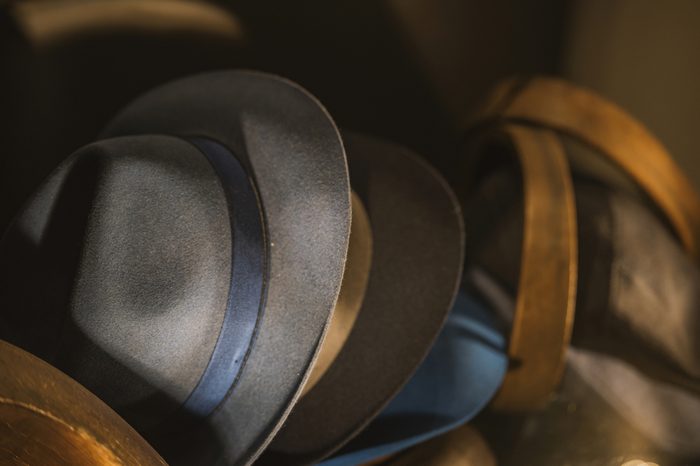
The Mad Hatter is one of the most beloved characters from Lewis Carroll’s 1865 classic Alice’s Adventures in Wonderland. His eccentricity is considered hilarious, but the idea of a hatter being insane is actually based in history. Watts explains in an episode of his podcast that in the 18th and 19th centuries, “hatters were a bit mad because they all had mercury poisoning from the mercurous nitrate that was used in the making of felt hats.”
Side note: Watts explains why the March Hare, another character in the novel, was also crazy. Since March is the peak of rabbit breeding season, a male hare in March “might be a little bit hopping mad.”
11/16
READER'S DIGEST, GETTY IMAGES
Toe the line
Dates back to: 1826
The phrase is believed to come from sailors being forced to stand with the tips of their toes exactly touching a line on deck planks for inspection. Failure to toe the line could lead to verbal reprimands, extra duties or even physical punishment. The earliest usage found in print is from The Edinburgh Literary Journal, in 1831:
The matter, therefore, necessarily became rather serious; and the whole gang of us being sent for on the quarter-deck, we were ranged in a line, each with his toes at the edge of a plank, according to the orthodox fashion of these gregarious scoldings, technically called toe-the-line matches.
Today, the literal “line up your toes or be punished” meaning is obsolete. Now it’s purely figurative, about conforming to rules, standards or expectations. Think: following company policy (“Employees are expected to toe the line on safety regulations”) or supporting a political party’s stance (“Senators were urged to toe the party line”).
12/16
READER'S DIGEST, GETTY IMAGES
Hysterical
Dates back to: 1615
The words hysterical, hysteria and hysterics all stem from the Greek hystera, meaning womb. Historically, hysteria was believed to be caused by the uterus, leading to the concept of “crazy lady” as far back as Ancient Greece, Zafarris explains.
For much of history, “hysteria was given as a medical diagnosis for basically anything that could be wrong with a woman, because it was believed to be caused by the uterus,” she says. In the mid-19th century, physician George Miller Beard documented 75 pages of symptoms attributed to hysteria, including heartburn, anxiety, vertigo, headaches, choking, depression, jealousy, vein problems in the nose, happiness, death and uncontrollable laughter—which probably explains the origin of hysterical laughter.
The sexist belief that a woman’s psychological distress was caused by her uterus remained dominant until the late 1800s, when experts like Jean-Martin Charcot and Sigmund Freud finally took an actual look at the psychological causes of stress-related symptoms in women and girls. Today, hysterical is usually used to describe someone who is highly emotional or laughing uncontrollably, often in a humorous or exaggerated way, rather than a medical condition.
13/16
READER'S DIGEST, GETTY IMAGES
Bum-rush
Dates back to: 1934
Crowds might bum-rush the field in a sports stadium when their team wins a big game. Politicians will bum-rush an onslaught of criticisms from their opponents. While this phrase is now slang for virtually any kind of great force or stampede, it originated as the forcible ejection of a so-called “bum” from an upscale location.
On his radio show A Way with Words, linguist Grant Barrett explains that bum’s-rush (an earlier variant) goes back to 1910, a time when saloons and pubs in New York City would offer free food like pickles and pretzels that would make patrons thirsty. Ne’er-do-wells would come into these places and eat the free lunch, but not buy the beer. “So the manager, the bouncer, the bartender, would throw them out, grab the belt, grab them by the neck, toss them right out the door,” Garrett says. “And that’s the bum’s-rush.”
The OED pins down the origin of the verb bum-rush, meaning to expel, to 1934. But Barrett attributes the more modern meaning of the phrase to Public Enemy’s 1987 debut album, Yo! Bum Rush the Show. “It really did make popular the idea of a bum-rush [as] a bunch of people trying to get into a place altogether, kind of overwhelming the bouncers, or overwhelming the doorman.”
14/16
READER'S DIGEST, GETTY IMAGES
Caught red-handed
Dates back to: 1781, possibly earlier
To be caught red-handed is to be caught in the act of committing a crime or misdeed, with the evidence there for all to see. It originated in Scottish legal writing, presumably from the literal image of a murderer’s hands stained with the fresh blood of his victim. A dark origin indeed.
Today, it’s used far more broadly—someone can be caught red-handed for any offense, however minor. Even a child with cookie crumbs on her face could be said to have been caught red-handed.
15/16
READER'S DIGEST, GETTY IMAGES
Rule of thumb
Dates back to: circa 1658
“Folk etymology can occasionally infuse perfectly innocuous terms with more horrifying history than they originally have,” Zafarris says. There’s a theory that the phrase rule of thumb derives from laws that allowed husbands to beat their wives with whips or sticks smaller than the width of a thumb. “But legal experts believe that there is no such law containing that phrase that ever existed,” she adds.
She explains that the first known usages of rule of thumb are in reference to measuring stuff, not for violent purposes, citing a 1658 reference criticizing foolish builders who work by guess, by “holding your thumb up in front of you and not using an actual ruler.”
That said, the phrase did later become affiliated with domestic violence, and that association was then perpetuated by lawyers and ended up in legal documents, though not in any laws. In 1782, satirist James Gillray published a cartoon titled “Judge Thumb,” taking English judge Sir Francis Butler to task for allegedly suggesting that a husband could beat his wife with a stick no wider than his thumb, but as Zafarris notes, “there’s no actual record of him saying it at all.”
16/16
READER'S DIGEST, GETTY IMAGES
Be-all, end-all
Dates back to: circa 1606
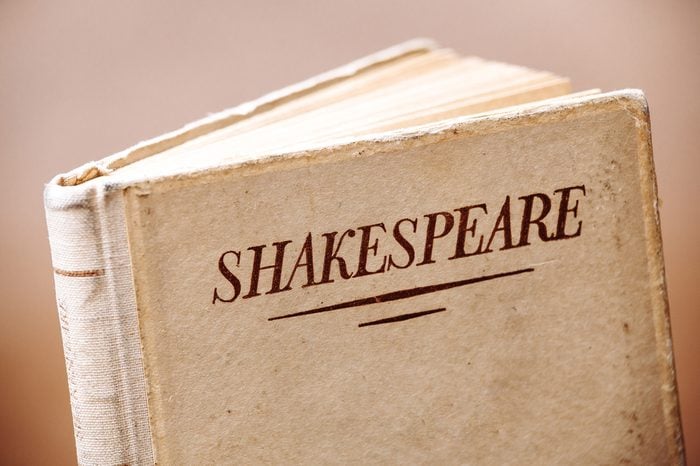
William Shakespeare‘s works stand as the pinnacle of literary achievement, and his influence on everyday English is impossible to overstate. Among the hundreds of phrases credited to the Bard is “the be-all and end-all,” meaning the ultimate goal, final word or defining element of something. When Macbeth is about to kill King Duncan in one of Shakespeare’s most famous tragedies, he says:
If it were done when ’tis done, then ’twere well
It were done quickly. If the assassination
Could trammel up the consequence, and catch
With his surcease, success, that but this blow
Might be the be-all and the end-all here—
But as anyone familiar with “The Scottish Play” can attest, the murder is anything but the end. Instead of settling matters, it unleashes a chain of bloody consequences that ultimately destroys Macbeth himself.
This list may not be the be-all, end-all on everyday phrases with dark origins, but if you pause the next time you bless a sneeze or bite the bullet, I’d say we’ve hit the mark.
About the experts
Jess Zafarris is an etymology expert and content creator. She’s the mind behind Useless Etymology, a blog for word enthusiasts, as well as the co-host of the Words Unravelled podcast. An adjunct professor at Emerson College, she is also the author of several books, including Words from Hell, and she also shares word lore with her nearly 100,000 followers on TikTok.
Grant Barrett is a lexicographer and dictionary editor who specializes in slang and new words. He is the co-host of A Way with Words, a national radio show about language, and has written several books, including Perfect English Grammar.
Rob Watts, aka RobWords, is a British journalist and broadcaster based in Berlin. A former BBC and Deutsche Welle presenter, he co-hosts the etymology podcast Words Unravelled and runs the popular YouTube channel RobWords, exploring the quirks and history of the English language.
Why trust us
At Reader’s Digest, we’re committed to producing high-quality content by writers with expertise and experience in their field in consultation with relevant, qualified experts. We rely on reputable primary sources, including government and professional organizations and academic institutions as well as our writers’ personal experiences where appropriate. We verify all facts and data, back them with credible sourcing and revisit them over time to ensure they remain accurate and up to date. Read more about our team, our contributors and our editorial policies.
We are no longer supporting IE (Internet Explorer) as we strive to provide site experiences for browsers that support new web standards and security practices.