Here’s How to Predict the Weather by Looking at the Clouds

Lisa Lombardi

By Lisa Lombardi

Updated on Sep. 30, 2025

Want to know what kind of weather is brewing? Keep an eye on the sky for these 10 different types of clouds.

What all the different types of clouds mean

Did you ever look up at the sky and wish you could figure out what was about to happen with the weather? Well, guess what—you can! “Observing clouds is probably the oldest form of weather forecasting,” says atmospheric scientist Matthew Igel, PhD, an associate adjunct professor in the department of land, air and water resources at UC Irvine. “Studying clouds is a great way for scientists to learn about the structure and behavior of weather patterns.”

While you’ve figured out that dark clouds aren’t a great sign, you might not realize just how much different types of clouds can predict the weather—from a massive storm brewing to sunny skies for days. “The shape, type, altitude, movement and even speed of clouds can tell us about the conditions of the atmosphere at any given time,” adds Alexandria Johnson, PhD, an atmospheric scientist and assistant professor at the College of Science at Purdue University in West Lafayette, Indiana.

We spoke to Igel and Johnson to learn the trick to this old-school way of figuring out the weather—and we have to say, it’s pretty neat! Read on to discover what all those puffy, wispy and wildly interesting clouds are trying to tell you, along with some fascinating facts that will come in handy on a rainy (or sunny!) day.

Get Reader’s Digest’s Read Up newsletter for more knowledge, humor, cleaning, travel, tech and fun facts all week long.

An infographic about How To Predict The Weather By Looking At The Clouds with illustrations of different types of clouds at different heights.
NAINA KAUSHAL FOR READER'S DIGEST

1 / 10

Blue sky background and white clouds soft focus
wenbin/Getty Images

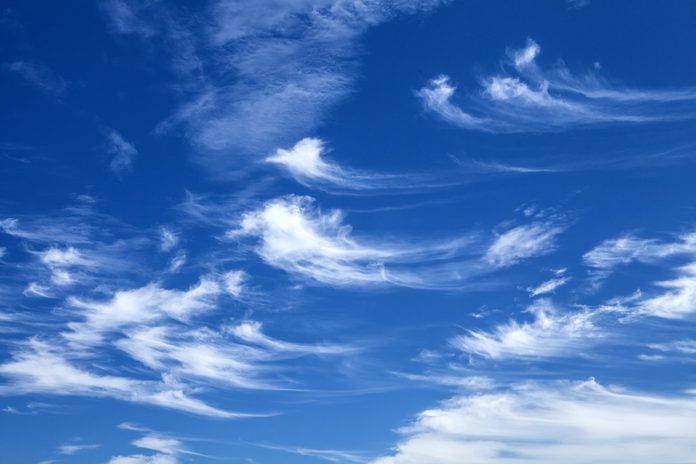
Cirrus clouds

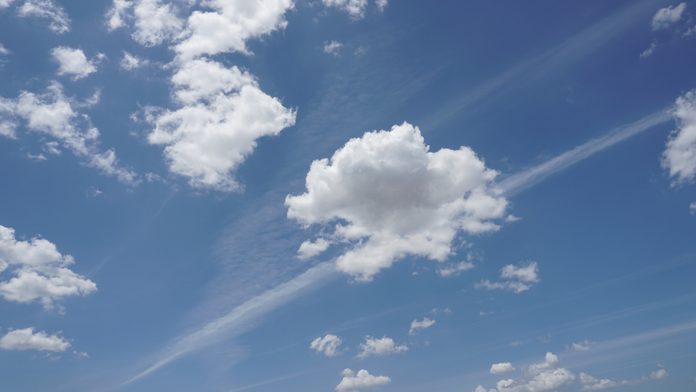
What they look like: Wispy, white hair-like clouds

Location: High in the atmosphere

Weather prediction: There should be good weather ahead.

Cirrus clouds are sometimes called “mare’s tails” because they look like horse tails. (Cirro is Latin for a “curl of hair.”) Made up of tiny ice crystals, these delicate clouds form in the upper atmosphere, 15,000 to 30,000 feet above ground, according to the National Weather Service. They usually point to calm weather, but as cirrus clouds build up, they suggest an approaching warm front, which can bring rain.

FYI, cirrus sunsets are spectacular. The wispy clouds take on other colors and glow red, pink and/or gold.

2 / 10
Cirrostratus Clouds Blue Sky Only
Yelena Rodriguez Mena/Getty Images

Cirrostratus clouds

What they look like: A thin sheet of clouds covering the entire sky

Location: High in the atmosphere

Weather prediction: Rain—and lots of it—is heading your way!

If you see this wall of clouds before you head out for work, you might want to grab an umbrella: Wet weather is likely coming your way in 12 hours or so, as part of a warm front.

How else can you tell if the clouds you’re seeing are cirrostratus vs. different types of clouds? They will look almost translucent. “Being so high in the atmosphere, these clouds are composed of ice,” Johnson says. “And they can lead to optical effects like halos around the sun or moon as light interacts with hexagonal ice crystals.”

Patchier clouds generally suggest the wet weather is farther off, while more uniform clouds mean it’s closer, Johnson adds.

3 / 10
Cirrocumulus Cloud in blue sky on sunny peaceful day.
SanchaiRat/Shutterstock

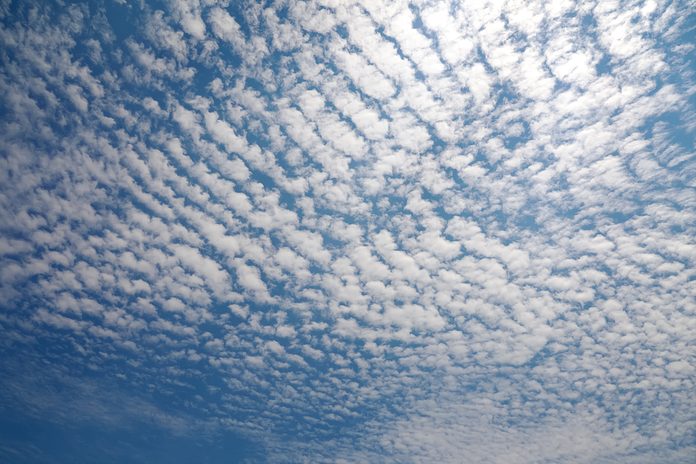
Cirrocumulus clouds

What they look like: Patchy, layered clouds that may be in long rows

Location: High in the atmosphere

Weather prediction: A change in weather is coming, and rain may be on the horizon.

One fun thing about cloud naming is that the height and visual characteristics of the clouds are incorporated into the name, Johnson says. “Cirro means these are high-altitude clouds, usually between 15,000 and 40,000 feet above the ground, and cumulus indicates that they are heaped—or what we think of as ‘puffy’ or ‘cotton like,'” she explains. These fast-moving clouds also have a bonus nickname: “mackerel sky,” so named because the ripples resemble fish scales.

Weather-wise, cirrocumulus clouds can mean more than one thing. “They can be associated with clear weather,” Johnson says, “but if they spread across the sky, they could be an indication of a slow-moving front and precipitation on the horizon.”

4 / 10

Full frame of the low angle view of white color clouds with a blue sky. Cirrostratus Clouds
Elizabeth Fernandez/Getty Images

Altostratus clouds

What they look like: A gray or bluish sheet of clouds

Location: Mid-atmosphere

Weather prediction: Rain or snow might be coming your way in the next few days.

Altostratus are “stratus” type clouds, which form horizontally. They look like a thin cloud cover across the horizon and “are indicative of light precipitation in the days to come,” says Johnson. While they aren’t true rain clouds, they tend to thicken and lower in the sky and form two other types of clouds: stratus and nimbostratus, according to the National Weather Service.

Fun fact: Altostratus form such a thin cloud cover, you can often see the sun shining through them—it may look fuzzy, but it won’t have a halo.

5 / 10

Altocumulus Cloud
Steve Clancy Photography/Getty Images

Altocumulus clouds

What they look like: Patchy, layered clouds

Location: Mid-atmosphere

Weather prediction: A mixed signal, but fairy stable weather ahead.

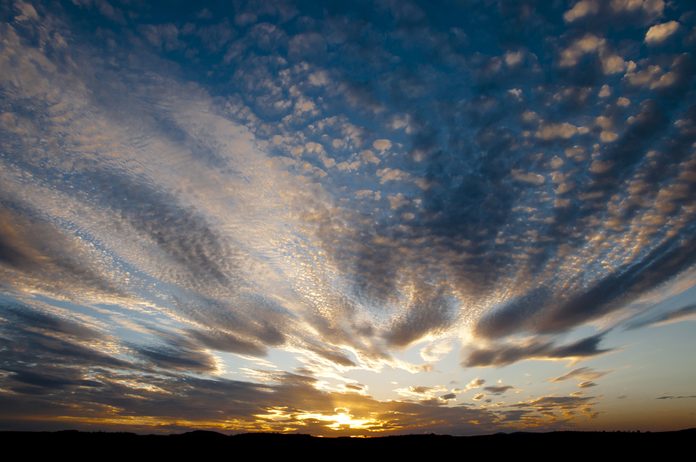
Altocumulus clouds are often dramatic, so don’t be surprised if you “ooh” and “ahh” at their rows of white or gray clumps (technically called cloudlets, which sounds much nicer than “clumps”). You might spot them on their own or grouped with different types of clouds.

They are among the trickier clouds to read. They could be associated with warm or cold fronts, and they sometimes indicate that conditions are developing for eventual thunderstorms, Igel says. “These clouds may rain, but frequently that rain evaporates before it reaches the ground,” he explains.

Altocumulus clouds also make for a stunning sunrise and sunset.

6 / 10
nimbostratus clouds /it was beginning to rain above the pool/ countryside of Thailand
Somyot Mali-ngam/Shutterstock

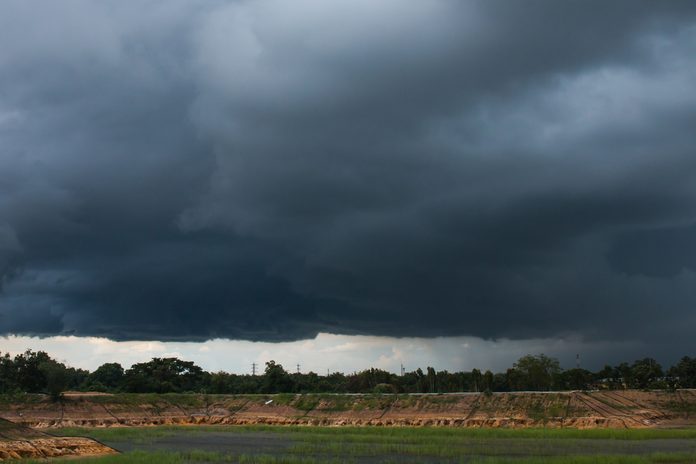
Nimbostratus clouds

What they look like: Dark gray low clouds covering the sky

Location: Low to mid-atmosphere

Weather prediction: Brace yourself—you’re about to get hit with long-lasting rain or snow.

When nimbostratus clouds roll in, you can see them in every direction, “almost as if there is a blanket in the sky,” Johnson says. The sight of these dark, ominous clouds with a low base (around 2,000 feet) means you’re in for a spell of wet weather.

“Nimbostratus clouds are usually associated with large storm systems and may persist for a day or more,” says Igel. They cause steady rain and long-lasting snowfalls, but not usually thunderstorms or other intense storms. The reason these clouds dump precipitation over long periods is that they are relatively stable due to slow vertical motions—meaning, moist air is rising gently rather than rapidly within the cloud. Slow vertical motions lead to longer, steady precipitation rather than a sudden, intense storm. And since they lack strong vertical motions, nimbostratus clouds don’t produce lightning, Johnson says.

7 / 10
a big and fluffy cumulonimbus cloud in the blue sky
Dario Lo Presti/Shutterstock

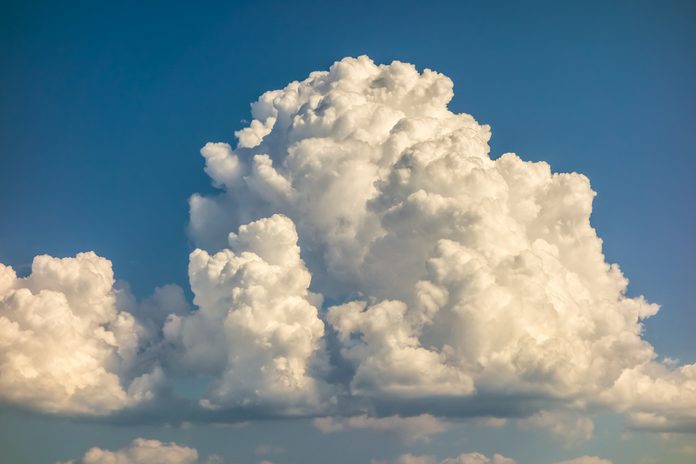
Cumulonimbus clouds

What they look like: Towering dense clouds that resemble huge mountains

Location: Low in the atmosphere

Weather prediction: There’s a thunderstorm coming.

Johnson calls these “your classic thunderstorm clouds.” While you can spot them in any season, they are most common and intense in spring and summer. They’re a red flag that “rain, hail, lightning and winds may be headed your way or are very nearby,” she says. And once you see this cloud, the thunderstorm may hit and be over within an hour, according to the Royal Meteorological Society.

Storms are only allowed to grow large like this when the atmosphere is unstable, meaning air can easily rise. “One way this happens is the sun warms the Earth’s surface, that surface heats the air around it, and the warmer, less dense air rises because it is lighter than its surroundings and, thus, buoyant,” Johnson explains. “It’s much like how the heat from a fire causes hot air to rise above it.” Only in this case, you get thunderstorms and other forms of unfun weather.

Cumulonimbus clouds are much more common in summer, but they can form year-round if there is moist, unstable air.

8 / 10
Small cumulus humilis clouds with clearly defined edges.
nvxstudios/Shutterstock

Cumulus humilis clouds

What they look like: Small, fluffy clouds with minimal vertical development

Location: Low in the atmosphere

Weather prediction: Get ready to enjoy a nice day ahead—without a drop of rain!

It’s no wonder this puffy white cloud is sometimes called “fair-weather cumulus,” since it goes hand-in-hand with blue skies and sunny conditions. Cumulus humilis clouds are also known as “sheep clouds,” because of course they are! They look like fluffy farmyard friends. As long as they remain true cumulus humilis, which are low vertical clouds (wider than they are tall), “they are an indication of good weather and a stable atmosphere—one that doesn’t tend to allow the growth of deep clouds,” Johnson says.

So if you wake up and see classic cumulus humilis out the window, get outdoors—it should be a great day.

9 / 10

A large Fractus cloud in the sky blocking sunlight, background of clouds, clouds before a change in weather, gloomy tones of the sky before rain.
Oleksandr Lanevskyi/Getty Images

Scud, or fractus, clouds

What they look like: Low cloud fragments that look ragged or torn, often appearing at the base of larger raining clouds

Location: Low in the atmosphere

Weather prediction: Rainy weather ahead!

These ominous clouds sometimes get confused with tornadoes because they’re both low-hanging and can have a funnel shape to them. But don’t worry—fractus, or scud, clouds aren’t dangerous, according to the National Weather Service.

Their name is telling: Scud is short for “scattered cumulus under deck,” and they are, in fact, “fragments detached from the base of a larger cloud like a cumulonimbus,” Johnson says. “They’re harmless in and of themselves, but they’re indicative of a thunderstorm or rain shaft to come.”

To make sure it’s not a tornado, check for rotation. A scud might have a little movement, but it won’t have a tight spin to it the way a tornado will.

10 / 10

Shelf Cloud Over Country Road
skhoward/Getty Images

Shelf clouds

What they look like: Low-hanging, horizontal wedge clouds

Location: Low in the atmosphere

Weather prediction: You might get a thunderstorm or some heavy rain later.

Ever seen a low-hanging gray to dark gray cloud that reminds you of a wave or a wedge? That’s a shelf cloud, which arrives at the front of a storm. “They’re attached to the base of a thunderstorm, and they’re a result of the storm’s downdrafts,” Johnson says. “This is why they are associated with what is known as a gust front—a strong, cool wind that spreads out ahead of a thunderstorm.”

This cloud sometimes gets confused with wall clouds. So what’s the difference between a shelf cloud and a wall cloud? “A shelf cloud is much more common and usually benign,” Igel says. A wall cloud sometimes rotates, which can warn you to prepare for a tornado or other strong storm.

Predicting the weather

Of course, gazing at the clouds won’t give you a perfect long-range forecast, but it can tip you off to a change in weather. As Johnson notes, before the advent of radars and predictive models, “you always had to keep your eye on the skies to know what might come.” And even today, with all our weather apps and alerts, it can’t hurt to keep an eye on the sky.

About the experts

  • Matthew Igel, PhD, is an associate adjunct professor of atmospheric science in the Department of Land, Air and Water Resources at UC Irvine.
  • Alexandria Johnson, PhD, is an atmospheric scientist and assistant professor at the College of Science at Purdue University in West Lafayette, Indiana.

Why trust us

At Reader’s Digest, we’re committed to producing high-quality content by writers with expertise and experience in their field in consultation with relevant, qualified experts. We rely on reputable primary sources, including government and professional organizations and academic institutions as well as our writers’ personal experiences where appropriate. For this piece on the different types of clouds, Lisa Lombardi tapped her experience as a longtime journalist who frequently covers science, knowledge and health for Reader’s Digest. We verify all facts and data, back them with credible sourcing and revisit them over time to ensure they remain accurate and up to date. Read more about our team, our contributors and our editorial policies.

Sources: