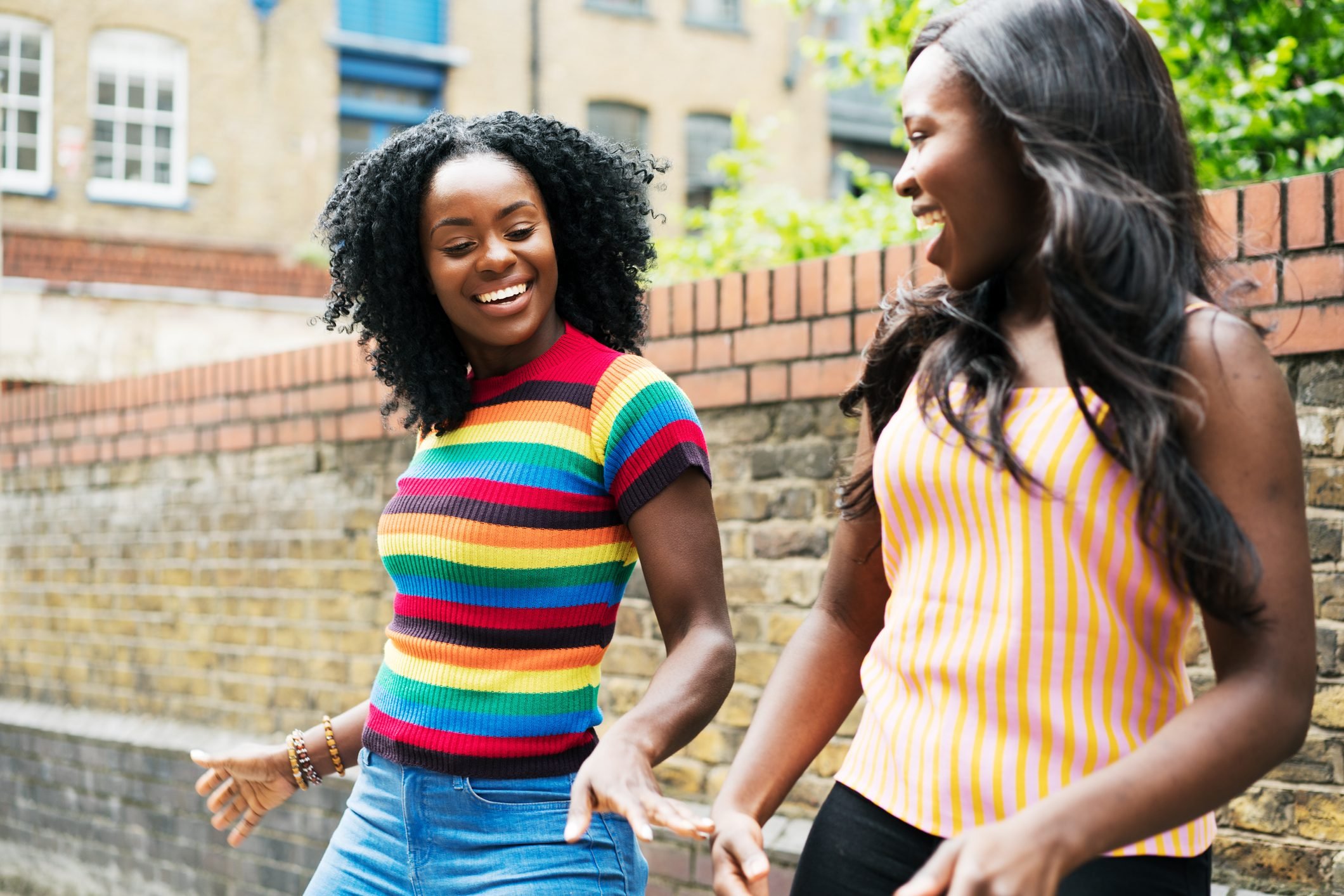
Gen Z slang is bussin—if you know what it means. From skibidi to frfr, we're decoding the vibes so you don't get cooked.
41 Common Gen Z Slang Words, Decoded

Cap/No cap
What it means: Cap = lie. No cap = true.
How to use it: “He said he’s 6 feet tall. That’s cap! He’s 5’9″ in Air Forces.” Also: “I got an A and I didn’t even study, no cap frfr.”
If something’s cap, it’s a lie. If it’s no cap, it’s the honest truth—Gen Z’s version of for real. It’s usually added for emphasis when something sounds unbelievable. One time, Micah told me his room was clean, and when I said, “No cap?” he just blinked and changed the subject.
Cap comes from hip-hop culture and exploded on TikTok, where it’s now used unironically by people with laundry piles bigger than their GPA.

Frfr
What it means: For real, for real
How to use it: “That was the best pizza I’ve ever had—frfr.”
It’s pronounced furrealfurreal—all one word and said so fast it’s basically gibberish. Frfr is used to double-down on honesty and often used in conjunction with no cap. It’s the verbal equivalent of making eye contact and saying, “No, seriously, I mean it.” One for real isn’t enough anymore; Gen Z needs two to prove they’re not just messing around.
Lorraine uses it when she’s trying to get me to take something seriously, like: “I cleaned out the dishwasher, frfr.” (Spoiler: She put away the silverware and abandoned the rest.) It’s often used in texts and comments to add emphasis, especially when what you’re saying sounds wild, unbelievable or too good to be true. You can also use it to show support—like when someone’s outfit is bussin and lit: “You look so good rn, frfr.” It’s like a verbal high-five with double stamps of approval.

BFFR
What it means: Be freaking for real, or you’ve got to be kidding me
How to use it: “You paid $18 for a smoothie? BFFR, girl.”
Think of BFFR as frfr‘s unhinged older sibling. It’s what Gen Z says when they’re calling out delusion, drama or bad decisions. Lorraine hit me with a hard BFFR when I said I might bring back skinny jeans. It’s sarcastic, snappy and typically used when someone’s behavior is giving full clown. Consider this Gen Z slang word a polite way of saying you’ve lost the plot.

Hits different
What it means: Feels unique or extra impactful compared to usual
How to use it: “Eating cereal at midnight just hits different.”
This is Gen Z’s way of saying something is unexpectedly better (or worse) because of the circumstances. It’s like when you rewatch a movie after a breakup and suddenly the sad parts hit like a freight train. Sam once said, “McDonald’s breakfast hits different after skiing,” and it’s so true. Older generations might say really hit the spot, but Gen Z makes it sound like a full sensory experience.

-core
What it means: The defining aesthetic or vibe of something
How to use it: “Your rainy day outfit is pure cozy-core.”
Add -core to anything (literally, anything) and you’ve named an aesthetic—cottagecore, goblincore, even ratgirl-core (yes, that’s a thing). It started with niche internet style communities and blew up on TikTok. Jonas told me my kitchen is “suburban-mom-core” because I own both a bread machine and an air fryer. Not wrong. It’s the Gen Z equivalent of so you.

Clocked
What it means: Noticed, called out or exposed
How to use it: “She clocked me immediately. I wasn’t slick.”
To be clocked means someone saw through your act, disguise or lie—fast. It’s often used when you get caught doing something shady, trying to flex or pretending to be chill when you’re very much not chill. Jonas once tried to sneak out of the house and got clocked by Lorraine before he even made it off the porch.
Clocked comes from drag culture, where reading someone’s behavior or look is a skill. Now it’s used anytime someone is perceptive enough to call you out, frfr. If someone says, “You got clocked,” it means your cover is blown—and you probably looked really goofy in the process.

Lit
What it means: Awesome, exciting and cool
How to use it: “That concert was lit!”
This Gen Z slang word was created in the early 2010s, and it’s still hanging on, though it’s considered borderline cheugy (we’ll get to that). Originally from hip-hop, lit means anything that’s fun, popping or high energy. Just don’t say it too enthusiastically if you’re over 30, unless you want a silent car ride home. Ask me how I know.

Cheugy
What it means: Outdated, trying too hard or cringe
How to use it: “Skinny jeans and side parts are so cheugy.”
Cheugy is Gen Z’s word for anything that screams “old Millennial energy.” Think: wall decals of inspirational quotes, pumpkin-spice obsession, and the word adulting. It’s not quite an insult, but it’s definitely not a compliment. My son once called my minivan cheugy and then asked me for a ride to Starbucks. The irony was not lost on me.
The word blew up on TikTok as a way to lovingly roast Millennials, though now that it’s been mainstreamed, Gen Z thinks the word itself is cheugy. Which is, honestly, peak cheugy behavior.

Bussin
What it means: Delicious or amazing, especially in reference to food
How to use it: “These fries are actually bussin.”
Bussin is one of the highest compliments Gen Z can give your cooking. This started in Black internet culture and now lives mostly in TikTok food reviews. Lorraine once said my cinnamon rolls were “low-key bussin,” and I framed that moment in my mind.
But use this one with caution. Saying your new iPhone is bussin is weird. It’s mostly a taste thing, not a tech thing … but not always. (The rules are confusing, honestly.)

Gyatt
What it means: A large booty, or a reaction to someone’s large booty
How to use it: *Kim Kardashian walks by* “Holy GYATT!!”
This one is less of a word and more of a shocked sound effect. Yelled (never whispered), gyatt is what Gen Z says when someone with a whole lot of cake (slang for butt) walks by. It originated on Twitch and has become part of the great Gen Z tradition of “saying the quiet thirst part out loud.” My son Sam likes to yell it when his brothers walk by. For some reason.

Gave me the ick
What it means: Turned off in a cringey way
How to use it: “He said, ‘Yummers,’ and it gave me the ick.”
An ick is an irrational deal-breaker. Once you get one, it’s game over. Lorraine’s icks include people who: have a plumber’s crack, lean against a door frame, walk around a lunch room looking for a seat, ride a bike with a helmet, shout sneeze, really quiet sneeze, wear skinny jeans, groan when sitting down, ride one of those animatronic bulls or horses, talk in a baby voice, call women “females,” talk and try to think of a word and then look up at the ceiling thinking like they are in a cartoon, constantly fluff their hair, refuse to do something because they think it’s cringey and then when everybody else is doing it they’re, like, side-eyeing you and refusing to have fun, and … drumroll … men saying “guys” to a group of people and then going, “Oh, I’m sorry, AND ladies.”
Yes, you guys, she wrote out this entire list for me. I have so many questions. Mostly about sneezing.

Let him cook
What it means: Let him do his thing because it might work
How to use it: “Don’t interrupt—let him cook!”
It’s a phrase of support that means “trust the process,” often with chaotic or hilarious results. Originally sports slang, it’s now used when someone is confidently winging it. Like when Micah told me he was going to do a standing backflip on pavement and I was like, “Noooo,” and he yelled, “Bro, just let me cook!” It’s a positive word, which is confusing considering the next word on the list.

Cooked
What it means: You’re done for
How to use it: “You forgot your lines? You’re cooked.”
This is the opposite of let him cook. You see, cooking is great. But being cooked means you’ve failed, it’s over and there’s no saving you. Micah once told me I was cooked after I accidentally hit “reply all” on a snarky email that was meant for a friend but went to all my co-workers. He wasn’t wrong. If someone says you’re cooked, just shut the laptop and go lie in a field somewhere.

Rizzler/Rizz
What it means: Someone with high flirting skills
How to use it: “He’s a certified rizzler.”
Rizz is short for charisma, and a rizzler is someone who can charm the pants off anyone—sometimes literally. It’s the Gen Z slang evolution of ladies’ man or smooth talker, but funnier. My daughter told me I had zero rizz after watching me try to flirt with my husband. In my defense, it’s hard to be smooth with a retainer in. (Yes, I still wear my retainer, Mom!)

Caught in 4K
What it means: Caught red-handed … on camera … in high definition
How to use it: “Bro, you lying—caught in 4K!”
Caught in 4K is internet speak for busted but with HD proof. It originated on YouTube and means there’s irrefutable video evidence. It’s the opposite of plausible deniability. I once tried to do a TikTok dance and tripped over the dog—Jonas filmed it and said, “You’ve been caught in 4K.” I’m still recovering.

Delulu
What it means: Delusional (but in a fun way)
How to use it: “I think Harry Styles is gonna see my TikTok and fall in love with me.” “You’re delulu.”
Delulu is Gen Z’s cute nickname for being delusional—usually about love, success or being the next viral star. It’s not mean; it’s more like “Dream big, bestie, even if it’s fake.” Jonas says it’s a coping mechanism. I say it’s Tuesday.

Skibidi
What it means: A nonsense word from a viral TikTok meme
How to use it: “Skibidi toilet has fully taken over my brain.”
You don’t need to understand it. You just need to accept that skibidi exists. It came from an unhinged series of TikTok videos featuring toilet-headed characters singing chaos-inducing techno opera. Gen Z loves it because it makes no sense—and that is the joke. Micah once spent a two-hour car ride whispering, “Skibidi bop, yes, yes,” and now I hear it in my nightmares.

Sigma
What it means: Lone-wolf cool guy
How to use it: “He’s not alpha or beta—he’s sigma.”
Originally a parody of alpha/beta “manosphere” rankings, Gen Z reclaimed it as a meme for mysterious loner types who play by their own rules. Sometimes it’s ironic; sometimes it’s a red flag. My son Sam says it’s the energy of someone who eats lunch alone but still somehow wins prom king.

It’s giving …
What it means: It reminds me of, or it’s the vibe of
How to use it: “That outfit—it’s giving failed circus magician.”
It’s giving is how Gen Z assigns vibes to everything. It’s the spiritual cousin of reminds me of, but sassier. My outfit once got roasted as “It’s giving 1986 PTA president.” I couldn’t even be mad—it was giving that. (Also, ’80s fashion is back, baby!)

Main character energy
What it means: Acting like you’re the star of the show
How to use it: “She walked in with main character energy.”
This one can be aspirational, but it’s more often an insult. Having main character energy means you move through life with confidence and drama, like a movie protagonist. But it also means that you think you’re the center of the universe and everyone else is just living in your world. Jonas says it’s all about self-narrative. I try to channel it while buying toilet paper in bulk.

Boujee
What it means: Fancy, high-maintenance and expensive
How to use it: “This matcha latte is so boujee.”
It should be spelled bougie, but Gen Z is also the generation that grew up with autocorrect, so their spelling is abysmal. Anyhow, boujee is short for bourgeois. This slang word has been around for a while, but was remixed by Black Twitter, hip-hop and TikTok into something fabulous. Being boujee doesn’t necessarily mean you’re rich—it means you act like you are.
Micah once called my candle collection “unnecessarily boujee,” and he wasn’t wrong. When you’re sipping LaCroix out of a wine glass while wearing fuzzy socks and eye patches, that’s boujee. (And that’s self-care.)

Slay
What it means: To kill it, dominate or look amazing
How to use it: “You slayed that presentation.”
Originally from drag culture, slay is now used across Gen Z (and beyond) to compliment anything from a great outfit to a mic-drop moment. It can be serious or sarcastic, depending on tone. Interestingly, my younger Gen Zers say this term is outdated and no one uses it anymore, but Jonas, one of my older Gen Zers, uses it as a first response to any announcement—specifically, he offers a deadpan “Slay queen, slay.”
So, yes, some Gen Zers are still saying it … but probably not for much longer.

Bet
What it means: “Yes, agreed, I’m in,” or “Awesome”
How to use it: “Want to mini-golf at 7?” “Bet.” or “Did you like that new song?” “Bet.”
Bet is Gen Z shorthand for OK, yes or I got you. It’s a casual way to confirm plans, agree with something or acknowledge a challenge. Micah once said bet when I asked him to clean out the cat box, but then never did it. So in this house, I guess bet means probably not.

Mid
What it means: Average, meh or not great
How to use it: “That movie was mid.”
Mid is the ultimate Gen Z insult. It’s not even bad, which somehow makes it worse. Jonas once called my homemade Halloween cookies mid, and I have never emotionally recovered. It’s the spiritual opposite of slaps.

Slaps
What it means: Really good—usually in reference to music
How to use it: “This playlist slaps.”
Slaps is Gen Z slang for something that’s so good, it hits. It’s usually applied to songs, but it can also describe food, movies or memes. Micah said my mac and cheese slaps, and I immediately updated my will to leave everything to him.

Shook
What it means: Surprised or rattled
How to use it: “Sabrina Carpenter posted a pic without bangs. I’m shook.”
This one’s a classic, used for anything that catches you off guard in a dramatic way. Lorraine once found a Cheerio in her shoe and screamed, “I’m shooketh.” She was 12. Drama is part of the charm of teens, right?

W
What it means: A win or a good thing
How to use it: “That comeback was a W.”
Pronounced double-u or dub, this is Gen Z’s shorthand for success. Did your favorite team win? W. Did you find $5 in an old coat? W. Jonas once opened the fridge and found an unopened bottle of Baja Blast. He whispered “W” like it was sacred.

Sus
What it means: Suspicious or shady
How to use it: “He said he doesn’t like cheese? That’s sus.”
Short for suspicious, this word blew up thanks to the video game Among Us, but it stuck around for all kinds of sketchy behavior. Lorraine uses it to describe everything from cheaters to people who stand too close in line at Target. My favorite is when she calls me a “sussy baka”—she’s smiling, so I think it’s a compliment?

Flex
What it means: A way of showing off
How to use it: “Bro, posting your GPA isn’t the flex you think it is.”
Originally a term for showing off muscles, flex now refers to any type of bragging—subtle or not. Sometimes it’s a compliment; sometimes it’s sarcastic. I once told the kids the dog puked on my new rug. Sam said, “Weird flex, but OK.”

Vibe check
What it means: A read on the mood or energy
How to use it: “He failed the vibe check.”
A vibe check is Gen Z’s way of evaluating how something feels, whether it’s a person, a party or a playlist. Jonas says vibe off like other people say red flag. He once walked into a dentist’s office and turned around because the waiting room had fluorescent lighting and old People magazines. Failed the vibe check.

OK, boomer
What it means: Dismissive reply to something out of touch
How to use it: “Back in my day, kids never spoke back.” “OK, boomer.”
Here’s the really fun part: You don’t have to be a Boomer to get OK-boomer’d. You just have to say something slightly crusty. I’m not a Boomer. Heck my parents aren’t even Boomers! But my kids still say this to me all the time. I once told my kids to mail handwritten thank-you notes. Lorraine said, “OK, boomer,” and then asked me what a stamp was.

Drip
What it means: Stylish clothing or accessories
How to use it: “You’ve got serious drip today.”
Drip means you’re dressed well—fashionable, confident and fresh. It comes from rappers talking about dripping in diamonds, Rolex watches and other bling, but now it has expanded to include any cool outfit or accessories. Jonas once told me I had “Target-mom drip.” I took it as a compliment.

Savage
What it means: Bold and ruthless
How to use it: “She roasted him in front of the whole class. Savage.”
Being savage means not holding back. It’s high praise for bold comebacks, blunt truths and fearless fashion choices. Lorraine once told Jonas his haircut looked like it was done by a fifth-grader using child scissors. Savage. I told her to apologize … after I stopped laughing.

Ratio
What it means: A post or comment that gets more likes than the original
How to use it: “Bro just got ratio’d.”
Ratio is a social media mic drop. If your comment gets more attention than the original post, you win. But you can also ratio someone in real life. It means that whatever your response was, it was better than the original comment or event.

Stan
What it means: A devoted fan
How to use it: “I stan Pedro Pascal.”
Originally from Eminem’s song “Stan,” this word has been reclaimed to mean a passionate (but hopefully not stalkery) fan. It’s kind of grown beyond that, though, to also mean when you hope two people will get together, like “I stan Ross and Rachel.” (Which you think would be a Gen X reference, but thanks to Netflix, Friends is cool again!)

Touch grass
What it means: Log off, go outside and calm down
How to use it: “You’re mad over a meme? Go touch grass.”
It’s a semi-polite way to say, “You might have lost touch with reality, and you need a break from the internet.” Touching grass is supposed to remind you that the real world exists and it’s good. Lorraine once told me to touch grass after I spent an hour reading Amazon reviews for a water bottle. She wasn’t wrong.

Bop
What it means: A catchy, fun song
How to use it: “That new CharliXCX song is a bop.”
A bop is Gen Z slang for a song that makes you move—head bob, foot tap, full-body sway. If you can’t help but dance, it’s a bop. If every song on an album is a bop? No-skip. Certified. Put it in a playlist, and play it loud.

Ate (and left no crumbs)
What it means: Absolutely nailed it
How to use it: “She ATE with that outfit.”
To eat is to dominate, impress or slay in the most satisfying way. Leaving no crumbs means you gave it everything—and it showed. Jonas once watched a girl absolutely kill a dance and said, “She ate that.” I thought she got a snack. He said she was the snack. (Which is … also a compliment?)

Girl math
What it means: Funny logic used to justify spending
How to use it: “I returned a $50 item, so technically this $70 dress was only $20. Girl math.”
It’s financial logic, but unhinged (which makes the gendering of it, well, not great). Lorraine once told me that if she buys something with a gift card, it’s free. Because … girl math.

NPC
What it means: A background character; someone irrelevant or robotic
How to use it: “She just stands there—serious NPC energy.”
NPC is short for non-playable character in a video game. These are characters that help move the main story along but only act in robotic and repetitive ways and have no life of their own. This is Gen Z’s way of describing someone who acts like a scripted robot or is irrelevant. It’s not a compliment.

A pick me
What it means: Someone who tries too hard for attention or approval
How to use it: “She said she ‘just gets along better with guys’—she’s such a pick me.”
A pick me is someone (often, but not always, a girl) who tries to stand out by putting others down or being overly agreeable to gain male attention. Lorraine says it’s basically Gen Z’s way of detecting internalized misogyny in the wild. But it can also be lighthearted—Micah called me a “pick me mom” because I brought cupcakes to a class party and tried to use slang. Honestly? He’s not wrong.

No cap, frfr
And there you have it: 41 Gen Z slang words, explained with only moderate emotional damage and one existential crisis about whether I’ve ever had drip. If nothing else, you now have the tools to decode TikTok, talk to your kids in their native language and avoid getting cooked in a group chat. Just remember: The moment you start using these terms too confidently, they’ll invent 41 new ones. That’s just the vibe. No cap, frfr.
Why trust us
At Reader’s Digest, we’re committed to producing high-quality content by writers with expertise and experience in their field in consultation with relevant, qualified experts. We rely on reputable primary sources, including government and professional organizations and academic institutions as well as our writers’ personal experiences where appropriate. For this piece on Gen Z slang, Charlotte Hilton Andersen tapped her experience as a longtime journalist who specializes in etiquette, communication and common curiosities for Reader’s Digest. We verify all facts and data, back them with credible sourcing and revisit them over time to ensure they remain accurate and up to date. Read more about our team, our contributors and our editorial policies.