


20 of the Most Famous Cold Cases of All Time

Updated: Jan. 25, 2024





Delving into the most famous cold cases of all time, it becomes frustratingly clear that the longer a case remains cold, the less likely it will be solved.
Cold cases
If you get chills from learning about cold cases, you’re in luck. Every single one of these cases is soooo incredibly cold, it makes us shiver just thinking about them. The good news is all of these 12 unsolved mysteries actually stand a chance of being solved in the next decade.
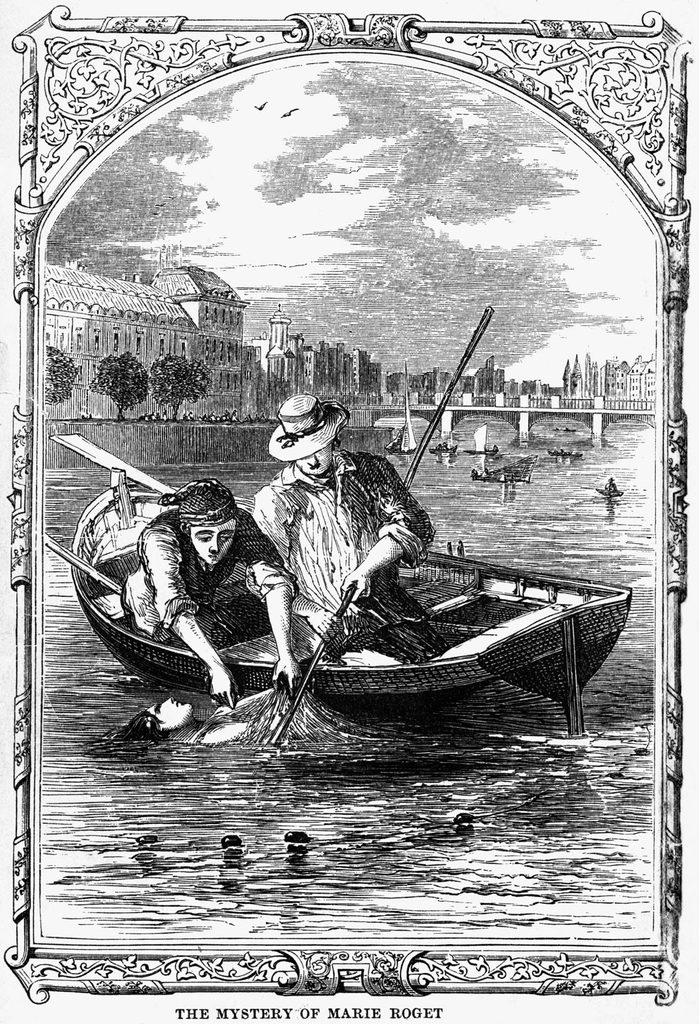
Mary Rogers
On the night of July 25, 1841, Mary Rogers, who lived in New York City, told her mother and fiance she was spending the evening visiting relatives in New Jersey. The 21-year old left and never returned home. Three days later, her badly beaten body turned up floating in the Hudson River near Hoboken, New Jersey. No one could imagine who might have had a motive to harm Mary—other than her fiance. However, he had an airtight alibi. Mary attracted a slew of admirers, who knew her as the “Beautiful Cigar Girl,” from her job working in a downtown cigar emporium. No one seemed to suspect a stalker might be involved in her disappearance. The only witness claiming to have seen Mary that night told a story involving an illegal abortion ring that didn’t seem to fit and couldn’t be corroborated. Within a year, the case had gone cold and Mary’s fiance committed suicide by overdosing on a type of opium on the very shores her body had washed up. The whole tragic tale might have faded from history, except that author Edgar Allen Poe, who had become obsessed with the case, memorialized it in The Mystery of Marie Rogêt. Similar to its real-life counterpart, the tale ends with the trail going hopelessly cold. Find out the most bizarre unsolved mysteries of 2018.
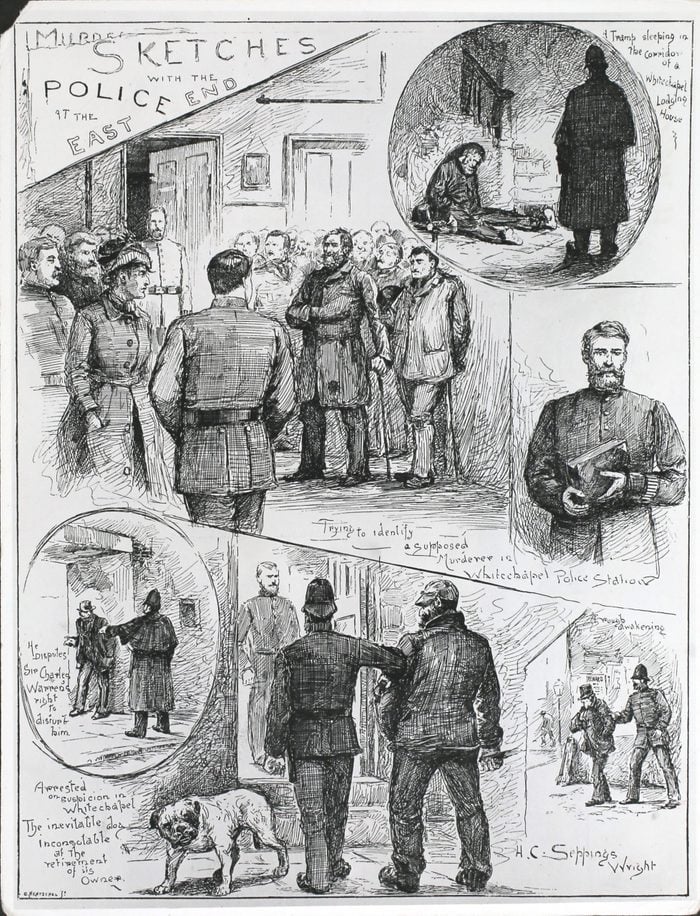
Jack the Ripper
Between August and November 1888, five prostitutes turned up dead on the streets of London’s Whitechapel neighborhood. All were found within a mile of one another—two on the same night—and all had their throats slashed from left to right. The lead investigators on the case suspected the killer was left-handed. All but one had been gutted with precision, leading investigators to suspect the killer might have been trained as a butcher or surgeon. The killer managed to commit these murders and escape undetected, which suggested the killer was familiar with the rhythms of the neighborhood. The murderer, whom the press referred to as “Jack the Ripper,” was never identified. Perhaps, Jack the Ripper died before he was able to carry out any additional murders? Or perhaps his killings evolved over time, as other murders occurred in Whitechapel over the next three years, which bore some similarities to Jack’s work. In either case, Jack the Ripper is now long gone, and it appears he has taken his identity with him to the grave. Of course, that doesn’t stop us from speculating as to who he might have been. You’ll find a surprising theory on it among the 13 biggest mysteries surrounding the royal family.
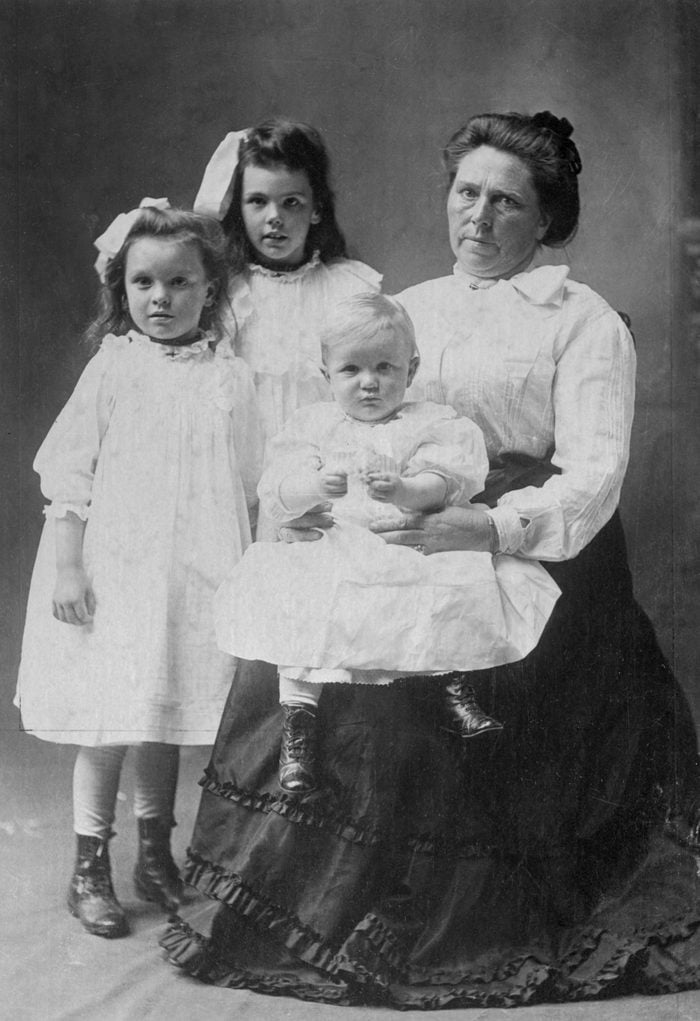
Belle Gunness
Wherever turn-of-the-20th-century Norwegian immigrant Belle Gunness went, people had a habit of turning up dead, especially well-insured people—including several of her husbands, boyfriends, and children. Still, it took a quarter-century and at least 40 kills for anyone to even suspect Belle might have been the common denominator. But before a solid case against Belle could be put together, Belle’s farmhouse burned to the ground on April 28, 1908, and Belle’s remains were thought to be found inside by investigators. With no other viable suspects, all the murder cases with respect to which Belle was under investigation went cold. But that’s not the only case that went cold that day. Turns out the fire was arson, and Belle’s hired hand, Ray Lamphere, was convicted of setting the fire. He was acquitted with regard to Belle’s resulting death when he convinced the jury Belle wasn’t dead, but, rather, she had hired him to start the fire to help her fake her death. As such, Belle’s “death” remains unsolved. Check out these 15 other crimes that have frustrated investigators and will likely continue to do so indefinitely.
Hinterkaifeck
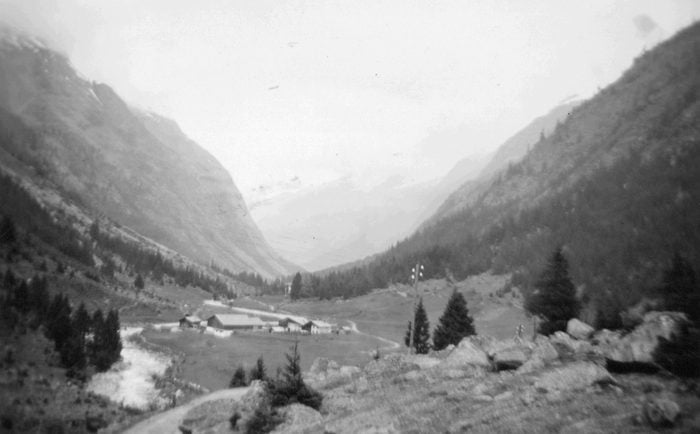
On March 31, 1922, five members of the Gruber family, along with their maid, were murdered at the Gruber family farm, HInterkaifeck, in Bavaria, Germany. It was nearly a week before the massacre was discovered—due in part to the remoteness of the Hinterkaifeck farm and to the patriarch’s unpopularity in the community. He was known as a bully and a wife-beater and had spent a year in prison after being convicted of incest with his widowed daughter, Viktoria, who was also one of the victims. The delay, which gave the perpetrator a significant head start in escaping, may have been a significant factor in why, despite a lengthy investigation and the identification of at least 100 suspects, the case was never solved. In addition, circumstances, including strange footsteps in the snow and strange noises coming from the attic, suggest the perpetrator may have been living—unknown and undetected—in the Gruber house for at least six months. That would have given the killer either ample time to plot the crime meticulously or sufficient familiarity with the property to escape undetected, even if the crime was committed impulsively. Still another theory is the killer was Viktoria’s husband, who, according to the theory, wasn’t dead at all but living elsewhere under an assumed name, conveniently, since no one ever suspects a dead man of murder. These 13 unsolved “mysteries” are easily explained by science.
The Black Dahlia
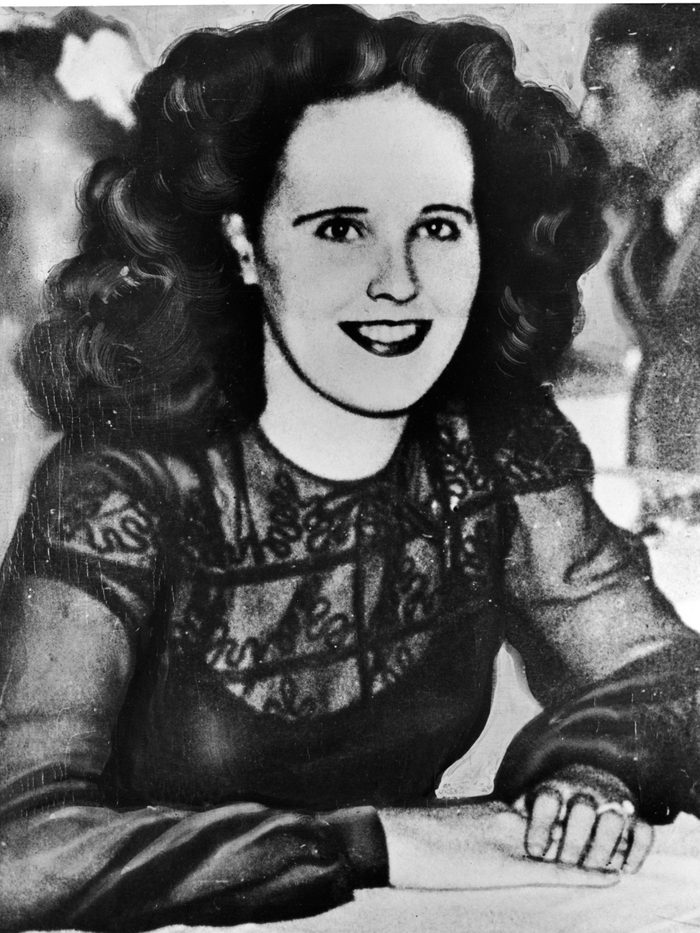
Aspiring actress Elizabeth Short was just 22 years old when she was found murdered in a vacant lot in Los Angeles on January 15, 1947. The “Black Dahlia” case led to a lengthy investigation that included a roster of more than 150 suspects. What was lacking, however, was any hard evidence or even a remotely reliable witness. Today, the Black Dahlia murder remains one of the oldest cold case files in Los Angeles, as well as the city’s most famous, according to Biography. The Black Dahlia is one of 14 crimes that are likely to remain cold forever.
The Somerton Man
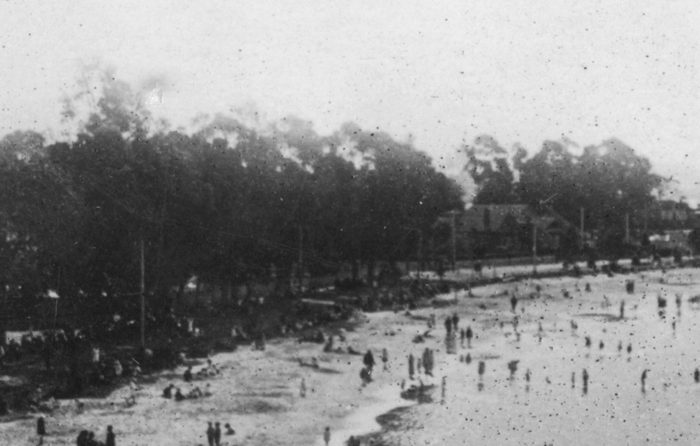
One morning in December 1948, a well-dressed, well-muscled middle-aged man was found dead on Somerton beach in Adelaide, Australia. The “Somerton Man,” as he became known, carried no identification, and all the labels on his clothing had been systematically removed. The only clue was a piece of paper found in one of his pockets with the words, “Tamam shud” printed on it, which is Persian for “It is ended.” The paper was traced to a book of Persian poetry found in a nearby parked car, from which the last page had been torn. Scribbled in the book was the phone number of a local woman, who, when questioned, claimed she didn’t know the man. Also scribbled in the book were a few lines of cryptic text no one has ever been able to decipher. No one ever came forward to identify the man, whom the coroner concluded had been poisoned. Love a good true crime story? These 10 true crime books are sure to satisfy.
The fugitive case
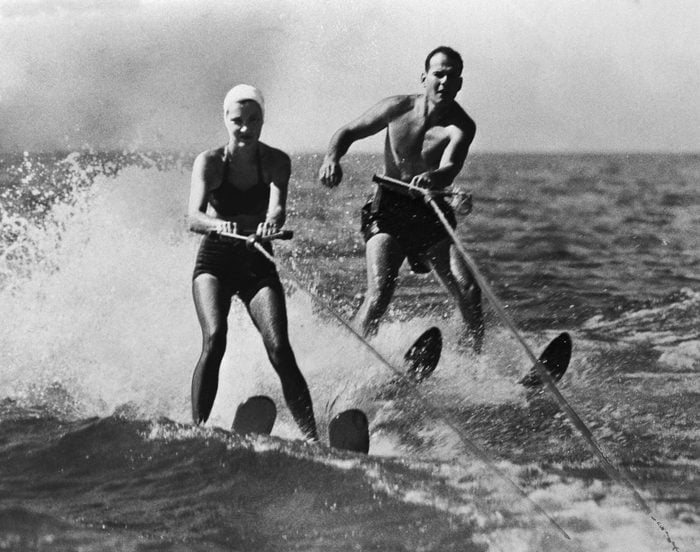
On July 4, 1954, 31-year old Marilyn Sheppard was beaten to death in the Cleveland home she shared with her husband, Sam, while their seven-year-old son lay sleeping in his bedroom down the hall. Sam claimed the killer was a “bushy-haired” intruder who had also assaulted him—leaving him with serious injuries. However, the evidence didn’t support this, and jurors believed the prosecution’s theory that Sam killed Marilyn to get out of the marriage. Sam, who was distrusted and reviled by the general public, spent ten years in prison before the U.S. Supreme Court found excessive publicity had deprived him of a fair trial. On retrial, Sam was acquitted and spent the rest of his life trying to find Marilyn’s killer. Sam’s determination inspired the television show, The Fugitive, as well as the film of the same name.
The “Love Me Tender” murders
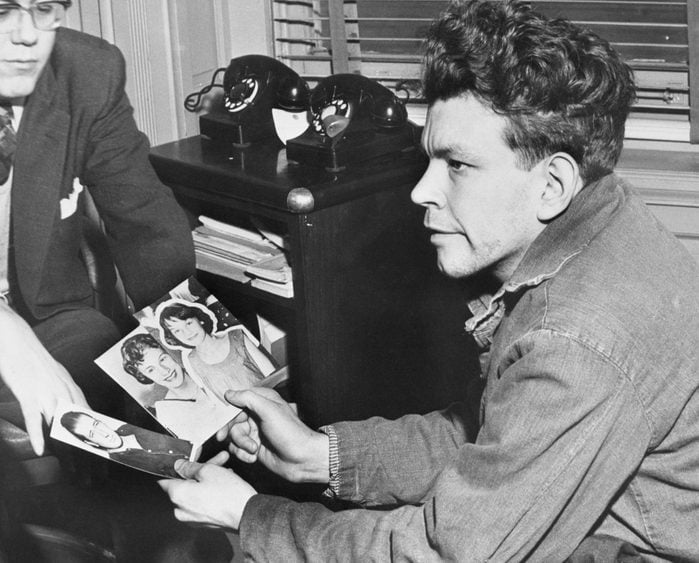
On the night of December 28, 1956, teenage sisters Patricia and Barbara Grimes went to a local Chicago movie theater to see the film, Love Me Tender. When they never returned home, a frantic search ensued. Although the police received a number of tips, none panned out, and a month later, the girls’ bodies were discovered by the side of a nearby road. Unfortunately, their bodies yielded so few clues, investigators weren’t even able to settle on time or cause of death. Nevertheless, several suspects emerged, the most promising of whom was a teenage boy who actually confessed to killing the girls. However, since his confession was elicited illegally through a lie detector test that the law said the boy wasn’t old enough to be subjected to, the boy couldn’t be tried for the crime. Whether or not the boy was the killer, the case remains unsolved to this day. All of these creepy urban legends have an actual real-life grain of truth.

The boy in the box
In February 1957, the body of a little boy, somewhere between four and six years old, was discovered in a vacant lot in Philadelphia, naked and stuffed in a bassinet box. The cause of death was multiple blows to the head, and it appeared the boy had been given a fresh haircut either immediately before or after his death. Although authorities estimated the body might have been in the box for as long as three weeks, they were able to piece together a drawing of what the boy probably looked like while alive. Still, the drawing didn’t match the description of any missing child, and no one came forward to identify him. Despite DNA testing, the boy was never identified. Fifty-three years later, his case remains unsolved.
The Walker family
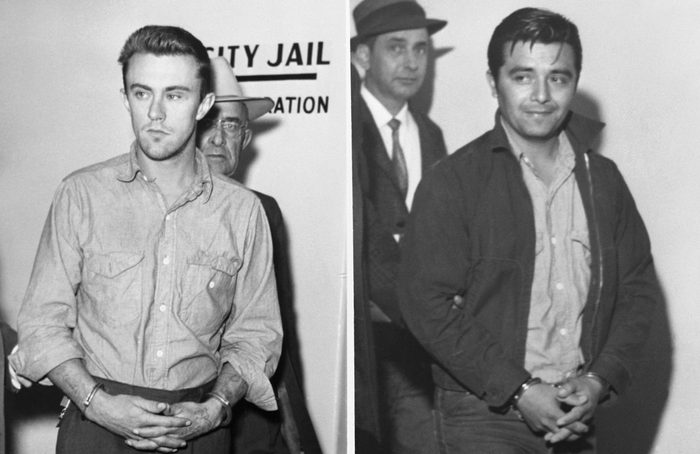
On December 19, 1959, the four members of the Walker family were brutally murdered in their Osprey, Florida, home. Their bodies were discovered the next day. The crime scene revealed few clues beyond a bloody boot, a partial fingerprint on a tub faucet, and a cellphone cigarette wrapper. However, police managed to cull 587 witnesses and/or suspects, but none panned out—not even Perry Smith and Dick Hickock. The two men were apprehended in Las Vegas a week later on suspicion of murdering another family under strikingly similar circumstances—the Clutter family of Kansas, whose massacre became the subject of Truman Capote’s true crime classic, In Cold Blood. While Smith and Hickock were eventually convicted of the Clutter family killings, authorities were unable to piece together a case against them with regard to the Walker case, which remains unsolved. If Smith and Hickock were involved, they have both since taken that secret with them to the grave. Here are 15 presidential mysteries that have never been solved.
The Beaumont children
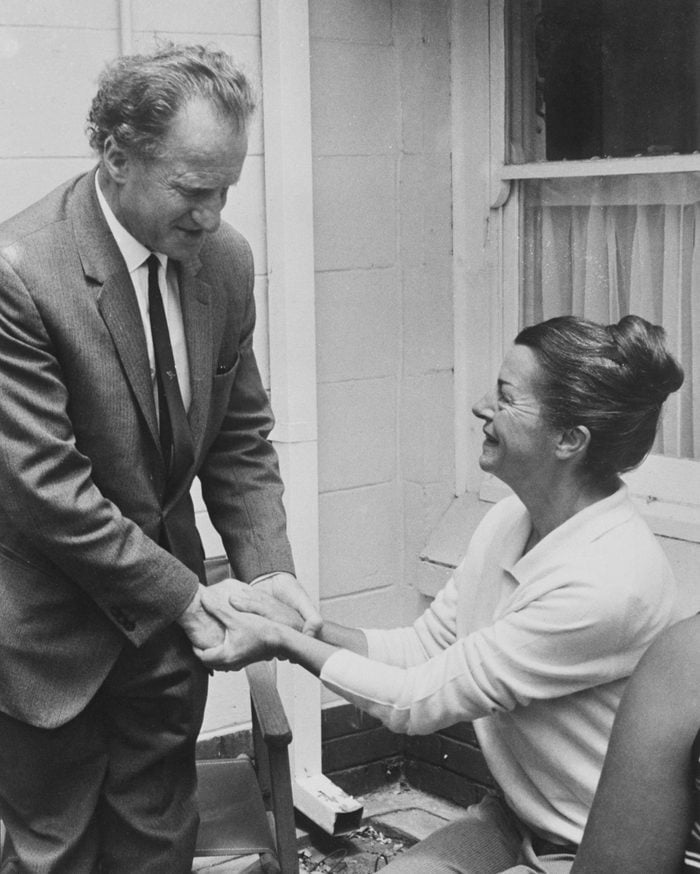
On January 26, 1966, Nancy Beaumont allowed her three young children, ages nine, seven, and four, to travel, unsupervised, by local bus to a nearby Somerton Beach in Adelaide, Australia. Since such unsupervised travel was the norm of the day, Nancy had no reason to think her children were in any danger. She was wrong. The children didn’t return home that afternoon and a frantic search ensued. Investigators learned the children had been interacting pleasantly and, seemingly, with some level of familiarity, with a tall, blonde man in his mid-30s, both at the beach and at a nearby food shop, where the man apparently gave the children money to buy meat pies. There was some hope the mystery might be solved in 2013 after two brothers told police they had spent that January weekend in 1966 digging a hole at a factory at the request of the factory owner, Harry Phipps. But the site was excavated and no bodies were found, so the mystery continues.
The hijacking of Northwest Flight 305 to Seattle
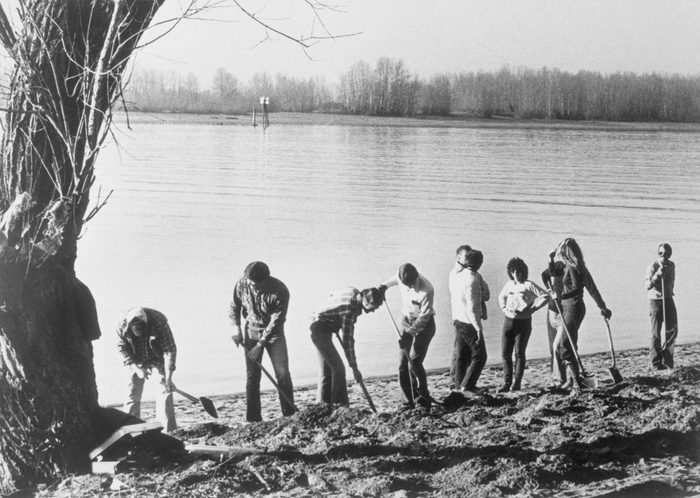
On November 24, 1971, as Northwest Orient Airlines Flight 305 took off from Portland, Oregon, its passengers had no idea the middle-aged man in a dark suit who sat near the rear of the plane—smoking a cigarette and speaking quietly to the young stewardess taking his drink order—wasn’t just ordering a bourbon and soda. He was also advising the stewardess he had a bomb that he fully intended to use if his “demands” weren’t met. Those demands included $200,000 in cash, which would be $1 million today, four parachutes, a fuel truck standing by in Seattle to refuel the plane on arrival, and a second leg trip to Mexico. After the demands of the man, who was traveling under the alias “Dan Cooper,” and has been known ever since as “D.B. Cooper,” demands were met, Cooper disappeared from the plane while en route to Mexico. Presumably he left via parachute, although no one can say since the flight crew had left Cooper alone in the rear of the plane. In any event, his parachute was never found, and the ransom money, in marked bills, was never used. Although some of that money turned up in 1980 along the banks of the Oregon branch of the Columbia River. The FBI worked the case for 45 years, but the man known as D.B. Cooper has never been identified. Despite that the FBI surmises Cooper likely didn’t survive the parachute jump and that all the “favorite” suspects (including Richard Floyd McCoy and Robert Rackstraw) are now dead, amateur sleuths continue to probe. Don’t miss these 18 unsolved mysteries that made our list of all-time strangest.
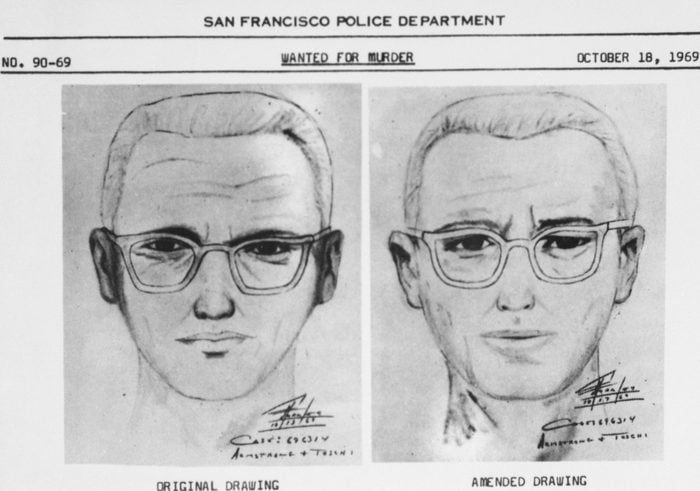
The “Zodiac Killer”
The man who called himself “Zodiac” apparently enjoyed taunting San Francisco area police as much as he enjoyed killing, which he apparently enjoyed very much. The first time Zodiac struck on December 20, 1968 (shooting and killing two teens parked on a “lover’s lane”), police approached the investigation as a standard homicide case—populating their suspect list with people whom the victims knew and working the “if teens are involved, then drugs must be involved” angle. The next time Zodiac shot at a couple in a car, he called the police himself, just in case they weren’t sharp enough to figure out these two crimes were the work of the same man—a man intent on controlling the narrative. This was also when Zodiac began contacting newspapers, offering titillating details only the actual killer would have known and threatening to up his level of violence if his letters weren’t printed. Over the next two years, Zodiac claimed responsibility for 37 lives, although law enforcement was only aware of five, and none after 1969. That being said, it was in November 1969 that Zodiac wrote a letter to the press proclaiming, “I shall no longer announce to anyone when I commit my murders. They shall look like routine robberies, killings of anger, and a few fake accidents, etc.” So perhaps Zodiac did continue killing, albeit with a revised modus operandi. In any case, the trail went cold, and although roughly 2,500 suspects were interviewed and a prime suspect identified (Arthur Leigh Allen), Zodiac’s identity remains an unsolved mystery. Find out the strangest unsolved mystery in your state.

The Isdal woman
On November 29, 1970, the badly burned body of a woman was discovered in Norway’s Isdalen Valley. Her burns rendered her unrecognizable, she bore no identification, and the labels in her clothing had been cut out. With 50 sleeping pills found in her stomach, the woman appeared to have died by suicide, but the plot grew thicker when her possessions were discovered at a nearby railway station, revealing eight fake passports, a wad of Deutschmarks, and an unsolvable, cryptic note. No one ever claimed the body, which was never connected with any missing person case. Accordingly, the case went cold. However, a podcast on the topic, Death in Ice Valley, has inspired some listeners to do some of their own sleuthing, so stay tuned because this cold case may be heating up. Here are 13 formerly cold cases that forensics finally solved.
Jimmy Hoffa
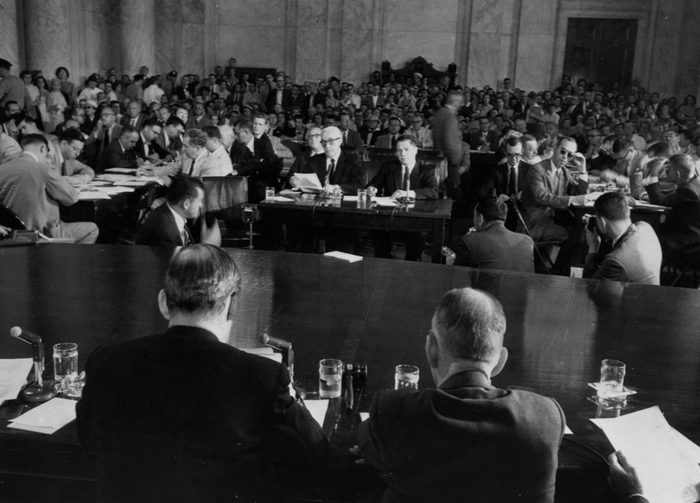
On July 30, 1975, former Teamsters Union president, Jimmy Hoffa, was looking to make a comeback from his career-derailing conviction for fraud, jury-tampering, and bribery, for which he’d received a pardon in 1971 from President Richard M. Nixon. To that end, Hoffa, who was known to associate with members of the Mafia and may have been involved in the disappearance of millions of dollars from a Teamsters’ pension fund, had arranged a meeting with Anthony “Tony Pro” Provenzano and Anthony “Tony Jack” Giacalone at a restaurant not far from Hoffa’s home in Michigan. At around 2:15 p.m., he called his wife to say he’d been stood up, and therefore, she should expect him home for dinner. But Hoffa never returned home, and, the next day, his car was still in the restaurant parking lot. A missing person investigation ensued but, not surprisingly, given the cast of characters, turned up nothing. The case went cold, and Hoffa was declared dead in 1982. The whereabouts of his body remain unknown. Discover more about the Unabomber and other notorious criminals from each state.

Tylenol Murders
On September 29, 1982, seven people around the Chicago area died after taking Extra Strength Tylenol capsules tainted with cyanide. It quickly became apparent it wasn’t that all Tylenol was tainted, but rather these particular bottles, which appeared to have been placed randomly in drugstores. Law enforcement helped avert further poisonings by driving around, confiscating pills and bottles, and shouting into bullhorns, “Don’t take Tylenol.” (This was the pre-Internet days, after all). At great cost, Tylenol’s manufacturer recalled all 31 million bottles throughout the nation, replaced capsules with caplets, and introduced tamper-free pill-bottle caps. Despite a nationwide dragnet, several smaller-scale copycat crimes in other states, and the arrest of a man who tried to use the tragedy to extort money from Tylenol, the perpetrator was never identified.

Amber Hagerman
On the afternoon of January 13, 1996, nine-year-old Amber Hagerman and her five-year-old brother Ricky were playing, as they often did, in an abandoned grocery store parking lot in Arlington, Texas. When Ricky went home, Amber stayed to play some more. But she never returned home. Despite that a man, James Kevil, now in his late 70s, witnessed Amber’s abduction from his own backyard and immediately called the police, offering a description of Amber’s kidnapper ( “a white or Hispanic male aged 25 to 40, under 6 feet tall, [with a] medium build”), the trail quickly went cold. Four days later, Amber’s body was discovered in a creek behind an apartment complex near the parking lot where she was last seen. Amber’s autopsy revealed she’d been kept alive for two days after her abduction. Unfortunately, it revealed little else, and the case went cold. The one bright light in this case is that it led to the establishment of the Amber Alert system, which alerts the public when a child has been kidnapped—in the hope they can be tracked down before they meet the same fate as Amber Hagerman.
Tupac Shakur and Biggie Smalls
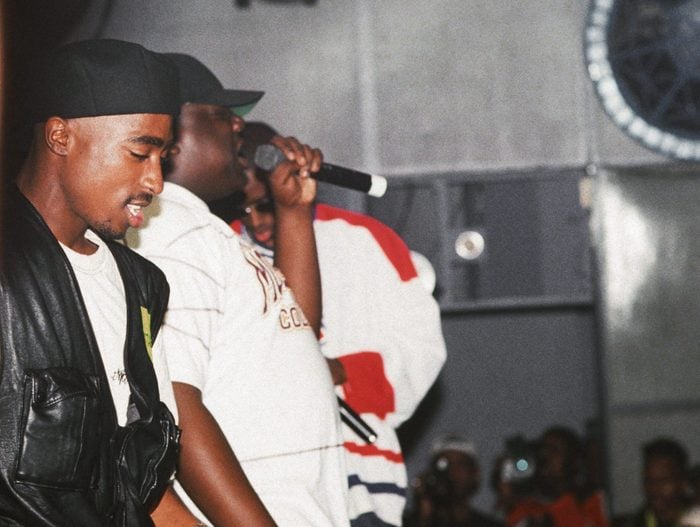
In September 1996, West Coast-based hip-hop star Tupac Shakur, 25, was gunned down in a drive-by shooting in Las Vegas. Two years earlier, Tupac had survived a similar attempt on his life and made it publicly known he believed his friend-turned-rival, Biggie Smalls had hired the gang, the Crips, to murder him. Six months after Tupac’s eventual murder, Biggie, 24, was also gunned down in Los Angeles. Some believe Tupac’s record-label paid to have Biggie killed.
JonBenet Ramsey
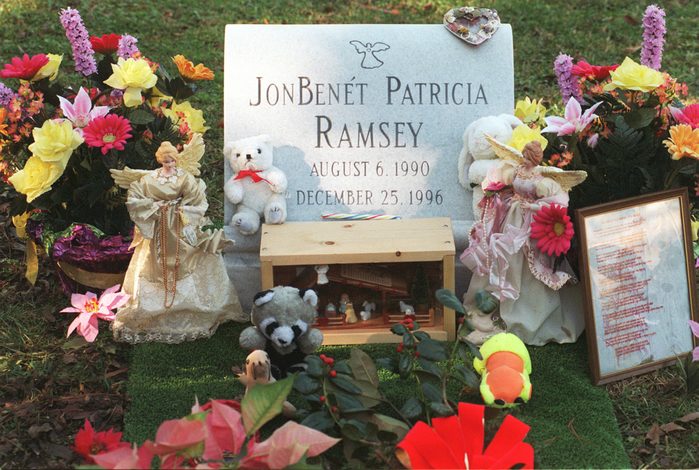
The day after Christmas in 1996, Patsy Ramsey awoke to find her six-year-old daughter, JonBenet, missing from her bed, along with a ransom note demanding $118,000. Later that day, JonBenet’s father, John, discovered JonBenet’s body in their basement. She’d been strangled and beaten to death. Investigators immediately suspected John, Patsy, and/or JonBenet’s half-brother, Burke. The public piled on as well, especially with regard to Patsy, who was reviled for her ruthless “pageant mom” behavior during the child beauty pageants in which she had entered JonBenet. Ultimately, more than 1,600 people were named as persons of interest. The crime remains unsolved, however, in part because of procedural errors, including loss and contamination of evidence, the sharing of evidence with the Ramsey family, and a delay in formally interviewing John and Patsy. Here are 20 baffling forensic cases that have thoroughly stumped everyone.
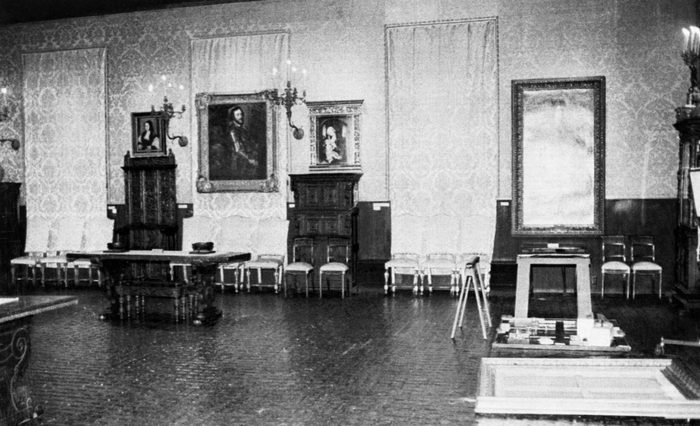
The Gardner Museum heist
Just because a case doesn’t involve the taking of human life doesn’t mean the stakes can’t be ridiculously high. Consider, for example, the “Gardner Museum Heist,” involving the theft of 13 paintings by renowned artists, including Edouard Manet, Edgar Degas, Jan Vermeer, and Rembrandt van Rijn from Boston’s Isabella Stewart Gardner Museum. The paintings, valued in today’s dollars at $500 million, were stolen right out of their frames during the wee hours of March 18, 1990, by two unarmed men dressed as policemen, who entered the museum, subdued the on-duty security guards, and left with the paintings, all in under 81 minutes. Making the case almost impossible to crack is that no one appears to have ever attempted to sell the stolen paintings. Nor has anyone come forward to claim the $10 million reward offered for the paintings’ return. Despite an ongoing investigation, the case of the missing paintings grows colder by the day to the great embarrassment and consternation of the museum. Learn about 12 more of the strangest unsolved mysteries of the art world.
Originally Published: March 18, 2020

