


These Are the Strongest Hurricanes Ever to Hit the United States

Updated: May 25, 2023





Most of us weren't alive when the strongest hurricane ever touched down on U.S. soil. Here's how the top 10 worst hurricanes stack up.
A storm’s brewing
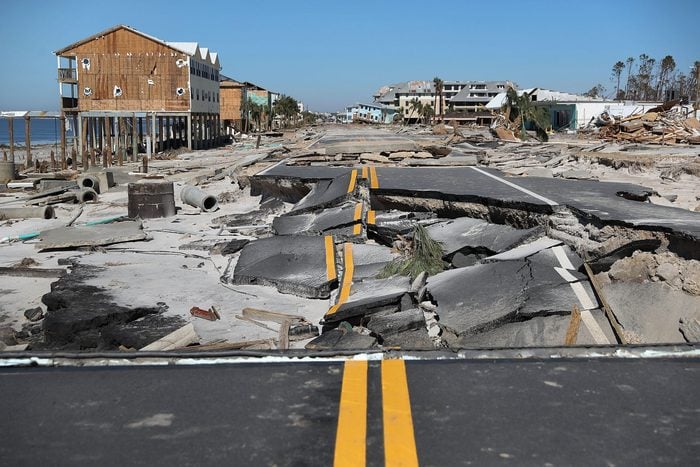
So far, the 21st century has seen its fair share of devastating hurricanes, with names like Katrina, Sandy, Maria, Harvey and, most recently, Ian living in our collective minds as forces that upended communities. Given how much death and destruction these storms caused, it seems likely that one of them was the strongest hurricane ever to hit the United States. But based on U.S. weather records—which date back to 1880—that’s not the case.
So which storm ranks as the worst in American history? To quell your curiosity, we dove into historical records and rounded up the top 10 strongest hurricanes ever to hit the United States. And after reading about these powerful storms, why not brush up on some natural disaster knowledge? Whether you want to know more about how to prepare for or survive a hurricane or where hurricane names come from, find yourself asking “what is a wildfire?” or want to learn how to prepare for a tornado, we’ve got you covered in any kind of weather.
What makes for the strongest hurricane ever?
The first thing to note is that the National Oceanic and Atmospheric Administration (NOAA) has no official metric to designate which hurricanes are the strongest. But media reports on the “strongest hurricanes ever” typically refer to one of two things: the storm’s central pressure or its wind speed at landfall.
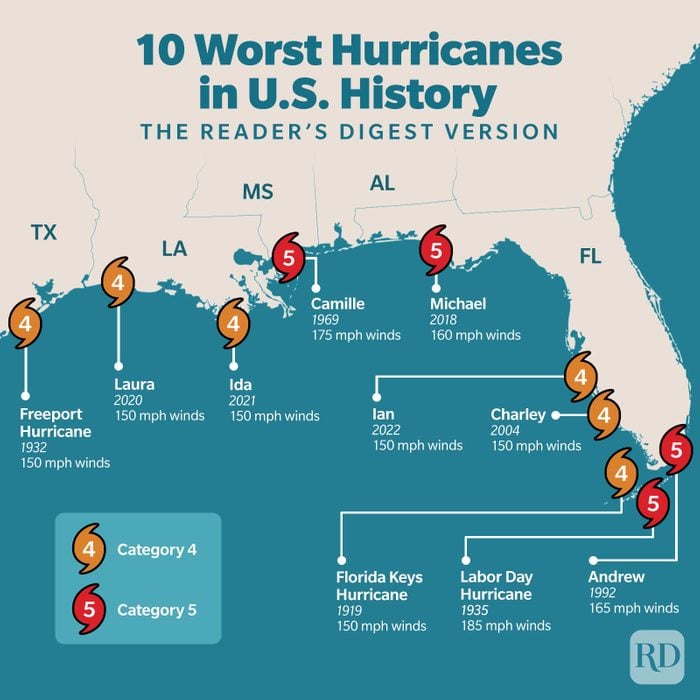
Our ranking of the strongest hurricanes ever to hit the United States is based on wind speed at landfall. This is also the metric NOAA uses to place storms into the numerical categories we hear about in weather reports—officially known as the Saffir-Simpson Hurricane Wind Scale—ranging from Category 1 (lower wind speeds) to Category 5 (the highest wind speeds). A total of four Category 5 hurricanes have hit the United States since 1880.
According to John Cangialosi, a senior hurricane specialist at NOAA’s National Hurricane Center, this is only one way of measuring and assessing a hurricane. “Statistically [and] historically, wind speed isn’t the biggest problem with hurricanes,” he tells Reader’s Digest. “The biggest problem is water hazards—specifically, storm surge.”
For example, when Hurricane Katrina made landfall in southeast Louisiana in 2005, it was a Category 3 storm. So in terms of wind speed, it was somewhere in the middle. But as Cangialosi points out, “it hit a major metropolitan area, caused levees to break and caused a horrific storm surge,” resulting in extensive damage and loss of life—which is the part that sticks with us. Similarly, Hurricane Sandy was barely a Category 1 storm when it hit New York City in 2012.
“Storm strength and the devastation are linked, but they’re not a perfect correlation,” Cangialosi explains. “It’s not like the category definitely tells you what the damage is going to be. It’s more complicated than that.”
Get Reader’s Digest’s Read Up newsletter for travel, tech, cleaning, humor and fun facts all week long.
Labor Day Hurricane of 1935
Category 5
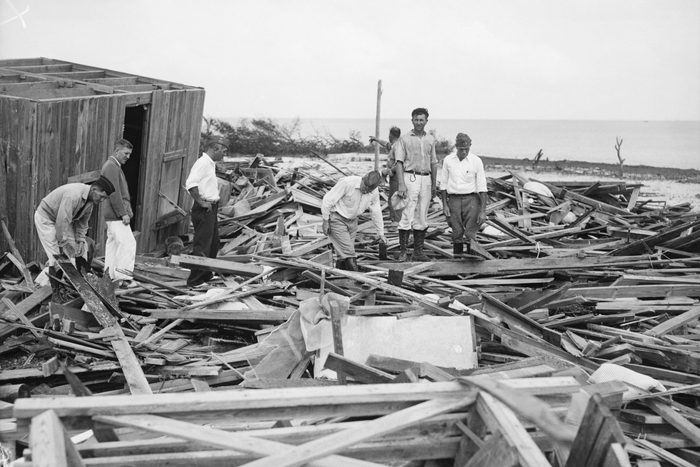
With a wind speed of 185 mph at landfall, the Labor Day Hurricane of 1935 is the strongest hurricane ever to hit the United States. It was also the first recorded Category 5 storm in the country’s history. As its name suggests, it hit on Labor Day in 1935, which fell on Sept. 2 that year.
The hurricane struck as it made its way across the Florida Keys, between Key West and Miami (the city with the highest hurricane risk on the East Coast). After that, the storm began traveling north, parallel to Florida’s west coast, then made landfall again near Cedar Key, Florida—this time as a Category 2 hurricane—before turning into a tropical storm in Georgia and the Carolinas.
The storm’s strong winds and heavy rainfall caused an estimated $6 million in damage (or about $130 million when adjusted for inflation), including the destruction of homes, commercial buildings, crops, docks and fishing craft. The Labor Day Hurricane of 1935 claimed at least 485 lives. A little more than half of the deceased (around 260 people) were World War I veterans working on a federal relief project.
Hurricane Camille
Category 5
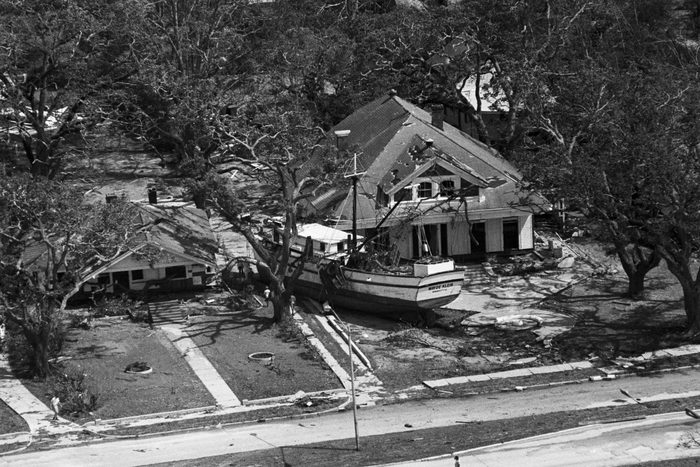
When Hurricane Camille made landfall the evening of Aug. 17, 1969, along the Mississippi Gulf Coast near Waveland, Mississippi, it had a wind speed of 175 mph. Or at least that’s what post-storm reanalysis data indicates. The precise wind speed isn’t known because “the hurricane destroyed all the wind-recording instruments in the landfall area,” according to the National Weather Service.
The storm’s path of destruction began with high winds in Mississippi, weakened into a tropical depression as it passed through Tennessee and finally caused massive flooding in Virginia. By the end of the storm, Hurricane Camille had destroyed 5,662 homes, 1,082 mobile homes, 775 farm buildings and 679 small business buildings, which amounted to an estimated $1.42 billion in damage. The hurricane also was responsible for 256 deaths and 8,931 injuries.
Was Hurricane Camille the worst hurricane ever? There’s no official way to determine that, but with so many deaths and such extensive damage, it’s certainly a contender. If you’re saddened by the destruction these hurricanes bring, find out how to help after a natural disaster.
Hurricane Andrew
Category 5
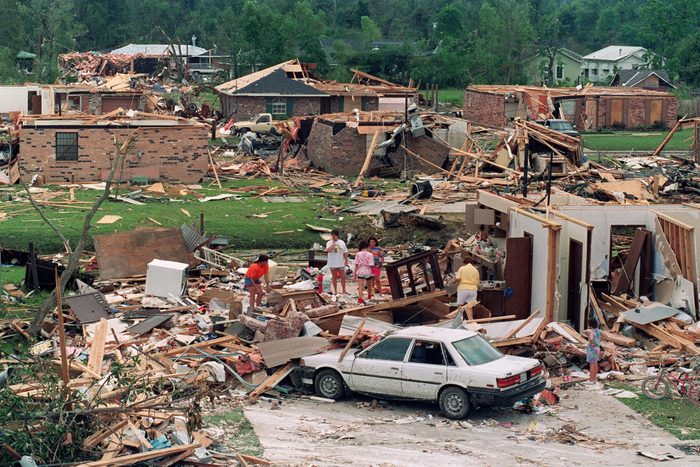
On Aug. 14, 1992, meteorologists kept an eye on a storm emerging from a tropical wave off Africa’s west coast. Over the course of a week, it gradually progressed from a tropical depression into a tropical storm. But when it transitioned from a tropical storm to a Category 5 hurricane in about 24 hours, they knew it was one to watch.
Hurricane Andrew hit the Bahamas first before making landfall on Elliott Key (near Homestead, Florida) on the morning of Aug. 24 with a wind speed of 165 mph. The powerful storm moved into the Gulf of Mexico, then headed north, hitting central Louisiana as a Category 3 hurricane on Aug. 26. At the time, Hurricane Andrew was the costliest hurricane ever to hit the United States, causing a total of $27.3 billion in damage in Florida and Louisiana. In the United States alone, the storm and its resulting hazards caused 65 deaths. And like many natural disaster survivors, those with firsthand experience of Hurricane Andrew—and its surge from tropical storm to Category 5 hurricane basically overnight—aren’t likely to forget it.
Hurricane Michael
Category 5
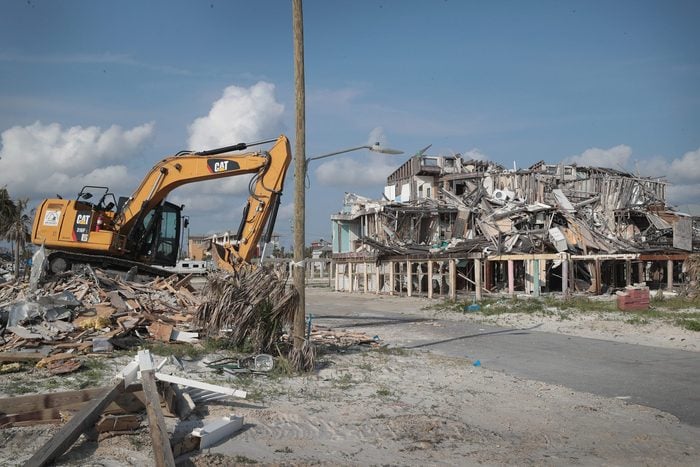
When Hurricane Michael made landfall with a wind speed of 160 mph on Oct. 10, 2018, near Mexico Beach and Tyndall Air Force Base, Florida, it became the first Category 5 storm to hit the United States since Hurricane Andrew and the fourth on record. It’s also the strongest hurricane ever to hit the Florida Panhandle. The state’s coastline saw powerful winds and storm surge, while inland areas dealt with a combination of wind and torrential rain.
Hurricane Michael moved into Georgia at Category 3 strength before dissipating to a tropical storm as it made its way through the state and into the Carolinas, leaving behind a trail of destruction resulting in an estimated $25 billion in damage. The storm and its aftermath (which included electrocutions from downed power lines and vehicle accidents on wet roads) claimed 59 lives in the United States. Speaking of issues with power lines, be sure you know what to do when the power goes out in case you’re ever in the path of an angry hurricane or another natural disaster.
Hurricane Ian
Category 4
The remaining spots on our list of the strongest hurricanes ever to hit the United States are a six-way tie for fifth place. Hurricane Ian and the storms that follow all had a wind speed of 150 mph when they made landfall. They’re listed in reverse chronological order, beginning with the most recent.
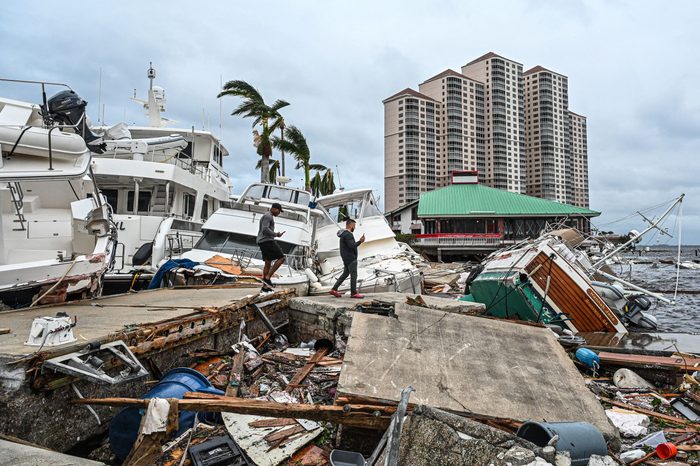
After barreling through the Caribbean, Hurricane Ian made landfall on Sept. 28, 2022, near Cayo Costa in southwestern Florida. With a wind speed of 150 mph, the Category 4 storm was just 7 mph shy of a Category 5 classification. Along with powerful winds and rainfall, a massive storm surge caused flooding of 12 to 18 feet above ground level on the west coast of Florida.
Ian was downgraded to a tropical storm on Sept. 29, and at that point, the intense rainfall was the biggest problem, producing 1-in-1,000-year amounts in some areas—including nearly 17 inches of rain within a 24-hour period in Lake Wales in central Florida. Having crossed over to the other side of the state, Hurricane Ian regained strength in the Atlantic Ocean. It made landfall in Georgetown, South Carolina, as a Category 1 storm on Sept. 30, prompting destructive storm-surge flooding.
Although the full extent of Hurricane Ian’s impact is not yet known, preliminary estimates indicate that the damage may be between $53 billion and $74 billion. As of Nov. 1, the Florida Medical Examiners Commission reported 130 confirmed deaths attributable to Hurricane Ian in the state. There have also been five confirmed deaths in North Carolina, but those figures may change as the recovery effort continues. As you keep reading about the strongest hurricanes ever, get your tropical storm terminology correct: Here’s the difference between a typhoon and a hurricane.
Hurricane Ida
Category 4
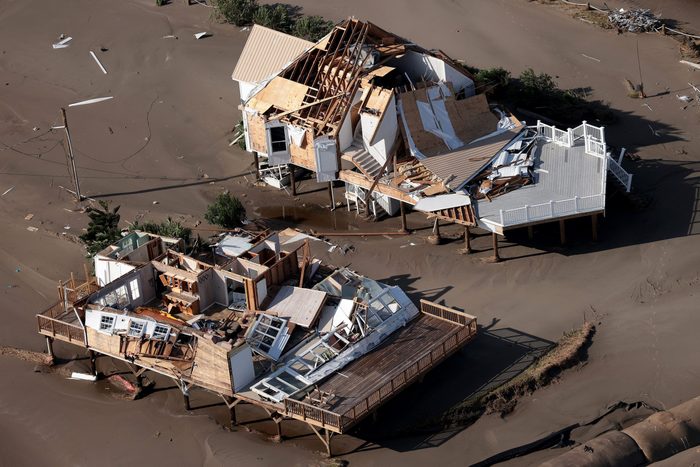
Just before noon on Aug. 29, 2021, Hurricane Ida struck the southeastern Louisiana coast near Port Fourchon, with a wind speed of 150 mph. Roughly two hours later, the Category 4 storm made landfall again—this time just southwest of Galliano—and though it continued to move inland, it took another 14 hours before weakening to a tropical storm. By the afternoon of Aug. 30, it had become a tropical depression.
The wind and peak storm surge of 9 to 14 feet above normally dry ground caused extensive damage in Louisiana. But it didn’t end there. As the remnants of Hurricane Ida made their way through or near much of the eastern United States—including Mississippi, Tennessee, West Virginia, Virginia, Maryland, Pennsylvania, New Jersey and New York (several of which are some of the U.S. states most prone to natural disasters)—they caused tornado outbreaks and devastating flooding, and an estimated $75 billion in damage. According to an October 2021 report from the Centers for Disease Control and Prevention, the hurricane was responsible for 91 deaths across nine states.
Hurricane Laura
Category 4
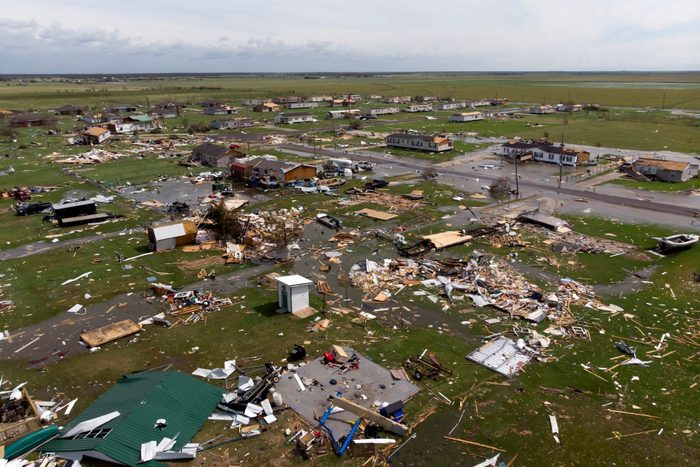
When Hurricane Laura slammed Louisiana’s southwestern coast on Aug. 27, 2020, those in the path of the Category 4 storm were faced with the reality of dealing with a hurricane in the midst of a global pandemic—at a time before vaccines for COVID-19 were available. The storm made landfall in Cameron, Louisiana, with 150 mph winds, making it the strongest hurricane ever to hit the southwest part of the state (or at least since records began).
Hurricane Laura’s intense winds damaged or completely knocked down homes, other buildings, trees, power lines and electrical poles. A storm surge of 12 to 18 feet above ground level resulted in extensive flooding throughout Louisiana and Arkansas. In total, Hurricane Laura resulted in at least $19 billion in damage and 77 deaths. If you live in an area that’s frequently hit by hurricanes, make sure you know the trick for determining if your food went bad during a power outage.
Hurricane Charley
Category 4
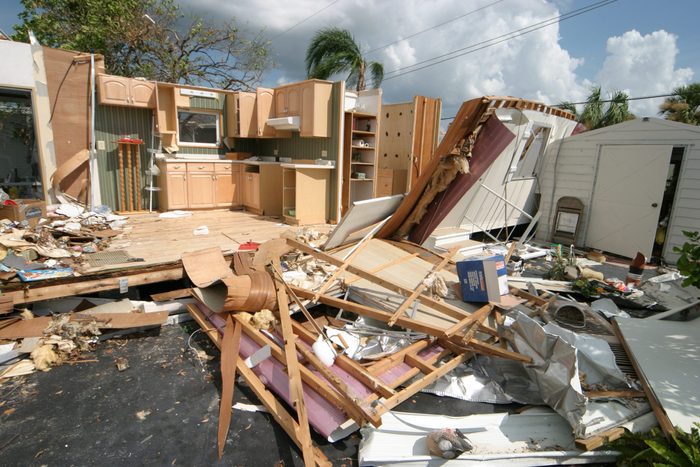
Originating as a tropical wave, a tropical depression developed southeast of Barbados in August 2004. The storm picked up wind speed as it traveled northwest, officially becoming a hurricane as it passed over Jamaica, then curving as it continued its path heading northeast. Hurricane Charley first made landfall in western Cuba as a Category 2 storm. Though this initially weakened the storm, an unseasonably strong extended area of low pressure caused it to accelerate and develop into a Category 4 hurricane just before making landfall on the southwest coast of Florida, north of Captiva Island.
The powerful winds—and the 16 related tornadoes that hit areas in Florida, North Carolina and Virginia—caused most of the estimated $15 billion in damage. The storm surge didn’t exceed 7 feet, and the areas with the most rainfall received fewer than 8 inches of precipitation. In total, Hurricane Charley was directly responsible for 10 deaths in the United States, as well as four in Cuba and one in Jamaica.
Traveling during hurricane season? Be strategic about your vacation destination. You can still visit these islands during hurricane season, for instance.
1932 Freeport Hurricane
Category 4
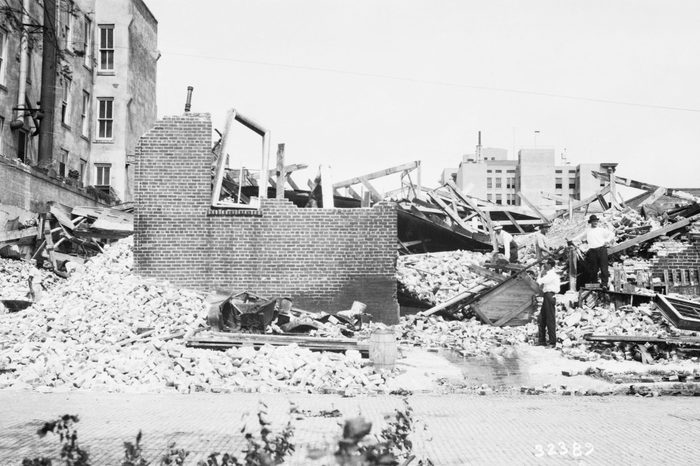
The 1932 Freeport Hurricane started off as a tropical cyclone, but thanks to its relatively small diameter, it was able to gain strength quickly. Cyclones and hurricanes may not have many differences, but they can be equally dangerous. By the time it made landfall between Galveston and Freeport, Texas, on Aug. 14, it had transformed into a Category 4 hurricane with 150 mph winds. Powerful gusts of wind demolished entire residential areas, leaving approximately 600 families without homes.
When the storm moved inland, rain became the biggest problem, including 12 inches of rain falling in parts of Oklahoma. The 1932 Freeport Hurricane caused an estimated $7.5 million in damage; that figure includes the massive loss of crops in the region. In total, the hurricane left 40 people dead and 200 injured.
Ever wonder what happens to birds during a hurricane? Heavy downpours in nearby Warton, Texas, killed roughly 800 birds during this hurricane.
1919 Florida Keys Hurricane
Category 4
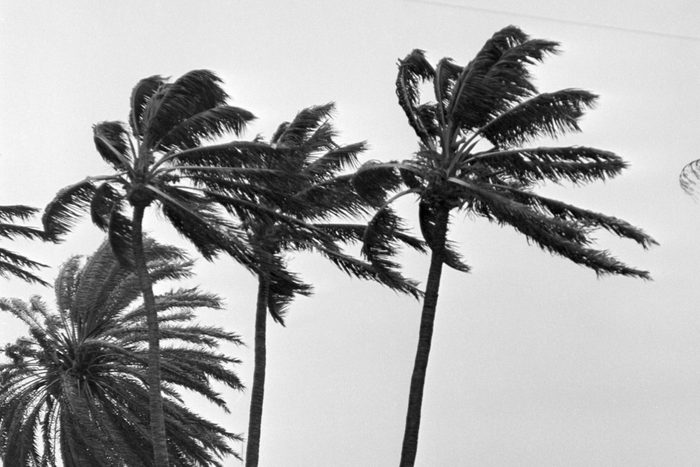
Sixteen years before the strongest hurricane ever, the 1919 Florida Keys Hurricane hit the archipelago with 150 mph winds. From there, it moved into the Gulf of Mexico, where it maintained its Category 4 status before making landfall again between Baffin Bay and Corpus Christi, Texas. It continued through Texas, finally ending in El Paso.
What the National Weather Service describes as “a dome of water” struck downtown Corpus Christi, resulting in a 16-foot-high storm surge. After the storm had passed and the water receded, piles of debris—some reaching a height of 16 feet and including a massive stockpile of lumber and 1,400 bales of cotton—lined the city’s streets. Additionally, oil tanks at Port Aransas were breached during the storm, causing them to spill into Nueces Bay.
The 1919 Florida Keys Hurricane caused an estimated $20 million in damage, which would be the equivalent of nearly $300 million today. The loss of life resulting from the hurricane remains unknown. Many Corpus Christi residents were swept into Nueces Bay during the storm, and even if their bodies were recovered, they were covered in heavy crude oil from the spill, making them impossible to identify. Although 284 bodies were identified, countless others weren’t—or never washed ashore. It’s estimated that a total of between 600 and 1,000 perished, which would make the 1919 Florida Keys Hurricane one of the strongest and deadliest hurricanes ever to hit the United States. For more fascinating weather facts, read about the times the weather changed the course of history.
Sources:
- John Cangialosi, senior hurricane specialist at the National Oceanic and Atmospheric Administration’s National Hurricane Center
- Maria M. Torres, meteorologist and communications and public affairs officer at the National Oceanic and Atmospheric Administration’s National Hurricane Center
- National Hurricane Center
- National Weather Service
- National Oceanic and Atmospheric Administration
- National Environmental Satellite Data and Information Service
- Morbidity and Mortality Weekly Report: “Deaths Related to Hurricane Ida Reported by Media — Nine States, August 29–September 9, 2021”
- World Meteorological Organization: “Hurricane Committee discusses record-breaking 2020 season, plans for 2021”
Originally Published: November 23, 2022

