


12 Facts About the White House You Missed in History Class
Updated: Apr. 21, 2024





Here are a few facts about the White House that will surprise you.
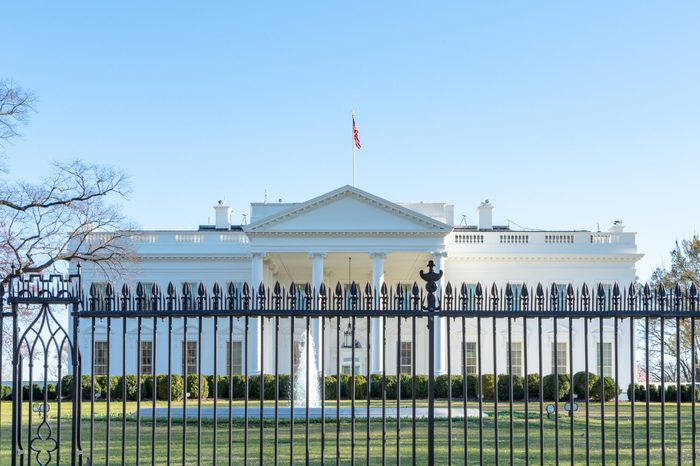
White House facts you never knew
Throughout history, the White House has been referred to as the “President’s Palace,” the “Executive Mansion,” and the “President’s House,” among other terms. Since its construction more than 220 years ago, 1600 Pennsylvania Avenue has remained one of the most exclusive—and extraordinary—buildings in the world.
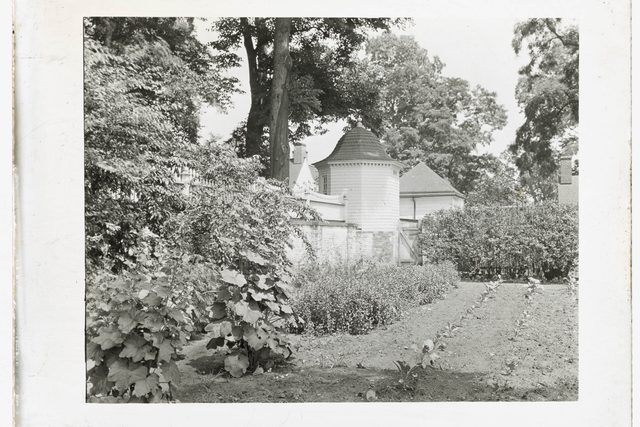
George Washington never lived there
In 1791, our founding father and first U.S. president chose the site where the White House would be built and also approved its final design. On October 13, 1792, the cornerstone was laid and a group of Freemasons began construction. President Washington, whose term ended in 1797 and who died in 1799, never had the opportunity to live in the “presidential palace.” President John Adams and his wife Abigail moved into the unfinished house in 1800, becoming the nation’s first First Couple to live there. The building and grounds are sprawled across 18 acres. Here are some more fascinating facts about George Washington.
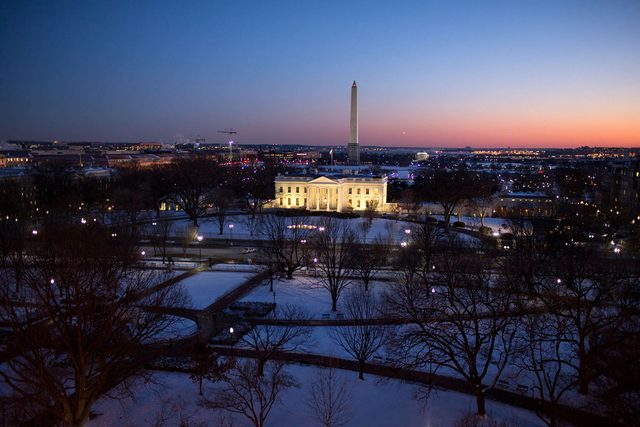
It’s bigger than you think
Although it’s relatively modest in terms of today’s sprawling mansions, the White House was the country’s biggest house until after the American Civil War. It has 132 rooms and 35 bathrooms on six levels, as well as 412 doors, 147 windows, 28 fireplaces, 8 staircases, and 3 elevators. It is 168 feet long by 85 feet wide (without porticoes), 70 feet tall on the south side and 60 feet 4 inches tall on the north side. The building and grounds are sprawled across 18 acres.
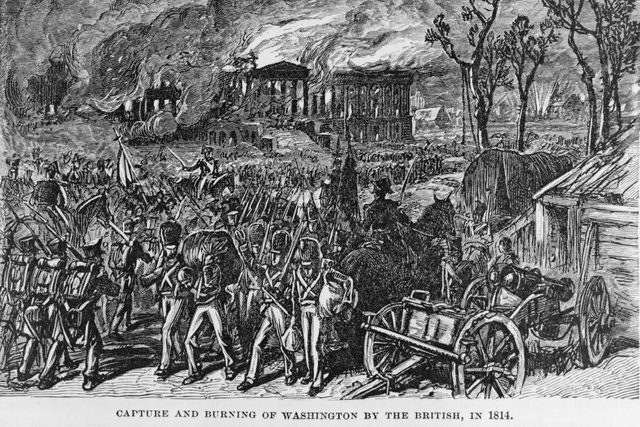
It was torched by British soldiers
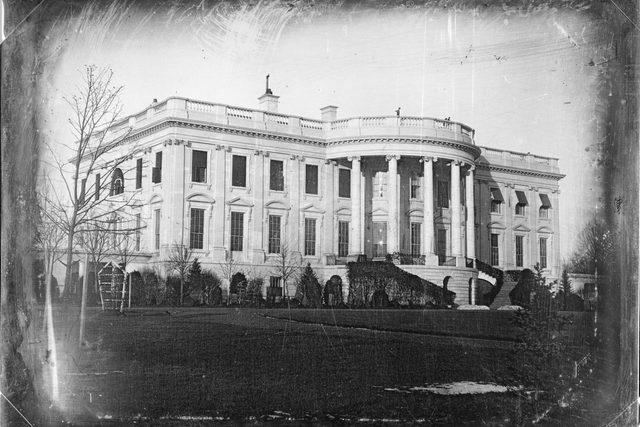
During the War of 1812, British soldiers invaded the White House in 1814, setting it aflame in retaliation for U.S. soldiers who were torching buildings in York, Ontario. The fire completely destroyed the interior and roof of the building. President James Madison called for immediate reconstruction, summoning the return of the original designer, James Hoban. Madison and his wife were never able to return to the White House, but reconstruction was completed in time for newly elected President James Monroe to move there in 1817.
It didn’t have an official name until 1901
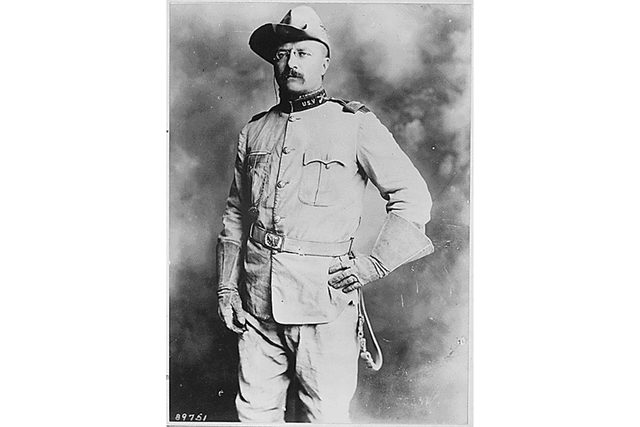
Although it’s been the official residence of all U.S. presidents since 1800, the building wasn’t formally deemed the “White House” until President Theodore Roosevelt used it on his stationary in 1901. Prior to that, it was referred to as “the President’s House” or “the President’s Mansion.” Some theorists say that the name originated after the fire of 1814, when the smoke-stained walls were painted over with white paint, although historians state that this myth is largely unfounded. What’s not a myth are these items that used to be banned in the White House.
Suffragists protested outside the gates for two straight years
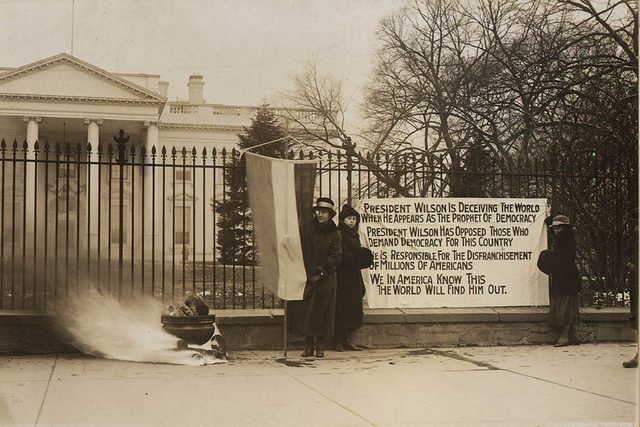
Beginning on January 10, 1917 with Woodrow Wilson’s presidency, a group of women called “the Silent Sentinels” began protesting outside of the White House gates. The group represented the National Women’s Party and refused to move until women were given the right to vote. They camped out in front of the White House for six days a week for two and a half years. During that time they were repeatedly harassed, mistreated, and even beaten—and yet they remained, until June 4, 1919, when the 19h Amendment was passed, finally giving women the right to vote. The stories behind these White House Christmas ornaments are a piece of history.
It’s rumored to be haunted
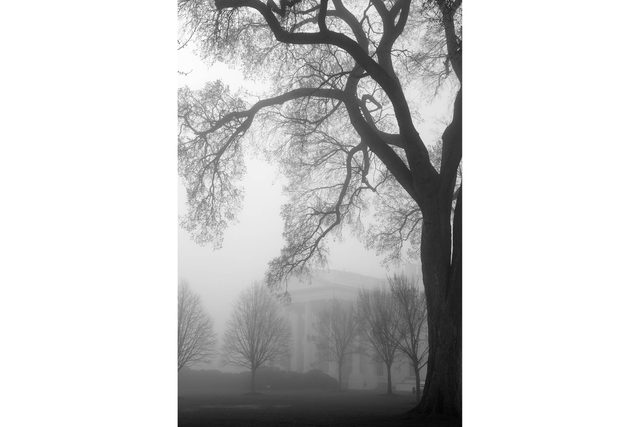
A myriad of presidents, first ladies, staffers, and guests have reportedly seen ghosts lurking in the rooms of the historic building. The ghost of Abigail Adams has been seen heading toward the East Room, where she used to hang her laundry, and First Lady Mary Todd Lincoln had told friends that she had heard an angry and defeated Andrew Jackson stomping and swearing throughout the building’s many halls. Of course, the most notable “ghost” comes in the form of President Abraham Lincoln; sightings have been reported by the first ladies of the Coolidge, Johnson, and Roosevelt presidencies, and even British Prime Minister Winston Churchill reported seeing Lincoln’s ghost while staying at the White House during World War II. Learn these timeless Abraham Lincoln quotes.
It’s housed bears, tiger cubs, and other wild animals
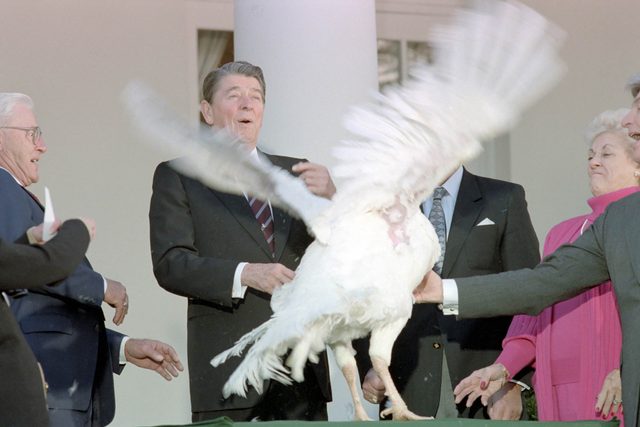
Of course, plenty of presidents have lived with standard house pets like dogs and cats, but others have welcomed animals that are much more…farm-friendly or even exotic. President John F. Kennedy welcomed a slew of animals onto the White House grounds, including birds, hamsters, rabbits, dogs, cats, and horses. Thomas Jefferson kept two bear cubs; Martin Van Buren had a pair of tiger cubs, which had been given to him by the Sultan of Oman and which Congress forced him to send to the zoo; William Henry Harrison kept both a billy goat and a cow; President James Buchanan had a pair of bald eagles; and among his array of puppies, ponies, and fish, Grover Cleveland also raised chickens on the White House property. Check out even more presidential trivia.
It needs tons of paint…literally
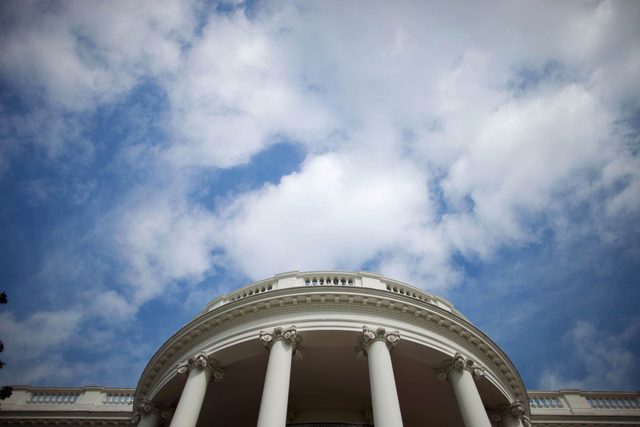
Just like any other historic house, the White House requires ongoing maintenance to keep it looking fresh. Unlike most other houses, however, the White House requires 570 gallons (about 3 tons) of white paint to cover the exterior, 300 of which are used just for painting the residence. When the White House was renovated in 1992, more than 30 layers of paint were removed from the exterior walls. It’s reported that painting now takes place on a yearly basis, with touch-ups ongoing throughout the year.
There’s a secret command center below the West Wing—or is there?
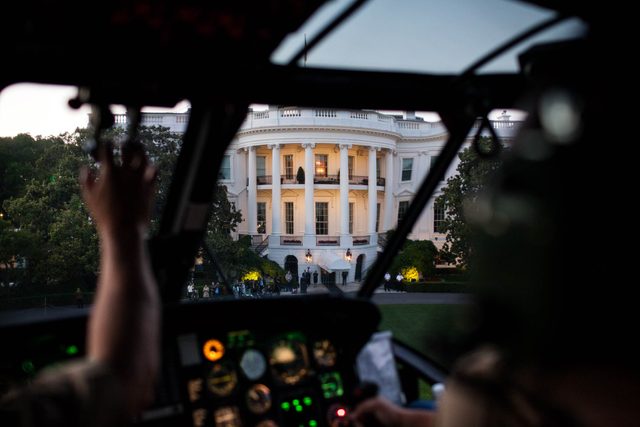
In 2010, construction workers started digging a giant hole in the ground in front of the West Wing, and it was a project that was literally shrouded in secrecy by a tall green construction fence. Two years later, the fencing came down, the surface repaved, and it looked like nothing had changed — or had it? The “official” word is that work was being done to replace the West Wing’s aging utilities, but the numerous truckloads of heavy-duty concrete and beams raised suspicion among conspiracy theorists and curious citizens alike: was a secret underground command center—one that had first been proposed more than 50 years ago—finally been established? Do you think you could decode these clever code names the Secret Service used for past presidents?
It has been punked
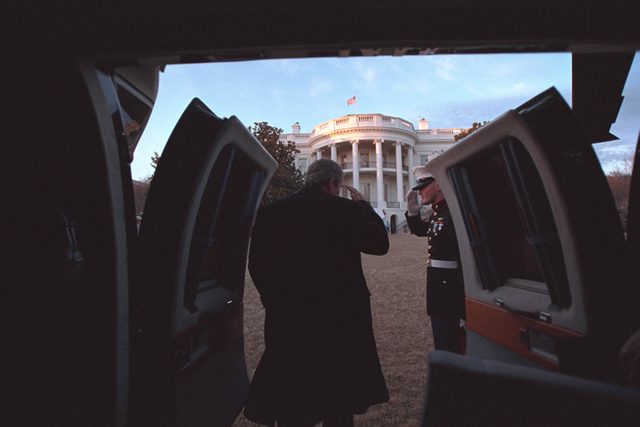
Throughout modern times the transition of power between exiting and incoming presidents has been seamless and dignified, the exits of a few past presidents has been anything but peaceful. While some outgoing presidents have refused to speak with president-elects (the 1932 Hoover-to-Roosevelt transition, was a notable one, as well as the most recent transition between Donald Trump and Joe Biden), other outgoing administrations have resorted to harmless pranks. One departing administration in particular, however, truly upped its game: Before George W. Bush’s administration took over in 2001, Clinton staffers apparently caused around $20,000 in damage to the White House by removing the “W” keys from between 30 and 60 computer keyboards, which were found taped to the walls. The staffers also stole doorknobs, smeared the undersides of desk drawers with sticky goo, and rerouted about 100 phone lines to ring at other numbers. That should probably be on the list of things no president is allowed to do in office.
More than 3,000 people work there full time
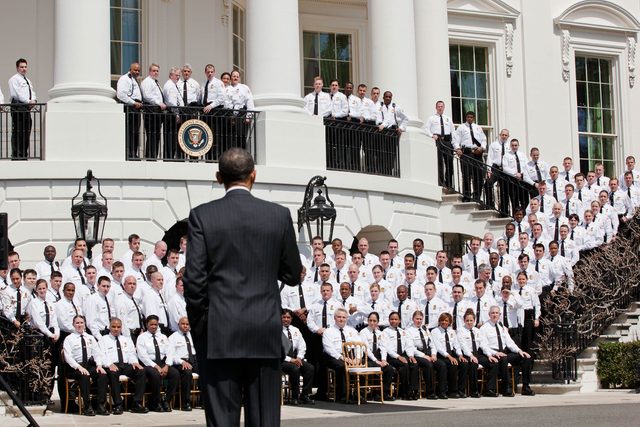
When a past president leaves the White House, he typically takes his staffers with him, leaving the president-elect to fill the void. With approximately 3,300 full-time positions to fill, that’s no easy task—and that’s not even counting the folks who work for the White House part-time or who are employed by the Executive Branch but have their offices off-site. The White House Office alone employees more than 500 people; the Office of the Vice President, nearly 100; the Military Office, around 1,300; and the Office of Management and Budget, about 500 people. There are also more than 500 Secret Service agents, and nearly 200 staffers on the president and vice president’s protective detail. If you’ve worked in the White House long enough, you’d be able to recognize the before-and-after photos of how presidents have aged in office.
The original cornerstone has disappeared
One of the most notable mysteries surrounding the White House is the disappearance of its original cornerstone. A mere 24 hours after it was laid in 1792, the cornerstone, along with its inscribed brass plate, disappeared. No one has seen it since. The Freemasons, who constructed the building, denied taking it, and numerous presidents, including Roosevelt and Truman, have tried to locate it, to no avail. One theory is that the cornerstone is hidden between two stone walls in the Rose Garden, but it has never been found.
