


Why does the Chicago River turn green, is the green dye safe and where can you see the green river today? Here's what to know!

This Is How the Chicago River Turns Green for St. Patrick’s Day

Updated Mar. 31, 2024
When you think of St. Patrick’s Day celebrations, what comes to mind? Parades, bagpipers, leprechauns and four-leaf clovers? What about green rivers? While it may sound unexpected, for Irish Chicagoans and Windy City residents, dyeing the Chicago River green is just another St. Patrick’s Day tradition that makes the holiday so special.
But what does turning the Chicago River green have to do with the Irish holiday—and when is St. Patrick’s Day anyway? While the holiday is celebrated on March 17, the waterway is dyed the famous St. Patrick’s Day color a few hours before the city’s annual parade. And unlike the pot of gold at the end of the rainbow, there’s no magic to it. We’ve got the details on what, when, where and why this one-of-a-kind emerald-tinged tradition came to be.
Get Reader’s Digest’s Read Up newsletter for more holiday trivia, humor, cleaning, travel, tech and fun facts all week long.
Why do they turn the Chicago River green?
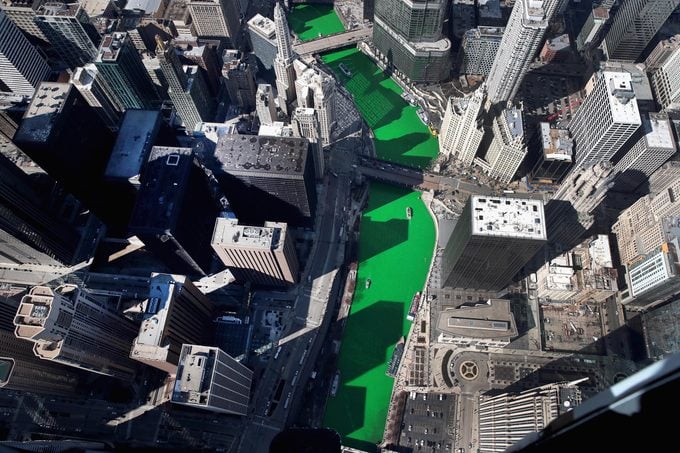
For more than 60 years, the Windy City has been turning the Chicago River green to celebrate St. Patrick’s Day. It started in 1961, when Stephen Bailey, the business manager of the Chicago Journeymen Plumbers Local 130, noticed emerald green stains on a plumber’s overalls. The fluorescent stains were caused by a dye used to find leaks and pollution in the river. Bailey, who also happened to be the city’s St. Patrick’s Day parade chairman, suggested using the dye to turn the river green. The very next year, with the approval of Mayor Richard J. Daley, the Chicago Plumbers Union used 100 pounds of the same dye to purposely stain the Chicago River green for St. Paddy‘s Day.
The bright, Flubber-colored hue honors Ireland’s nickname, the Emerald Isle, making it a long-standing tradition in which Chicagoans take part (along with cooking up some Irish soda bread and other St. Patrick’s Day recipes). While the origin story doesn’t include a magical leprechaun or lucky four-leaf clover, it’s still a pretty incredible tale of stained white overalls, leaky pipes and the local plumbers union.
When does the Chicago River turn green?
The Chicago River still turns green today! Every year, the river is dyed a few hours before the Chicago St. Patrick’s Day Parade, which will take place on Saturday, March 16 this year, just one day before the St. Patrick’s Day holiday. Can’t make it to Chicago to celebrate? Grab your popcorn and stream the best Irish movies, cozy up in a traditional Aran sweater or simply wear green!
How do they dye the Chicago River green?
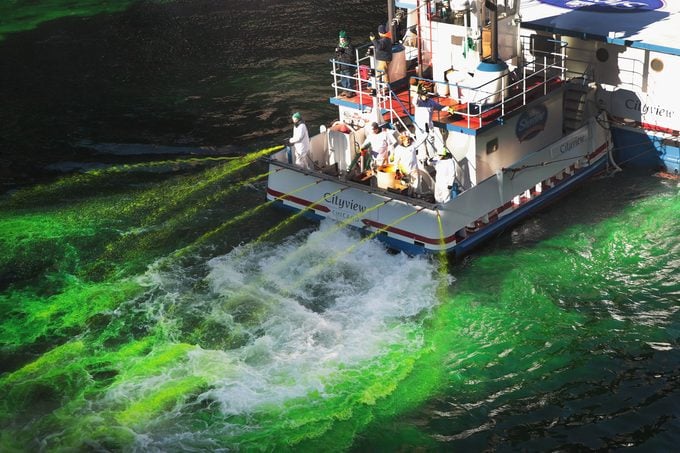
In the early days, the original plumber’s dye was used to turn the Chicago River green, but in 1966, environmentalists convinced the city to begin using a vegetable-based dye. Today, the Chicago Plumbers Union still pays to dye the river and safeguards their 60-year-old secret recipe, which is a low-impact orange powder. The powder is spread by two motorboats (one for dumping, one for stirring the water). It takes a crew of six (featuring relatives of the first families to dye the river, the Rowans and the Butlers), about 40 pounds of powder and two hours to turn the Chicago River into a shamrock-hued paradise. This process leaves the Chicago River green for four to five hours.
“Dyeing” to see a river turned green? While it was the first of its kind, Chicago’s green river isn’t the only tributary in Illinois to honor the Emerald Isle this way—the Fox River dyes its waters green, as well.
Is the green dye in the Chicago River safe?
While the Illinois Environmental Protection Agency has deemed the dye “completely nontoxic” and environmental groups haven’t disputed the safety of the vegetable dye, other sustainable-living advocates are more skeptical. The Friends of the Chicago River Organization worries about the message it sends. “We think that dying the river gives the impression that it is lifeless and artificial,” the organization said in a blog post. So while the tradition isn’t an environmental breach, it also doesn’t pass with flying (green) colors.
Where do I go to see the Chicago green river?
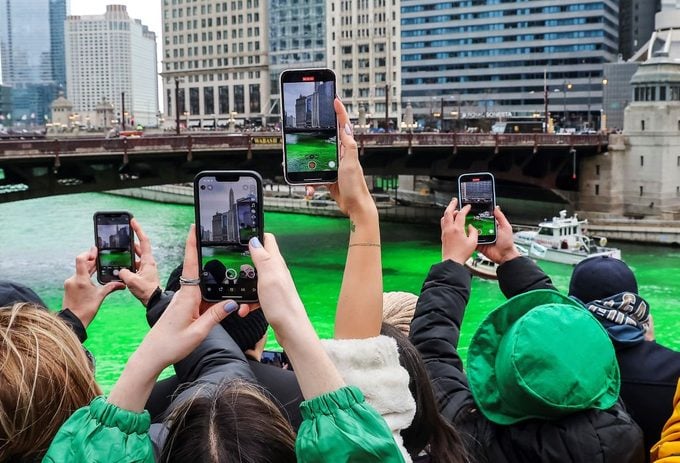
Along with learning more about Irish culture, history, words and phrases (like “Erin go Bragh” and sláinte), take a trip to the Chicago Riverwalk for a spectacular view of the river dyeing on March 16. You’ll have to arrive early to get a good spot, one being the walkway between Columbus Drive and State Street.
Sources:
- Chicago St. Patrick’s Day Parade: “2024 Chicago St. Patricks Day Parade”
- Enjoy Illinois: “The History of Chicago River Dyeing”
- Chicago Line Cruises: “The History of Chicago and the Green River”
- Enjoy Illinois: “McHenry ShamROCKS the Fox”
- CBS Chicago: “Relatives of the men who started Chicago River dyeing tradition feel their legacy is in jeopardy”
- Friends of the Chicago River: “The impact of dyeing the river green”
- Tall Ship Windy: “The best places to watch the Chicago River dyeing”



Originally Published: February 08, 2023

