What Are the St. Patrick’s Day Colors, and What Do They Mean?
Updated: Mar. 31, 2024





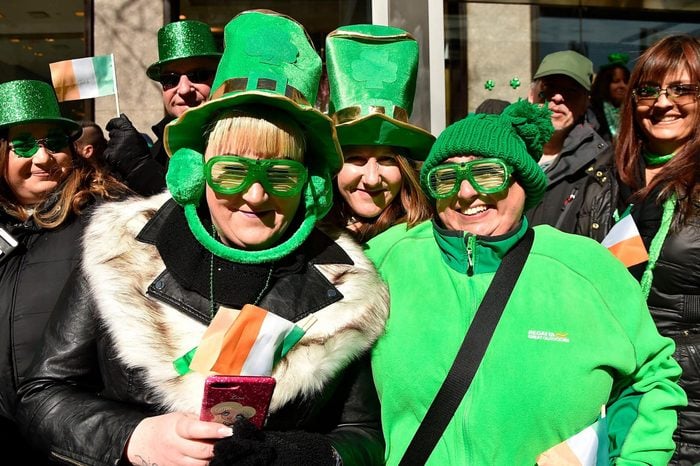
What does green represent on St. Patrick's Day and what are the other St. Patrick's Day colors? We've got the answers.
They say the whole world is Irish on St. Patrick’s Day! Or at least, the whole world adopts a certain version of Irish culture. Every March 17, we break out our green clothing and jewelry, wear four-leaf clover-shaped pins and glasses, and dye our rivers, bagels and beverages (particularly alcoholic ones) green. Although these St. Patrick’s Day traditions seem timeless, it’s not the way the day has always been celebrated. You might be surprised to learn that there are other St. Patrick’s Day colors with deep history.
Fortunately, the luck of the Irish applies all year round, and March 17 is a good time to reflect on the luck you’ve had (or draw some more in) with some St. Patrick’s Day quotes. But why do we wear green on St. Patrick’s Day and what does green represent? Once you’ve dunked your shamrock and donned your green top hat, read below to learn what the St. Patrick’s Day colors are.
Get Reader’s Digest’s Read Up newsletter for more holiday tips, fun facts, humor, cleaning, travel and tech all week long.
What are the St. Patrick’s Day colors, and what do they mean?
Although green is nearly ubiquitous in St. Patrick’s Day celebrations these days, there are actually multiple St. Patrick’s Day colors! Blue has historically been the color of St. Patrick himself, and orange is part of the celebrations as a stripe on the Irish flag—although we don’t recommend wearing orange by itself. Different shades of green can even evoke different meanings for the holiday. There’s the spring green of the Irish flag, the deeper green of the shamrock and brighter Kelly green that isn’t so much symbolic as it is festive and fun.
Why do we wear green on St. Patrick’s Day?
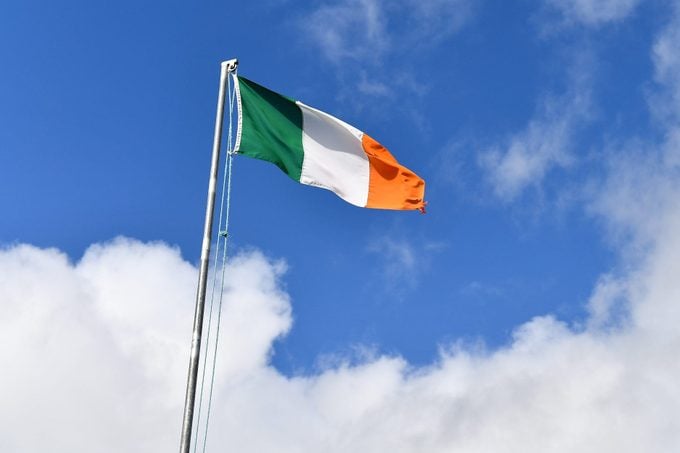
Well, one of the reasons we wear green is because of Ireland’s nickname, The Emerald Isle. The green stripe in the Irish flag also played a role. Traditionally, the green represents the Catholics of Ireland, the orange represents the Protestant population and the white in the middle symbolizes the peace between the two religions.
The religious symbolism doesn’t stop there. St. Patrick is thought to have used green shamrocks to teach people about the Holy Trinity (God the Father, God the Son and God the Holy Spirit), another justification for greenifying everything.
Of course, we can’t talk about St. Paddy’s Day without mentioning leprechauns. Back in the day, these mischievous little guys were said to wear red and gold jackets with pointy red hats. Now they’re rarely seen in anything other than green, and legend has it, they pinch anyone not wearing their favorite color. Rude! But probably reason enough to wear green, even if it’s just your socks. Or to dye the entire Chicago River green, if you really want to be thorough!
Why did we stop wearing blue on St. Patrick’s Day?
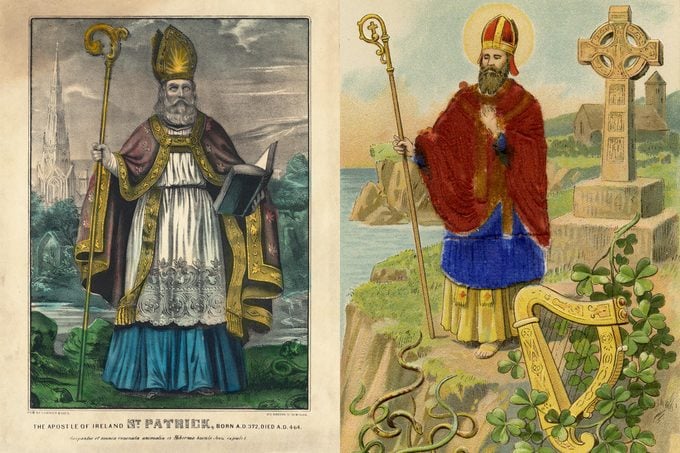
Even though it’s less common today, blue has always been one of the St. Patrick’s Day colors. Early depictions of St. Patrick show him wearing blue, and the official color of the Order of St. Patrick, part of Ireland’s chivalry, was a sky blue known as “St. Patrick’s Blue.” The blue symbolism dates back to early Irish mythology, as Flaitheas Éireann, the symbol of Irish sovereignty (think Uncle Sam), was depicted with a woman in a blue dress. The first official association with the color blue was when Henry VIII took the throne and declared himself King of Ireland, making it part of England.
As time went on, the people of Ireland resented this arrangement. They rebelled, using St. Patrick’s shamrock as a symbol of their identity, making green the symbol of Irish culture. Although it’s hard to find St. Patrick’s Day–specific clothes that aren’t green, you can still celebrate by learning Irish words and phrases (like “Erin go Bragh” and sláinte) while wearing Irish clothes in the saint’s original color: blue!
Is it offensive to wear orange on St. Patrick’s Day?
While St. Patrick’s Day is a Roman Catholic holiday, not all the people of Ireland are Catholic. Many of the Irish are actually Protestant. Irish Catholic tradition is associated with the color green, as we mentioned earlier, but Irish Protestant tradition is associated with orange. This stems from William of Orange, the Protestant king who overthrew the Roman Catholic King James II.
Even though Orange was a place, the Protestants used the color orange to show their loyalty. So while St. Patrick’s Day is about celebrating Irish culture and solidarity, there is a little bit of a historical divide. Both green and orange are represented in the Irish flag to illustrate the peaceful coexistence of Catholics and Protestants, so both green and orange could be considered St. Patrick’s Day colors. But you still probably shouldn’t wear orange, as it represents loyalty to the English. Instead, use it with green as part of a larger Irish flag color scheme.
Sources:
- History.com: “History of St. Patrick’s Day”
- Smithsonian Magazine: “Should We Be Wearing Blue on St. Patrick’s Day?”
- KTBS: “Orange Irish: Why some prefer orange to green on St. Patrick’s Day”