


The Oldest Cemeteries in Every State

Updated: Jan. 25, 2024





Have you visited the oldest cemetery in your home state?
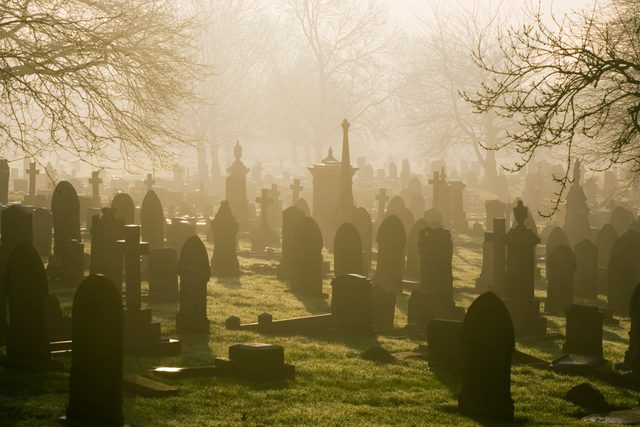
Oldest cemeteries around the country
We can think of cemeteries as spooky places scarred by sadness, or as beautiful and instructive windows into the lives of those who walked the earth before it was our turn. We choose the latter. You’ll also want to read up on the oldest historic towns in each state.
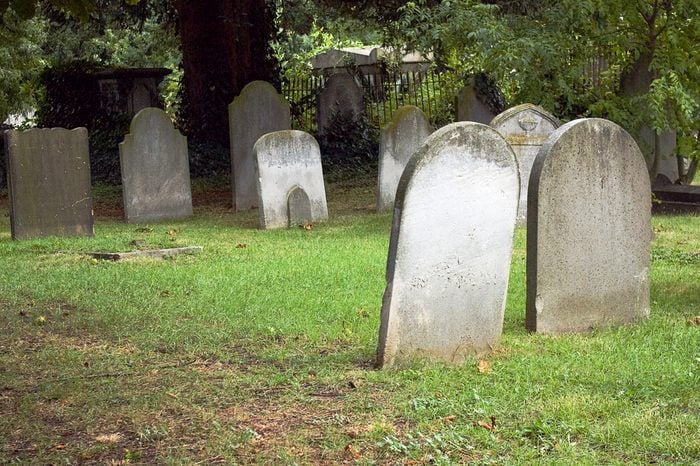
Alabama: Forks of Cypress
The Forks of Cypress Cemetery is on the Register of National Historic Places and is believed to be the oldest established cemetery in Alabama, with one of its earliest headstones dating back to 1820 (Jane Hanna, who lived about 17 years). There are older burial grounds in Alabama, as there are in every state, where native Americans lived and died, but most are abandoned and long-forgotten. In Alabama, this includes the burial grounds of the people who lived in Childersburg, founded in 1540 by Native Americans, as well as far more ancient burial grounds dating back to the first century A.D. Check out these 50 astonishing facts about the 50 states.
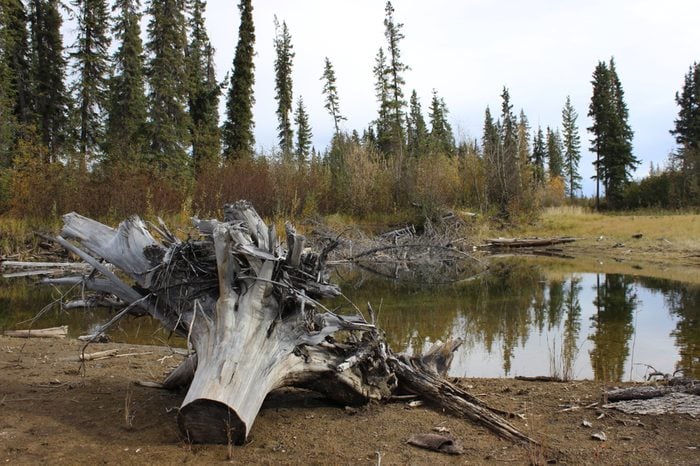
Alaska: Sitka National Cemetery
In 2013, archeological excavators working in central Alaska’s Tanana River Basin discovered the remains of two infants who’d been buried together—11,500 years ago, according to Science Magazine. But in terms of more modern-day burial grounds, the Sitka National Cemetery, which dates back to the late 1800s, is certainly among Alaska’s oldest. Among those interred here is the body of John Green Brady, who was the governor of the Alaska Territory at the turn of the 20th century—before Alaska was even a state. The cemetery, which is listed on the National Register of Historic Places, likely wins the award for most remote in the state—it’s only reachable by air, marine highway, or ferry. These are the spookiest urban legends from all 50 states.
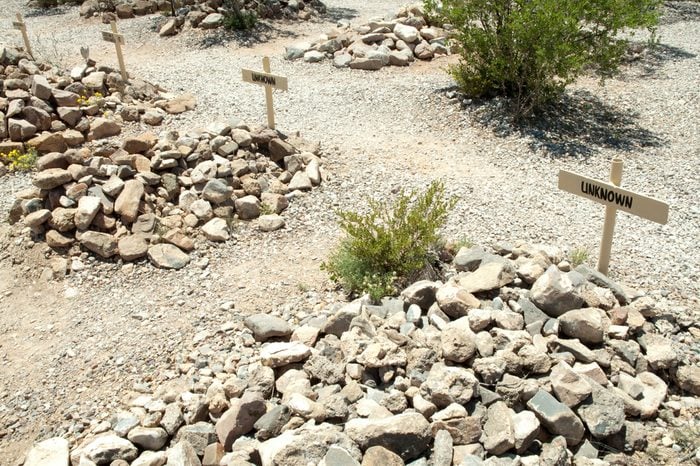
Arizona: Hardyville Cemetery
Established around 1100 A.D., Oraibi, located in the northeastern corner of Arizona, was the center of the Hopi civilization, and thousands were believed to have lived and died in this area. But the oldest modern-day established cemetery in Arizona is likely the Hardyville Cemetery, in what is now Bullhead City but was once Hardyville. The oldest grave appears to be that of John Gillian (or Killian), who died during an ambush by Native Americans in 1866. It’s also rumored to be haunted. Check out these 12 states that were almost part of the United States.
Arkansas: Scull Cemetery
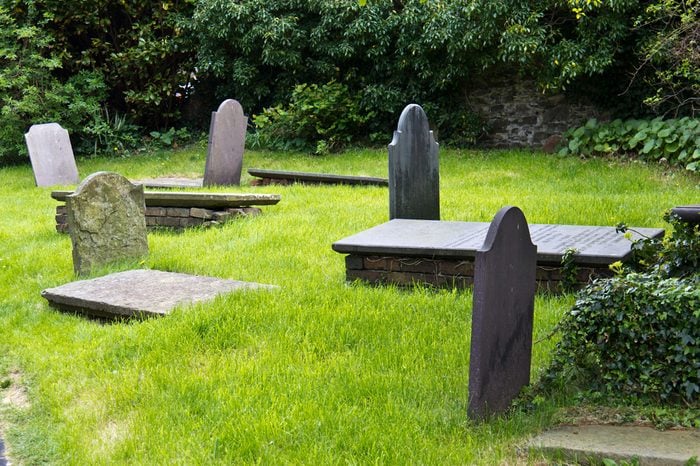
The oldest settlement in Arkansas is Arkansas Post, established in 1686, so it’s not surprising that it’s the home of the oldest established cemetery in the state: The Scull Cemetery dates back to 1778. It’s just a short scenic drive away from the Arkansas Post National Memorial, a national park that’s home to much wildlife, including bald eagles, turkeys, and alligators. Here are 24 facts about the United States that everyone gets wrong.
California: Yorba Family Cemetery
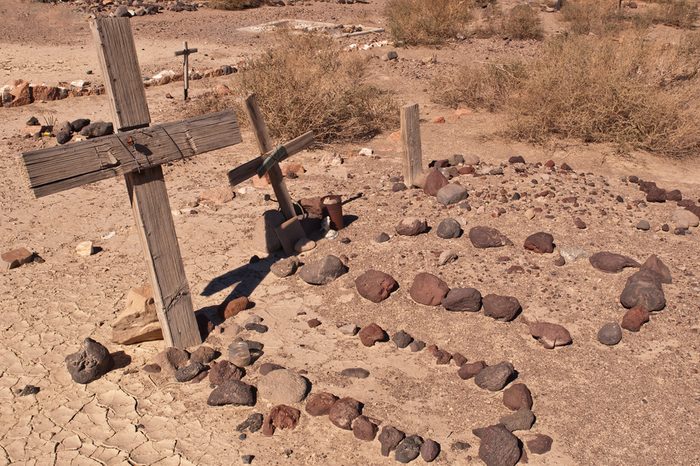
The Yorba Family Cemetery is known as the oldest established cemetery in The Golden State. The land was originally set aside by Fernando Bernardo Antonio Yorba for his family and friends in 1858, according to the Yorba Linda History site. The cemetery, which was abandoned and is now in disrepair, and the land on which it lies is now owned by Orange County. Don’t miss these haunted house mysteries no one can explain.
Colorado: Gold Hill Cemetery
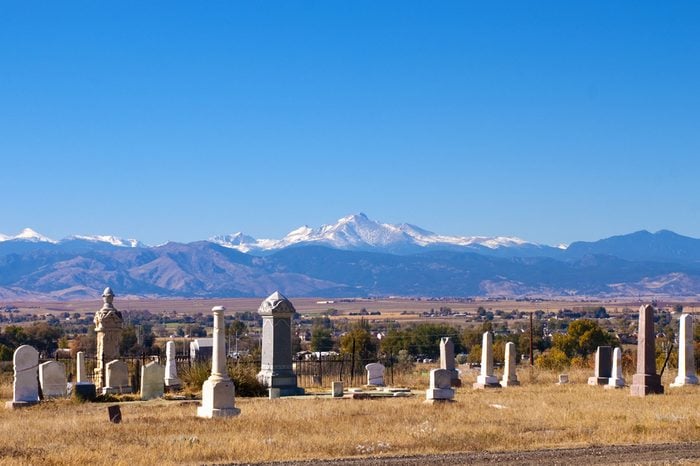
Established in 1861 in the town of the same name, Gold Hill was originally founded by miners hunting for gold. As time progressed, it became the final resting place of many tuberculosis patients who had sought out treatment at the Jewish Consumptives Relief Society in the early 1900s, reports the local Fox News station. Check out these funny tombstones that really exist.
Connecticut: Ancient Burying Ground
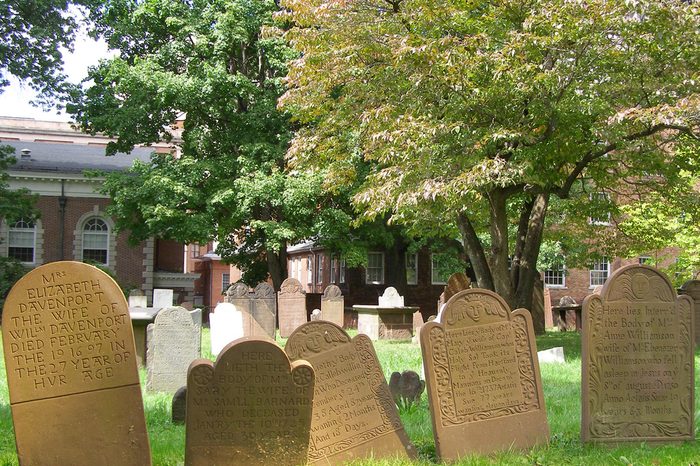
Connecticut’s first municipality, Hartford, was founded as Fort Hoop by the Dutch in 1637. Burials began soon after at what is the oldest established cemetery in the Nutmeg State, the Ancient Burying Ground; for nearly two centuries, it was the only established burial ground in the city, as such, residents of all races, religions, and economic status were interred here.
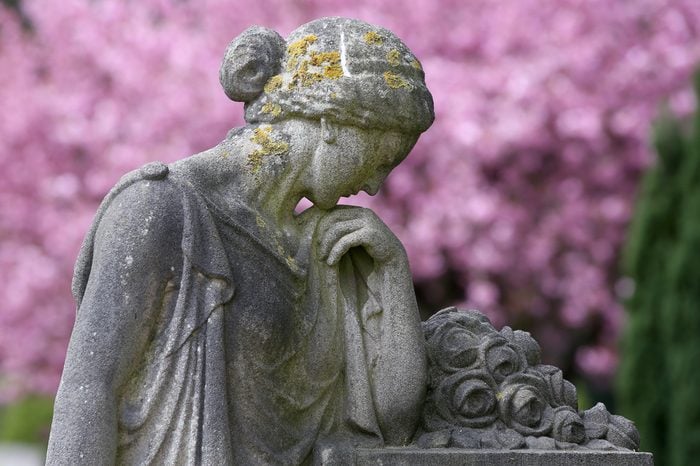
Delaware: Saint Peter’s Episcopal Church Cemetery
Dating back to 1631, Lewes was the first town founded in Delaware. The oldest graves that can be identified today are those of the Nunez family that are marked by old slate stones dating from 1746 at the Saint Peter’s Episcopal Church Cemetery. Think you know geography? Try identifying U.S. states on a totally blank map!
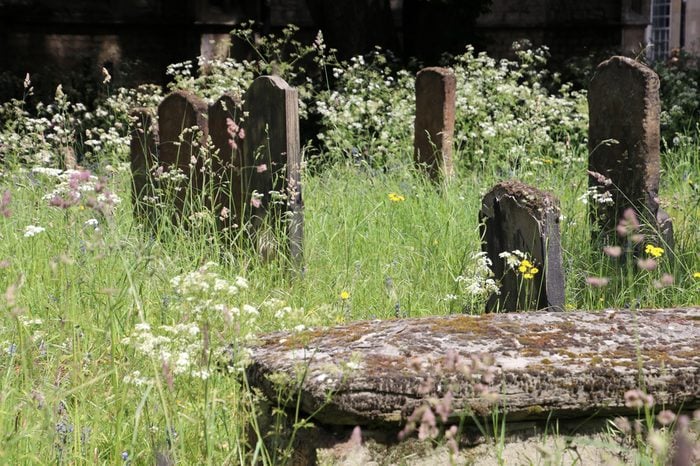
Florida: Tolomato Cemetery
St. Augustine was one of the first cities founded by European settlers in all of North America and holds the honor of America’s oldest continuously inhabited city, having been established by Spanish settlers in 1565, reports Smithsonian Magazine. St. Augustine’s Tolomato Cemetery is the oldest planned cemetery in Florida, with its earliest known burials being those of members of the Tolomato tribe who’d been Christianized. St. Augustine is one of the best American cities for history buffs—don’t miss the 15 others.
Georgia: Oak Grove Cemetery
Nearly 50 years before St. Augustine was founded in 1525, the Spanish had already settled in Georgia—in San Miguel de Guadalupe; this was the very first European settlement in what would become the continental United States. Sadly, none of the settlers survived the first three months, and although their graves are not marked, they’re believed to be located within what is the present-day Harris Neck National Wildlife Refuge. As far as the oldest established cemetery in Georgia, that’s believed to be Oak Grove Cemetery in St. Marys. Founded in 1788 it’s the burial site of slave owners and slaves alike, along with French Acadians who sought refuge in the area from Nova Scotia. These are the oldest airports in the world.
Hawaii: Oahu Cemetery
With a rich and storied history that goes back long before it became a state, Hawaii has many ancient burial grounds and private cemeteries, including the Lekeleke Burial Grounds, a historic Hawaiian resting place for warriors killed during a major military battle in 1819. But Oahu Cemetery in Nuuanu, Ohau, is the oldest established cemetery, dating back to 1844, more than 50 years before Hawaii even became a U.S. territory. “The site was constructed during the era of Victorian cemeteries,” with elaborate headstones, filled with symbolism, according to Honolulu Magazine. You won’t want to miss these totally bizarre roadside attractions in every state.
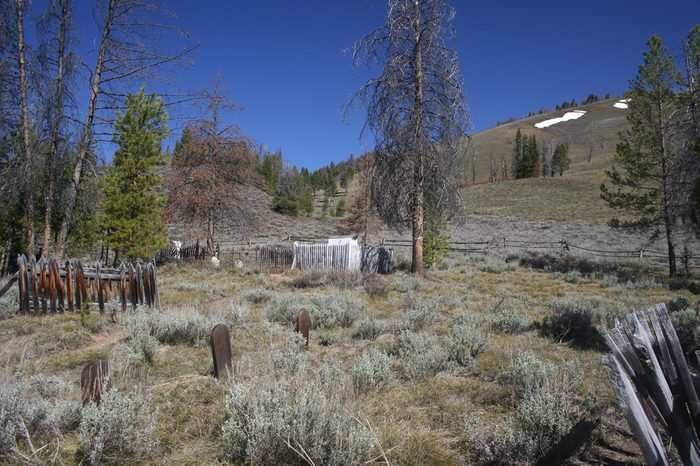
Idaho: Boise’s Pioneer Cemetery
One of Idaho’s oldest and most well-known cemeteries is Boise’s Pioneer Cemetery, which has been in continuous use since the area was first settled in 1863. Buried here are some of Boise’s earliest and most prominent citizens, including 11 Boise mayors, eight local county sheriffs, and four Idaho governors, according to Preservation Idaho. Take a look at the oldest buildings around the world.
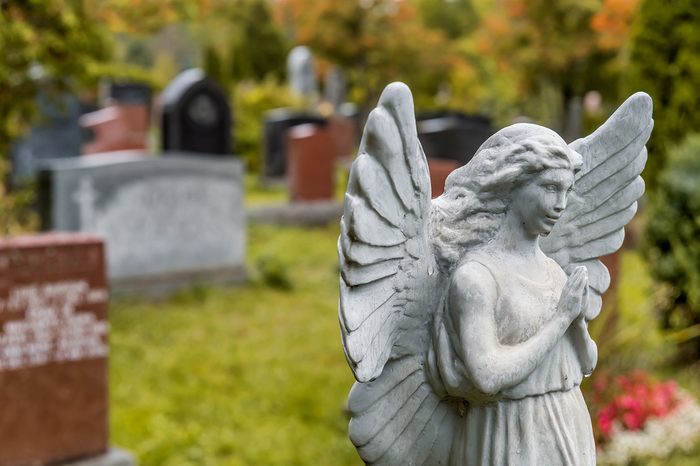
Illinois: Decatur’s Greenwood Cemetery
The Cahokia Mounds State Historic Site in Illinois was once the site of the Native American city of Cahokia, which existed between 1050 and 1350 A.D. While there are no written records pertaining to Cahokia, we can learn a lot about the society from its burial practices, which indicate an impressive level of sophistication, according to archeologists. In terms of modern-day established cemeteries, however, Decatur’s Greenwood Cemetery seems to have the oldest gravestone in the state, dating back to 1813. Here’s the oldest tourist attraction in every state.
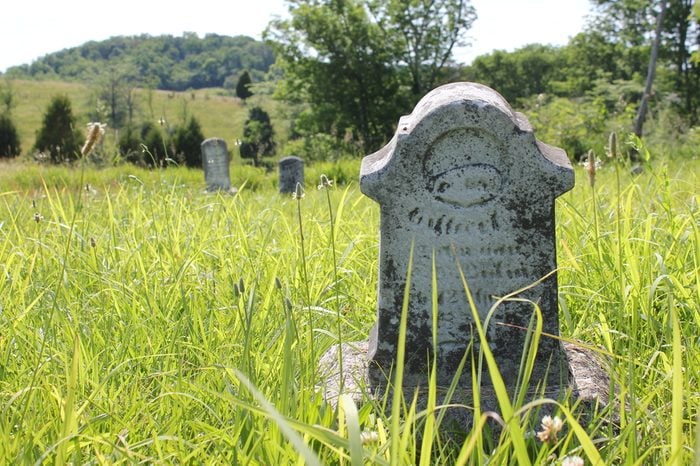
Indiana: Greenlawn Cemetery
Greenlawn Cemetery, Indiana’s first public cemetery (as opposed to family burial grounds and native burial sites), was founded in 1788 by the trustees of Vincennes and is still in use today. It is estimated that over 10,000 are buried here, although there are written records pertaining to only about 8,000. The earliest record is from the burial of Dolly Blackman, wife of Truman, who died in on 1815 at the age of 32.
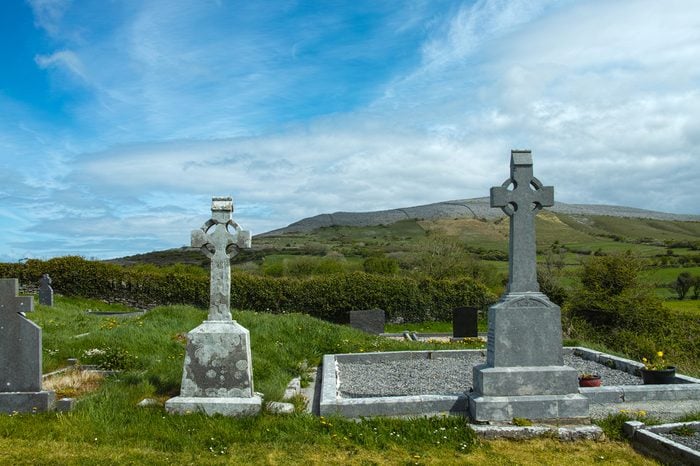
Iowa: 3rd Street Cemetery
“Atop a scenic bluff overlooking the Mississippi River and downtown Dubuque there once lay a graveyard dating to the 1830s, the earliest days of American settlement in Iowa,” wrote Robin Lillie and Jennifer Mack, the archeologists who excavated the area. Prior to the first known burial at the 3rd Street Cemetery in 1830, it’s believed that settlers were buried privately on their own property
Kansas: Topeka Cemetery
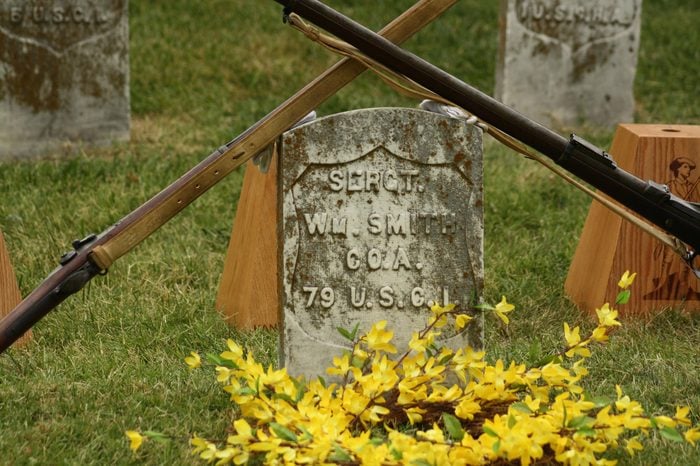
Founded in 1854, Topeka was the first European settlement in Kansas, and its historical cemetery, the Topeka Cemetery, is the oldest established cemetery in Kansas, dating back to 1859. It is the final resting place of five governors, Vice President Charles Curtis who served under President Herbert Hoover, and countless soldiers, pioneers, and other trailblazers. “We encourage you to visit, to take a stroll among monuments bearing names familiar to you from street signs and businesses, and to reflect on the beauty of this spot and the lives of those who came before you,” its website beckons.
Kentucky: Old Lexington Cemetery
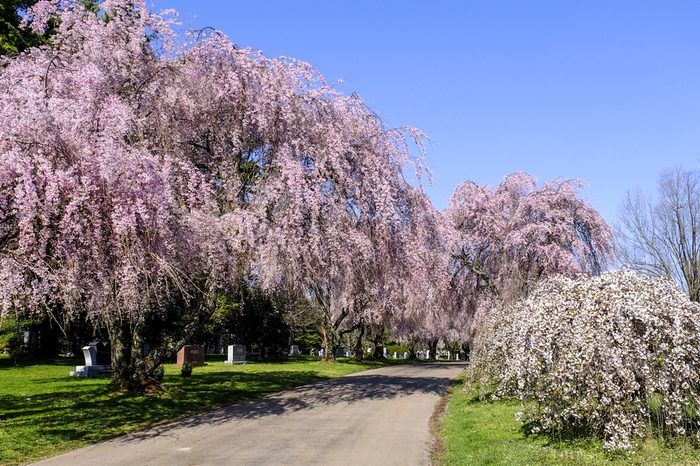
Kentucky’s first public cemetery was located where Lexington’s First Baptist Church on Short Street now stands. By 1833, it was already overcrowded, due to a cholera epidemic. See if you can guess the states by their flags.
Louisiana: American Cemetery
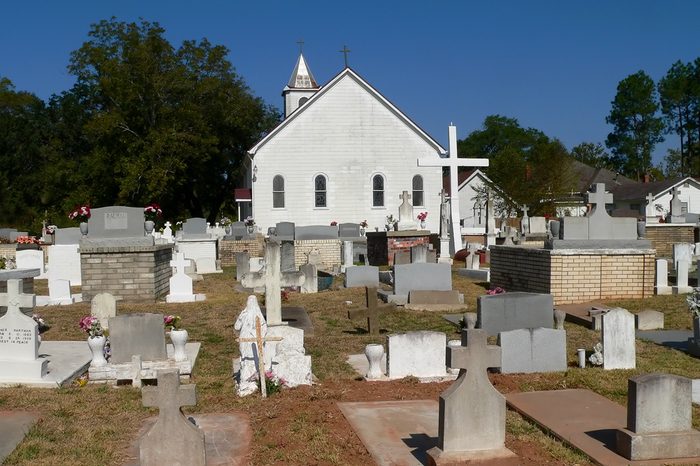
Natchitoches is Louisiana’s first settlement, dating back to 1714, and its first public cemetery, the American Cemetery, founded around 1787, is the final resting place of its founders and first residents, although most of the oldest graves are no longer marked. Today, it’s part of the Cane River National Heritage Area and, perhaps its biggest claim to fame is that it’s where Julia Robert’s character was buried in the 1989 film, Steel Magnolias. Find out the iconic movie set in your state.
Maine: Burying Ground at Pemaquid
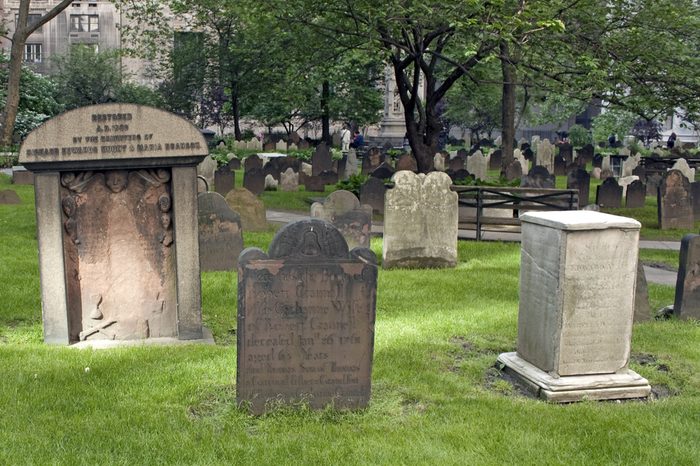
In 1604, a full 16 years before the Pilgrims landed at Massachusetts’ Plymouth Rock, a group of French adventurers, including Samuel de Champlain, settled St. Croix Island, Maine, a now-uninhabited island near the Canadian border. Most of the settlers died of a mysterious illness soon after and would have been buried here in the winter of 1604 to 1605. As far as modern-day cemeteries, the Burying Ground at Pemaquid dates back to the early 1700s, although historians believe settlers from as early as the 1620s were buried there.
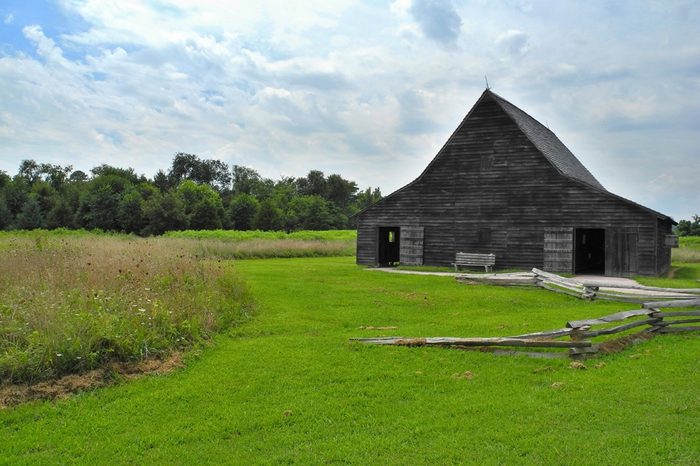
Maryland: Old St. Paul’s Churchyard Cemetery
Laid out in 1692, this churchyard cemetery is the oldest established public cemetery known to have existed in the Baltimore metropolitan area. However, it’s likely the first colonial settlers of Maryland, who founded the settlement of St. Mary’s on the Eastern Shore in 1634, are buried in unmarked graves within the town. You won’t want to miss any of these hidden gems tucked away in each state.
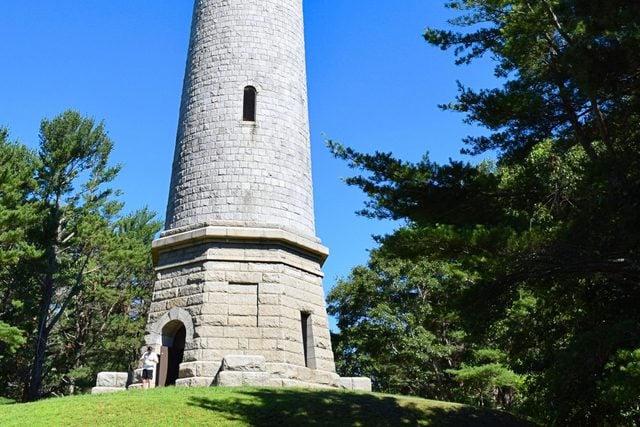
Massachusetts: Myles Standish Burying Grounds
Named for the famed military leader of the Plymouth Colony, Myles Standish Burying Ground is the oldest established cemetery in the country. Marked by an American flag waving over a stone wall enclosure with four cannons point outward from the corners, the final resting place of “Capt. Myles Standish, 1656” is announced in big block letters on a tall wooden sign. He’s joined by several passengers of the Mayflower.
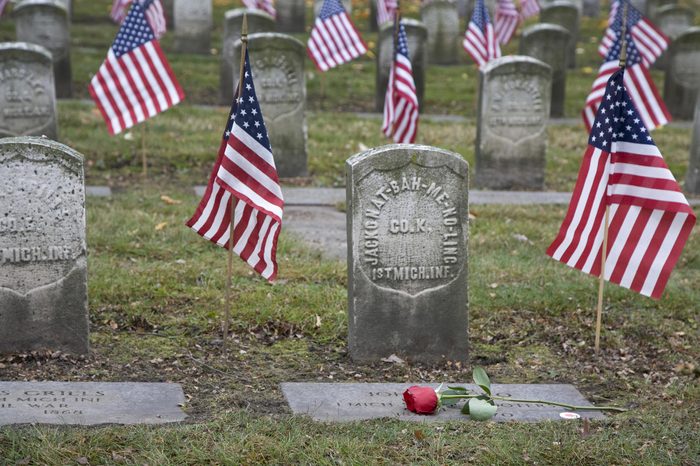
Michigan: Elmwood Cemetery
Sault St. Marie is the oldest settlement in Michigan, dating back to 1668, and while the settlers must have buried their dead nearby, there’s no record of any established Michigan cemetery until 1846, when Detroit’s Elmwood Cemetery was founded. That being said, in the town of Plymouth, there is an old abandoned cemetery that alternately goes by the name of the Hill Cemetery and the Shearer Cemetery, which was actively used throughout all of the 1800s. Many of the Shearer family members are buried here, including one of the cemetery’s very first occupants, the four-day-old son of Jonathan and Christiana Shearer, who died in May 1838.
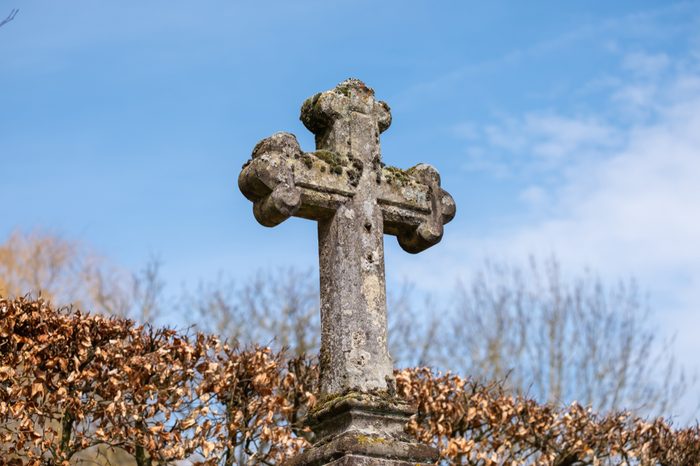
Minnesota: Oakland Cemetery
In 1820, Oliver’s Grove was established as a trading and military post, and its dead were most certainly buried nearby (in what is now present-day Hastings). But it wasn’t until 1853 that the Oakland Cemetery was established in St. Paul. At the time, burial plots sold for 15 cents a square foot (or $3.15 for the standard seven-by-three unit), reports the Minnesota Post. It is still in operation today. Here’s more U.S. trivia we bet your teacher never taught you.
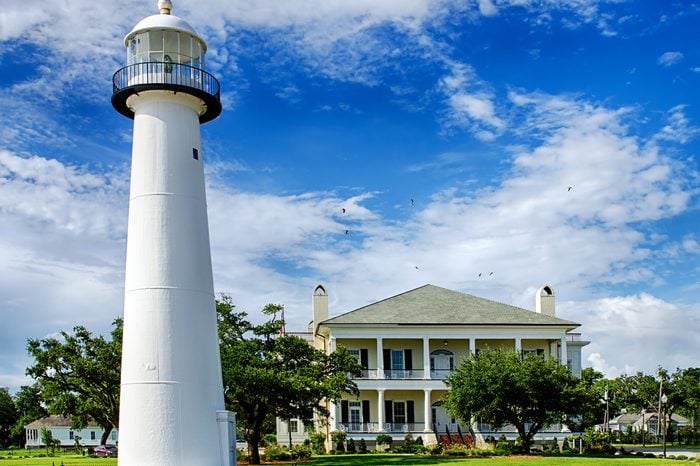
Mississippi: Biloxi Cemetery
Settled in 1699, Biloxi was the first settlement in Mississippi, but the earliest gravestone that can be found here is dated 1811. Inscribed in French, that gravestone resides at the Biloxi Cemetery. The Clinton Cemetery in central Mississippi was established a decade earlier (1800), but its oldest gravestone is dated 1815.
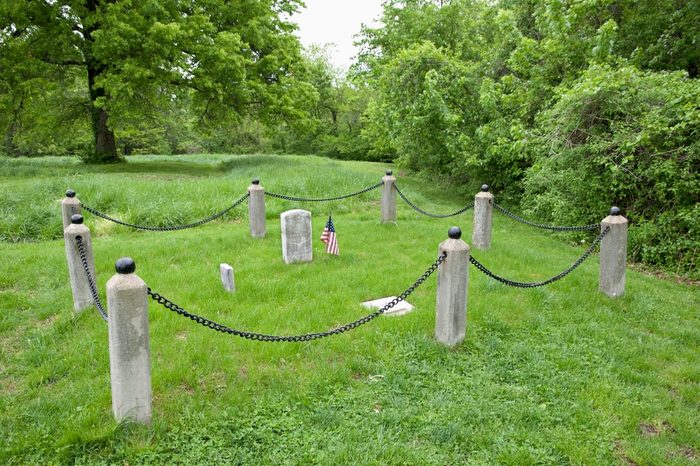
Missouri: St. Genevieve Memorial cemetery
Established in 1778, the Saint Genevieve Memorial Cemetery includes the tombs and grave markers of the area’s earliest pioneers as well as slaves and Native Americans. The cemetery was closed in 1880 after more than 3,500 persons were buried in this two block area. Test your state-nickname mettle with this quiz.
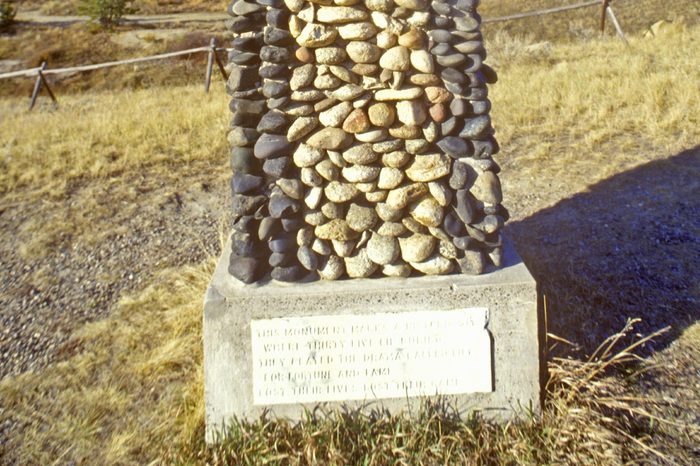
Montana: Home of Peace Cemetery
Founded in 1877, Billings was the home of the Yellowstone River settlement, Montana’s first settlement, and its historic Billings Cemetery has graves dating back to the early years of the settlement. But going back even further is a family plot in Helena, with headstones from as early as 1870. And even further than that is Helena’s Home of Peace Cemetery, which is the final resting place of a number of Jewish pioneers and is believed to have been established in 1867.
Nebraska: Prospect Hill Cemetery
Omaha was Nebraska’s first settlement, and it’s also the home of Nebraska’s oldest pioneer cemetery. Prospect Hill Cemetery was established in 1858 with “Burial Permit #1,” that of Alonzo F. Salisbury, Omaha pioneer and member of its Legislative Council. Since then there have been approximately 15,000 burials recorded here, including those of many Omaha pioneers, mayors, judges, and benefactors. Each of these tourist attractions has one thing in common: they’re completely free.
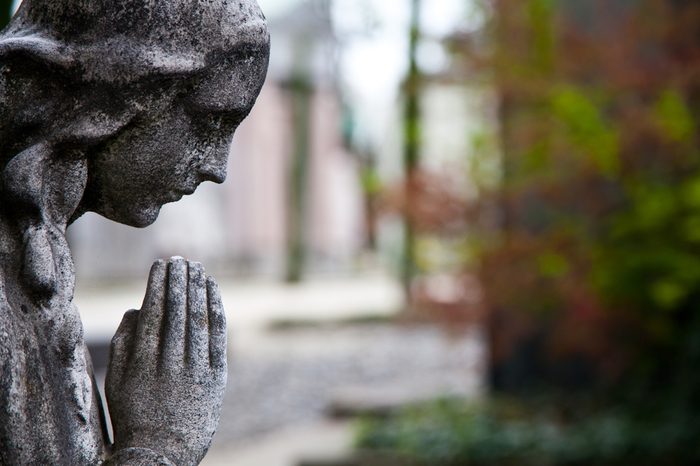
Nevada: Walsh Cemetery
Carson City, founded in 1858, is Nevada’s first settlement, and its Walsh Cemetery (so-called as it originally was located on Walsh Ranch), was the state’s first established cemetery. “Though many of the people originally buried here have been moved to the city’s Lone Mountain Cemetery, there are still gravestones to be found, as well as a monument marking the first resting place of Major William Ormsby before he too was moved to his new home at Lone Mountain,” according to Reno.com.
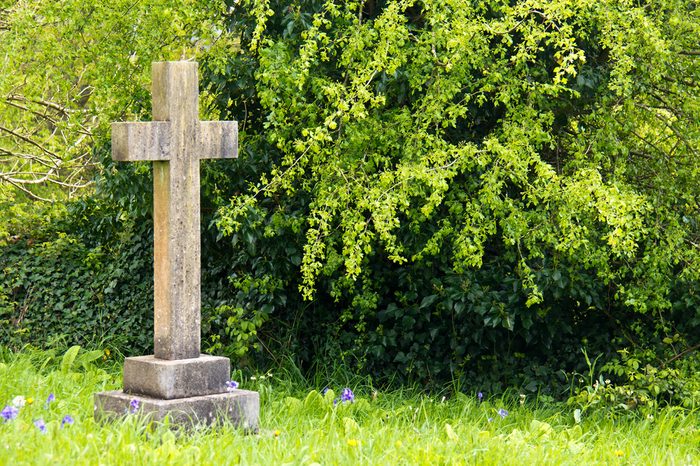
New Hampshire: Old Odiorne Point Cemetery
The Old Odiorne Point Cemetery, located within the grounds of Odiorne Point State Park, is accessible via a rustic path winding through the estate that once belonged to the Odiorne family of Rye, New Hampshire. The cemetery, known as the first white-man burial ground in New Hampshire and which dates back to the 1620s, is maintained by the National Society of Colonial Dames and contains the graves of the Odiorne family as well as 40 others that are no longer identifiable by their headstones.
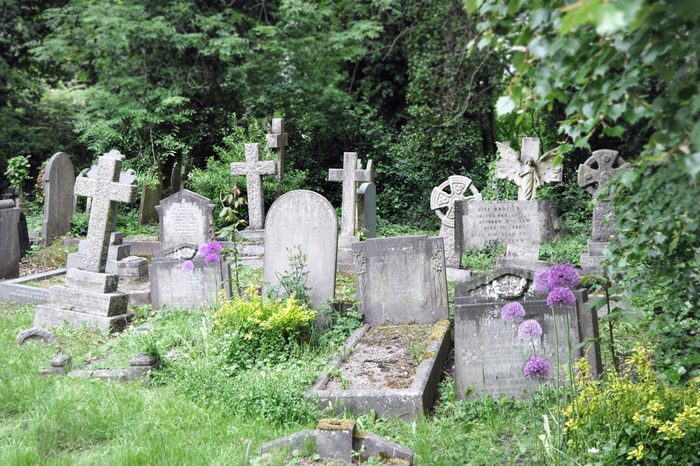
New Jersey: Friends Burial Ground, Burlington
Settled in 1624, Burlington was the Garden State’s first European settlement and the Burlington Quaker Meeting House was at the center of the community. It’s believed that the grounds were also used for burials.
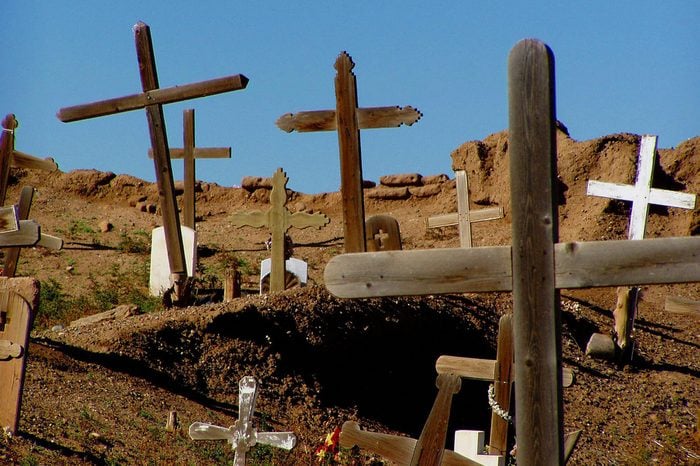
New Mexico: The Graveyard at Acoma Pueblo
About 70 miles west of Albuquerque rises the Acoma Mesa. On top of it sits Acoma Pueblo, also known as Acoma Sky City, which some believe to be the oldest continuously occupied community in the Western Hemisphere. (The Denver Post dates the Pueblo’s founding back an estimated 1,000 years.) However, its oldest graveyard, located on the grounds of the San Esteban del Rey church at Acoma Sky City, a National Trust Historic Site in New Mexico, dates back “only” to 1629, which is when the Acoman people first began burying their dead.
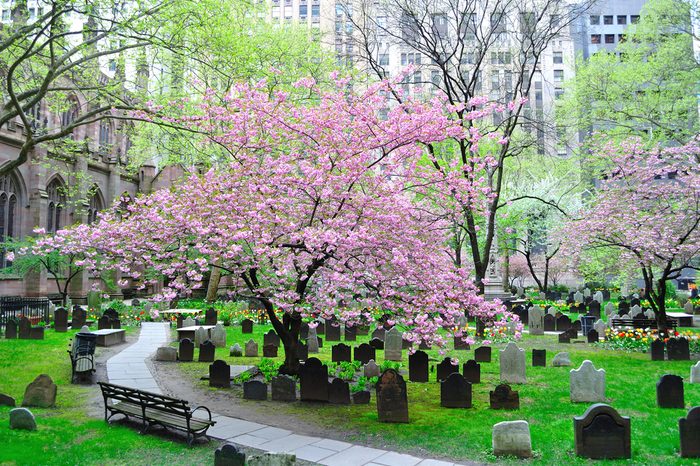
New York: Old Trinity Church
The oldest cemetery is the one at Trinity Church in downtown Manhattan, which was probably being used as early as the 1660s, although the oldest gravestone, belonging to Ann Churcher is dated 1691. The church has seen much throughout the years; notably, it sustained absolutely no damage during the 9/11 terrorist attacks (the World Trade Centers were built across the street). It became a makeshift relief camp, with volunteers from around the country setting up shop to serve food to rescue workers for several months after the attacks.
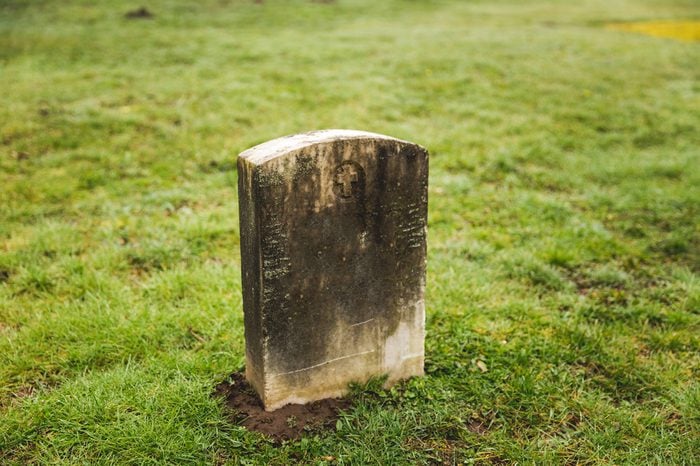
North Carolina: Old English Cemetery
The oldest gravestone on record in North Carolina dates back only to 1775 (Captain Daniel Little), at the Old English Cemetery in Salisbury. But historians are aware of a man (Edward Salter), who died in 1735 in North Carolina; that said, the man’s remains (the oldest known remains in North Carolina) were not officially interred until the 20th century.
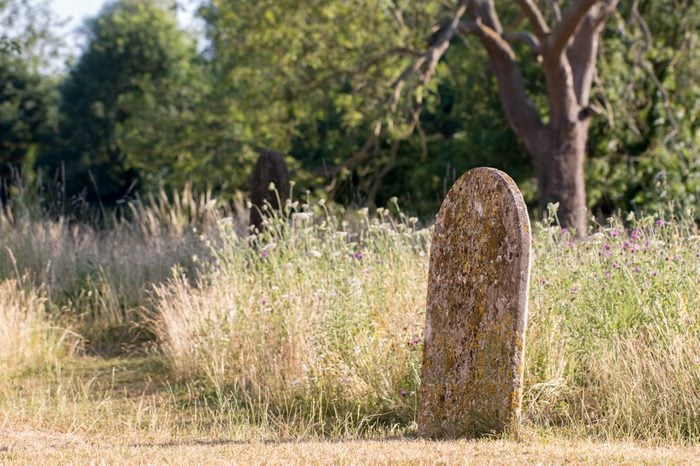
North Dakota: Walhalla Cemetery
The Walhalla Cemetery is where “martyrs” who died while trying to convert Native Americans to Christianity were laid to rest. Most of the graves are from 1852 or 1854. The inscriptions are haunting, for example, “Mrs. Cornelia Leonard Spencer. Killed by Indians August 30, 1854, at Walhalla, where she and her husband were laboring as missionaries.” These are the history questions everyone gets wrong.
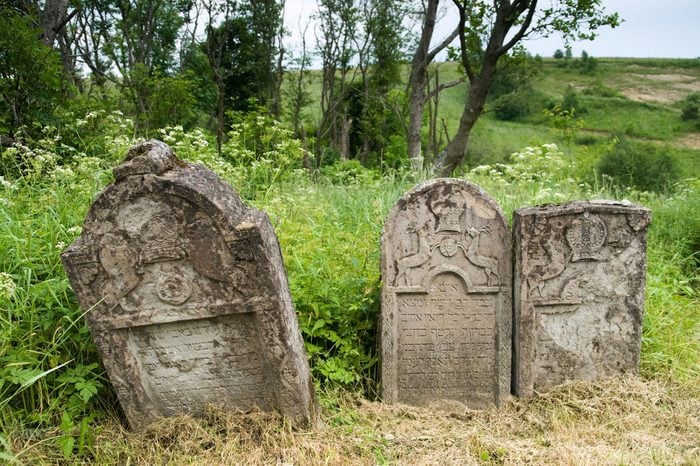
Ohio: Union Cemetery
Steubenville, Ohio’s first settlement and also home to the oldest cemetery in the state was founded in 1797 by Bazaleel Wells on the ruins of what had been Fort Steuben. The first burials were held in various locations around Steubenville until 1853 when the growth of the town began to require a much larger and more formal burial ground. That’s how the historic Union Cemetery came to be founded. Originally, it was 48 acres; today it’s four times the size at 199.
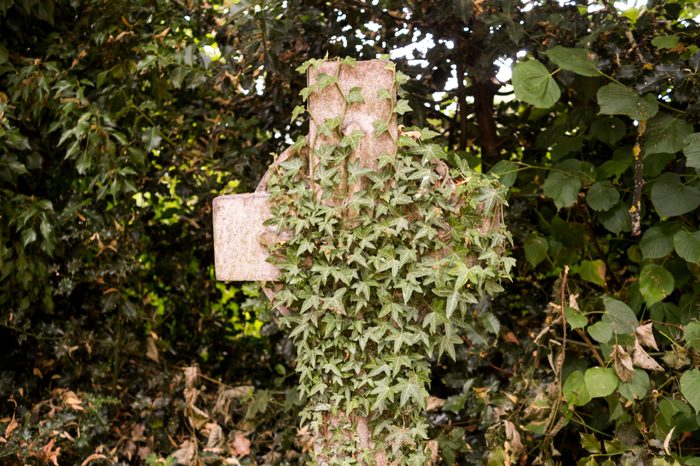
Oklahoma: Garland Cemetery
Although Oklahoma’s first official settlement, Oklahoma City, was founded in 1889, some of Oklahoma’s earlier pioneers first settled in the southeastern part of the state. When those first pioneers died, they were buried in what is now known as Garland Cemetery (named for Samuel Garland, who migrated from Mississippi during the 1830s and eventually became a Choctaw chief). The oldest grave at the cemetery is that of Sophia Pitchlynn (wife of Major John Pitchlynn) who was born in 1783 and is believed to have died in 1871.
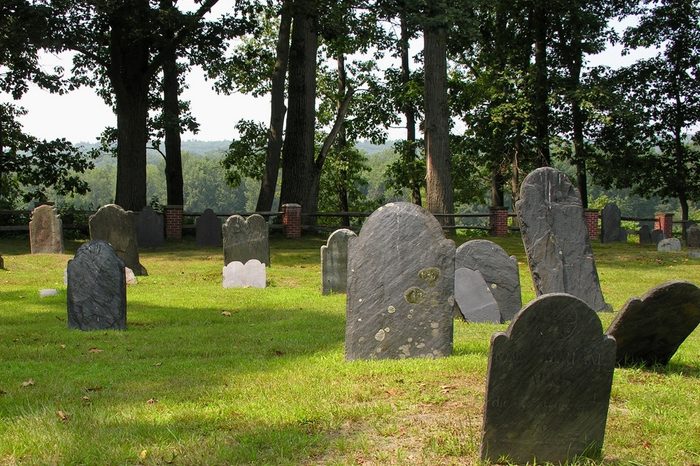
Oregon: Astoria Pioneer Cemetery
Astoria, Oregon’s first settlement, was founded in 1811. Its Pioneer Cemetery is the final resting place not only of Astoria’s founding residents but really, some of the Pacific Coast’s very first pioneers as bodies from abandoned cemeteries were brought here for their final rest. The cemetery was no longer used after 1900.
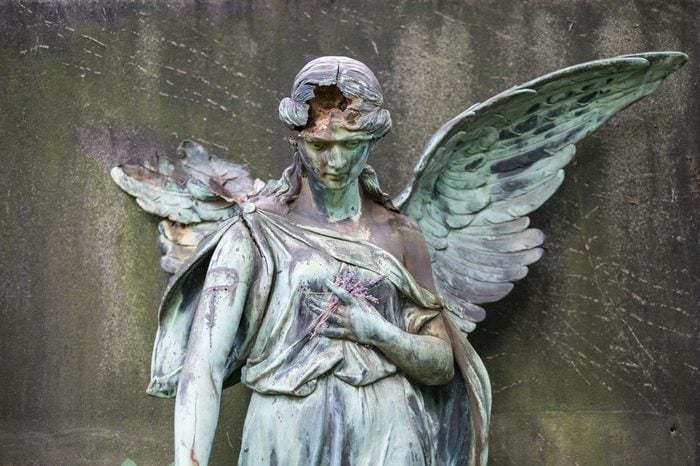
Pennsylvania: Old Chestnut Level Presbyterian Church Graveyard
If by now you’re wondering why there are so few cemeteries that go back much past a century or two, Penn State’s website provides insight: the earliest American graveyards were private burial grounds, typically marked with wooden markers or crude fieldstones that weren’t designed to survive the ages. Among the oldest known burial grounds in Pennsylvania are Lancaster County’s Tschantz Graveyard, which dates back to 1733, and the Old Chestnut Level Presbyterian Church Graveyard in Drumore Township, with a tombstone dating to 1732, belonging to Elizabeth King. Did you know Lancaster is on our list for the best small cities to live in America?
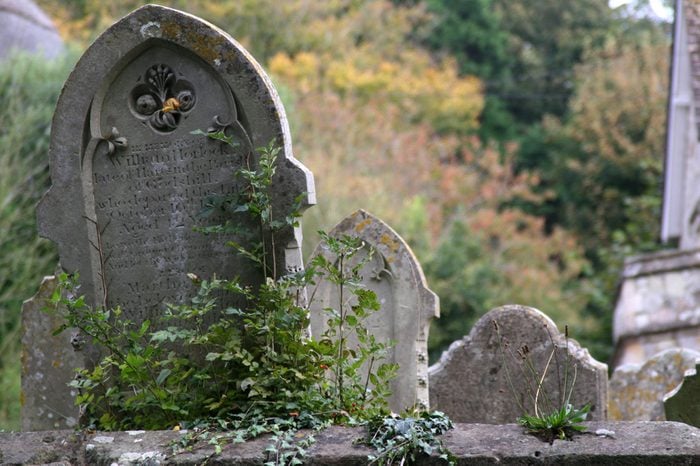
Rhode Island: North Burial Ground
The oldest cemetery, the North Burial Ground, was founded in downtown Providence in 1700. As was consistent with Rhode Island’s approach to inclusiveness, it was a public burial place, open to the deceased of all faiths, from millionaires to paupers and even emancipated slaves.
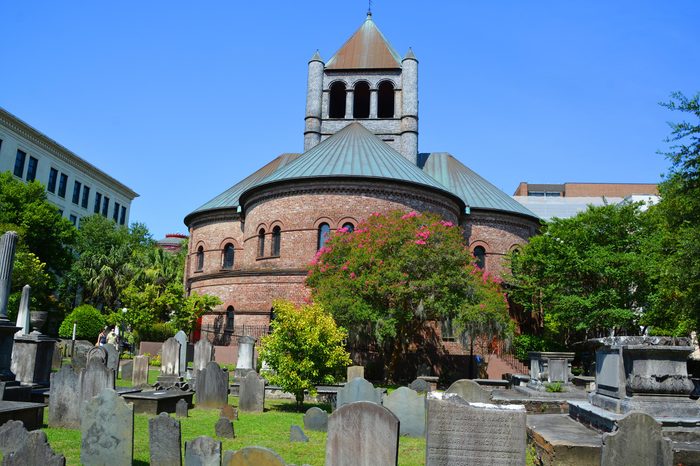
South Carolina: The old burying ground at Circular Congregational Church
Charleston’s oldest cemetery is the one located at 150 Meeting Street in Charleston’s Historic District and the current home of the Circular Congregational Church. It dates back to 1695 and more than 500 gravestones remain, according to its website.
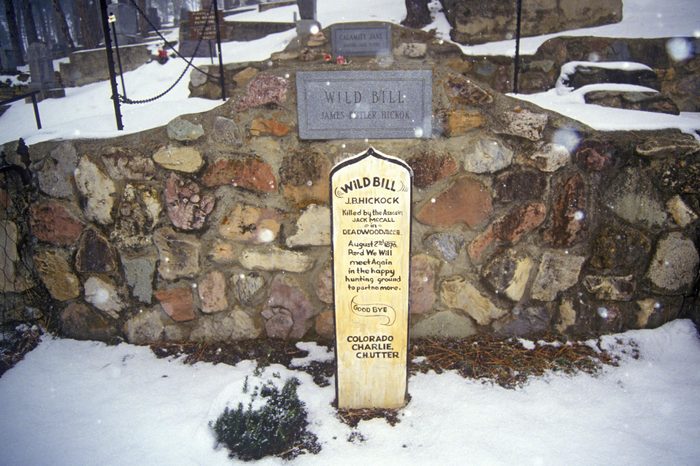
South Dakota: Mount Moriah
Mount Moriah isn’t the oldest burial ground in South Dakota, which was the home to Native Americans long before it became a part of the American West. But it’s certainly South Dakota’s oldest, established in 1878, and its most famous South Dakota cemetery, being the final resting place of Wild Bill Hickok and Calamity Jane. Here are America’s most notorious criminals, one for each state.
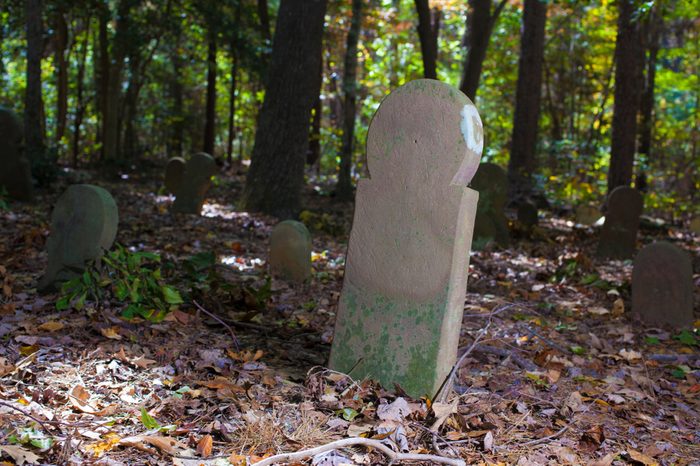
Tennessee: Old Jonesborough Cemetery
Both Nashville and Jonesborough were founded in 1779, and the first established cemeteries came soon after. The oldest appears to be the Old Jonesborough Cemetery (also known as “Rocky Hill”), which is the subject of a land deed dating back to 1803. Nashville’s City Cemetery was opened in 1822.
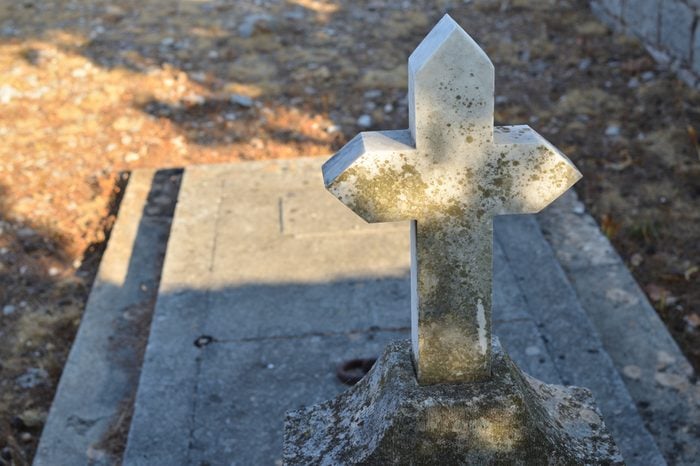
Texas: The Earnest Witte Aboriginal Cemetery
There are over 50,000 historic cemeteries in Texas, although only a portion of them have written records. That said, there is an aboriginal cemetery located in Austin County, about 40 miles west of Houston, where burials took place as early as 2700 B.C.
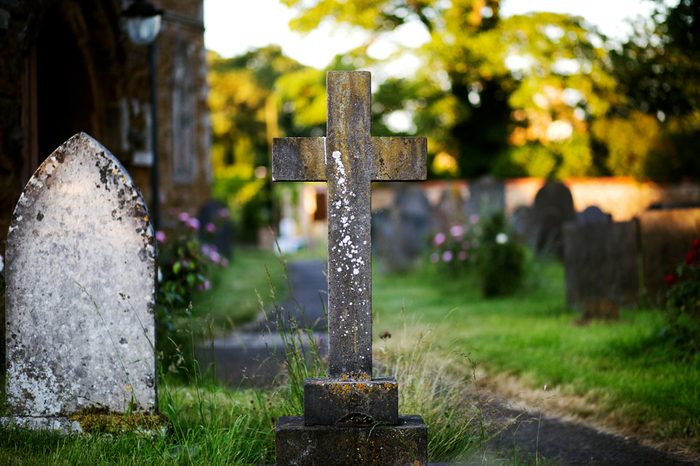
Utah: Salt Lake City Cemetery
The oldest and largest cemetery in Utah is Salt Lake City Cemetery in Salt Lake City, which was also Utah’s first settlement. Although Salt Lake City wasn’t founded officially until 1850, the first burial in the cemetery goes back to 1847 and was the young daughter of a sexton. Most of the founding members of the Church of Jesus Christ of Latter-Day Saints are laid to rest at this cemetery, although Joseph Smith’s final resting place is in Illinois and his predecessor, Brigham Young, is buried at Salt Lake City’s Mormon Pioneer Memorial Monument.
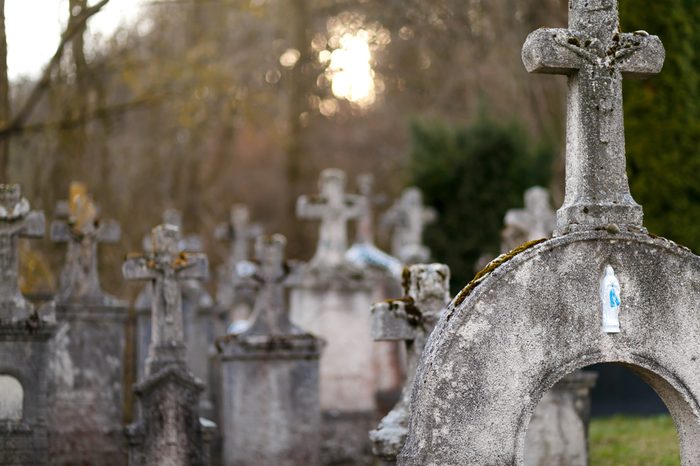
Vermont: Elmwood Cemetery
Founded in 1763, Burlington was Vermont’s first settlement. Its oldest cemetery, Elmwood Cemetery, may have been in official use since 1794, although some claim that the first burial was of Ethan Allen, which took place in 1801. Find out how every state in America got its name.
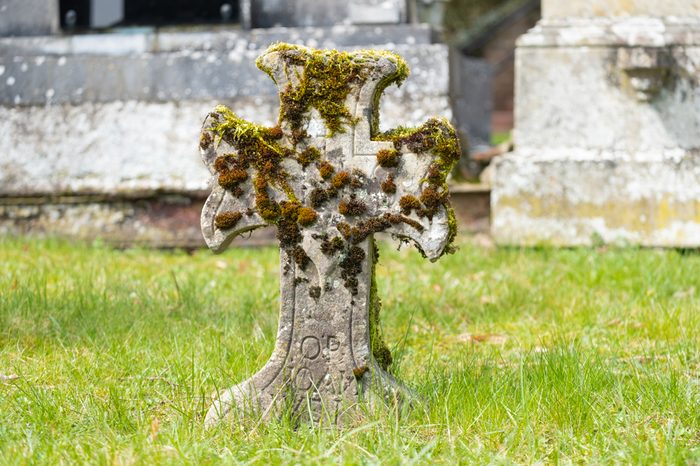
Virginia: Jamestown Original Burying Ground
The first 104 colonists to settle Jamestown, Virginia arrived in May of 1607. The first who died were buried inside a fort so as not to attract the attention of the Native Americans, but eventually, all bodies were moved to the site of the Jamestown Original Burying Ground, which was established in 1619 and is the oldest cemetery in Virginia.
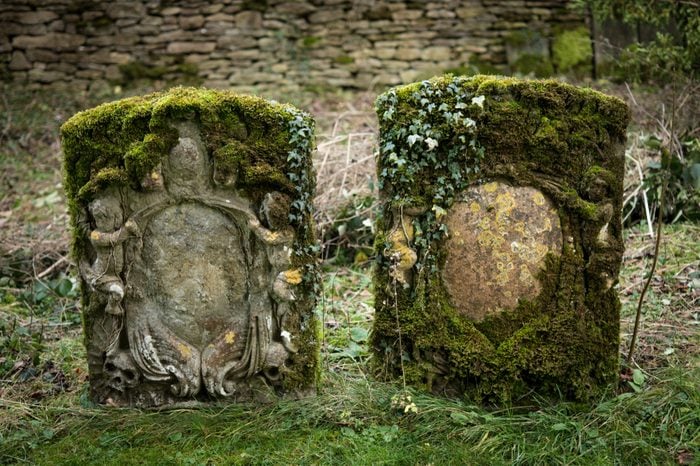
Washington: Park Hill Cemetery
In 1825, more than a decade after Oregon was settled, Vancouver, Washington was founded. Some of the graves that lie in its Park Hill Cemetery may go back to the early 1800s, although the deceased were buried elsewhere before being moved to Park Hill. Discover the most famous inventions from each state.
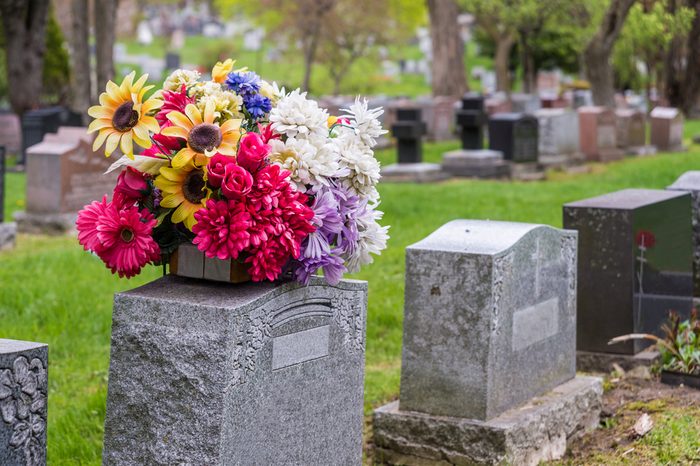
West Virginia: Morgan Chapel and Graveyard
The Indian Mount Cemetery was established in 1859 on the site of the Romney Indian Mound, an ancient native burial ground dating as far back as 1,000 B.C. But an older modern-day cemetery is the Morgan Chapel and Graveyard in Bunker Hill. The Morgan Chapel was constructed in 1741 by Colonel Morgan Morgan, for whom a 1966 monument was erected, indicating Morgan was one of the earliest settlers to the area, having arrived from Wales in 1732. Don’t miss these charming small towns…one in every state.
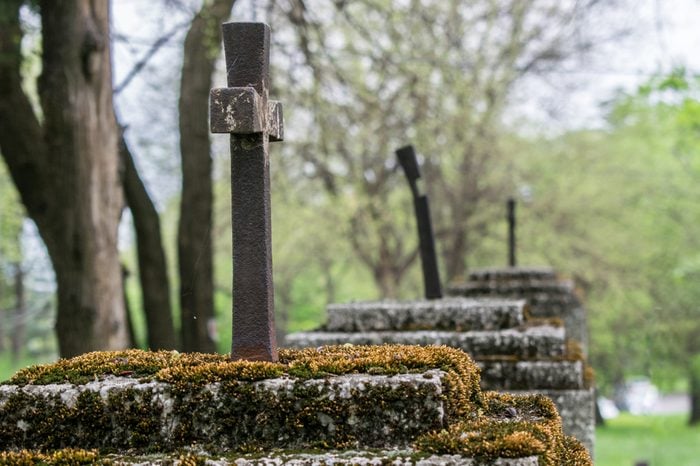
Wisconsin: Forest Lawn Cemetery
Green Bay, Wisconsin’s first municipality, was founded in 1634 by Jean Nicolet. Although Nicolet later died at sea (technically, the St. Charles River), clearly there were burials in Wisconsin before the founding of the Forest Lawn Cemetery, which appears to be Wisconsin’s first established and oldest cemetery. It was founded by St. Paul’s Church in the 1840s and the first burial on record there took place in 1850. However, Wisconsin’s oldest burial sites date from the end of the last Ice Age, almost 10,000 years ago, according to Wisconsin History.
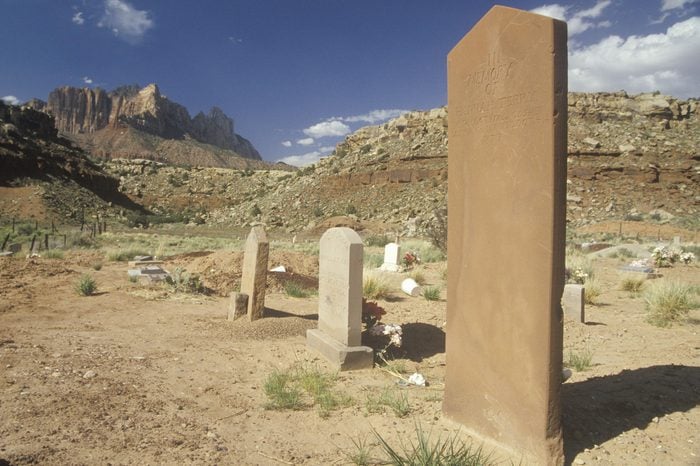
Wyoming: Carbon Cemetery
Carbon Cemetery in the town of Carbon lies nine miles southwest of the town of Medicine Bow on private land. It was in use mainly from 1868 through 1902, while people still lived in the Carbon. If you visit Carbon Cemetery today, it is said to look almost exactly as it did in the 1940s.
Originally Published: October 02, 2020

