


11 Abandoned Mansions and Their Creepy Histories
Updated: Jan. 25, 2024





Of course, mansions can be beautiful, sprawling signs of wealth—but these abandoned mansions and their incredible stories will give you a run for your money
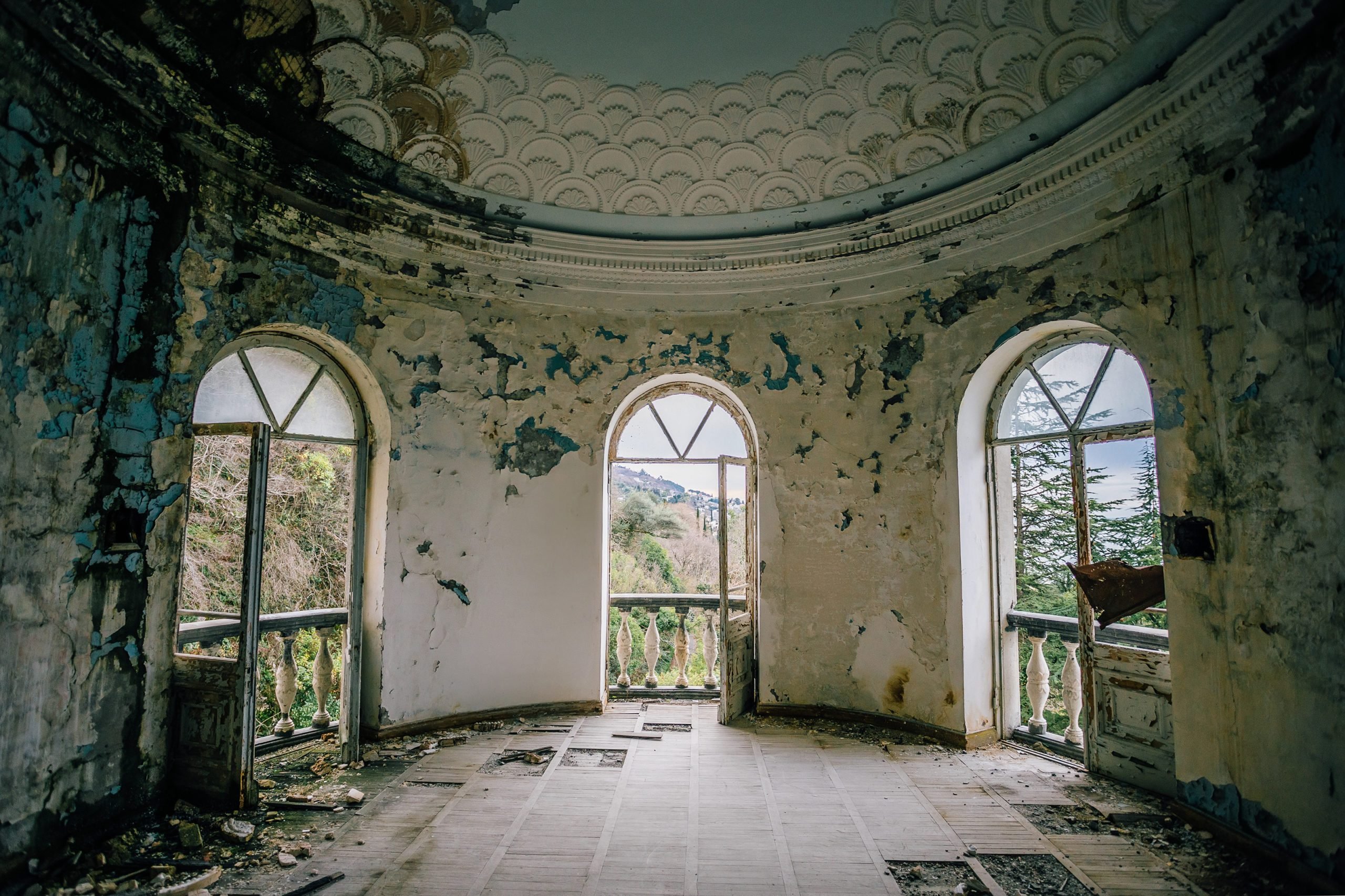
While we all love a good scary story, few of us are brave enough to live in a scary story. Sometimes home is where the heart is, but for some of the people on this list—home was exactly where the troubled started. The spine-chilling stories of these abandoned mansions are chock-full of strange histories, mysteries and even scandal. Just like these haunted house mysteries, some stories might be better left in the past.
The owners of the once-lavish and magnificent mansions and castles below knew that the price of the house was just one small part of the story. Usually, mansions are sold or passed down in families for years, each loving and updating the sprawling property in a new way. So, what happens to make someone run away from their dream home? These abandoned places have some incredible and almost unbelievable stories to tell. To dive even deeper into the Halloween spirit, check out these abandoned cities next.
Mínxíong Ghost House
Location: Mínxíong, Taiwan
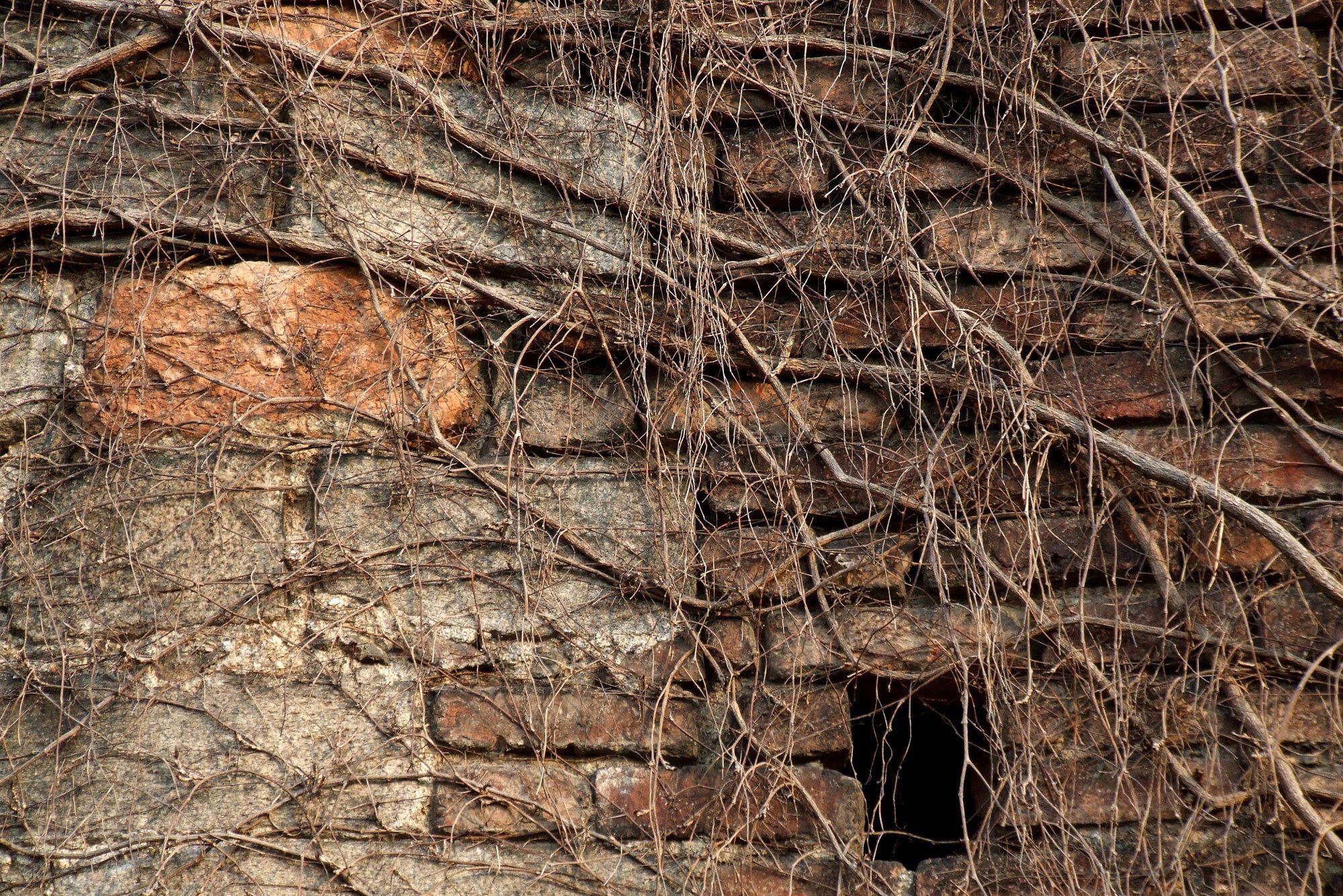
Ranked as the spookiest haunted house in Taiwan in 2019, the Mínxíong Ghost House naturally lives up to its reputation. The stories surrounding this mansion run the gauntlet from affairs to suicide to simple relocation, but whatever you believe, this mansion definitely fits the creepy bill. Built in 1929 by Liu Rongyu, this Baroque-revival-style mansion (sometimes called the Old Liu House) is hidden among overgrown greenery. One of the most popular tales states that a housemaid had an affair with the homeowner, leading to the wrath of his wife and the eventual death of the maid by jumping down a nearby well. If the maid story was not enough, another story claims a soldier committed suicide in the home after hearing strange voices. Regardless of whether they’re true urban legends, the large mansion has some wild history within its beautiful, yet decaying walls. For more chills, take a look at these eerie photos of abandoned car dealerships.
Chaonei No. 81
Location: Beijing, China
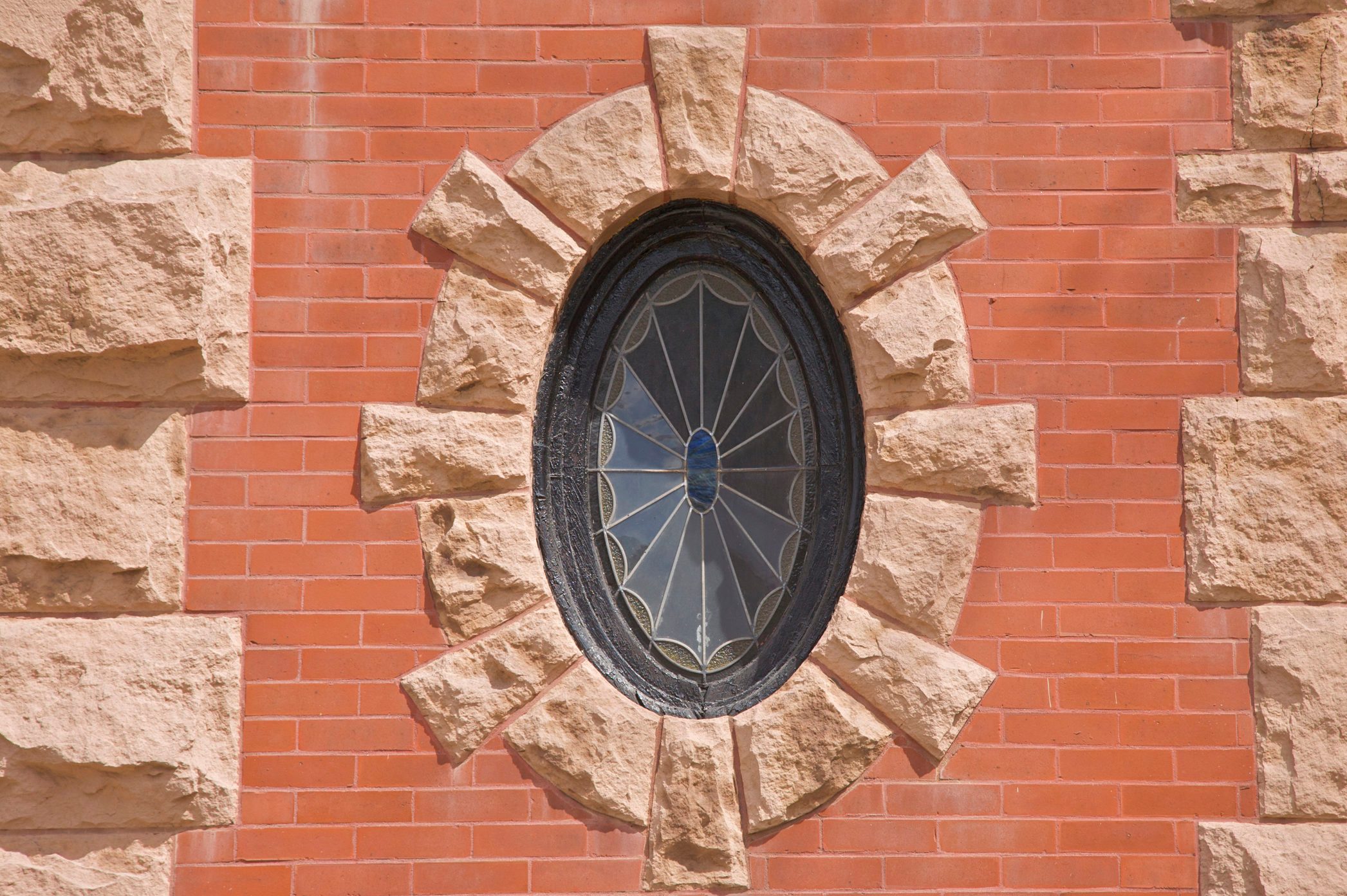
Built in the early 20th century, this mansion has a much darker past. Constructed in the baroque style by the Qing imperial family, this three-story mansion has been abandoned since 1949. The story goes that after the Nationalists’ defeat by the Communists, the Kuomintang official who owned the property abandoned his wife in the mansion. According to legend, she was so wrought with anguish and heartache that she hanged herself in the home. Some say her spirit still haunts the house, as explorers and local children alike dare to take a peek inside the once elegant and now decaying home. For more creepy buildings, check out these other abandoned houses.
Odd Fellows Home
Location: Liberty, Missouri
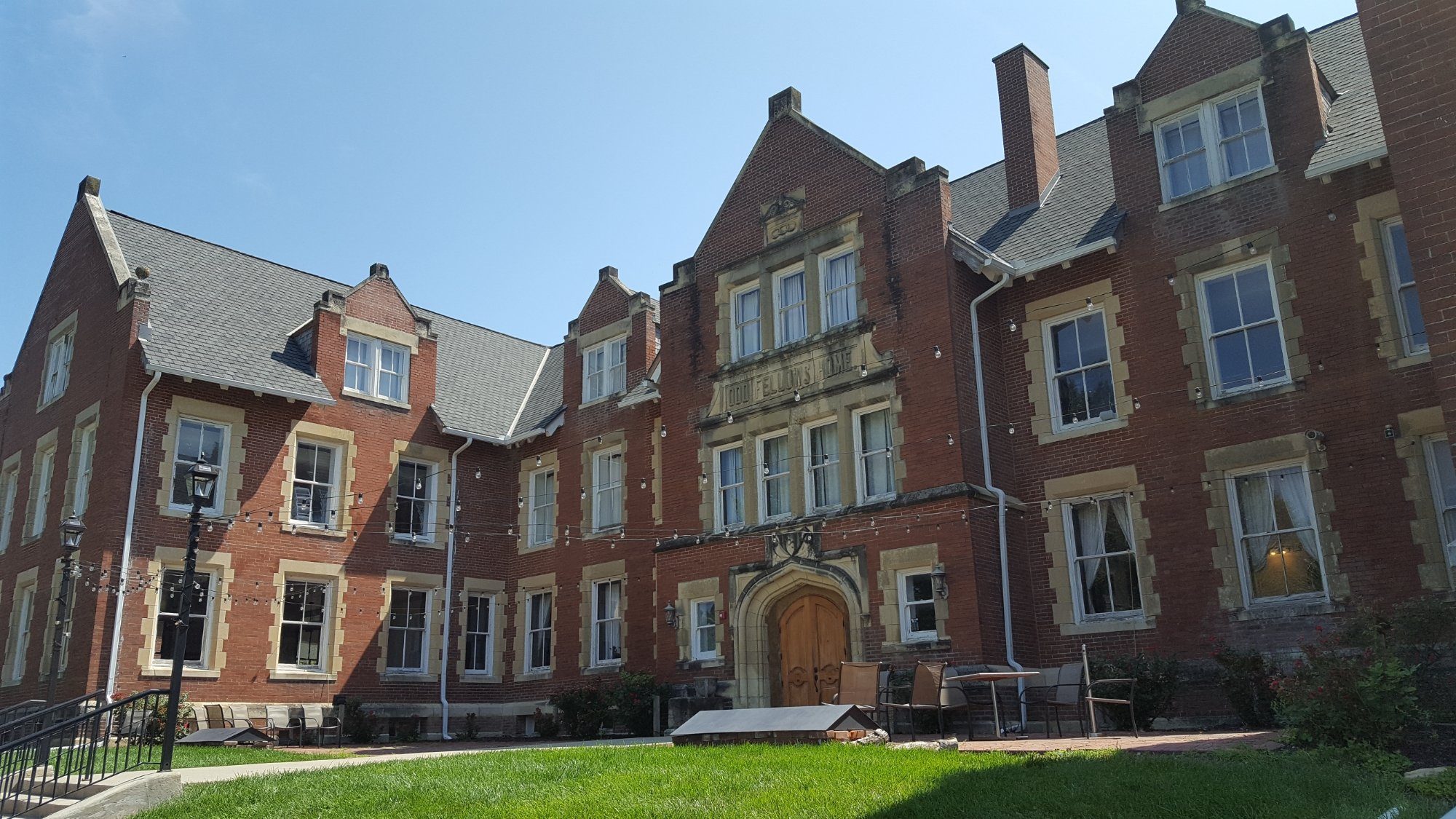
This mansion was built for the Independent Order of Odd Fellows, founded in 1819, as a central hub for the organization in Missouri. The fraternal organization resembled the Masons, with the goals of promoting brotherhood, loyalty and community outreach. The IOOF was also known for “secret rituals,” many of which were performed in the Odd Fellows Home throughout the 19th century. That is, of course, when they weren’t taking care of the at-risk members of their community at their 200-plus-acre complex with a school, nursing home, hospital and orphanage. While the complex fell to disrepair (aside from one building that now holds a functioning winery), the Odd Fellows left a skeleton of one of their members—”George”—behind, which was said to be used in the strange initiation rituals. This is just one of the urban legends from every state.
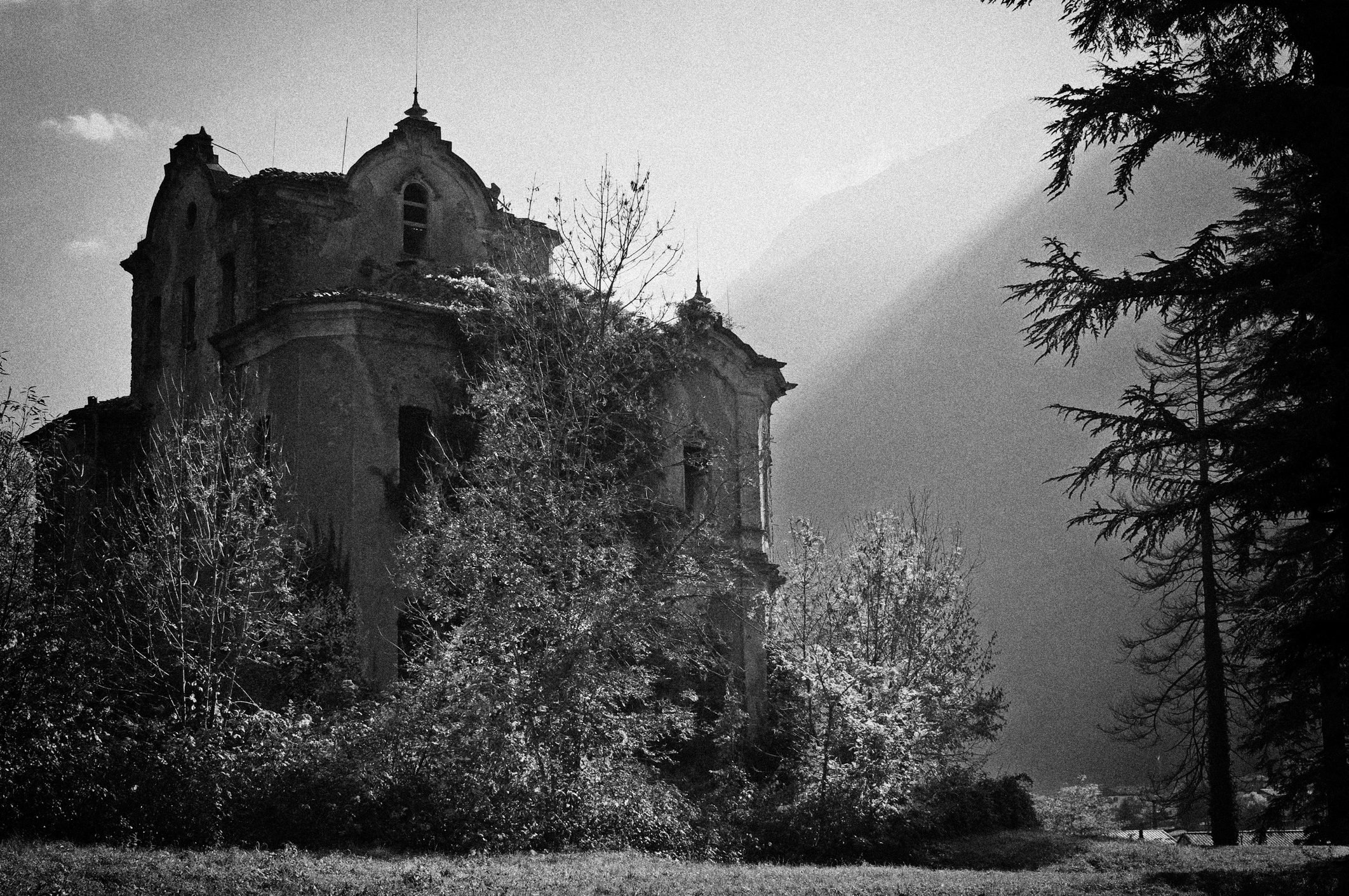
Villa de Vecchi
Location: Cortenova, Italy
This beautiful mansion sits among the trees in the mountains of Cortenova, beside Lake Como. Known by many nicknames, including the “Red House,” “Ghost Mansion” and “Casa Delle Streghe” (The House of Witches), this mansion touts a tragic history. In the late 19th century, Count Felix De Vecchi commissioned architect Alessandro Sidoli to build this Baroque-style behemoth. Unfortunately for the Count, Sidoli died a year before the top-of-the-line villa was completed.
The Vecchi family spent very little time in the villa before tragedy struck: The Count’s wife was murdered and daughter kidnapped. After a number of search attempts, the Count himself succumbed to suicide. The house was passed around the Vecchi family for a few decades before falling to disrepair, nature intrusion and vandalism. Still, the mansion lives on in lore to this day. Along with rumors of occult activities and sacrifices, locals say the long-ago smashed piano still floats music outside the house and down the countryside. Here are more historic places that now sit abandoned.
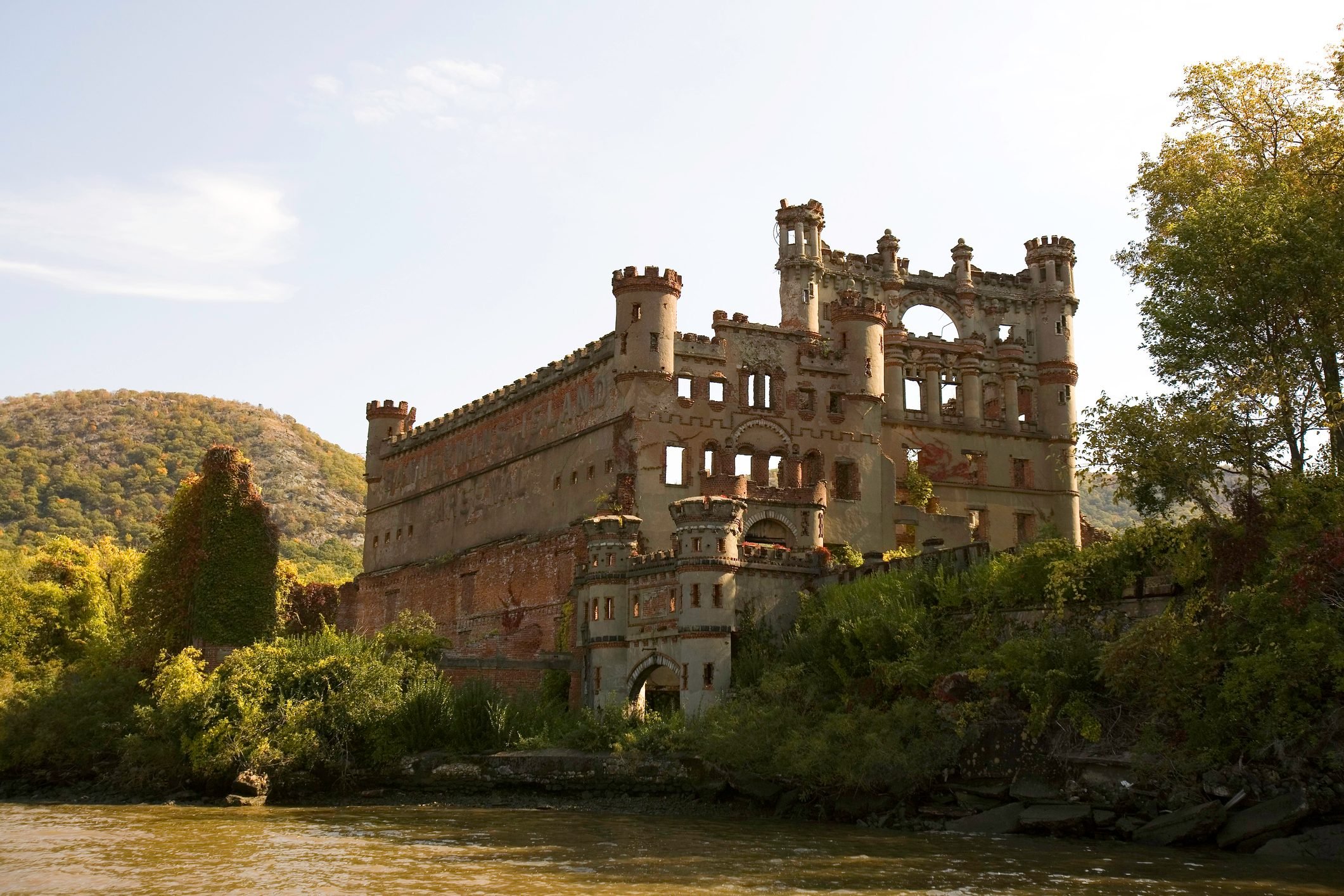
Bannerman Castle
Location: Pollepel Island, New York
This castle doesn’t have a morbid history so much as a historically interesting one. According to Jane Bannerman, granddaughter-in-law of the builder, Frank Bannerman VI, the mansion was built on Pollepel Island in the Hudson River as a place to store arms for sale. A bit of folklore from the Indigenous tribes of the island survives, including the legend of naming the island after the story of a girl named Pell who was rescued and swept to safety on the island by her heroic sweetheart. The American Revolution saw the island and its surrounding waters outfitted with booby traps called “chevaux-de-frise“—translating to Frisian horses—to block British ships.
In 1900, once the Bannermans owned the island, they built the Scottish-style mansion (or armory!) and even allowed various charity groups to visit the beautiful island in the summer. Frank Bannerman’s wife maintained beautiful grounds on the island, some of which still exist even after a destructive fire in 1969. Today, The Bannerman Castle Trust works to restore the building, promote tourism and preserve the history of the island and structure. While this home doesn’t necessarily seem haunted, these abandoned churches will definitely give you the spooky fix you’re searching for.
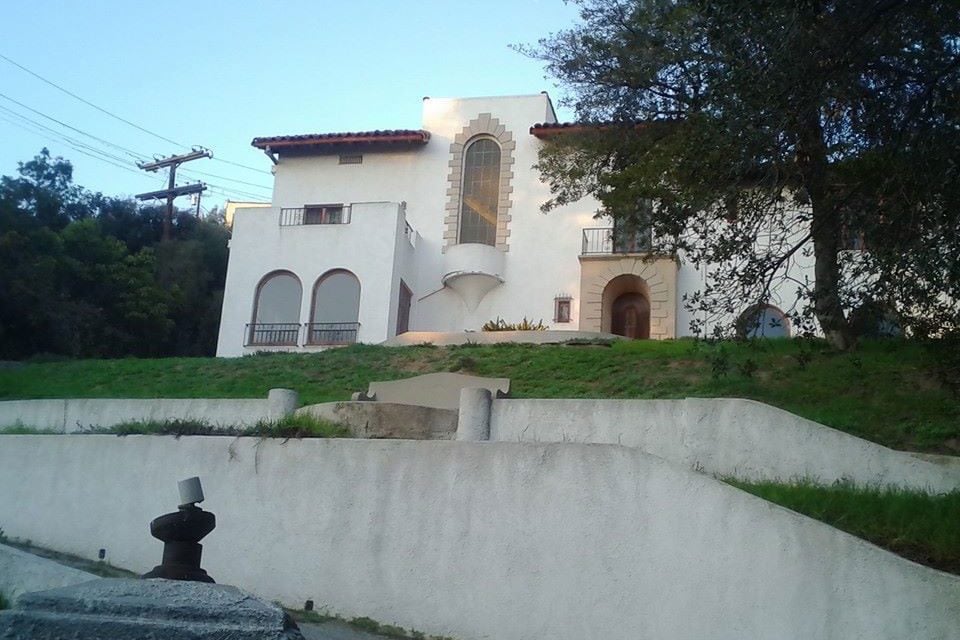
Los Feliz Mansion
Location: Los Angeles, California
The story goes that this abandoned mansion atop a hill was the home of Dr. Harold Perelson, his wife and his three children. As a respected doctor in the late 1950s, Perelson shocked the city and, to an extent, the world when he suddenly brutally murdered his wife with a ball-peen hammer in her sleep. After attempting the same cruel act with his young daughter, he ended his own life by drinking acid and taking tranquilizer pills. Many have speculated about his causes and the “hauntings” of the mansion thereafter, though it was purchased and sold multiple times over the following 60 years. What’s more spooky? Up until 2016, the owners let the house remain largely the same as it was in 1959—with the same dust-coated decor and same eerie emptiness. Don’t miss the spookiest abandoned place in every state.

Wyckoff Villa (Carleton Villa)
Location: Carleton Island, New York
Predictably, of course, the Wyckoff Villa (located on Carleton Island in the St. Lawrence River in upstate New York) is yet another example of a tragic story. What many call one of the first Gilded Age mansions along the Thousand Islands, the villa was commissioned by architect William H. Miller for William Wyckoff. A Remington typewriter magnate, Wyckoff lived in the home for only one day after its 1895 completion. Why? Well, unfortunately, Mr. Wyckoff suffered a heart attack that night on July 11, only a month after his wife, Ives Wyckoff, passed away. After 30 years in the family, the villa was sold to General Electric. Though originally planning to tear down the villa to construct a golf course and retreat in its place, GE eventually stripped the house of all useful (and necessary) parts and left it in disrepair. Still, if you’re interested, it’s back on the market! And if you’re really brave, you could stay in one of the most haunted hotels in America…
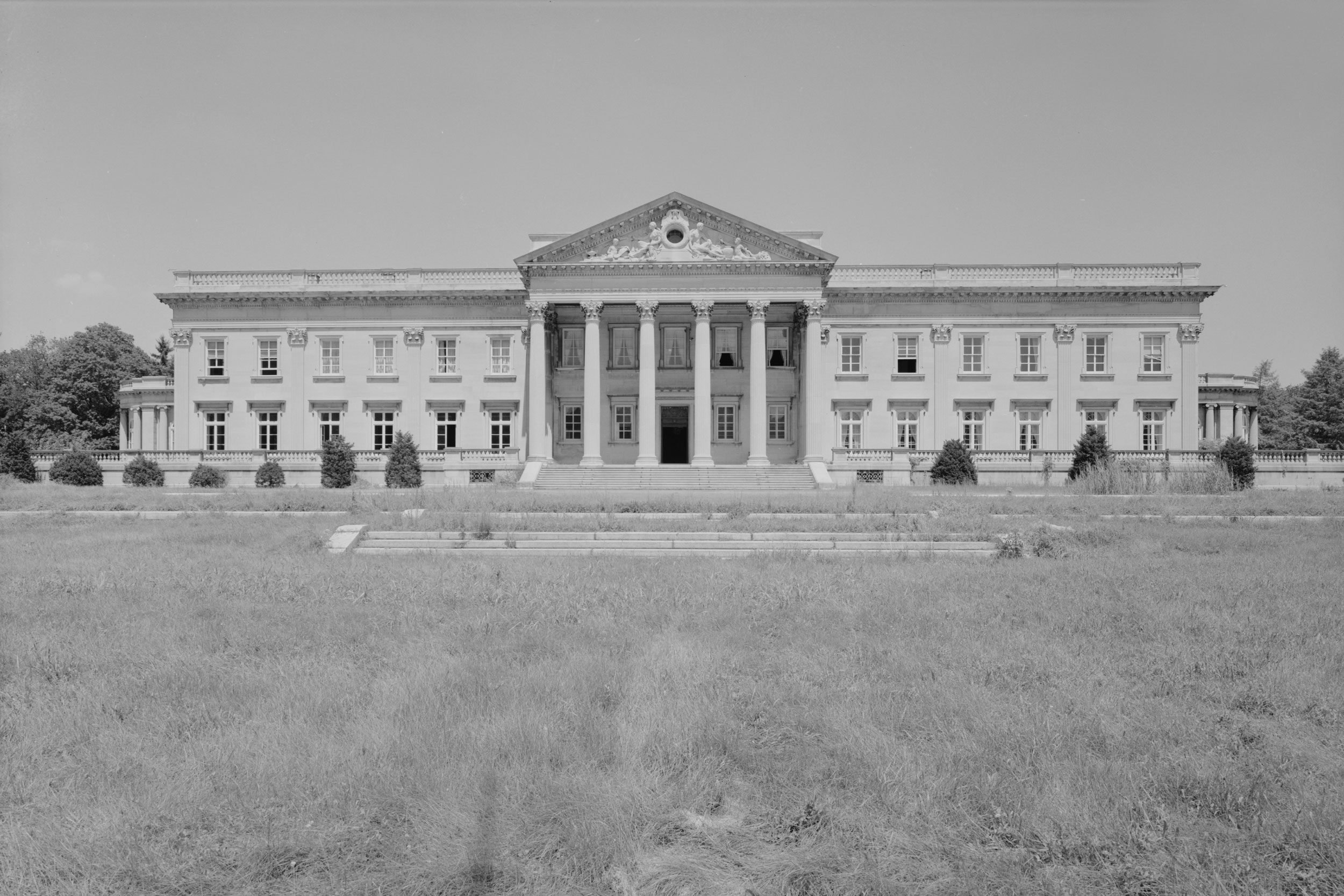
Lynnewood Hall
Location: Elkins Park, Pennsylvania
Built in the late 19th century, Lynnewood Hall is a Neo-classical, Gilded Age mansion with a regrettable past. The unfathomably rich art collector and tycoon Peter A.B. Widener commissioned the 110-room mansion with 55 bedrooms from famous architect Horace Trumbauer. The lavish limestone mansion was built shortly after the death of Widener’s wife and filled with famous pieces and paintings (some by El Greco, Rembrandt and Donatello). Tragically, the eldest son, meant to inherit the property, was on the Titanic’s maiden voyage. That Widener son and his own son lost their lives, while his wife, Eleanor, survived on a lifeboat. Ironically, the Wideners were a large investor in the RMS Titanic. The younger son, Joseph, managed the property until his death in 1943, when the house was left unclaimed, abandoned and stripped of its valuable decor. Next, check out these equally spooky abandoned amusement parks.
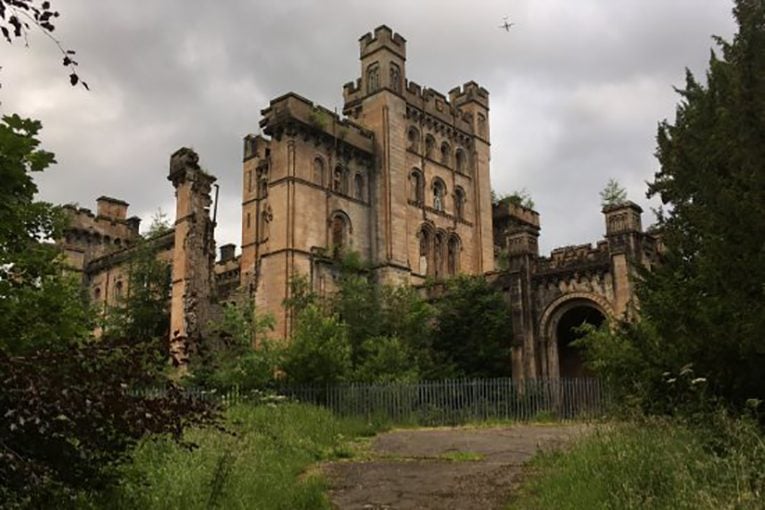
Lennox Castle
Location: East Dunbartonshire, England
Just north of Glasgow, this mansion and castle were built sometime around the early 1840s. Initially, the castle was built for John Lennox Kincaid, of the familial line of the Earl of Lennox. In 1927, the castle was purchased by the Glasgow Corporation and converted into a “hospital for the mentally ill.” Buildings cropped up around the main castle structure to eventually hold more than 1,200 patients. Toward the middle of the century, however, fights, unrest and riots began to break out among the patients. One such fight in 1956 resulted in some of the male patients attacking the nursing staff and being locked inside a small hut. In 2002, the Lennox Castle Hospital was officially retired and all other buildings on the property were knocked down. In their stead, the Celtic Football Club attempted to make training facilities. Today, the abandoned castle has fallen to fire and nature and remains a beautiful, eerie ruin. If you like this, you’ll love these other abandoned hospitals.
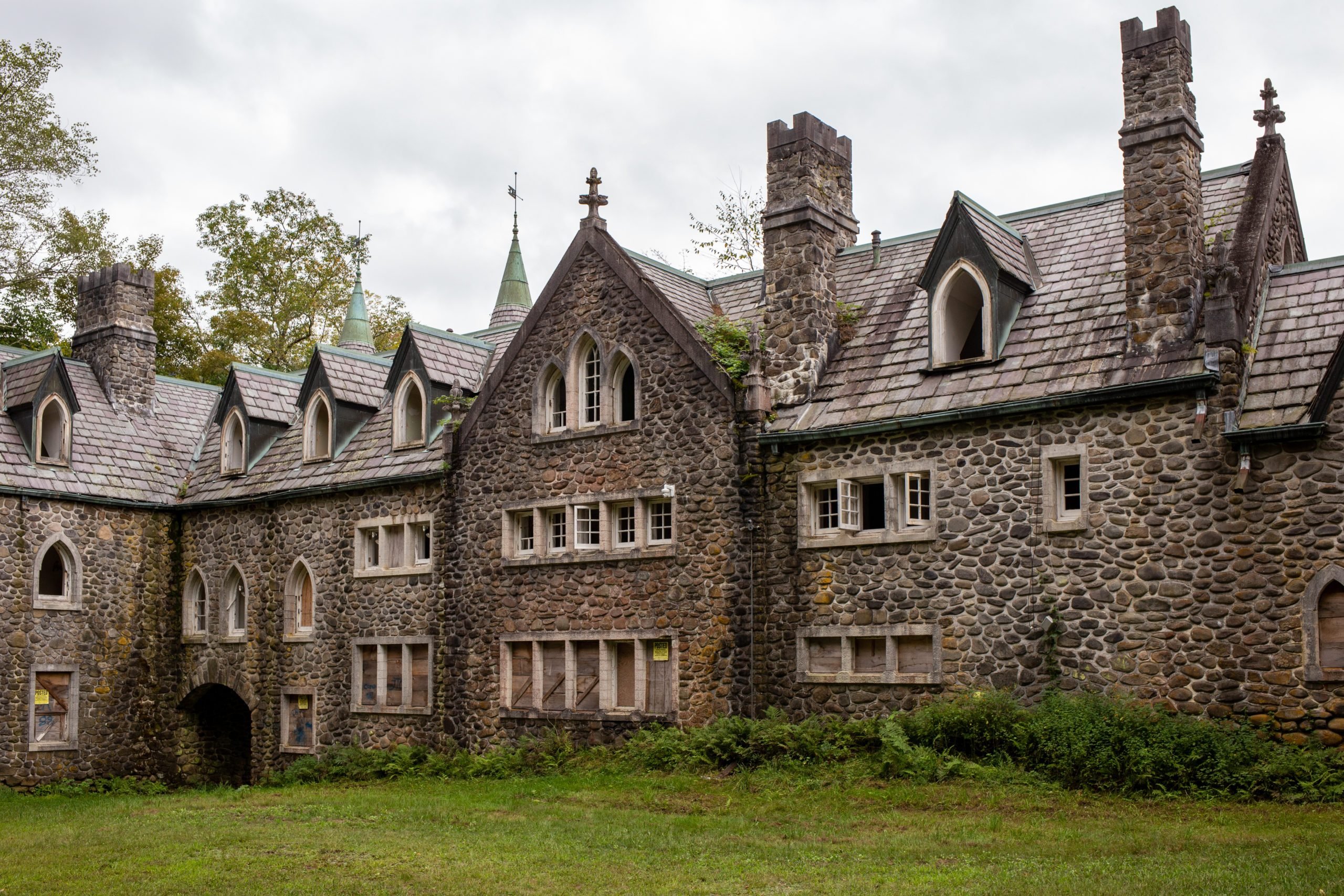
Dundas Castle
Location: Roscoe, New York
Sometimes called the Craig-E-Claire Castle, this eventual mansion was first a small lodge structure built by Bradford Lee Gilbert around 1880. In 1915, new owner Ralph Wurts-Dundas decided to construct a more castle-like structure, though he passed away a year shy of its completion. His wife, Josephine, was shortly thereafter committed to a mental institution against her will, also never living in the finished castle. Their daughter Muriel became the owner, but her due inheritance was said to be stripped and stolen from her by greedy castle caretakers. Sometime after, the daughter was married and left the property to be sold a few times before landing in the hands of a local Masonic chapter. Now, while still under Masonic ownership, the castle is abandoned and falling apart. Lore implies that the ghost of Josephine still haunts the structure. Wish you could stay in the castle? Satisfy your scared-meter with a stay in one of these haunted Airbnb rentals.
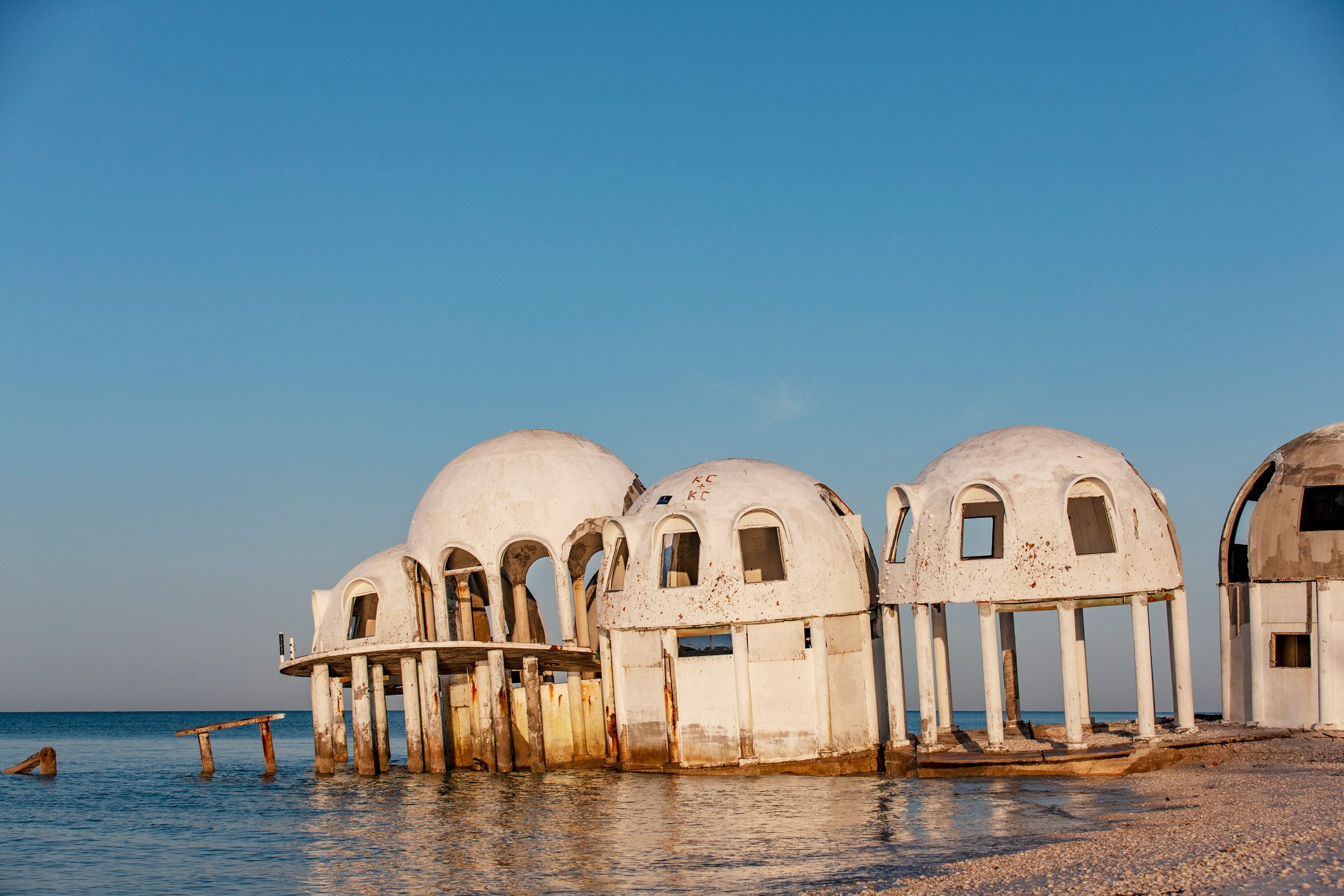
The Cape Romano Dome House
Location: Collier County, Florida
While today the Cape Romano Dome House is a popular area for fishing and graffiti, it wasn’t always this way. Located just 300 feet offshore from Cape Romano Island, south of Marco Island in the Ten Thousand Islands of Collier County, Florida, this vacation home’s many structures were built relatively recently, in 1981. Retired oil producer Bob Lee wanted a self-sufficient, eco-friendly, relaxing abode for his family—complete with domes and troughs to collect rain water for dishes and showers and concrete pylons beneath the structures to be lit on fire to heat the home. Erosion finally sabotaged the very sands it was built upon, and though it was purchased in 2001 to be refurbished, the costs of the project proved to be too high, leaving the building as a home to only wildlife and spooky stories.
If these creepy photos of abandoned mansions didn’t scare you one bit, maybe you’ll enjoy these unsolved mysteries explained by science. Or, if you’re like us and go running at the first sign of a flickering light, try these unsolved hotel mysteries to make you sleep with the lights on.
Sources:
- Atlas Obscura: “Odd Fellows Home”
- New York Times: “Dilapidated Mansion Has Had Many Occupants, Maybe Even a Ghost”
- Taiwan News: “Minxiong Ghost House ranked No.1 scariest haunted house in Taiwan”
- Atlas Obscura: “Villa de Vecchi”
- Atlas Obscura: “Los Feliz Murder Mansion”
- BannermanCastle.org
- LoveProperty.com: “Lynnewood Hall: the abandoned mansion with a tragic Titanic connection”
- Atlas Obscura: “Craig-E-Clair Castle”
- Scottish-Places.info: “Lennox Castle”
- Atlas Obscura: “Cape Romano Dome House”
